

Revolutionizing Card Games: Ai Personalizing Player Styles
By Tom Seest
At CardGameNews, we help people who love card games by collating information and news about card games.
Be sure to read our other related stories at CardGameNews to learn more about card games.
Could Artificial Intelligence Adapt Card Games to Suit Individual Player Styles?
Imagine sitting down for a night of cards with friends—or perhaps a solo venture into your own world of strategy and chance. It’s more than just a pastime; it’s a tapestry woven with shared laughter, fleeting victories, and even the occasional nail-biting defeat. Now, imagine that the game—let’s say a beloved card game you know inside and out—starts to evolve right before your eyes. It’s not just the rules that are shifting; it’s tailored to you, your style, your quirks. That’s the tantalizing promise of artificial intelligence (AI) as it steps into the world of card games.
Now, let’s be real for a moment: any time you hear about AI stepping in, there can be a natural instinct to bristle. After all, it’s easy to slip into the mindset that these algorithms are cold, unfeeling machines. But here’s the beauty of it—the heart of the matter lies not in the cold calculations of data but in the rich, vibrant tapestry of human expression and interaction. AI doesn’t just mimic; it learns. Picture an AI that dives into your play style, recognizing when you thrive on aggression or when you prefer a more cautious approach. It’s like having a partner who knows just the right moment to share a laugh or offer a nod of encouragement.
Rationally, it makes sense. We all have different ways of doing things. Think of how this personalization could transform the experience for new players or veterans seeking fresh challenges. AI could adapt the card game in a way that eases newcomers into the fold while keeping veterans engaged, ensuring that no one feels left behind.
Moreover, ethically, we must consider the implications. Could AI help to level the playing field in competitive settings, allowing underdogs to shine? Picture a local tournament where players of all skill levels are catered to, fostering camaraderie rather than competition. The stories formed around those tables would shine brighter than any trophy.
Whether you’re at a table filled with friends or playing a solo round on your device, the goal is connection. If AI can enhance that connection—tailoring every card, every strategy to suit how you play—then it’s doing more than just acting as a facilitator. It’s becoming a trusted companion, working with you to elevate the experience. So, are we ready to embrace this evolution?

Could Artificial Intelligence Adapt Card Games to Suit Individual Player Styles?
Could Artificial Intelligence Adapt Card Games to Suit Individual Player Styles?
- Card games are more than a pastime; they create shared experiences filled with laughter and competition.
- Artificial intelligence (AI) has the potential to personalize card games by adapting to individual play styles.
- AI learns from players instead of merely mimicking, enhancing human expression and interaction in games.
- This personalization can make card games accessible for newcomers while providing fresh challenges for veterans.
- Ethically, AI could level the playing field in competitive settings, promoting camaraderie among diverse skill levels.
- The aim of card games, whether played socially or solo, is to foster connection and enjoyment among players.
- AI has the potential to act as a trusted companion, elevating the overall gaming experience through tailored strategies.

Could Artificial Intelligence Adapt Card Games to Suit Individual Player Styles?
Table Of Contents
- Could Artificial Intelligence Adapt Card Games to Suit Individual Player Styles?
- What If Ai Could Learn Your Unique Card Playing Style?
- How Would Personalized Card Games Enhance Your Enjoyment?
- Can Ai Bridge The Gap Between Casual And Competitive Players?
- What Ethical Concerns Arise When Ai Tailors Games For Individuals?
- How Might Ai Transform Traditional Card Games Into New Experiences?
- Conclusion
- Other Resources
- Glossary Of Terms
- Other Questions
- Haiku
- Poem
- Checklist
What If Ai Could Learn Your Unique Card Playing Style?
What If AI Could Learn Your Unique Card Playing Style?
Imagine sitting across the table in your favorite card game, poised to play your hand and outwit your opponents. Every shuffle of the deck, every whispered strategy, is not just about winning; it’s wrapped up in memories, friendships, and perhaps a little friendly rivalry. Now picture an AI—attentive, perceptive, and almost human in its ability to sense the rhythm of the game. It could learn your unique card playing style, adapt to your moves, and evolve as you stick to what you know or venture into uncharted territory.
At first glance, it might sound a little intimidating, right? After all, you’ve honed your skills through trial and error, through that palpable rush of winning a tough game or the happy camaraderie of a shared loss. When AI starts to learn what makes you tick, it feels like your carefully crafted secrets could be laid bare. But therein lies the promise—the potential for deeper connection and a more engaging experience.
Think of it as another teammate, albeit one that doesn’t get tired or emotional. Rationally, this AI could analyze thousands of hands in mere seconds, identifying trends and opportunities that might escape your human intuition. The ethical implications of this technology come to the forefront, conjuring images of environments enriched not just by competition, but by a shared goal: to elevate the enjoyment of the card game for everyone involved.
What if, rather than reducing the game to mere algorithms, this AI enriches your experience? Imagine it recognizing the way you bluff or the subtle cues you give when bored. It might suggest new tactics or challenge you just when you’re slipping into predictability. Suddenly, your ordinary Friday night turns into a narrative of growth and discovery that keeps your opponents—and yourself—on your toes.
This endeavor isn’t just about gameplay; it’s about fostering social connections that celebrate the age-old tradition of gathering around a table. It’s about trusting a new partner that respects your individual style while also pushing you toward new horizons. By inviting a thoughtful AI into the equation, you’re not replacing the heart of the game; you’re enriching it with evolved understanding. And in the world of card games, isn’t that what we’re all really after? A deeper connection to the game we love and the people we share it with.

What If Ai Could Learn Your Unique Card Playing Style?
What If Ai Could Learn Your Unique Card Playing Style?
- AI can learn and adapt to your unique card playing style, enhancing the gameplay experience.
- The integration of AI offers potential for deeper connections and more engaging card game moments.
- AI serves as a tireless teammate, analyzing thousands of hands to identify trends and opportunities.
- Ethical implications arise, focusing on enriching the game rather than reducing it to algorithms.
- The AI can recognize your playing habits, suggesting tactics and challenging your predictability.
- This innovation fosters social connections, celebrating the tradition of gathering around the table.
- The goal is to enhance enjoyment and connection in card games without replacing their essence.

What If Ai Could Learn Your Unique Card Playing Style?
How Would Personalized Card Games Enhance Your Enjoyment?
Imagine a quiet evening with friends—laughter echoing off the walls, the clatter of chips, and the rustle of cards shuffling. Now, picture that very same scene, but with a twist. Each card you play springs from a unique, personalized set designed just for you and your group. The joy isn’t just in the game itself; it’s in the memories woven between the decks, memories that resonate with your shared experiences. This isn’t merely a card game; it’s a tapestry of connection, designed in real-time to reflect the personalities and stories that define your circle.
At the heart of why personalized card games enhance your enjoyment is the simple truth that they foster deeper relationships. Tailoring a game to resonate with your collective humor, interests, or inside jokes turns each play into a shared narrative, an adventure that belongs exclusively to your group. Instead of just being another gaming session, it transforms into a story only you can tell. Imagine a card with an inside joke that sends everyone into fits of laughter—suddenly, that card game elevates bonding to a whole new level. It taps into our shared narratives, igniting nostalgia, humor, and camaraderie.
Rationally, consider how engagement deepens when players can connect with content they love. Personalized cards can cater to niche interests—whether it’s references from a beloved show, favorite memes, or quirky anecdotes from past escapades. This tailored approach resonates on a logical level, enhancing enjoyment because it pulls you in, making the experience not just entertaining but also intellectually stimulating.
Ethically, we all recognize that the best moments in life are often about the people we share them with. Personalized card games empower you to celebrate and honor your friendships. Each game offers a chance to highlight relationships, showcasing what matters most to your group while cultivating an environment rich in respect and empathy.
Socially, they become a bridge for connection, often drawing in new members. When a newcomer joins your circle, introducing them through a personalized card game creates a sense of belonging right away. They’re not just playing; they’re stepping into a cherished narrative, fostering friendships in a way that merely shuffling a standard deck never could.
So, are you ready to elevate your game night? Transform a simple card game into an experience that resonates with heart, engages the mind, and speaks to the very essence of connection. Let the cards reflect the unique bond you share. It’s more than just playing; it’s creating a legacy of laughter, friendship, and unforgettable stories.

How Would Personalized Card Games Enhance Your Enjoyment?
How Would Personalized Card Games Enhance Your Enjoyment?
- Imagine a lively evening with friends featuring laughter and unique, personalized card decks.
- Personalized card games foster deeper relationships, creating a shared narrative among players.
- Cards with inside jokes and shared experiences turn game nights into memorable adventures.
- Engagement increases when players connect with content that reflects their interests and humor.
- Personalized games celebrate friendships, emphasizing respect and empathy among players.
- Introducing newcomers through personalized games helps them feel a sense of belonging and connection.
- Transform a simple card game into a heartfelt experience that builds a legacy of laughter and memories.

How Would Personalized Card Games Enhance Your Enjoyment?
Can Ai Bridge The Gap Between Casual And Competitive Players?
In the world of gaming, there’s a bridge that needs to be crossed—one that connects casual players, who relish the simple joy of a card game on a rainy afternoon, with the fiercely competitive folks who treat every match like a life-or-death battle. It’s a divide that many of us recognize, and it begs the question: can artificial intelligence, with its endless algorithms and data crunching, genuinely bridge this gap?
Imagine a casual player, their hands adorned with a steaming mug of coffee, trying to navigate a new card game. They’re there for the fun, the laughter, the camaraderie. Yet, across the table, a competitive player—eyes sharp, strategy laid out like a battlefield—reads their every move, ready to pounce. It’s a clash of worlds that can feel daunting for the everyday gamer. But what if AI could step in, not as a competitor, but as an inclusive guide?
Consider this: AI could analyze gameplay, providing gentle nudges to the casual player. “Why not try this move?” or “Here’s a strategy that might surprise your opponent.” These friendly reminders would transform the learning curve from intimidating to exhilarating, fostering confidence in the casual players and offering insights to the competition that might otherwise remain hidden. With AI by their side, they would find common ground.
But beyond pure mechanics, what if we think about the ethical implications? Gaming should be a shared experience, after all. The goal isn’t to create a rift but to nurture connections—between players of all skill levels, and the AI itself. With the right protocols, AI can model behavior that encourages respect and sportsmanship, promoting a healthier, more inclusive gaming environment that resonates with the core values we hold dear.
We’ve seen narratives unfold in the gaming community—how a well-timed power-up can inspire a round of applause from allies, or how an unexpected defeat can lead to improved strategies and stronger bonds. With AI helping pave the way, we could witness a wave of shared stories, of camaraderie forged in friendly competition, and friendships solidified over strategic plays.
So, let’s imagine a future where the casual and competitive players rise together, learning from each other with AI as their bridge. It’s a future not built on separation, but on connection—a celebration of the game we all love and a reminder that at the heart of any card game, we’re all just players seeking to enjoy the journey.

Can Ai Bridge The Gap Between Casual And Competitive Players?
Can Ai Bridge The Gap Between Casual And Competitive Players?
- There exists a divide in gaming between casual players and fiercely competitive players.
- AI has the potential to bridge the gap between these two types of players.
- AI could provide helpful suggestions and strategies to casual players, enhancing their experience.
- This assistance could transform the learning curve into a more enjoyable process.
- Ethical considerations are important; gaming should promote connections among players of all skill levels.
- AI can foster an environment of respect and sportsmanship, leading to healthier gaming experiences.
- A future with AI could allow both casual and competitive players to learn from one another, celebrating the shared love of the game.

Can Ai Bridge The Gap Between Casual And Competitive Players?
What Ethical Concerns Arise When Ai Tailors Games For Individuals?
What Ethical Concerns Arise When AI Tailors Games for Individuals?
Picture this: you settle down with a cup of coffee, ready to unwind with your favorite card game, but this time, it’s different. The game knows you—not just your preferences but your mood, your emotions, even your past experiences. It crafts a personalized adventure that feels tailor-made, but lurking beneath the surface are ethical concerns ripe for scrutiny.
At first glance, the ability of AI to customize our gaming experiences seems like a breakthrough—a tool that deepens engagement and entertainment. Yet, as we dip our toes into this seductive ocean, we must pause and consider where the current might take us. The problem isn’t just about technology; it’s about the relationship we’re forging with it. Are we becoming passive consumers, forever tethered to algorithms that dictate our choices, our fun, and perhaps even our emotional well-being?
Let’s turn the focus to fairness. Imagine a scenario where an AI-powered card game learns that you enjoy taking risks, enriching the gameplay with high-stakes scenarios that cater to that thrill-seeker in you. Sounds exciting, right? But what if that game begins to manipulate your emotions, steering you toward choices that could lead to frustration or disappointment? The line blurs between entertainment and exploitation.
Moreover, there’s the question of transparency. How many players really understand how these algorithms work or the data being collected? When an AI shapes your gaming environment, clarity is crucial. We need to know what information is being used against our better judgment, turning our innocent gaming sessions into laboratories of manipulation.
And let’s not forget the social implications. Gaming is often seen as a shared experience, a way to connect with others. If AI tailors games solely at an individual level, do we risk fracturing those communal bonds? Friends gather around a table to battle over a classic card game; but what happens when each player’s game is uniquely twisted by an unseen hand?
Ultimately, as we thrill and chill within these realms of tailored gameplay, we must carry the lantern of ethics to illuminate our path forward. We have the power to shape the future of gaming by demanding transparency, urging developers to prioritize player well-being over profit, and fostering inclusivity. When we engage with AI in gaming, let’s weave a fabric of trust, understanding, and ethical responsibility—because the heart of gaming isn’t just pixels, it’s connection.

What Ethical Concerns Arise When Ai Tailors Games For Individuals?
What Ethical Concerns Arise When Ai Tailors Games For Individuals?
- The rise of AI in gaming allows for personalized experiences based on players’ preferences, moods, and past experiences.
- Concerns arise about players becoming passive consumers controlled by algorithms that dictate their choices and emotional well-being.
- AI can manipulate gameplay by catering to individual traits, potentially leading to emotional exploitation and disappointment.
- Transparency is crucial; players should understand the algorithms and data collection methods used in personalization.
- AI-driven individualization in gaming may fracture communal bonds, impacting the shared gaming experience.
- Ethical considerations should guide the development of AI in gaming, prioritizing player well-being and promoting inclusivity.
- We must advocate for transparency and ethical practices to ensure that gaming remains a source of connection and enjoyment.

What Ethical Concerns Arise When Ai Tailors Games For Individuals?
How Might Ai Transform Traditional Card Games Into New Experiences?
Imagine a room filled with laughter, friendly banter, and the occasional gasp of surprise as players take their turns around a table. This is the timeless essence of a card game, a gathering cornerstone that connects generations and friends alike. But what if I told you that artificial intelligence is poised to transform this cherished tradition into something truly extraordinary?
At first glance, you might feel a pang of nostalgia, raising an eyebrow at the idea of a computer mingling among friends. But let’s delve a bit deeper, shall we? Picture AI as a new kind of player—one that enhances rather than replaces the joy of face-to-face interaction. Imagine advanced algorithms learning your favorite strategies, adapting to your playstyle, and challenging you at every hand. Instead of diminishing the experience, AI could illuminate all the nuances of a card game, prompting players to rethink their strategies and bond over shared victories and defeats.
Thinking logically, this technology doesn’t just elevate the competition; it provides learning opportunities. For newcomers, an AI-driven card game can serve as a patient mentor, guiding them through the intricacies of rules and strategies without judgment. Seasoned players, too, can seek its wisdom, tackling advanced tactics that push their skills to new heights. The trust that builds from this partnership enhances the experience. Friends gathered around the table can discuss not just outcomes but learning moments, fostering camaraderie.
Now, let’s get ethical for a moment. In a world where digital distractions abound, AI can encourage more authentic connections. Imagine a card game that tracks players’ emotional engagement, suggesting moments for deeper conversation between hands or even offering “fun facts” about the history of the game and its players—all designed to evoke deeper connections.
Moreover, consider the social implications. Through online platforms enhanced by AI, card games can extend beyond individual gatherings, creating virtual communities where players across the globe share strategies, stories, and laughter. This new landscape isn’t just about playing cards; it’s about forging friendships that transcend borders and backgrounds, backed by the wisdom of AI.
So, when you sit down for your next card game, remember this: the transformation that AI brings isn’t about replacing those tender moments; it’s about amplifying them, enriching our gatherings, and fostering connections that matter. The cards will still hold the same weight, but the experience? That’s what will truly evolve.

How Might Ai Transform Traditional Card Games Into New Experiences?
How Might Ai Transform Traditional Card Games Into New Experiences?
- Card games are a timeless gathering that connects generations and friends.
- Artificial intelligence is set to transform the tradition of card games into something extraordinary.
- AI can enhance face-to-face interaction by learning player strategies and adapting to playstyles.
- AI-driven card games provide learning opportunities for newcomers and seasoned players alike.
- AI can track players’ emotional engagement, encouraging deeper connections during gameplay.
- Online AI-enhanced platforms create global card-playing communities, fostering friendships beyond borders.
- AI’s role is to amplify card game experiences, enriching gatherings and enhancing meaningful connections.

How Might Ai Transform Traditional Card Games Into New Experiences?
Conclusion
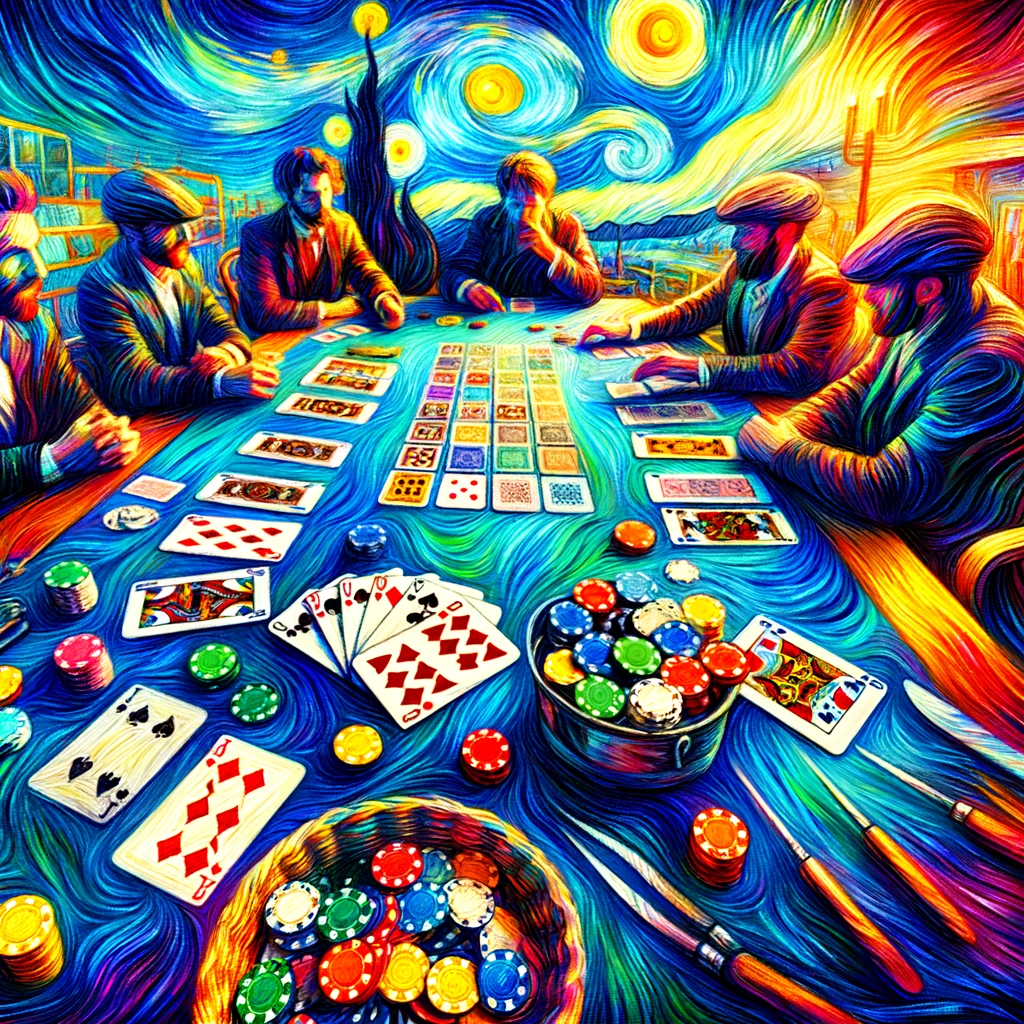
As we draw the curtains on this exploration of how artificial intelligence might reshape our card game experiences, let’s take a moment to reflect—both critically and emotionally—on what this could mean for us as players and as people. Picture, if you will, that familiar scene: a group of friends gathered around a table, ready to share in laughter, competition, and camaraderie, each card playing not just a part in the game but a role in the cherished story of their friendship. Now, imagine bringing a smart ally into that circle, an AI that listens, learns, and adapts to each unique playing style. This isn’t just some cold machine; it’s an invitation to a more connected, personalized experience.
At its core, AI aims to enhance our interactions, making games more accessible and engaging. Casually lounging over a game, players can receive gentle nudges from an AI, helping novices gain confidence while keeping skilled players on their toes. We’re not looking at a cold battle of wits, but a vibrant exchange highlighting our differences and the shared joy of discovery. This technology invites us to celebrate both competition and connection, blurring the lines that often separate casual and competitive play.
But let’s not rush past the ethical considerations. In embracing AI, we must also interrogate its role. Are we allowing algorithms to dictate our fun, potentially leading to emotional manipulation? It’s a question worth pondering as we invite AI into our homes. Transparency is paramount; we need to understand how these algorithms shape our experiences and preserve the essence of human connection that makes gaming so special. The thrill of a good hand should be a shared joy, not a lonely path dictated by unseen codes.
Moreover, we must recognize the potential for AI to foster inclusivity and camaraderie. Imagine a personalized deck crafted not just for you but for your friends—a tapestry woven from inside jokes, shared interests, and collective memories. Such games could draw newcomers into the fold, creating a welcoming atmosphere that elevates gameplay and nurtures friendships.
So, as we stand on the precipice of this new era of gaming, let us embrace this evolution with open hearts and inquisitive minds. The next time you shuffle the cards, remember that the game is more than the play; it’s about the connections we forge, the stories we create, and the laughter that rises above the shuffle. With AI by our side, we’re not just playing cards; we’re enriching the very fabric of our shared experiences, and that, my friends, might just be the greatest win of all.

Conclusion
Conclusion:
- AI has the potential to reshape card game experiences, enhancing both emotional and social connections among players.
- It can serve as a smart ally, adapting to players’ styles and fostering a personalized gameplay experience.
- AI can make games more accessible by supporting novices and challenging experienced players, enriching the competition.
- Ethical concerns arise about AI’s influence, particularly regarding emotional manipulation and its impact on human connections.
- Transparency is crucial in understanding how AI algorithms affect gaming experiences while preserving the essence of social interaction.
- AI can promote inclusivity by personalizing games based on shared memories and interests, welcoming newcomers into the gaming community.
- The evolution of gaming with AI should be embraced as an opportunity to enhance relationships, storytelling, and shared laughter.
Conclusion
Other Resources

Other Resources
Here is a list of other resources you can review online to learn more:
- Hanabi
- Euchre
- Poker
- Hans im Glück
- Cards Against Humanity
- Boardgames.com
- Gloom
- Eagle-Gryphon Games
- Atlas Games
- GamesRadar+
- Uno
- Tantrum House
- Exploding Kittens
- Beasts of War
- Meeple Mountain
- Power Grid
- Arkham Horror: The Card Game
- Ars Technica
- Kingdom Death: Monster
- Great Western Trail
Use This Prompt To Get More Resources With Your Favorite Online AI Tool: Please provide me with a list of online articles with their URLs in a bulleted list that I can read regarding Could Artificial Intelligence Adapt Card Games to Suit Individual Player Styles?

Other Resources
Glossary Terms
Could Artificial Intelligence Adapt Card Games to Suit Individual Player Styles? – Glossary Of Terms
1. Artificial Intelligence (AI): Simulation of human intelligence processes by machines, particularly computer systems, used to mimic cognitive functions such as learning, reasoning, and problem-solving.
2. Algorithm: A set of rules or processes to be followed in calculations or problem-solving operations, often used by AI to process player data and devise strategies.
3. Adaptive Learning: A method of education that adjusts the content and pace of learning materials to fit the unique needs of individual learners, applicable to AI-driven card games adapting to player styles.
4. Player Profile: A compilation of data about a player’s preferences, skill level, and behavior patterns, which AI uses to personalize game experiences.
5. Behavioral Analytics: The analysis of a player’s actions and decisions during gameplay, which can inform AI systems about individual styles and preferences.
6. Game Mechanics: The rules and systems that govern gameplay, including how actions are performed and how players interact with the game environment.
7. Reinforcement Learning: A type of machine learning where an AI system learns to make decisions by receiving rewards or penalties based on its actions, useful for adapting strategies in card games.
8. Personalization Engine: The component of an AI system that customizes game experiences for individual users based on their behavior and preferences.
9. Neural Networks: A series of algorithms modeled after the human brain that are used in AI to recognize patterns and make predictions based on input data.
10. Game Theory: The study of strategic interactions between players, which can be analyzed to inform AI strategy development in card games.
11. Dynamic Difficulty Adjustment: A technique where the game’s difficulty level changes in real-time to match the player’s ability, enhancing engagement and enjoyment.
12. Natural Language Processing (NLP): An AI technology that allows systems to understand and interact using human language, which can enhance player communication in card games.
13. Contextual Awareness: The ability of an AI to understand and react to the context of the game situation, including the current state of play and the players’ emotional states.
14. User Experience (UX): The overall experience a player has when interacting with a game, influenced by design, gameplay mechanics, and personalization.
15. Data Mining: Analyzing large datasets to discover patterns and insights, which can inform the AI’s understanding of player behavior and preferences.
16. Feedback Loop: A process in which the output of a system is circled back and used as input, allowing AI to continuously refine its algorithms based on player interactions.
17. Simulation: The imitation of a real-world process in a virtual environment, allowing AI to test different strategies based on player styles.
18. Social Dynamics: The patterns of interaction between players in a game, which can influence AI adaptations to enhance cooperative or competitive play.
19. Player Engagement: The level of interest and involvement that a player has with a game, which AI seeks to enhance through tailored experiences.
20. Cognitive Load: The amount of mental effort being used in the working memory, which AI can help manage by adjusting game complexity according to player skill.
21. Strategy Adaptation: The process by which AI alters its gameplay approaches based on the observed behavior and preferences of individual players.
22. Emotion Recognition: The capability of AI to detect players’ emotional states through cues like facial expressions or gameplay decisions, enabling more responsive interaction.
23. Cross-Platform Play: The ability for players to engage with card games across different devices, which AI can optimize for varying player styles and preferences.
24. Real-Time Analysis: The process of evaluating data as it is generated during gameplay, allowing AI to make instantaneous adjustments to player experiences.
25. Interface Design: The planning and creation of the user interface, which affects player interaction with the game and can be tailored by AI for individual preferences.
26. Exploration vs. Exploitation: A dilemma in AI decision-making between trying new strategies (exploration) and using known strategies that yield high rewards (exploitation), crucial for adapting gameplay.
27. Player Retention: Strategies aimed at keeping players engaged and returning to the game, where AI can personalize experiences to encourage long-term participation.
28. Heuristic Processing: Problem-solving methods that are sufficient for immediate goals and can provide a practical approach for AI in gameplay adaptation.
29. Skill Matching: The process of pairing players of similar skill levels in games to ensure balanced competition, which AI can dynamically manage.
30. Gamification: The application of game-design elements and principles in non-game contexts to enhance user engagement, where AI can personalize challenges based on player styles.
These terms collectively illustrate the interplay between AI and card games, emphasizing the ways in which AI can tailor experiences to suit individual player styles.

Glossary Of Terms
Other Questions
Could Artificial Intelligence Adapt Card Games to Suit Individual Player Styles? – Other Questions
If you wish to explore and discover more, consider looking for answers to these questions:
- What specific AI technologies or algorithms are used to tailor card games for individual players?
- How do AI systems understand and learn a player’s unique style?
- Can AI personalization lead to an unfair advantage in competitive settings?
- What are some examples of existing card games that already use AI for personalization?
- How do players typically react to the integration of AI in their gaming experience?
- What safeguards can be put in place to ensure ethical AI use in gaming?
- How does AI personalization impact the social dynamics of group gaming?
- Can AI adapt to changes in a player’s style over time?
- What role does user feedback play in AI-enabled card games?
- How can AI promote inclusivity in gaming communities?
- Are there any risks of data privacy with AI in card games?
- What are the challenges faced by developers in implementing AI in card games?
- How might AI enhance the educational aspects of card gaming for newcomers?
- What future developments can we anticipate in AI and card gaming?
- How can AI influence the narrative experience in card games?

Other Questions
Haiku
Could Artificial Intelligence Adapt Card Games to Suit Individual Player Styles? – A Haiku
In a world of cards,
AI learns each player’s heart—
Moments shared, truths sparked.
Haiku
Poem
Could Artificial Intelligence Adapt Card Games to Suit Individual Player Styles? – A Poem
Cards in a New Light
Gather ’round the table, where laughter dances free,
With friends, we share the game, a bond of harmony.
But what if magic beckons from circuits born of code?
A whisper of connection as the game begins to unfold.
Imagine the cards adapting, as if they know your heart,
An AI partner waiting, every move a work of art.
Not just cold calculations, but a pulse infused with cheer,
Learning all your quirks and styles, making playtime dear.
In the spirit of the game, it nurtures those who start,
While keeping veterans engaged, igniting passion’s spark.
Picture friendly nudges guiding a cautious hand,
Transforming every session into a shared wonderland.
Ethically we ponder, as algorithms weave their thread,
Are we mere consumers bound by choices predefined?
Will joy fade into shadows under subtle digital dread?
But if we hold the lantern high, transparency can shine.
So, let’s envision tables where casual meets the keen,
AI as the bridge, a guide through every scene.
Breaking down the barriers, in friendship’s sweet embrace,
Together we rise higher in this digital space.
With personalized decks tailored for laughter and for play,
Threads of shared stories woven in every strategic sway.
Moments crafted near and far, as joy expands its wings,
Connecting hearts and minds alike in the game that friendship brings.
As AI walks with us in this beloved, timeless quest,
Let’s cherish each card played, each laughter, every jest.
For in this evolution, we’re not just playing games,
We’re intertwining lives and dreams, sharing love in endless flames.

Poem
Checklist
Could Artificial Intelligence Adapt Card Games to Suit Individual Player Styles? – A Checklist
Checklist: Embracing AI in Card Games for a Heartfelt Experience
Heart Appeals (Emotional Connections)
1. Reflect on your favorite card game memories—what emotions did those experiences evoke?
2. Consider how personalized gameplay could elevate friendship bonding.
3. Visualize laughter shared around the table when a card triggers an inside joke.
4. Acknowledge the unique narratives each session creates—how can AI enhance these stories?
5. Think about the moments of encouragement and support that could come from an AI partner during gameplay.
Head Appeals (Logical and Rational Considerations)
1. Identify how AI could analyze your gaming style for a tailored experience—what strategies might it suggest?
2. Consider the learning opportunities AI provides for new players—how could this boost their confidence?
3. List how diverse playstyles could coexist in a single game environment, benefiting from AI adaptation.
4. Assess the potential for AI to promote engagement through custom card designs or themes that cater to group interests.
5. Evaluate how AI could facilitate a healthy competition by offering insights and nudges, fostering growth rather than intimidation.
Gut Appeals (Intuition and Ethics)
1. Reflect on your comfort level regarding AI making judgment calls in your gameplay—what worries do you have?
2. Consider the implications of emotion-driven AI—could this lead to manipulation?
3. Ponder the importance of transparency—were you aware of how your data could be used in personalized gameplay?
4. Assess the ethical responsibility of developers to ensure player well-being over profit—what do you wish to demand from them?
5. Think about how AI could strengthen community bonds—are there risks of losing shared experiences to hyper-personalization?
Authority Appeals (Expert Opinions)
1. Research expert insights on AI in gaming—what do scholars and industry professionals say about personalized gameplay?
2. Explore case studies of successful AI integration in other gaming realms—what can you learn from these examples?
3. Seek recommendations from experienced gamers on how AI could enhance their gameplay experiences.
4. Consult articles or podcasts that dive into ethical AI usage in gaming—are there red flags?
5. Join discussions or forums that address concerns regarding AI in games—what knowledge can you gain?
Narrative Appeals (Stories and Shared Experiences)
1. Share your own card game experiences where a twist in rules added excitement—how might AI introduce unexpected elements?
2. Encourage friends to recount their favorite game night battles—what lessons can be drawn from these narratives?
3. Collect and reflect on stories about the role of technology in enhancing personal interests and hobbies.
4. Relate how AI could create new stories during gameplay—what unique scenarios could unfold?
5. Discuss collective narratives that could be shaped with AI—how might group dynamics evolve?
Social Appeals (Community and Connection)
1. Consider how AI could draw new players into your card circle—what benefits come from inclusivity?
2. Evaluate how personalized gaming experiences foster a sense of belonging—what social dynamics can improve?
3. Reflect on the importance of empathy and respect in gaming—how can AI model these values?
4. Share experiences of playing games with diverse skill levels—how might AI mediate these casual-competitive tensions?
5. Discuss with your gaming group how embracing AI can open up new social avenues, both offline and online.
This checklist is designed to awaken emotions, provoke thought, and encourage reflection on how AI can enrich card games, fostering deeper connections among players and enhancing the overall experience.

Checklist
At CardGameNews, we help people who love card games by collating information and news about card games.
Be sure to read our other related stories at CardGameNews to learn more about card games.


