

Unlocking The Secrets Of Ai In Card Game Strategy
By Tom Seest
At CardGameNews, we help people who love card games by collating information and news about card games.
Be sure to read our other related stories at CardGameNews to learn more about card games.
Can Artificial Intelligence Algorithms Predict Winning Strategies In Card Games?
Can Artificial Intelligence Algorithms Predict Winning Strategies in Card Games?
When you sit down to play your favorite card game, whether it’s poker with friends or a high-stakes tournament, you’re not just shuffling a pack of cards. You’re entering a world of strategy, psychology, and sheer human will. But what if we brought artificial intelligence into this arena? Could algorithms predict winning strategies, or would they simply be a soulless rival?
At first glance, the notion of relying on AI for card games stirs a visceral response. It feels like a betrayal of that age-old dance of bluff, read the room, and sharp intuition. The excitement of watching a player sweat as they face down a tense moment with nothing but their instincts and a flicker of confidence—that’s the beating heart of any card game. Yet, if we peel back the curtain, we find something remarkable. AI can analyze countless data points at lightning speed—a feat no human could even fathom.
Consider the math behind the game. Each play requires not just an understanding of the cards but also the psychology of your opponents. AI, steeped in data, can help illuminate winning patterns and optimal plays. It’s a tool for growth. Rather than diminishing the artistry of the game, it challenges players to elevate their strategies, sharpening their skills.
However, ethics becomes the elephant in the room. Should AI have a seat at the table? The answer lies in how we wield this technology. If we use it to enhance understanding and foster camaraderie, we can create an environment where players respect each other and uplift one another. This isn’t just about winning; it’s about forming connections, sharing stories, and celebrating our triumphs and failures.
The narrative is compelling, isn’t it? Imagine a community where seasoned players mentor newcomers, using AI as a guiding hand. As we welcome this technology, we could help demystify card games for the uninitiated, breaking down barriers and inviting more people into this rich, complex world. By fostering trust in both technology and community, we create a space where everyone has a seat at the table, where every card dealt means another story to tell.
So, as we ponder the future of AI in our cherished card games, let’s remember: technology might illuminate paths we hadn’t considered, but it’s the human spirit that truly holds the winning hand.

Can Artificial Intelligence Algorithms Predict Winning Strategies In Card Games?
Can Artificial Intelligence Algorithms Predict Winning Strategies In Card Games?
- AI has the potential to enhance play in card games by predicting winning strategies.
- The integration of AI brings a unique analysis of data that surpasses human capabilities.
- Understanding both the math and psychology behind card games is essential for AI to be effective.
- AI can elevate players’ strategies, promoting skill enhancement rather than diminishing the artistry of the game.
- Ethical considerations arise regarding the role of AI in competitive settings.
- Using AI collaboratively can foster community, mentorship, and connection among players.
- Ultimately, while AI can provide insights, the human spirit remains fundamental to the experience of card games.

Can Artificial Intelligence Algorithms Predict Winning Strategies In Card Games?
Table Of Contents
- Can Artificial Intelligence Algorithms Predict Winning Strategies In Card Games?
- How Can Ai Enhance Our Strategic Thinking?
- Is Relying On Ai Undermining Our Gaming Intuition?
- Can Ethical Considerations Shape Ai Strategies In Gaming?
- Which Ai Models Have Proven Most Effective In Card Games?
- How Do Social Dynamics Influence Our Gameplay And Ai Decisions?
- Conclusion
- Other Resources
- Glossary Of Terms
- Other Questions
- Haiku
- Poem
- Checklist
How Can Ai Enhance Our Strategic Thinking?
How Can AI Enhance Our Strategic Thinking?
Imagine you’re sitting around a table, engrossed in a card game with friends. Each play requires more than just a good hand; it demands strategy, intuition, and a certain level of foresight. Now, think about how artificial intelligence can be the ultimate partner in that game, reshaping not only how we play but the very strategy we employ.
At its core, AI isn’t just a collection of algorithms and data points; it’s a transformative force, one that can help us elevate our strategic thinking. Let’s be honest — we all have blind spots. We strategize based on our experiences, making decisions shaped by our backgrounds and biases. AI has the capability to sift through vast oceans of data, identifying patterns and insights that even the most seasoned strategist might overlook. It’s like having a powerful card counter in your corner, tracking the cards being played and predicting what’s next.
This isn’t just workplace jargon or a Silicon Valley dream; it’s a reality that can empower us to think bigger and bolder. With AI as our ally, we can play a higher-stakes game where the outcomes matter. Think about the implications: from healthcare providers using AI to predict patient needs, to businesses leveraging insights for market strategies, the opportunities are endless.
But let’s not gloss over the ethical dimension. As we integrate these tools into our thought processes, we must remain mindful of the biases that our AI systems can also inherit. Our challenge is to ensure that this technological power is wielded responsibly. It’s not just about winning the next round; it’s about fostering trust and integrity in our decisions. After all, a winning strategy should inspire confidence, not just in ourselves but in the communities we serve.
And here’s the thing: using AI to enhance our strategic thinking creates a ripple effect. It encourages collaboration and dialogue, engaging teams in ways that are both meaningful and productive. We begin to share our victories, learn from our mistakes, and discuss new possibilities more openly, much like the laughter and banter that fills a room during that card game.
So, let’s embrace AI not as a replacement, but as our next strategic teammate. Together, we can play smarter, think deeper, and navigate the complex game of life with a greater sense of purpose and clarity. It’s time to draw a new card and change the game for the better.

How Can Ai Enhance Our Strategic Thinking?
How Can Ai Enhance Our Strategic Thinking?
- AI can enhance strategic thinking by identifying patterns and insights that humans might overlook.
- It serves as a powerful ally, akin to a card counter in strategy games, predicting future moves based on data.
- AI empowers organizations in various sectors, from healthcare to business, by leveraging insights for improved decision-making.
- Ethical considerations are crucial; we must be aware of biases that AI systems can inherit and ensure responsible use.
- Using AI fosters collaboration and dialogue, encouraging teams to share victories and learn from mistakes.
- AI should be embraced as a strategic partner, not a replacement, enhancing our ability to think deeply and act purposefully.
- Integrating AI can change the game for the better, allowing for a more insightful and confident approach to decision-making.

How Can Ai Enhance Our Strategic Thinking?
Is Relying On Ai Undermining Our Gaming Intuition?
In the fast-paced world of gaming, we find ourselves at a crossroads, where the allure of advanced AI meets our innate human intuition. Picture this: you’re gathered around a table with friends, laughter echoing, as you deal a hand in an intense card game. Each move is electrifying; decisions are made on instincts honed from countless hours of playing—not just the cards in your hand, but the subtle cues from your opponents that weave a complex tapestry of strategy and psychology.
Now, consider how AI could tip the scales. This technology, brilliant as it may be, has the potential to dilute that raw, exhilarating experience. When we start to rely on algorithms to dictate our strategies, we risk losing that primal edge—the gut feeling that tells you when to hold ’em or when to fold ’em. Intuition is as much a part of gaming as the game itself; it connects us, not only to the challenge but to one another.
Rationally speaking, we can argue that AI grants an impressive advantage, with its vast databases and rapid analysis. Who wouldn’t want help in a high-stakes card game? Yet, isn’t there beauty in embracing the messiness of human error? Remember the thrill of those unexpected blunders that lead to unforgettable victories? They forge stories, create memories, and strengthen friendships.
Ethically, we should pause to consider what we sacrifice when we lean too heavily on artificial intelligence. Are we automating our social interactions? Are we creating a generation of gamers who win at all costs, relying solely on the cold, calculated predictions of machines?
The narrative we create in the gaming community should celebrate our human flaws rather than erase them. Each game should be a testament to learning, camaraderie, and shared experiences. The joy found in deciphering an opponent’s poker face can’t be programmed or predicted; it’s an irreplaceable spark that fuels our passion.
So, as we embrace innovation, let’s do it mindfully—balancing the brilliance of AI with the vulnerability of our human spirit. Let’s challenge ourselves to keep our gaming instincts sharp, ensuring that technology enhances our experience without overshadowing the bond we share over the table. After all, there’s more than one way to win; some victories are better when they come from the heart.

Is Relying On Ai Undermining Our Gaming Intuition?
Is Relying On Ai Undermining Our Gaming Intuition?
- The intersection of advanced AI and human intuition is reshaping the gaming experience.
- Human instincts, honed through experience, play a crucial role in decision-making during games.
- AI may enhance strategy but risks diminishing the excitement of instinctive gameplay.
- Human errors and unexpected blunders often lead to memorable victories and strengthen friendships.
- Ethical concerns arise when relying too much on AI, including the potential loss of social interactions.
- The gaming community should celebrate human flaws and the learning experiences they bring.
- A mindful approach to innovation can balance AI’s advantages while preserving the essence of human connection in gaming.

Is Relying On Ai Undermining Our Gaming Intuition?
Can Ethical Considerations Shape Ai Strategies In Gaming?
When we think about the intersection of ethical considerations and AI strategies in gaming, let’s take a moment to consider the humble card game. Ah, the card game! A simple deck that brings together friends, foes, and everyone in between around a table. It’s one of those experiences where strategy and chance collide, but what happens when AI slips into the deck?
At first glance, the idea of artificial intelligence mastering a card game may seem harmless, even thrilling. Imagine an AI that can shuffle, deal, and predict moves with precision. It’s impressive, sure—but pause for a moment. What happens when that power shifts? An algorithm created to enhance fun could easily morph into a tool for exploitation. This isn’t just about winning or losing; it’s about trust. Players need to believe that the game is fair, that their skills matter, and that their time is respected.
Let’s dig a little deeper into the ethics here. The developers behind these AI strategies wield a significant amount of influence. They’re not just architects of algorithms; they are stewards of community integrity. Like the good neighbor who restores an old card table rather than replacing it with a flashy new one, we need to ensure that AI evolves in ways that strengthen connections, not sever them. How do we foster this trust? By establishing ethical guidelines rooted in transparency, fairness, and respect for the player experience.
Now, consider the narrative being painted. Picture a group of friends gathered around. With laughter and banter, they shuffle cards, vying for supremacy while sharing stories and forming bonds. Then, an intelligent algorithm enters this intimate space. If we’re not cautious, that lively atmosphere could shift into something cold and calculated, turning camaraderie into competition in a blink.
This isn’t merely about gaming; it’s about our shared humanity. By nurturing ethical AI strategies that prioritize the social aspects of gaming, we’re not just creating smarter games; we’re fostering deeper relationships. The gaming landscape is ours to shape, and when we prioritize ethics alongside innovation, we invite each player not just to compete but to connect. The card game—whether played on a tabletop or through a screen—can teach us that life, much like gaming, is about playing fair, respecting each other, and building trust. So let’s choose our strategies wisely and ensure that ethics lead the way for the next generation of gaming.

Can Ethical Considerations Shape Ai Strategies In Gaming?
Can Ethical Considerations Shape Ai Strategies In Gaming?
- The intersection of ethical considerations and AI strategies is significant in gaming.
- AI’s mastery of card games raises questions about fairness and trust among players.
- Artificial intelligence has the potential to enhance gameplay but can also lead to exploitation.
- Developers must act as stewards of community integrity by prioritizing ethical guidelines.
- The introduction of AI into social gaming environments could disrupt camaraderie and connection.
- Nurturing ethical AI strategies fosters deeper relationships and enhances the social aspects of gaming.
- Choosing strategies that prioritize ethics is crucial for the future of gaming and player experience.

Can Ethical Considerations Shape Ai Strategies In Gaming?
Which Ai Models Have Proven Most Effective In Card Games?
Which AI Models Have Proven Most Effective In Card Games?
When we talk about card games, we’re diving into a realm steeped in tradition, strategy, and the kind of thrill that makes your heart race with every draw and discard. Whether it’s poker, bridge, or any of the hundred variations that scatter across cultures, these games have a special way of binding people together or driving them apart. We’ve all seen that heated exchange over a bluff or that celebratory high-five after a victorious hand. But what if I told you that the game is evolving, and the opponents at the table aren’t just skilled humans but also sophisticated AI models?
Artificial intelligence has stepped into the world of card games with remarkable effectiveness. Your gut might clench at the thought of a machine outsmarting human intuition, but let’s dig deeper into the call of this technological advancement. As we unpack which AI models have proven most effective, we see pioneers like DeepStack in poker and Libratus in heads-up no-limit Texas Hold’em, making headlines and changing the landscape. These models have not only taken card games beyond their traditional boundaries but have done so with an ethical backbone — pushing the envelope while respecting the game’s essence.
Think about it: these AI systems aren’t just algorithms; they’re your latest sparring partner. Each hand they play is a lesson, analyzing game dynamics and delivering unexpected insights. As we approach this brave new world, the beauty lies in collaboration, not competition. The human intuition and creativity that fuel card games remain irreplaceable, while AI enhances our understanding of strategy, odds, and psychology. It’s about enriching the experience, not taking it away.
Imagine sitting at your kitchen table, engaging with friends over a game of cards—but now, you’re armed with the knowledge shared by these AI models. Your confidence grows as you learn from the successes and blunders of machines that have analyzed millions of games. Isn’t that what card games are about? Learning, adapting, and evolving together?
So, whether you’re a seasoned player or just someone who enjoys a casual game now and then, embrace this melding of tradition and technology. It’s not just about playing a card game anymore; it’s about deepening connections—both with our friends and the insights born of powerful AI. Together, we can shape what’s possible at the table, embarking on a journey where wisdom meets innovation, and every deal becomes a new opportunity.
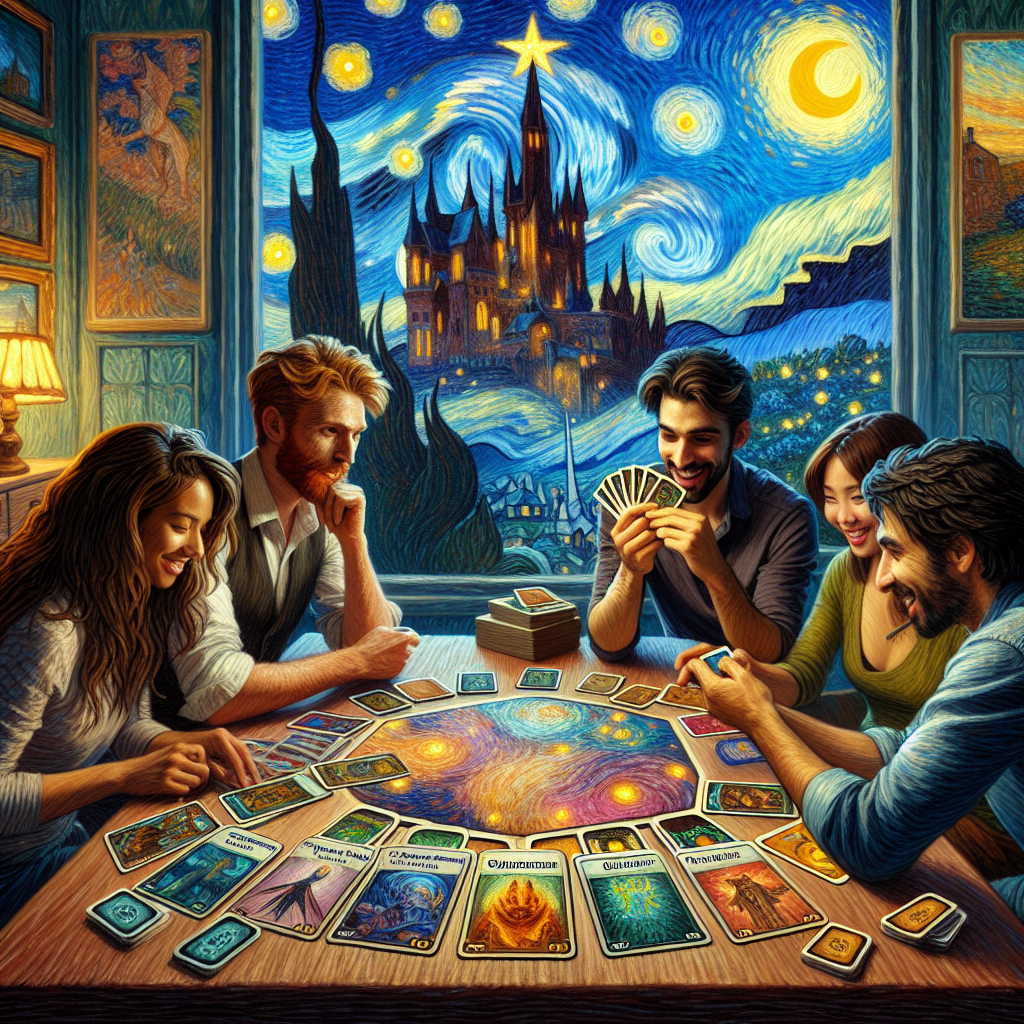
Which Ai Models Have Proven Most Effective In Card Games?
Which Ai Models Have Proven Most Effective In Card Games?
- Card games are rooted in tradition and strategy, promoting social connections and competitive spirit.
- AI models like DeepStack and Libratus have emerged as effective opponents in games like poker and heads-up no-limit Texas Hold’em.
- These AI systems offer insights and lessons from their gameplay, enhancing players’ understanding of strategy and psychology.
- The collaboration between human players and AI can enrich the card-playing experience rather than detract from it.
- AI can help players learn and adapt, boosting confidence through analysis of millions of games.
- This blending of tradition and technology fosters deeper connections among players and enhances the overall experience.
- The future of card games lies in creating opportunities for growth, wisdom, and innovation at the table.

Which Ai Models Have Proven Most Effective In Card Games?
How Do Social Dynamics Influence Our Gameplay And Ai Decisions?
In the world of card games, you might think it’s just about luck and strategy. But as anyone who’s sat around a table with friends can tell you, the real magic lies in the intricate dance of social dynamics that unfolds with each shuffle of the deck. Picture this: the laughter, the friendly banter, the tension that seeps in as the stakes rise; these aren’t just background noise. They’re the very heartbeat of gameplay.
Now, let’s talk about the gut. There’s an undeniable thrill that surges when you make a bold move, anticipating not just the cards in your hand, but reading the expressions and reactions of those seated across from you. Are they nervous? Overconfident? Every flicker of their gaze is a clue, an insight into their strategies—every raised eyebrow, an emotional poker face that could reveal a blunder or a masterstroke. It’s an intricate web of interaction where decisions aren’t made in isolation, but rather, are painted against the backdrop of collective energy in the room.
From a rational perspective, our AI partners operate in a realm where algorithms dictate choices. But what happens when we factor in those subtle, human elements? The AI may calculate probabilities with unmatched precision, yet it may still miss the nuanced shifts in social dynamics. With each card played, there’s an opportunity to take the game from mere mechanics to a canvas of human connection—a chance to celebrate the nuances of camaraderie, rivalry, and perhaps, even vulnerability.
Ethically speaking, these dynamics foster a sense of community. A card game isn’t merely about winning; it’s about building relationships, establishing trust, and learning from one another. When we let the audience know: “hey, it’s okay to make mistakes. It’s part of the fun,” we create an environment where everyone—newcomers or seasoned veterans—feels empowered to be an active participant.
Moreover, we cannot overlook the stories that emerge from these sessions. Every game is a narrative, woven from shared experiences and moments of unexpected triumph. These tales resonate beyond the walls of the gaming table; they bind us together, forming a rich tapestry of collective memory.
Whether it’s a raucous night with friends or a quiet Sunday afternoon, the emotional rush and social bonds formed around those cards can ignite our very souls, connecting us in ways we might never have expected. So the next time you pick up a hand in a card game, remember: the game is not just in the cards; it’s in every laugh, every gasp, and every moment shared around the table.

How Do Social Dynamics Influence Our Gameplay And Ai Decisions?
How Do Social Dynamics Influence Our Gameplay And Ai Decisions?
- Card games involve more than luck and strategy; they are rich in social dynamics.
- Laughter, banter, and rising tension are crucial elements of gameplay.
- Reading opponents’ expressions provides insights into their strategies and emotional states.
- AI relies on algorithms for decision-making but may overlook nuanced social interactions.
- Card games facilitate community building, trust, and learning through shared experiences.
- Every game creates a narrative, contributing to collective memory and connection.
- The emotional rush from gameplay fosters relationships and shared moments among players.

How Do Social Dynamics Influence Our Gameplay And Ai Decisions?
Conclusion
As we sit at the crossroads of tradition and innovation, the question of whether AI can predict winning strategies in card games takes on profound significance. We all know that a simple deck of cards brings more than just a game; it carries with it a host of emotions, strategies, and human interactions cultivated over lifetimes. Imagine the thrill of a poker night, laughter echoing, friends leaning in as the stakes rise—now imagine introducing artificial intelligence into that cherished ritual.
At first, it’s an unsettling thought. After all, this isn’t just about the cards; it’s about the psychology, the bluffs, the nuanced reads of your opponents. The raw, exhilarating connectivity that we share over those cards seems at risk of being overshadowed by the icy precision of algorithms. However, stepping back reveals a different picture. AI isn’t here to usurp our human instincts; it’s here to amplify them. By swiftly crunching data and revealing patterns, AI can sharpen our strategic thinking. No longer merely a tool for the chosen few, it can be the ally that democratizes card playing, offering insights that bring both seasoned veterans and enthusiastic newcomers together.
But let’s not forget the ethics involved. This conversation isn’t simply about calculations and winning hands—it’s about the trust between players. As we weave AI into the fabric of our games, we must remain guardians of the camaraderie that defines them. Imagine a world where seasoned players mentor newcomers, where AI becomes a bridge rather than a barrier. It can create communities rich in stories, laughter, and learned lessons.
Yet, the challenge lies in balancing technological advances with our intrinsic human qualities. Yes, AI can help spot winning trends, but it’s the unpredictable nature of human play that turns each game into a legend, filled with unexpected twists and shared experiences. It’s important to keep the element of chance—the delightful unpredictability that creates unforgettable memories.
In the end, as we stand on the brink of what’s next in card game culture, let’s embrace AI not as a rival but as a respected partner at the table. By doing so, we enrich our play and deepen our connections, ensuring that every game remains a testament to the human spirit. As you shuffle that deck, remember: it’s not just about the winning hand; it’s about the stories we weave together, reinforcing the idea that in every deal, there’s a chance for connection, laughter, and maybe even a well-deserved victory.

Conclusion
Conclusion:
- The intersection of tradition and innovation raises questions about AI’s role in card games.
- A deck of cards evokes emotions, strategies, and human interactions built over time.
- Introducing AI into card games can enhance strategic thinking and democratize the playing experience.
- Ethical considerations include maintaining trust and camaraderie among players.
- AI can facilitate mentorship, creating supportive communities within card games.
- Preserving the unpredictable nature of human play is crucial to maintaining memorable experiences.
- Embracing AI as a partner can enrich gameplay and deepen connections among players.

Conclusion
Other Resources

Other Resources
Here is a list of other resources you can review online to learn more:
- IELLO
- Lookout Games
- Capstone Games
- Mechs vs. Minions
- Tumblr
- The Secret Cabal Gaming Podcast
- Concordia
- Victory Point Games
- Ravensburger
- Small World
- Splendor
- Ravensburger
- Love Letter
- Flying Frog Productions
- Through the Ages: A New Story of Civilization
- The Resistance: Avalon
Use This Prompt To Get More Resources With Your Favorite Online AI Tool: Please provide me with a list of online articles with their URLs in a bulleted list that I can read regarding Can Artificial Intelligence Algorithms Predict Winning Strategies In Card Games?

Other Resources
Glossary Terms
Can Artificial Intelligence Algorithms Predict Winning Strategies In Card Games? – Glossary Of Terms
1. Artificial Intelligence (AI): A branch of computer science that aims to create machines capable of intelligent behavior, including learning and decision-making processes.
2. Algorithm: A step-by-step procedure or formula for solving a problem; in AI, it refers to the set of rules that the machine follows to analyze data and make predictions.
3. Predictive Modeling: A statistical technique used to forecast outcomes by building a model based on past behaviors and events, often used in developing AI strategies.
4. Card Game: A game played with a deck of cards, which can involve strategic decision-making, luck, and skill, including games like poker, bridge, and solitaire.
5. Game Theory: A study of strategic decision-making that often applies to competitive situations like card games, where the outcome depends on the actions of multiple players.
6. Monte Carlo Simulation: A statistical technique that uses random sampling to estimate mathematical functions and mimic the operations of complex systems, often used in card game predictions.
7. Reinforcement Learning: A type of machine learning where an algorithm learns to make decisions by receiving rewards or penalties for its actions in an environment, commonly applied in AI for games.
8. Nash Equilibrium: A concept in game theory that describes a situation where players are in a stable state, meaning no player can benefit from changing their strategy unilaterally.
9. Neural Network: A system of algorithms modeled after the human brain that is designed to recognize patterns, often used in AI to analyze card game strategies.
10. Deep Learning: A subset of machine learning that utilizes neural networks with multiple layers to analyze various factors and predict outcomes more accurately.
11. Training Data: The dataset used to train AI models, consisting of historical game data that helps the AI learn strategies and outcomes.
12. Feature Engineering: The process of selecting and transforming variables in a dataset to enhance the performance of machine learning models, crucial in analyzing card game behaviors.
13. Winning Strategy: A defined method or plan aimed at maximizing the chances of winning a game, which can be derived from AI predictions and modeling.
14. Bluffing: A strategy in card games where one player deceives others by pretending to have a stronger hand, which AI models can analyze and predict based on patterns.
15. Data Mining: The practice of analyzing large datasets to identify patterns and extract valuable insights, utilized in understanding card game dynamics.
16. Opponent Modeling: The process of creating a representation of an opponent’s strategies and tendencies to improve decision-making during the game.
17. Strategic Adaptation: The ability of an AI to adjust its strategies based on observed opponent behaviors and game situations.
18. Probabilistic Reasoning: A method of drawing conclusions based on probabilities, crucial in card games where outcomes are uncertain.
19. Simulation: The act of imitating a real-world process or system to analyze how it would behave under various conditions, often conducted in AI research for games.
20. Softmax Function: A mathematical function used in AI to convert raw scores into probabilities, often utilized in decision-making processes for games.
21. Exploration vs. Exploitation: A dilemma in reinforcement learning where the AI must balance exploring new strategies and exploiting known successful tactics.
22. Deck Composition: The arrangement and distribution of cards within a deck, which significantly affects strategy and outcomes in card games.
23. Turn-based Gameplay: A type of game structure where players take turns to make their moves, affecting how AI models analyze strategy and decision-making.
24. Computational Complexity: A field of computer science concerning the resources required to solve computational problems, including the strategies used in card games.
25. Heuristic Methods: Techniques used to make decisions that offer good solutions in a reasonable timeframe, important for developing actionable strategies in card games.
26. Risk Assessment: The analysis of the potential risks and rewards in different game moves, informing strategy adjustments by AI.
27. Data Augmentation: A technique in machine learning that enhances training datasets artificially to improve the model’s accuracy, useful in AI for games.
28. Lead Generation: The process of initiating moves in a card game, where the timing and choice can influence the success of an AI-generated strategy.
29. Adaptive Learning: The capability of an AI to improve its performance continuously by learning from new data and experiences during gameplay.
30. Multi-Agent Systems: Systems that consist of multiple AI entities that interact with each other, often used to simulate competitive scenarios in card games.

Glossary Of Terms
Other Questions
Can Artificial Intelligence Algorithms Predict Winning Strategies In Card Games? – Other Questions
If you wish to explore and discover more, consider looking for answers to these questions:
- What are the best AI algorithms for predicting winning strategies in various card games?
- How does AI impact the social dynamics of card games?
- Can AI be trained to understand human emotions and read opponents like a human player?
- What are the ethical implications of using AI in casual versus competitive card games?
- How can players balance their intuition with AI recommendations during gameplay?
- What limitations does AI have in understanding the nuances of card games?
- How do different cultures approach the integration of AI in traditional card games?
- What role does human oversight play in AI decision-making during card games?
- How has AI changed the competitive landscape of card game tournaments?
- How can AI be used to teach new players about strategy in card games?
- What has been the player community’s response to AI involvement in card games?
- Can AI technology improve the fairness and transparency of card games?
- How do AI models evolve as they are exposed to more complex card game scenarios?
- What future developments can we expect in AI for card games?
- How do various demographics perceive the role of AI in social gaming?

Other Questions
Haiku
Can Artificial Intelligence Algorithms Predict Winning Strategies In Card Games? – A Haiku
Cards shuffle with fate,
AI whispers winning moves—
Heart and soul still play.

Haiku
Poem
Can Artificial Intelligence Algorithms Predict Winning Strategies In Card Games? – A Poem
The Dance of Cards and Code
In a world where cards are deftly dealt,
Where laughter rings and stories are felt,
Human hearts play the timeless game,
Yet now, machines whisper in their name.
AI, a partner, sharp and bright,
Analyzes patterns, plots, and insight.
With speed unmatched, it sifts through lore,
Unlocking strategies, opening doors.
Yet in this realm of bluff and chance,
Our gut’s intuition begins to dance.
Do we risk the thrill of the human touch,
Relying on algorithms, oh so much?
Ethics loom, a specter in the night,
As we balance trust with the thrill of insight.
Can a puppet master bring warmth to the game,
Or do we risk playing just for fame?
Imagine a table, where mentors arise,
Guiding the newbies with wisdom and ties.
AI as a teacher, not a foe to defeat,
Letting friendships flourish, making the game sweet.
But what of the sparks, unpredictable and true,
The magic of blunders, the joy in the cue?
For it’s in the moments, both high and low,
That connections are deepened, that friendships grow.
So embrace the algorithms, but heed this plea:
Let not the machines dictate how we see.
For every hand dealt is a memory we make,
And the bond shared at the table is all at stake.
A tapestry woven from laughter and thrill,
Where every decision is power, not nil.
As we navigate life, with wisdom and art,
Let tech light the way, but keep close to the heart.
In the dance of cards, the code, and the soul,
We find the true purpose—together, we’re whole.
So let’s play the game, with both heart and head,
And cherish the memories, with each card that’s spread.

Poem
Checklist
Can Artificial Intelligence Algorithms Predict Winning Strategies In Card Games? – A Checklist
Sure! Based on the themes and insights presented in the article, here’s a checklist titled “Balancing AI and Humanity in Card Games: A Comprehensive Guide”. This checklist appeals to emotional, rational, ethical, authority, narrative, and social aspects, thoughtfully categorized.
Balancing AI and Humanity in Card Games: A Comprehensive Guide
Heart: Emotional Appeals
1. Reflect on Your Experience: Consider how playing card games with friends has made you feel. What memories and connections do you cherish?
2. Cultivate Community: Think about ways to foster camaraderie at your gaming table—games should bring joy, not just competition.
3. Celebrate Mistakes: Embrace the idea that mistakes contribute to learning and fun—share your blunders as stories with friends.
Head: Rational Appeals
1. Understand AI as a Tool: Analyze how AI can provide insights into strategy without replacing human intuition—consider its role as a partner rather than a rival.
2. Analyze Data: Reflect on how AI can help identify patterns and enhance decision-making—what insights have you gained from previous games?
3. Evaluate Performance: Use AI-infused strategies to track your performance over time—are you improving and adapting your gameplay?
Gut: Ethical Appeals
1. Question the Balance: Ask yourself if your reliance on AI in gaming is shifting your approach from instinct to algorithm—how does this impact the essence of the game?
2. Establish Fair Play: Consider how developers can ensure that AI respects player integrity and promotes a fair gaming environment—what ethical guidelines should be adhered to?
3. Prioritize Transparency: Advocate for transparency in AI algorithms used in gaming—do you understand how these algorithms function, and can you trust their impact on gameplay?
Authority: Credible Information
1. Research Successful AI Models: Look into AI models like DeepStack and Libratus—what lessons can they teach you about strategy in card games?
2. Solicit Expert Opinions: Seek advice from seasoned players or AI researchers on integrating AI into your gameplay—what new strategies can you learn?
3. Join Discussions: Engage in conversations within gaming communities about the role of AI—what are others’ views on its impact on our favorite games?
Narrative: Storytelling Aspects
1. Share Your Stories: Document memorable moments from your card games—what narratives have shaped your understanding of strategy and intuition?
2. Create Theme Nights: Organize game nights focused on storytelling through card games—encourage players to share personal anecdotes alongside their gameplay.
3. Mentor Others: If you’re experienced, consider mentoring newcomers—how can you help them weave their own stories in the gaming world?
Social: Community Engagement
1. Foster Inclusivity: Encourage participation from all skill levels in your gaming group—how can you break down barriers for newcomers?
2. Encourage Dialogue: Facilitate discussions about the role of AI in gaming—how can collaborative insights enhance your group’s strategies?
3. Celebrate Collaborative Wins: Acknowledge collective victories over algorithmic successes—how can you ensure that the human element remains celebrated in your games?
Conclusion
By using this checklist, you can deepen your understanding and appreciation of both AI and human elements in card games, helping to preserve the joyful dance of strategy, psychology, and camaraderie that makes card games special.

Checklist
At CardGameNews, we help people who love card games by collating information and news about card games.
Be sure to read our other related stories at CardGameNews to learn more about card games.


