

Unleashing AI’s Impact On Fair Play In Card Games
By Tom Seest
At CardGameNews, we help people who love card games by collating information and news about card games.
Be sure to read our other related stories at CardGameNews to learn more about card games.
How Could Artificial Intelligence Transform the Meaning Of Fair Play In Cards?
Picture a round table, illuminated by soft light, where friends gather for an evening of laughter, strategy, and camaraderie—the heart of what a card game is all about. But now imagine adding artificial intelligence to this mix. At first glance, it may seem like a real-life game-changer, introducing algorithms that promise to enhance our understanding of strategy and reinforce the meaning of fair play. When we dive into the implications, though, it reveals a complex tapestry of emotions, ethics, and humanity.
As AI begins to play the cards, we face a crossroads. Will these digital “players” respect the unwritten rules of human interaction—the nuances of intuition, bluffing, and camaraderie? While the algorithms may dissect probabilities faster than any human can, the essence of a card game often lies in the raw emotions exchanged across the table: the sweat on someone’s brow as they hold back laughter, or the anticipation that builds with each dealt hand. This delicate balance can be disrupted if AI becomes the ultimate strategist, overshadowing those elements that make card games truly special.
Consider the ethical question: What does fair play mean when a machine utilizes data beyond human capacity? It can elevate the game but may also erode our sense of trust. The thrill of outsmarting a human opponent is foundational to the experience, drawing us deeper into the game. Fair play should include a respect for our shared humanity, an acknowledgment of each player’s skill and intuition. What happens when the cards are stacked in favor of an algorithm? The potential for manipulation, whether intentional or not, could lead to a deeper divide among players, rather than uniting them through healthy competition.
Moreover, think about the social fabric of gaming. AI might offer us new ways to engage, but it also sets a precedent for isolation. If we lean too heavily on technology, we risk losing the rich stories woven through the laughter and camaraderie that define card games. As situations evolve, the challenge is not just to embrace the advancements but to ensure they validate the spirit of the game.
Ultimately, we must navigate this new landscape with wisdom and intention. AI can serve as a partner—not a replacement—empowering us to redefine fair play while cherishing the very human connections that have always made a card game extraordinary. The cards are in our hands; let’s play them wisely.

How Could Artificial Intelligence Transform the Meaning Of Fair Play In Cards?
How Could Artificial Intelligence Transform the Meaning Of Fair Play In Cards?
- The image of friends gathered around a table reflects the core essence of card games: laughter, strategy, and camaraderie.
- Introducing AI to card games could enhance understanding of strategy but raises emotional and ethical complexities.
- AI’s role as a player challenges the unwritten rules of human interaction, intuition, and camaraderie.
- The essence of card games lies in the emotions shared among players, which may be overshadowed by AI’s strategic prowess.
- Fair play becomes complicated when machines use data beyond human capacity, potentially eroding trust among players.
- AI might create new gaming engagement opportunities but risks fostering isolation and undermining the social fabric of gaming.
- We must approach AI with wisdom, ensuring it enhances the spirit of card games and strengthens human connections.

How Could Artificial Intelligence Transform the Meaning Of Fair Play In Cards?
Table Of Contents
- How Could Artificial Intelligence Transform the Meaning Of Fair Play In Cards?
- What Does Fair Play In Cards Mean to You Personally?
- How Can AI Ensure Fairness In Card Games?
- Is It Ethical to Use AI In Competitive Card Playing?
- How Might AI Change Our Understanding Of Cheating?
- How Does Technology Impact the Spirit Of Traditional Card Games?
- Conclusion
- Other Resources
- Glossary Of Terms
- Other Questions
- Haiku
- Poem
- Checklist
What Does Fair Play In Cards Mean to You Personally?
Fair play in a card game isn’t just a set of rules or an expected etiquette; it’s a reflection of who we are as individuals. Picture a table strewn with cards, laughter filling the air, friends and family gathered around. When we shuffle that deck and deal the cards, we’re not merely playing a game—we’re weaving a tapestry of trust and respect. Each hand played is an unspoken bond, held together by the understanding that fair play is the foundation of true enjoyment.
Think about it: when your buddy pulls off a cunning move, do you feel jealousy or admiration? It’s that shared acknowledgment of skill and strategy that elevates the experience. Fair play allows creativity to flourish. You craft your strategies, counting cards, calculating risks, but always within the bounds of honesty. This honesty doesn’t just enhance the game; it garners respect among players, even those who are strangers at first. That first friendly challenge can turn into a lasting friendship, all because the stakes were fair and the rules respected.
On a deeper level, fair play speaks to our ethical core. We’ve all had that moment where we could exploit a rule, snag an easy victory at the expense of integrity. The choice to play fairly is a testament to our character. It says that we value more than just winning—we value the experience, the camaraderie, the collective enjoyment of the card game itself.
There’s a narrative here, one that echoes through generations. I recall sitting at my grandfather’s table as a child, trying to grasp the nuances of poker. It wasn’t just about knowing when to bluff; it was about understanding that respect for your opponent was paramount. Those lessons resonate fiercely today. Fair play creates an environment of safety, where players feel free to take risks without fear of betrayal.
Socially, fair play invites engagement. It encourages us to return to the table, not just for the thrill of victory but for a space where everyone feels valued. It’s about building a community around the game—a place where, regardless of who wins or loses, we all walk away richer in experience and connection. When the cards are dealt fairly, we rise together, fostering trust that spills over into every aspect of our lives. Who hasn’t felt that rush of joy when sharing a good laugh after a particularly blundered hand? In life, just like in cards, fair play paves the way for lasting bonds.

What Does Fair Play In Cards Mean to You Personally?
What Does Fair Play In Cards Mean to You Personally?
- Fair play in card games reflects individual character, going beyond rules and etiquette.
- The experience of playing cards fosters trust and respect among players, creating unspoken bonds.
- Skillful moves by opponents lead to admiration rather than jealousy, enhancing enjoyment.
- Honesty in gameplay cultivates creativity, camaraderie, and respect, even among strangers.
- Choosing fair play demonstrates values beyond winning, emphasizing the shared experience and enjoyment.
- Fair play creates a safe environment, allowing players to take risks without fear of betrayal.
- It strengthens community engagement, ensuring that all players feel valued and fostering lasting connections.

What Does Fair Play In Cards Mean to You Personally?
How Can AI Ensure Fairness In Card Games?
In the world of card games, the stakes are high, and the outcomes can shape friendships, rivalries, and even reputations. Picture this: a cozy living room filled with laughter, the shuffle of cards, and the scent of popcorn wafting through the air. In that moment, each player is not just holding cards; they’re holding their hopes, dreams, and maybe a touch of pride. This is where the essence of fairness plays a crucial role.
Imagine an AI system integrated into the fabric of your favorite card game. It doesn’t just stand as a digital referee; it embodies a guardian of equity. By analyzing countless games, it learns what fairness looks like—from ensuring balanced hands to recognizing when a player might be at a disadvantage. When players know they’re entering a game that prioritizes fairness, it transforms the experience. Emotions run deeper as you’re not just competing; you’re celebrating the game itself.
Let’s talk about trust. Trust is the invisible glue that binds us in these moments. When players understand that an impartial AI stands between them and any potential bias, it creates a level playing field. The player who excels does so based on skill, strategy, and perhaps a sprinkle of luck. No longer will there be whispers of favoritism or accusations of cheating. Instead, there’s camaraderie built on the shared enjoyment of a fair contest.
Furthermore, think about the ethical implications of using AI in card games. In a world often filled with injustice, adopting technology that values fairness opens conversations about ethics and integrity. It sets a standard—if AI can promote fairness in a card game, why not in other aspects of life? This relentless pursuit of equality resonates deeply with many, urging us to strive for a world where every player, regardless of background or experience, has an equal shot at victory.
As we gather around that table, we are not merely engaging in a card game; we are connecting with each other, creating memories, and forging bonds that can last a lifetime. With AI in our corner, we can uphold the integrity of our mutual enjoyment and transform a simple game into a nurturing ground for fairness, trust, and genuine connection—values that echo well beyond that deck of cards.

How Can AI Ensure Fairness In Card Games?
How Can AI Ensure Fairness In Card Games?
- The stakes of card games can influence friendships, rivalries, and reputations.
- An AI system can act as a guardian of equity, promoting fairness in gameplay.
- Players’ experience is enhanced when they know the game prioritizes fairness.
- Trust is fostered through the presence of an impartial AI, creating a level playing field.
- The use of AI raises important ethical discussions about fairness and integrity.
- The pursuit of fairness in card games can inspire broader conversations about equality in other life aspects.
- AI helps transform card games into opportunities for building trust, connection, and lasting memories.

How Can AI Ensure Fairness In Card Games?
Is It Ethical to Use AI In Competitive Card Playing?
In the dim light of a neighborhood game room, the shuffle of cards dances between laughter and quiet concentration, a familiar sound echoing memories of nights shared among friends. Each flip of a card in a card game carries a heartbeat, a story, a bit of vulnerability. You see, this is where human spirit and strategy intertwine; it’s more than just a competition—it’s about connection. So, what happens when the human element is overshadowed by the cold precision of artificial intelligence?
The ethical implications of using AI in competitive card playing dig deeper than the sleek algorithms at work. In that moment of anticipation, when you carefully weigh your decisions, there’s a trust between players—a social contract that honors the spirit of the game. Introducing AI into the mix transforms the integrity of this dynamic. While AI can calculate odds and predict outcomes with unnerving accuracy, it lacks the emotional underpinnings that make a card game meaningful. This isn’t just a discussion of fairness; it’s an abridged version of human experience, stripped of spontaneity and life’s unpredictable twists.
On one hand, we can admire the brilliance of technology that enhances strategy. Yet, as we ponder this juxtaposition, we’re obliged to reflect on the core essence of competition. Isn’t it the triumph over struggle that elevates a victory? When AI steps onto the scene, it undermines the hard-fought victories that leave players with a sense of pride and accomplishment. A win is hollow when the sweat and fire of competition are replaced with cold calculation.
Consider those who have devoted years honing their skills. They are not just players; they’re keepers of a tradition that connects generations. The respect earned at the table transcends points scored. We stand at a crossroads, where creating machines with the capability to outperform us raises powerful questions of ethics and identity.
Choosing to play without AI isn’t merely an act of nostalgia; it’s a statement of commitment to the cultural fabric of gaming. It invites us to celebrate the clumsy, beautiful flaws that make us human in that card game. As players, we have the choice to embrace technology wisely or to safeguard the very essence of our shared experience, ensuring that every hand dealt is a chance to connect, to grow, and to truly play.

Is It Ethical to Use AI In Competitive Card Playing?
Is It Ethical to Use AI In Competitive Card Playing?
- The neighborhood game room is a setting for laughter and camaraderie, where card games evoke memories and connections among friends.
- Card games involve not just strategy but also vulnerability, representing the intertwining of human spirit with competition.
- Introducing AI into card games raises ethical concerns about trust and the integrity of the game, overshadowing the human element.
- While AI excels in calculations and predictions, it lacks the emotional depth that gives card games their meaning.
- AI can undermine the value of hard-fought victories, making wins feel hollow without human struggle and achievement.
- Players who hone their skills represent a tradition that connects generations, emphasizing respect over mere points.
- Choosing to play without AI is a commitment to preserve the cultural essence of gaming, celebrating human flaws and connections.

Is It Ethical to Use AI In Competitive Card Playing?
How Might AI Change Our Understanding Of Cheating?
Imagine sitting around a table, playing a card game with friends, each hand revealing more than just the cards we hold. The stakes are higher than we think, and the game extends beyond the table. Cheating—it’s a word that stirs emotions, ignites conversations, and challenges our ethics. But how might artificial intelligence reshape this fundamental human experience?
Picture the scene: you’re caught up in the thrill of the game, laughter fills the air, yet a shadow lurks. AI technology, with its analytical prowess, can dissect every move, predict outcomes, and even identify patterns of deceit faster than a seasoned player. It begs the question: if a machine can identify cheating more effectively than our instincts and intuition, what does that say about our reliance on human judgment? This intersection of technology and morality forces us to confront our values.
When we hear about AI detecting cheating among students during exams, or athletes striving for glory, our instincts kick in—are we losing trust in human capability? The gut reaction is one of defense; we cling to the belief that our instincts should guide us. Yet, there’s a rational side to this as well. With AI acting as a sentry of fairness, it can help us create a level playing field, protecting the integrity of the game—not just in sports or academics, but in the card game of life itself.
As we embrace the idea of AI standing guard against deceit, we must also consider the ethical implications. Will it empower us to play better and fairer, or will it instill a sense of paranoia? A true card game is about connection, about the stories shared and the bonds formed over confrontations and reconciliations. Introducing AI into the mix could stifle those very connections, fostering distrust among players.
But here’s where the magic happens: if we can find a way to integrate AI without sacrificing our humanity, we might not only redefine cheating but also elevate our game. Trust can evolve, friendships can flourish, and integrity can shine bright. The challenge before us is this: will AI enhance our understanding of cheating, making us more vigilant and committed to honor, or will it divide us, turning every game into a battleground of suspicion? It’s a powerful moment to reflect on what we value most—not just cards in hand, but the hearts and minds that play the game.

How Might AI Change Our Understanding Of Cheating?
How Might AI Change Our Understanding Of Cheating?
- Playing card games reveals more than just the cards in hand, extending stakes beyond the table.
- AI can analyze moves, predict outcomes, and identify cheating patterns faster than human players.
- The effectiveness of AI in detecting cheating raises questions about human judgment and reliance on instincts.
- AI’s role in detecting cheating in various fields may indicate a growing distrust in human capability.
- While AI can promote fairness and integrity, introducing it may also cause paranoia and distrust among players.
- Finding a balance between AI integration and maintaining human connection is crucial for redefining cheating.
- The challenge lies in whether AI will enhance moral understanding or create division and suspicion in games.

How Might AI Change Our Understanding Of Cheating?
How Does Technology Impact the Spirit Of Traditional Card Games?
In an age where technology permeates every facet of life, the charm of traditional card games often feels like a nostalgic whisper, echoing through the corridors of our memories. There’s something undeniably magical about gathering around a table with friends or family, the scent of popcorn wafting through the air, laughter merging with the rustle of cards being shuffled. A seemingly simple card game can become a conduit for connection, drawing us together in shared moments of triumph and defeat. Yet, as the digital age rushes forward, the spirit of these cherished games faces both challenge and transformation.
Technology has undeniably revolutionized how we play card games. Online platforms allow us to connect with friends across the globe, transcending physical barriers. This digital convenience has a straightforward appeal—you can play anytime, anywhere, without the need for a deck of cards or a table to gather around. But here lies the conundrum; while we may have access to countless games at our fingertips, do we lose something irreplaceable in the process? The essence of face-to-face interaction, the unspoken camaraderie that comes from shared glances and playful banter, often evaporates in the sterile world of screens.
Consider a family card night, the clatter of chips and the voices rising in excitement. These moments carve out a space where memories are shared and bonds are reinforced. When a child learns to play their first card game with a grandparent, it’s more than just a lesson in strategy; it’s an inheritance of tradition and love. Without these intimate gatherings, important narratives that shape our values and ethics might fade away, replaced by an impersonal digital score and algorithm-driven matchmaking.
Yet, technology isn’t merely a thief of traditions. In the hands of the right people, it can be a powerful ally. The hybrid gaming experiences emerging today—where virtual interactivity complements the tactile appeal of physical cards—can breathe new life into old customs. They foster new connections while preserving the heart of traditional card play.
As we march into the future, let’s not forget the lessons learned around the table. Embrace technology, but let it enhance the experience rather than replace it. When we choose to shuffle a deck in the company of others, we’re not just playing a card game; we’re investing in relationships, in stories, in a legacy that transcends generations.

How Does Technology Impact the Spirit Of Traditional Card Games?
How Does Technology Impact the Spirit Of Traditional Card Games?
- Technology influences every aspect of life, overshadowing the nostalgic appeal of traditional card games.
- Gathering around a table with loved ones for card games creates meaningful connections through shared experiences.
- Online platforms enable global connections, allowing card games to be played anytime and anywhere.
- Digital gaming may lead to a loss of face-to-face interaction and the intimate bonds formed in person.
- Family card nights create cherished memories and pass down traditions and values across generations.
- Technology can enhance traditional card games through hybrid experiences that combine physical and digital elements.
- Embracing technology in gaming should focus on enhancing real-life interactions, preserving the legacy of card games.

How Does Technology Impact the Spirit Of Traditional Card Games?
Conclusion
The evolution of card games in the age of artificial intelligence sparks a crucial conversation about what fair play truly means. Gathered around that familiar table, we’re reminded that a card game is not merely a competition; it’s an intricate dance of trust and camaraderie embedded in laughter and shared stories. As we consider the implications of AI stepping into this intimate arena, we’re drawn to the significance of maintaining the human connection that defines these experiences.
AI has the potential to reshape our understanding of fairness—a digital referee capable of identifying bias and level playing fields. However, the heart of the matter isn’t just about algorithms crunching numbers faster than we ever could. It’s about the emotions tied to our decisions and the respect we bring to the table. Each hand dealt is a chance to showcase not only strategy but integrity, and it beckons us to ponder the ethical dimensions tied to incorporating technology in such a personal space.
The challenge we face lies in balancing the efficiency that AI offers against the essence of human interaction. Technology can enhance our understanding of cheating and fairness, but it may also instill a sense of paranoia that undermines the trust built over countless games. When we prioritize the cold efficiency of machines, will we risk losing the warmth of communication, the joy of shared victories, and the lessons learned through mistakes?
Moreover, the ethical considerations demand our attention. We must question whether our reliance on machines signifies a shift away from our responsibilities as players. Are we willing to forsake the messy, beautiful flaws of being human for the sterile simplicity of digital calculations? It’s not just about winning or losing; it’s about upholding a tradition that celebrates our character and humanity. Fair play transcends mere strategy—it’s about forming bonds, creating memories, and cherishing those moments when a simple game transforms into a testament to our integrity.
Looking forward, we have an opportunity to embrace technology as a partner rather than a substitute, striking a balance where AI enhances our experiences without overshadowing the very qualities that make card games special. The responsibility lies with us to redefine fair play. Let’s choose to foster relationships that enrich our lives while honoring the spirit of the game that has brought us together for generations. As the cards lay before us, it’s up to us to play them wisely, ensuring that the heart of the game remains untainted by the digital age.
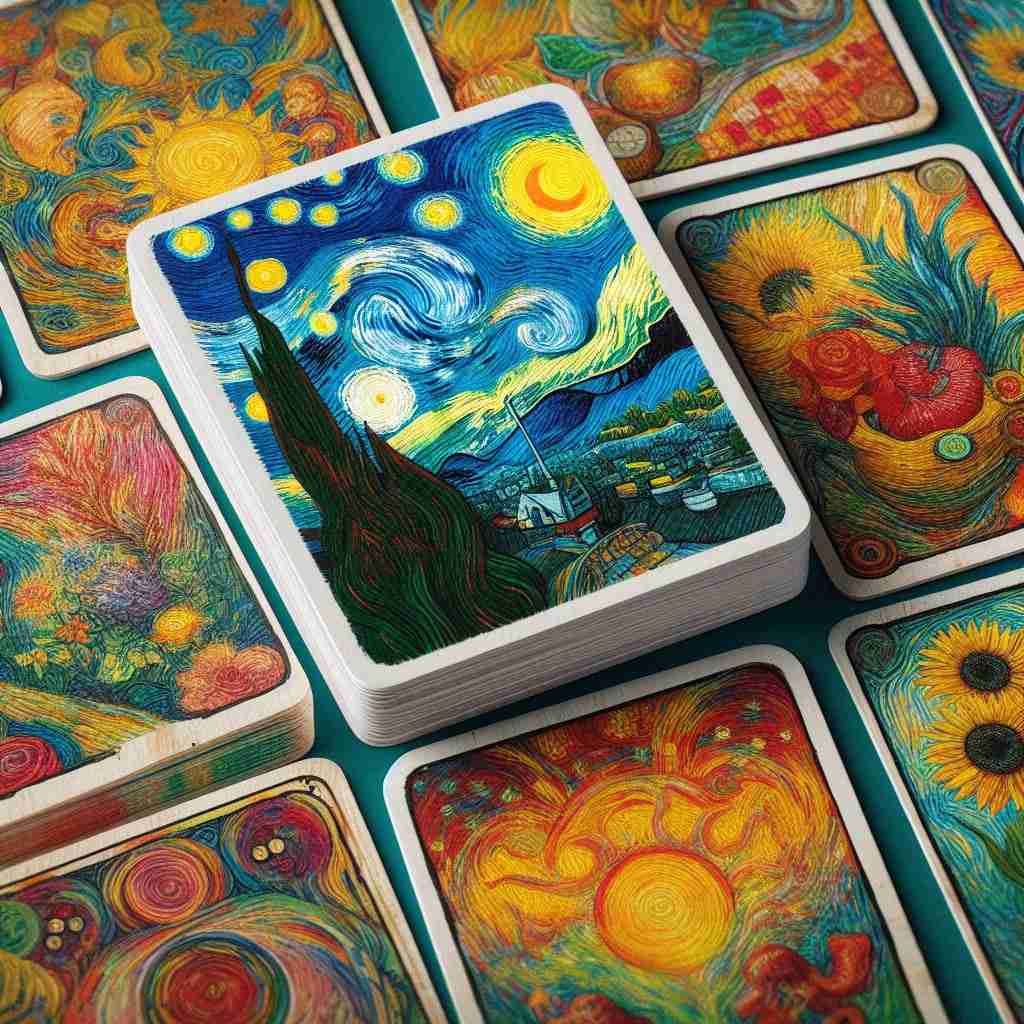
Conclusion
Conclusion:
- The evolution of card games in the age of AI raises important questions about fair play.
- Card games embody trust, camaraderie, laughter, and shared stories beyond mere competition.
- AI can serve as a digital referee, promoting fairness but also impacting emotional connections.
- Incorporating technology in games brings ethical concerns regarding human responsibilities and interactions.
- Balancing AI efficiency with the essence of human interaction is crucial to maintain trust and enjoyment.
- Fair play involves more than strategy; it encompasses building bonds and cherishing memories formed through games.
- We should embrace technology as a partner, ensuring it enhances rather than overshadows the spirit of card games.

Conclusion
Other Resources

Other Resources
Here is a list of other resources you can review online to learn more:
- Codenames
- Serious Poulp
- Mastodon
- Z-Man Games
- Caverna: The Cave Farmers
- Clank!: A Deck-Building Adventure
- Plurk
- GeekDad
- Threads
- The Gallerist
- White Wizard Games
- Mechs vs. Minions
- Sushi Go!
- AEG
- Twilight Imperium (Fourth Edition)
- War of the Ring (Second Edition)
- Robinson Crusoe: Mystery Tales Expansion
- Tumblr
- Twilight Struggle
Use This Prompt To Get More Resources With Your Favorite Online AI Tool: Please provide me with a list of online articles with their URLs in a bulleted list that I can read regarding How Could Artificial Intelligence Transform the Meaning Of Fair Play In Cards?

Other Resources
Glossary Terms
How Could Artificial Intelligence Transform the Meaning Of Fair Play In Cards? – Glossary Of Terms
1. Artificial Intelligence (AI): Computer systems designed to perform tasks that typically require human-like intelligence, such as reasoning, learning, and problem-solving.
2. Fair Play: Adherence to rules and ethical standards that promote equality and integrity in games and competitions.
3. Game Theory: A mathematical framework used to model strategic interactions among rational decision-makers, often applied in competitive settings.
4. Algorithm: A step-by-step procedure or formula for solving a problem, commonly used in AI to make decisions and predictions.
5. Machine Learning: A subset of AI that allows systems to learn from data and improve their performance over time without being explicitly programmed.
6. Reinforcement Learning: A type of machine learning where an AI agent learns to make decisions by receiving rewards or penalties based on its actions.
7. Predictive Analytics: The use of statistical algorithms and machine learning techniques to identify the likelihood of future outcomes based on historical data.
8. Simulations: The imitation of the operation of a real-world process or system over time, often used in AI to model game scenarios.
9. Computer Vision: A field of AI that enables computers to interpret and make decisions based on visual data, potentially useful in card recognition.
10. Natural Language Processing (NLP): A branch of AI that focuses on the interaction between computers and humans through natural language, useful for game instructions and communication.
11. Data Ethics: A set of principles that govern the responsible use of data, especially in AI, ensuring fairness and preventing bias.
12. Bias: A systematic error that affects the fairness and accuracy of AI decisions, potentially leading to unfair advantages or disadvantages in card games.
13. Software Bots: Automated programs that can play card games, often leveraging AI to analyze opponents and optimize strategies.
14. Cheating Detection: The use of AI techniques to identify unfair practices or rule violations in card games.
15. Transparency: The clarity and openness of AI algorithms, enabling players to understand how decisions are made during gameplay.
16. Player Trust: The confidence players have in the fairness of the game and the systems that govern it, which can be influenced by AI’s role.
17. Ethical AI: The design and implementation of AI systems that consider moral implications and promote fairness in their operations.
18. Augmented Reality (AR): Technology that overlays digital information onto the real world, potentially enhancing card game experiences through interactive elements.
19. User Experience (UX): The overall experience a player has while interacting with an AI in a card game, impacting their perception of fairness.
20. Real-Time Analysis: Instant processing and evaluation of game data by AI to inform decisions and strategies during play.
21. Skill Assessment: The evaluation of a player’s abilities, which can be influenced by AI providing feedback or recommendations.
22. Diversity in Algorithms: The incorporation of various approaches in AI development to prevent homogeneity that could lead to biased outcomes in gameplay.
23. Feedback Loops: Cycles in which AI systems refine their strategies based on player behavior and game outcomes.
24. Adaptive Learning: The ability of AI to evolve and adjust its strategies based on ongoing player interactions and game dynamics.
25. Serious Games: Games designed for a purpose beyond entertainment, often used to study strategies or decision-making in competitive environments.
26. Blockchain Technology: A decentralized digital ledger that can enhance transparency and trust in card games by verifying each transaction or move.
27. Game Integrity: The maintenance of an environment where the rules are followed, and all players have a fair chance, potentially supported by AI systems.
28. Virtual Reality (VR): An immersive technology that can create realistic card-playing environments, affecting player engagement and perceptions of fairness.
29. Collaborative AI: AI systems designed to work alongside human players, emphasizing teamwork and collective strategy rather than competition.
30. Regulatory Frameworks: Guidelines and laws governing the use of AI in gaming, focusing on ensuring fairness and ethical treatment of players.

Glossary Of Terms
Other Questions
How Could Artificial Intelligence Transform the Meaning Of Fair Play In Cards? – Other Questions
If you wish to explore and discover more, consider looking for answers to these questions:
- What specific AI technologies are currently being used in card games?
- How do players feel about AI’s involvement in card games?
- What are the potential benefits of AI in enhancing strategies in card games?
- How can AI foster fair play among players?
- What ethical guidelines should be established for using AI in card games?
- What are some examples of AI detecting cheating in other contexts?
- How can players maintain trust when AI is involved in gameplay?
- What are the psychological effects of AI on players’ emotions during a game?
- How could AI impact the social dynamics of traditional card games?
- Can AI technology replicate the human experience of bluffing and intuition?
- What are the challenges of integrating AI into traditional gameplay without losing its essence?
- How does the use of AI in card games compare to its use in other competitive fields?
- What is the future of card games with the increasing presence of AI technologies?
- What role does nostalgia play in the resistance against AI in traditional games?

Other Questions
Haiku
How Could Artificial Intelligence Transform the Meaning Of Fair Play In Cards? – A Haiku
Cards on the table,
AI’s cold hand plays the game—
Humans cherish trust.

Haiku
Poem
How Could Artificial Intelligence Transform the Meaning Of Fair Play In Cards? – A Poem
In the glow of a table where laughter and strategy blend,
Cards shuffle stories, friendships born anew,
But AI looms like a specter, with promises to lend,
Is it a partner or a thief in the game that we pursue?
With algorithms sharp as the keenest eyes,
It dissects every chance, calculates every play,
Yet, can it grasp the laughter, the joy that never lies,
Or sense the weight of trust that hangs in dismay?
What is fair play when a machine takes the lead?
Does integrity falter in the glow of the screen?
When the thrill of the bluff becomes an automated deed,
Do we risk losing the tapestry of moments unseen?
Around the table, woven with bonds that don’t break,
Fair play is the heart, the glue that aligns,
A space where intrigue ignites and where friendships awake,
Yet isolation beckons when technology entwines.
Will it heighten the trust or birth a festering fear,
As AI watches, judging our every misstep?
In a world wrapped in data, will our souls disappear,
Or can we cherish the human, the eyes that accept?
Let’s celebrate the blunders, the warmth of a game,
For in each hand dealt lies the essence of us,
As tech keeps advancing, let’s stake our claim,
To play in each moment, embracing the trust.
The cards are in our hands—may we play them with heart,
Navigating the dance of the digital age,
Balancing the thrill with compassion, a vital part,
And transforming our games into stories we stage.

Poem
Checklist
How Could Artificial Intelligence Transform the Meaning Of Fair Play In Cards? – A Checklist
Checklist for Navigating Fair Play in Card Games with AI
Emotional Appeal
_____ Reflect on cherished memories of playing card games with friends and family.
_____ Consider how the laughter and shared moments enhance the enjoyment of the game.
_____ Acknowledge feelings of jealousy or admiration when skillful moves are made.
Rational Appeal
_____ Assess the role of AI in leveling the playing field through unbiased analysis.
_____ Evaluate the potential for AI to enhance strategy while maintaining human joy in the game.
_____ Contemplate the balance between technology and human intuition in gameplay.
Ethical Appeal
_____ Define what fair play means to you personally and identify how it reflects your values.
_____ Investigate the ethical implications of AI in promoting or undermining fair play.
_____ Challenge yourself to consider how fair play can serve as a moral foundation in gameplay.
Authority Appeal
_____ Research case studies of AI implementations in card gaming and their outcomes on fairness.
_____ Seek expert opinions on the future of card games with AI involvement and regulations.
_____ Examine how different gaming communities perceive the integration of AI in traditional card games.
Narrative Appeal
_____ Share personal stories from your experiences at the card table that highlight the importance of fair play.
_____ Engage in discussions about generational lessons learned from card games.
_____ Construct a narrative on how AI could reshape your gaming experiences—positively or negatively.
Social Appeal
_____ Reflect on how fair play fosters community, trust, and friendship among players.
_____ Discuss with peers the impact of AI on social interactions within card games.
_____ Consider organizing card game nights that focus on traditional play to enhance connection.
Practical Actions
_____ Set clear values for fair play before beginning a game, ensuring all players agree.
_____ Create a list of rules that respects both traditional gameplay and enhancements brought by AI.
_____ Engage in regular discussions with your gaming companions to share thoughts on the evolution of card games with AI.

Checklist
At CardGameNews, we help people who love card games by collating information and news about card games.
Be sure to read our other related stories at CardGameNews to learn more about card games.


