

Exploring Ai’s Impact On Card Game Strategy
By Tom Seest
At CardGameNews, we help people who love card games by collating information and news about card games.
Be sure to read our other related stories at CardGameNews to learn more about card games.
Can Artificial Intelligence Enhance Strategy In Card Games?
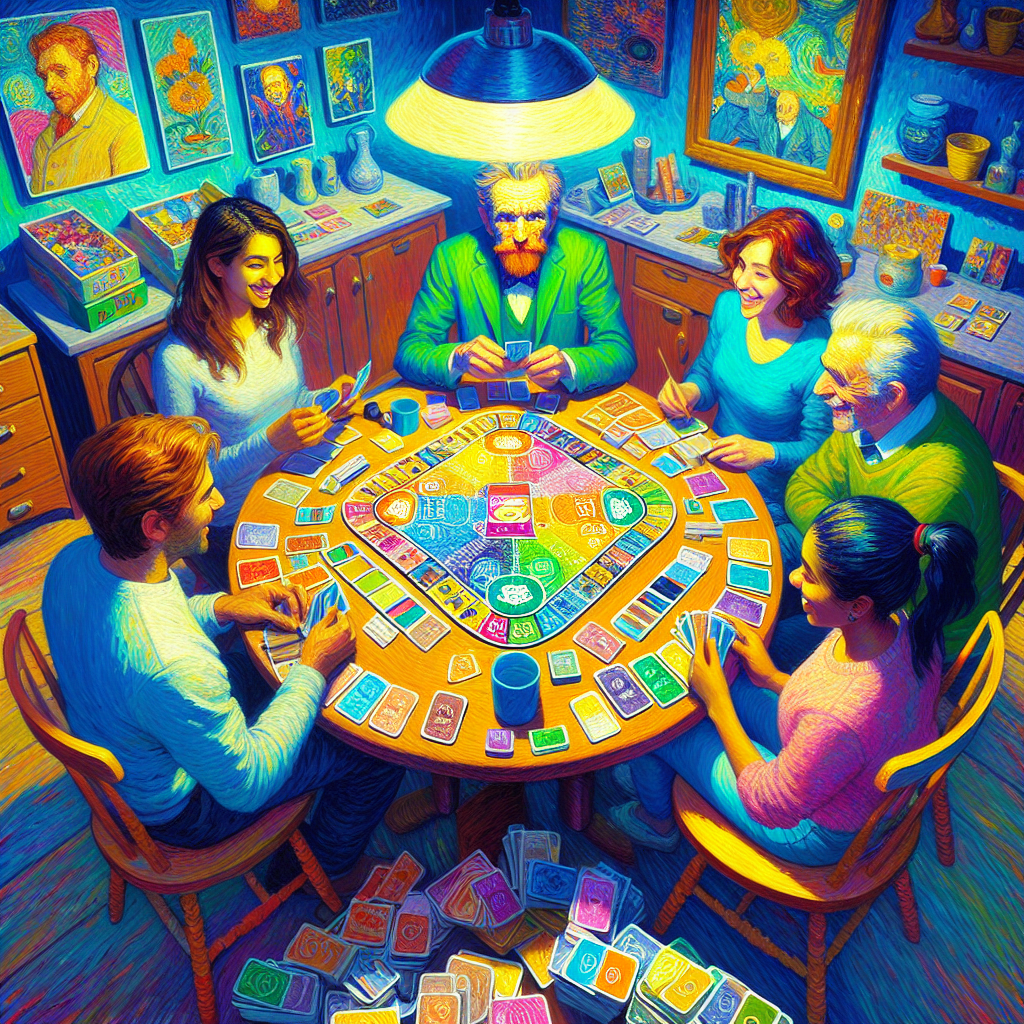
Imagine a dimly lit room, filled with the soft rustle of cards sliding across the table, the occasional clink of a glass, and laughter mingling with the tension of competition. This is where friendships are tested, memories are made, and where the thrill of a well-played hand reigns supreme. For generations, card games like poker, bridge, and rummy have brought people together, weaving stories of triumph and defeat into the fabric of our social lives. But what if the next chapter in this timeless narrative features an unexpected partner: Artificial Intelligence?
At first glance, you might think of AI as a cold, calculating entity, devoid of the warmth and intuition that characterize human players. Yet, digging deeper into its role reveals a more fascinating truth. AI has the potential not only to bolster our strategies but also to enhance the very essence of what makes these games appealing: the blend of skill, chance, and camaraderie. Imagine having a coach in your corner, one that studies the nuances of each player, analyzes their strategies, and offers insights to refine your game. Like a trusted advisor, AI can elevate your understanding, enabling you to make smarter moves while still savoring the emotional highs and lows that come with each hand.
The heart of card games is rooted in risk-taking and the thrill of the unknown. The strategic innovations offered by AI can empower players to take calculated risks, crafting stories of their own along the way. With AI analyzing thousands of game scenarios at lightning speed, it can provide perspectives that even the most seasoned player might overlook. This blend of human intuition and machine learning creates a beautiful synergy, driving us to think critically while reminding us to connect with our fellow players on a deeper level.
As with any new technology, ethical considerations arise. The question isn’t just about winning; it’s about fostering integrity in gameplay. Embracing AI responsibly can enhance our games without overshadowing the spirit of fair play. Setting boundaries—using AI as a tool for learning rather than a way to dominate—can keep the spirit of the card game alive.
Ultimately, the chance to grow and connect echoes through every shuffle of those cards. The journey with AI doesn’t diminish the heartfelt moments at the table; it enriches them, encouraging players of all ages to share in the joy and challenge of the game. With each hand dealt, remember, the best part of any card game isn’t just about winning; it’s about building lasting bonds, learning from our moves, and enjoying the ride together. So, are you ready to embrace this new frontier in your favorite card game?

Can Artificial Intelligence Enhance Strategy In Card Games?
Can Artificial Intelligence Enhance Strategy In Card Games?
- Card games create a unique atmosphere filled with competition, laughter, and camaraderie.
- AI offers a new perspective on traditional games like poker, bridge, and rummy, enhancing strategy and gameplay.
- AI serves as a coach, analyzing player strategies and providing insights to refine skills.
- Combining human intuition with AI’s analytical power may drive critical thinking and deeper connections among players.
- Ethical considerations are crucial; using AI responsibly ensures the integrity of gameplay is maintained.
- AI can empower players to take calculated risks and craft their own game stories without compromising the spirit of play.
- The integration of AI in card games enriches gameplay experiences, fostering connections and shared joy among players.

Can Artificial Intelligence Enhance Strategy In Card Games?
Table Of Contents
- Can Artificial Intelligence Enhance Strategy In Card Games?
- How Can Ai Improve Decision-Making In Strategic Card Games?
- Can Ai-Driven Strategies Make Card Games More Engaging And Fun?
- How Does Ai Analyze Human Behavior In Card Games For Strategy?
- In What Ways Can Ai Help Players Learn And Develop Skills Faster?
- Are Traditional Strategies Becoming Obsolete With Ai Advancements?
- Conclusion
- Other Resources
- Glossary Of Terms
- Other Questions
- Haiku
- Poem
- Checklist
How Can Ai Improve Decision-Making In Strategic Card Games?
In the world of strategic card games, the decisions we make can feel as monumental as they are fleeting. Each card drawn is not just the end of a turn; it’s a potential turning point. Imagine sitting at a table, surrounded by friends or foes, the air thick with anticipation. In these high-stakes environments, every decision carries weight, and this is where the magic of AI can breathe new life into our game.
First, let’s look at the emotional side of this—think of those moments when you’ve played your heart out, only to watch your carefully laid plans crumble before your eyes. Now, envision an AI system that doesn’t just analyze the numbers but feels the rhythm of the game. This AI doesn’t just crunch probabilities; it learns from your style, your panic, and your triumphs. It becomes a partner in your quest for victory, providing insights that resonate with your strategy, allowing you to harness your intuition while dotting the i’s and crossing the t’s of your plan.
On a rational level, the statistics that AI can provide are nothing short of formidable. With advanced algorithms and machine learning, it can sift through countless game scenarios, evaluating the best possible outcomes based on the strategies already employed by opponents. While the heart races, the head can rely on unbiased data to inform choices. Imagine being able to visualize not just the immediate consequences of a move, but the long-term effects, too. It’s like having a crystal ball for your card game, guiding your decisions through the fog of uncertainty.
Ethically, let’s not forget that this technological marvel must be wielded with care. As players, we still carry the mantle of responsibility and fairness. Using AI as a tool, rather than a crutch, adds depth to the game rather than stripping it away. We should strive to engage our fellow players, sharing insights that elevate everyone’s game. The social dynamic shifts positively, as knowledge blooms not just for the individual, but for the group.
This is about more than simply winning a match; it’s about forging connections and crafting stories that resonate long after the final card is played. Would we rise to trust AI, harness its power, and let it guide us on this journey? The answer, my friends, starts with us—because in the end, it’s not just about playing a card game; it’s about how we feel about the choices we make along the way. So, why not take that leap? Embrace the future of card games, where human intuition and artificial intelligence unite, making every decision a step towards understanding the game—and ourselves—better.

How Can Ai Improve Decision-Making In Strategic Card Games?
How Can Ai Improve Decision-Making In Strategic Card Games?
- Decisions in strategic card games are both fleeting and monumental, serving as potential turning points.
- AI can enhance the gaming experience by analyzing emotional aspects and understanding players’ styles and strategies.
- This technology provides valuable insights that align with players’ intuition, refining strategies effectively.
- AI’s formidable statistical analysis allows for evaluation of countless game scenarios and potential outcomes.
- Using AI as a tool encourages a sense of responsibility and fairness among players, enriching the game’s depth.
- Engaging with AI promotes a positive social dynamic, fostering collective knowledge and growth within the group.
- The integration of AI challenges players to embrace new opportunities for connection and understanding through their gameplay.

How Can Ai Improve Decision-Making In Strategic Card Games?
Can Ai-Driven Strategies Make Card Games More Engaging And Fun?
Can AI-Driven Strategies Make Card Games More Engaging and Fun?
Imagine gathering around a table with friends, the room buzzing with laughter and the thrill of competition. A classic card game sits between you, each card holding the promise of victory, and yet, there’s an opportunity for something more. Enter the world of AI-driven strategies, a game-changer that can ramp up the excitement, connection, and skill involved in the gameplay. This isn’t just about technology; it’s about rediscovering the essence of what makes card games so captivating.
Think back to the last time you faced a seemingly insurmountable opponent in a card game. The tension mounts, emotions flare, and the stakes feel real. Now, picture an AI as your sparring partner, analyzing your moves, adapting, and learning from each round. Suddenly, every game takes on new life, each decision counted, each hand played a chance for growth. By harnessing algorithms to personalize strategies, AI can provide players with tailored challenges that resonate on an emotional level, pushing boundaries and igniting a competitive spirit that breeds laughter, camaraderie, and unforgettable moments.
But let’s not ignore the rational side. The beauty of AI lies in its ability to crunch numbers more efficiently than any human brain could ever hope to. Imagine a card game where players can get real-time feedback on their strategies, leading to smarter plays and deeper understanding. This combination of art and science can help players elevate their skills, reflecting a great respect for both the game and its participants. And yes, there’s an ethical layer to this; ensuring that the use of AI enhances rather than detracts from the social dynamics that make card games special.
Now, consider the stories our games tell. Every hand dealt offers a narrative, a path of choices that weaves together victory tales and lessons learned. With AI, these narratives can evolve. Players can unlock new modes or challenges, enriching the experience and instilling a sense of shared achievement; think of the late-night strategy sessions, where friends gather to brainstorm ways to outsmart the AI’s increasingly clever tactics.
Engagement is the heart of a good card game; it’s about connection, rivalry, and a collective journey through the art of strategy. So, are you ready to invite AI into your next game night? Embrace the new age of card games—where strategy meets connection, and every shuffle of the deck is a new adventure. It’s time to deal the cards and let AI make your game night more engaging and fun than ever before.

Can Ai-Driven Strategies Make Card Games More Engaging And Fun?
Can Ai-Driven Strategies Make Card Games More Engaging And Fun?
- AI-driven strategies can enhance the excitement and connection in card games.
- AI can act as an adaptive sparring partner, analyzing players’ moves for personalized challenges.
- Utilizing algorithms allows for tailored challenges that promote emotional engagement and foster camaraderie.
- AI provides real-time feedback on strategies, helping players make smarter plays and deepen their understanding of the game.
- The integration of AI can elevate players’ skills while respecting the social dynamics unique to card games.
- AI can evolve the narratives of card games, allowing for new modes and shared achievements among players.
- Embracing AI in card games can lead to more engaging and fun experiences, making each game night an adventure.

Can Ai-Driven Strategies Make Card Games More Engaging And Fun?
How Does Ai Analyze Human Behavior In Card Games For Strategy?
When we think about a card game, it often conjures images of friends gathered around a table, laughter ringing out, and friendly banter filling the air. But peel back those layers, and you’ll find something deeper — a dance of strategy, intuition, and sometimes, risk. Enter artificial intelligence, a silent observer and a master strategist, nestled in the digital realms, tirelessly analyzing the complexity of human behavior at those tables.
Imagine a game of poker, where every bet and bluff holds weight. AI doesn’t just calculate odds; it watches. It observes how a tell—the slight twitch of a lip, the nervous flicker of an eye—can signal a player’s strength or weakness. This isn’t just numbers on a screen; it’s an intricate understanding of human nature, an embodiment of experience distilled into algorithms. The core of AI’s analysis lies not in its cold logic but rather in this nuanced perception of emotions. It mirrors what’s been unspoken and combines it with the art of decision-making that has been passed down through generations.
You see, the analytical prowess of AI transcends mere data. It serves as the lens through which we can understand ourselves better—how our instincts drive our choices and how our intuition can sometimes deceive us. The heart of the game beats strongest when it challenges the players to tap into their own emotional intelligence. It brings a sense of vulnerability and authenticity that every player relates to, reminding us that at the end of the day, it’s all about connection, trust, and sometimes, sheer guts.
Moreover, there’s an ethical layer to this growing partnership between human and machine. As we welcome AI into our strategies, we also grapple with questions of fairness, transparency, and the essence of competition itself. Should we rely entirely on algorithms to navigate the unpredictable human psyche? Balancing technological prowess with genuine human instinct is a delicate dance, one that requires continuous reflection.
AI isn’t here to replace the human touch; it’s here to enhance it. It arms us with insights and empowers us to refine our strategies, whether we’re facing opponents in card games or navigating life’s complex choices. The magic happens when we blend the expertise of machine analytics with our human instinct, creating a partnership that champions both the heart and brain. So, the next time you shuffle your deck, remember: you’re not just playing a card game; you’re stepping into a world where technology meets humanity, weaving connections through strategy and insight. Embrace it.

How Does Ai Analyze Human Behavior In Card Games For Strategy?
How Does Ai Analyze Human Behavior In Card Games For Strategy?
- Card games evoke social interactions filled with laughter and strategy.
- AI acts as an observer and strategist in understanding human behavior.
- In games like poker, AI not only calculates odds but also interprets emotional cues.
- This analysis transcends data, offering insights into human instincts and intuition.
- The partnership between AI and humans raises ethical questions regarding fairness and competition.
- AI enhances human decision-making without replacing the essential human touch.
- The integration of AI and human instinct creates a powerful synergy in gaming and beyond.

How Does Ai Analyze Human Behavior In Card Games For Strategy?
In What Ways Can Ai Help Players Learn And Develop Skills Faster?
In What Ways Can AI Help Players Learn And Develop Skills Faster?
Picture this: You’re sitting at a table, cards laid out, and the thrill of competition is buzzing in the air. Every shuffle, every deal, every bluff—it’s a dance of strategy in this rich world of card games. Now, imagine having a partner by your side that not only understands the ins and outs of the game but also knows you better than you know yourself. That’s where AI steps in, illuminating the path for players eager to learn and develop skills faster than ever before.
On the surface, the thought of AI as a tutor might feel intimidating. After all, who takes advice from a machine? But let’s peel back that layer. In a bustling world, where time is a priceless commodity, using AI for training becomes not just practical, but necessary. These algorithms analyze your gameplay, picking apart every move to provide personalized feedback that would take even the most seasoned coach hours to formulate. Imagine digesting complex strategies or adapting your style on the fly, all while enjoying a card game that ignites your passion.
But it’s not just about efficiency; it’s about growth. AI doesn’t just crunch numbers; it tells stories. It shows you what happened in a past game, recounts pivotal moments, and allows you to explore “what if” scenarios. Each session transforms into a narrative woven with trial and error, where failure is but a stepping stone towards mastery. You don’t merely play a card game; you embark on a journey filled with insights that deepen your love for the craft.
Engagement with AI also caters to the human instinct for social interaction. With features that simulate diverse opponents, it brings players together in a shared learning experience, whether they’re new to the game or seasoned veterans. You’re not just competing; you’re joining a community, exchanging tactics and sharing victories, all while nurturing friendships built around that common love for the game.
So, how does one harness this dynamic duo of the human heart and machine intelligence? It starts with trust. Embrace the change that AI brings into your card game experience—let it guide you through the labyrinth of strategy and skill development. With each digital hand dealt, you’re not just improving; you’re reclaiming your time, forging connections, and achieving a rich, fulfilling mastery that is uniquely yours. The beauty lies not just in winning a game, but in the journey to get there.

In What Ways Can Ai Help Players Learn And Develop Skills Faster?
In What Ways Can Ai Help Players Learn And Develop Skills Faster?
- AI serves as a knowledgeable partner in card games, helping players learn and develop skills quickly.
- Using AI is practical for busy individuals, providing personalized feedback on gameplay much faster than traditional coaching.
- AI analyzes gameplay to offer insights and allows players to adapt strategies in real-time.
- Every gaming session with AI becomes a narrative of growth, highlighting pivotal moments and “what if” scenarios.
- AI fosters a sense of community by simulating diverse opponents and encouraging social interactions among players.
- Trust in AI’s guidance can elevate the entire card game experience, focusing on skill development and strategic mastery.
- The journey of learning with AI in card games is emphasized as more valuable than just winning.

In What Ways Can Ai Help Players Learn And Develop Skills Faster?
Are Traditional Strategies Becoming Obsolete With Ai Advancements?
In this age of rapid advancement, it sometimes feels like we’re playing a high-stakes card game, doesn’t it? Each time we think we’ve found our hand—a strategy or a process that’s been tried and tested—the rules shift, the deck reshuffles, and suddenly the game looks completely different. The question on everyone’s mind is whether traditional strategies are becoming obsolete in the face of AI advancements.
Now, don’t get me wrong. Traditional methods built upon years of experience and hard-earned wisdom still hold value. They’ve guided us through thick and thin, often reinforcing the foundations of businesses and communities alike. But let’s face it: AI operates at speeds and scales beyond human comprehension, pushing us to reconsider how we approach our challenges. Imagine trying to win a card game with a static hand while the dealer is shuffling up new cards every few seconds—you’d end up losing your shirt!
It’s tempting to dismiss AI as just another shiny object, a passing phase in our constant pursuit of efficiency. But that’s a dangerous approach. Consider this: AI isn’t merely a replacement; it’s a tool that, when wielded wisely, can amplify human ingenuity. The marriage between human experience and AI-driven insights can create a synergy that propels us forward into territories we’ve yet to explore. It’s like playing both sides of that card game—using your intuition backed by the analytics and predictive capabilities that AI offers.
Of course, this evolution brings with it an ethical responsibility. As advancements loom on the horizon, we must tread carefully, ensuring that we don’t lose the very essence of what makes us human in the process. Our deeply ingrained values of connection, empathy, and integrity should guide us as we navigate this new landscape.
And let’s not forget the social aspect: we are not in this alone. Many of us grapple with uncertainty and fear of becoming obsolete ourselves. Yet, we’re all players in this game together. It’s crucial to lean on one another and foster a community that embraces both innovation and the heart of traditional strategies. So, whether you’re clinging to your old card tricks or eager to learn the new game, remember: the best players adapt, not by discarding their past, but by integrating it into a brighter, more inclusive future. In this evolving landscape, it isn’t just about playing your cards right; it’s about reshaping the game for everyone involved.

Are Traditional Strategies Becoming Obsolete With Ai Advancements?
Are Traditional Strategies Becoming Obsolete With Ai Advancements?
- The rapid advancement in technology feels like a high-stakes card game with constantly changing rules.
- Traditional strategies, while valuable, may become obsolete in the face of AI advancements.
- AI operates at speeds and scales that challenge human comprehension, prompting a reevaluation of our approaches.
- AI should be viewed as a tool to amplify human ingenuity, rather than merely a replacement for traditional methods.
- The integration of human experience with AI-driven insights creates a powerful synergy for innovation.
- Ethical responsibility is crucial as we navigate advancements, ensuring we maintain our core human values.
- Community support is essential as we adapt, blending traditional strategies with new innovations for a better future.

Are Traditional Strategies Becoming Obsolete With Ai Advancements?
Conclusion
As we draw the curtain on this exploration of artificial intelligence in the world of card games, let’s take a moment to recognize the profound journey we’re on. Think back to the dimly lit rooms filled with laughter and tension, where friendships are forged over a simple deck of cards. Card games are a celebration of connection, strategy, and risk-taking, and now, with the introduction of AI, we’re standing on the brink of a new frontier.
Imagine AI not as a cold calculator, but your trusty sidekick at the table—one that understands the pulse of the game, the rhythm of your play. It analyzes every bluff, every scream of triumph, and even those moments when the cards just don’t fall in your favor. This technology can refine strategies and empower players, elevating the experience of the game without overshadowing the human touch. With AI as a coach, you can invite competition with calculated confidence, knowing you have insights that can transform the way you play while still basking in the emotional highs and lows that draw us all to card games.
Now, let’s not sidestep the ethical side of this equation. As we harness AI’s power to understand strategy better, we must also ensure that its use doesn’t compromise the integrity of gameplay or the camaraderie that makes these games special. This means using AI responsibly—as a learning tool, a challenger, and a source of collective growth rather than a shortcut to supremacy. The heart of card games isn’t merely about winning; it’s about sharing stories, crafting memories, and fostering friendships.
So, we ask ourselves: how far are we willing to go to invite AI into our game nights? As we blend human intuition with artificial intelligence, we create an opportunity for deeper engagement and richer narratives. With each hand dealt, we aren’t just strategizing; we’re connecting more profoundly and evolving as players. This isn’t a replacement; it’s an enhancement—an invitation to play smarter, to learn faster, and to enjoy the thrill of competition while building a community.
So here’s the challenge: are you ready to shuffle the deck with AI on your side? Embrace this change. The allure of the card game is eternal, but with this new partner, we have a chance to deepen the experience—from the thrill of a high-stakes game to the laughter shared over a well-played strategy. Together, let’s embark on this adventure, where every shuffle is a new story waiting to be told.

Conclusion
Conclusion:
- Card games symbolize connection, strategy, and risk-taking, enhanced by the introduction of AI.
- AI is envisioned as a supportive partner that understands gameplay dynamics and emotional moments.
- This technology refines strategies and empowers players without diminishing the human experience.
- Ethical considerations must guide AI use in card games, ensuring it maintains integrity and camaraderie.
- AI should be viewed as a tool for learning and growth rather than a shortcut to winning.
- Combining human intuition with AI can lead to deeper engagement and richer narratives in gameplay.
- Embracing AI in card games presents an opportunity for enhanced experiences and community building.

Conclusion
Other Resources

Other Resources
Here is a list of other resources you can review online to learn more:
- Board Game Quest
- The Crew: The Quest for Planet Nine
- Serious Poulp
- Star Realms
- Board to Death TV
- Through the Ages: A New Story of Civilization
- Threads
- Great Western Trail
- Brass: Birmingham
- War of the Ring (Second Edition)
- Matagot
- Power Grid
- Gloomhaven
- Dead of Winter: The Long Night
- Polygon
Use This Prompt To Get More Resources With Your Favorite Online AI Tool: Please provide me with a list of online articles with their URLs in a bulleted list that I can read regarding Can Artificial Intelligence Enhance Strategy In Card Games?

Other Resources
Glossary Terms
Can Artificial Intelligence Enhance Strategy In Card Games? – Glossary Of Terms
1. Artificial Intelligence (AI): Computer systems designed to perform tasks typically requiring human intelligence, like decision-making and problem-solving.
2. Algorithm: A step-by-step procedure or formula for solving a problem, often utilized by AI to analyze game scenarios.
3. Card Game: A game played with a set of cards, often involving strategy, skill, and chance, such as poker or bridge.
4. State Space: The set of all possible configurations of a game at any given point, which AI explores to make decisions.
5. Game Theory: A mathematical study of strategic interactions among rational decision-makers, applicable in analyzing card games.
6. Monte Carlo Simulation: A computational technique for understanding the impact of risk and uncertainty in prediction and forecasting models, often used in AI strategies for card games.
7. Nash Equilibrium: A situation in which no player can benefit by unilaterally changing their strategy, commonly analyzed in strategic card games.
8. Machine Learning (ML): A subset of AI that enables systems to learn from data patterns and improve performance over time without explicit programming.
9. Reinforcement Learning: A type of machine learning where an agent learns to make decisions by receiving rewards or penalties for its actions.
10. Heuristic: A rule of thumb or shortcut used to simplify decision-making, often used in AI algorithms for faster processing.
11. Opponent Modeling: The AI’s ability to analyze and predict the strategies and behaviors of its opponents during gameplay.
12. Deep Learning: A branch of machine learning involving neural networks with many layers, capable of processing complex data, useful in strategy development.
13. Decision Tree: A flowchart-like diagram used to make decisions, illustrating various possible outcomes based on different choices.
14. Predictive Analytics: Techniques that use statistical algorithms and machine learning to identify the likelihood of future outcomes based on historical data.
15. Game Engine: A software framework that provides the necessary tools to develop and simulate games, including card games.
16. User Interface (UI): The means by which a player interacts with a game, including touchscreens, buttons, and displays, crucial for player experience.
17. Strategy Optimization: The process of refining tactics or plans to achieve the best possible outcomes in a game, often aided by AI.
18. Data Mining: The practice of analyzing large datasets to discover patterns, useful for enhancing game strategies and player insights.
19. Simulation: The imitation of a real-world process or system to analyze complex interactions in strategy, useful for testing AI performance.
20. Artificial Neural Networks (ANN): Computing systems inspired by biological neural networks that can learn from and interpret data, pivotal in developing AI strategy.
21. Beta Testing: The phase in software development where a game is tested by users to identify bugs or areas for improvement before full release.
22. Turn-Based Strategy: A game format where players take turns making moves, requiring careful planning and strategic thinking, ideal for AI analysis.
23. Real-Time Strategy: A game format that requires players to make decisions rapidly, creating challenges for AI deployment.
24. Exploration vs. Exploitation: A dilemma in AI decision-making, where one must choose between exploring new strategies or exploiting known effective ones.
25. Betting Strategy: Techniques employed in games like poker to maximize wins and minimize losses, often enhanced by AI prediction capabilities.
26. Tournament Play: Competitive formats where players face off in a series of games, valuable for assessing AI strategy effectiveness in high-stakes scenarios.
27. User Experience (UX): The overall experience of a player while interacting with the game, influenced by design, gameplay, and AI behavior.
28. Skill Matching: The process of pairing players of similar abilities in games, often utilized by AI to create balanced competition.
29. Feedback Loop: A system where the output (player performance) is fed back into the system (AI) to enhance future decision-making.
30. Adaptive Learning: The capability of AI to adjust its strategies based on players’ actions and game dynamics to improve over time.

Glossary Of Terms
Other Questions
Can Artificial Intelligence Enhance Strategy In Card Games? – Other Questions
If you wish to explore and discover more, consider looking for answers to these questions:
- What specific AI technologies are currently being used in card games?
- How does AI compare to human players in the context of strategy and decision-making?
- What are the ethical implications of using AI in card games?
- Can AI assist in learning card games for beginners?
- How can players integrate AI tools without compromising the game’s integrity?
- What are the potential downsides of relying on AI for card game strategies?
- How does AI personalize experiences for different players in card games?
- Are there specific card games that benefit more from AI integration than others?
- What role does AI play in maintaining the social aspect of card games?
- How can players ensure fair playing practices when using AI tools?
Other Questions
Haiku
Can Artificial Intelligence Enhance Strategy In Card Games? – A Haiku
Cards shuffled, hearts race,
AI whispers strategy,
Together, we win.

Haiku
Poem
Can Artificial Intelligence Enhance Strategy In Card Games? – A Poem
A Game of Hearts and Algorithms
In a dim-lit room, where laughter blends,
Card games gather friends, where the story bends.
Each shuffle whispers tales of triumph and loss,
Yet an unexpected partner steps in—AI, the boss.
A cold machine, some might fear,
But listen closely, as it draws near.
With a heart wrapped in data, it learns our ways,
Enhancing our game, illuminating our plays.
Imagine a guide, using logic anew,
That watches our tics, foreseeing what’s true.
A coach in the shadows, analyzing our style,
Transforming our losses into learning, worthwhile.
For every high-stakes moment, each calculated risk,
AI’s insights are not just a mere brisk.
They blend the old with the new, hand-in-hand,
Creating a synergy, with strategy grand.
Yet linger a moment on ethics we share,
For fair play’s the treasure we must all declare.
Using AI not to conquer, but to elevate,
As friendships deepen, and moments resonate.
We rise, not alone, but as a community strong,
In journeys of growth, where learning belongs.
Each hand dealt is a story, a chance to ignite,
The heart of the game, wrapped in joy and delight.
So as we embrace this technological twist,
Let’s savor the thrill, let no bond be missed.
Together we rise on this infinite quest,
In the game of our lives, we’re all truly blessed.
With each crafty strategy that AI ignites,
The joy isn’t just winning; it’s sharing the nights.
So shuffle the cards, let the narratives flow,
In the partnership of hearts, let our passions grow!

Poem
Checklist
Can Artificial Intelligence Enhance Strategy In Card Games? – A Checklist
Checklist: Enhancing Your Card Game Experience with AI
Emotional Appeals
1. Reflect on Connections: Take a moment to appreciate the friendships and memories made during your card games. How can AI enhance these emotional experiences?
2. Embrace the Thrill of Risk: Consider how AI can help you take calculated risks to create memorable stories and triumphs at the table.
Rational Appeals
3. Analyze Game Performance: Utilize AI tools to evaluate past game scenarios and understand optimal decision-making strategies.
4. Educate Yourself: Dedicate time to learn about AI’s capabilities and how they can be applied to enhance your gameplay and decision-making.
Ethical Considerations
5. Embrace Fair Play: Establish guidelines for using AI responsibly, ensuring it serves as a learning tool rather than a means to dominate opponents.
6. Foster Integrity: Discuss with fellow players the ethical implications of AI in card games, promoting fairness and transparency.
Authority
7. Seek Expertise: Follow AI experts and card game strategists to gain insights on how AI is shaping gameplay.
8. Participate in Workshops: Join events or webinars focused on integrating AI into strategic card gaming to boost your skills and knowledge.
Narrative
9. Share Your Story: Document personal experiences where you or someone else has effectively integrated AI into card games. Share these narratives with your gaming community.
10. Explore “What If” Scenarios: Experiment with AI to simulate different game outcomes and analyze how altering strategies changes the narrative of the game.
Social Engagement
11. Host AI Game Nights: Organize friendly competitions using AI tools, inviting friends and family to experience new strategies together.
12. Collaborate on Strategies: Work with peers to develop new game tactics that combine traditional methods with AI insights for a richer experience.
General Tips
13. Trust the Process: Approach AI as a partner that can help you grow as a player while still valuing your intuition and past experience.
14. Stay Open to New Insights: Be willing to adjust your strategies as you learn more about AI’s capabilities and how it can improve your gameplay.
By following this checklist, you can maximize your card game experiences by integrating AI thoughtfully while maintaining the heart and social essence of gameplay. Whether you’re a casual player or a competitive strategist, AI has the potential to enhance your understanding and enjoyment of card games.

Checklist
At CardGameNews, we help people who love card games by collating information and news about card games.
Be sure to read our other related stories at CardGameNews to learn more about card games.


