

Game-Changing Ai: Emotion-Adaptive Card Games
By Tom Seest
At CardGameNews, we help people who love card games by collating information and news about card games.
Be sure to read our other related stories at CardGameNews to learn more about card games.
Could Artificial Intelligence Create Card Games That Adapt to Our Emotions?
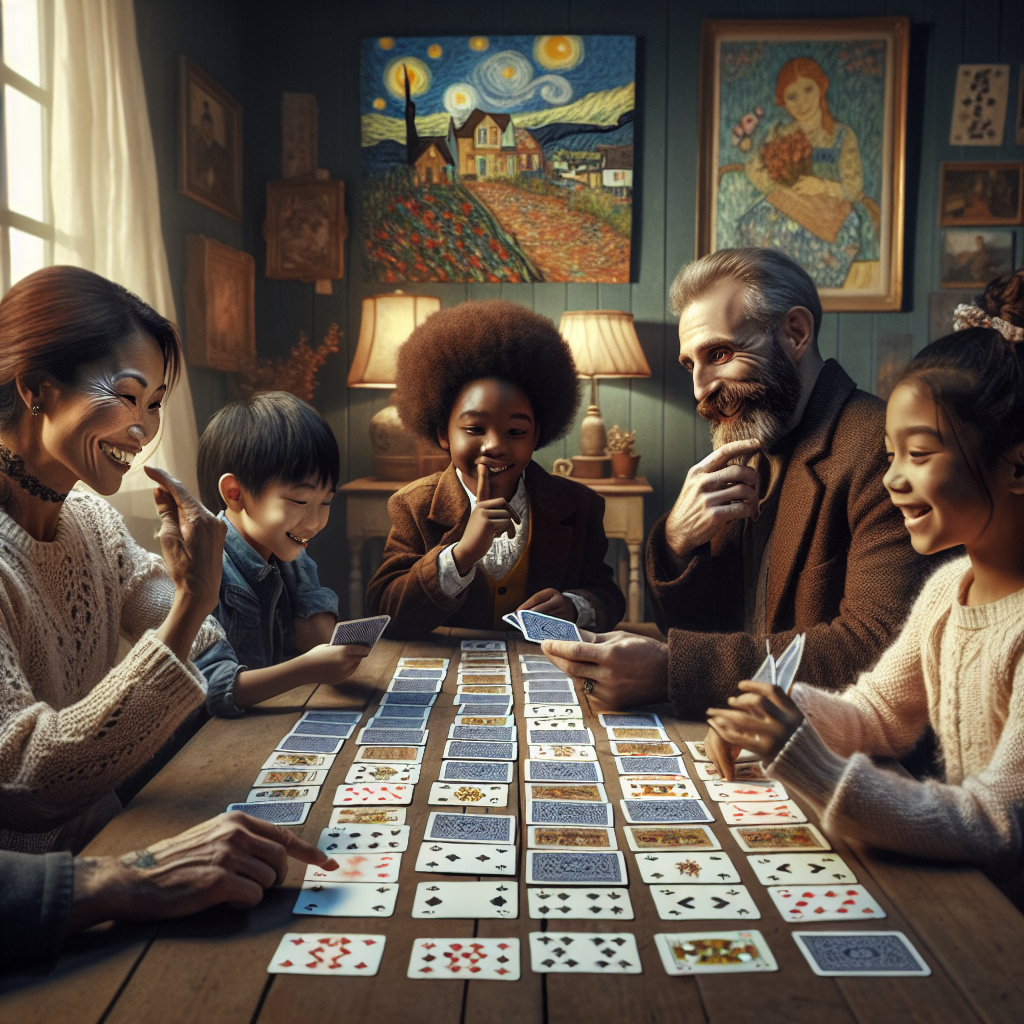
Imagine sitting around a table with friends, cards in hand, laughter bubbling up like a warm cup of coffee shared on a crisp morning. Now picture that this card game is no ordinary deck. It’s infused with the ability to respond to your emotions, creating a unique experience each time you play. This is the promise of artificial intelligence—it’s not just about algorithms and code, but about weaving deeper connections among us.
As we shuffle the deck, consider the profound impact a card game that senses our feelings could have on our quality of life. Traditional games often follow a set script, but an AI-driven card game would learn from our reactions, adapting to our moods and offering tailored challenges or comforting themes, much like a friend who knows when to crack a joke or lend support. This engaging emotional intelligence can help harness our shared human experience, making each round feel personal and significant.
Let’s be real for a moment. We live in a world overflowing with distractions and digital interactions that often leave us feeling isolated. Yet, a simple card game, enhanced by technology to understand us better, could bridge that gap. It would invite us to connect on a deeper level—bringing our honest laughter to the fore when we’re joyous, or providing empathy-packed moments when we’re down. This potential for interaction makes it more than just entertainment; it’s an opportunity for growth, reflection, and togetherness.
Moreover, there’s an ethical responsibility tied to this technology. It’s not simply about creating an engaging experience; it’s about doing so thoughtfully. Designers must prioritize emotional safety and ensure that adaptation doesn’t cross into manipulation. We need to champion developers who treat this endeavor with respect, fostering card games that not only entertain but also elevate our emotional and social well-being.
With each deal, each shuffle, we reminisce and bond. Whether it’s a family gathering or a night with friends, the table becomes a tapestry of shared stories and collective laughter. This innovation of AI can remind us that even in a technology-driven age, the heart of play remains grounded in human connection. So, as we lean into this brave new world of gaming, let’s harness the power of AI for good—creating card games that not only adapt to our emotions but celebrate our humanity. The game is on, and it’s time to deal a better hand!

Could Artificial Intelligence Create Card Games That Adapt to Our Emotions?
Could Artificial Intelligence Create Card Games That Adapt to Our Emotions?
- AI-enabled card games can respond to players’ emotions, enhancing social interaction.
- Unlike traditional games, these games adapt based on players’ moods, providing personalized experiences.
- Such games foster deeper connections, allowing for shared joy and empathy during gameplay.
- The integration of AI serves as an opportunity for personal growth and reflection.
- Designers have an ethical responsibility to ensure that emotional adaptation does not turn into manipulation.
- The goal is to create card games that prioritize emotional safety and enhance players’ social well-being.
- Ultimately, AI in card games can remind us of the importance of human connection in a technology-driven world.

Could Artificial Intelligence Create Card Games That Adapt to Our Emotions?
Table Of Contents
- Could Artificial Intelligence Create Card Games That Adapt to Our Emotions?
- Can Ai Truly Understand Human Emotions?
- How Could Card Games Enhance Emotional Intelligence?
- What Ethical Concerns Arise From Ai In Gaming?
- Can Ai-Made Games Deepen Our Understanding Of Ourselves?
- How Might Adaptive Games Change Our Social Interactions?
- Conclusion
- Other Resources
- Glossary Of Terms
- Other Questions
- Haiku
- Poem
- Checklist
Can Ai Truly Understand Human Emotions?
Can AI Truly Understand Human Emotions?
Picture this: a group of friends gathered around a table for a card game—laughter punctuating the air as they play, bantering, sharing their ups and downs. This simple tableau of connection speaks volumes about the human spirit and our enduring desire for understanding. In moments like these, one might wonder, can a machine truly grasp the depth of these emotions?
At first glance, it might seem far-fetched. After all, a computer can process data faster than we can blink, but replicating the rich tapestry of human emotion is akin to asking a spoon to understand the complexities of a gourmet meal. Emotion is messy; it’s not just the red or blue on our faces but the many shades of feeling that color our interactions. Yet, it’s not all black and white. Savvy developers are now programming algorithms to recognize cues—frowns of despair, the glimmer of joy—signaling an earnest attempt at understanding. But can they really feel?
Let’s engage our heads for a moment. We know the human brain is a marvel, an intricate network of neurons firing with every thought and emotion. The very essence of empathy, a core human trait, isn’t easily distilled into zeros and ones. But what if we consider AI as an invaluable tool, rather than a substitute? Think of it like a helpful companion at that card game—one who can learn from our interactions and, in turn, offer insights or support. It may not be able to feel your anxiety before a big play, but it can analyze patterns and help you strategize.
Now, the heart: There’s something stirring about the idea that our digital companions aspire to understand us, to be there in our moments of triumph and despair. It pulls at our collective hope, enticing us to imagine a partnership between man and machine that transcends mere functionality.
And here’s where ethics come in: As we develop this technology, we must tread carefully. It’s our responsibility to ensure it serves humanity well, enhancing our emotional journeys without overshadowing what makes us inherently human.
So, as we shuffle the deck and draw our cards, let’s contemplate this journey. AI may not have a heart, but its growing capabilities can still enhance our connections if we wield it thoughtfully. Let’s embrace the possibilities while grounding ourselves in what makes us human—understanding, compassion, and that rich, messy emotion we call life.

Can Ai Truly Understand Human Emotions?
Can Ai Truly Understand Human Emotions?
- The human desire for understanding is evident in social interactions, like friends enjoying a card game.
- Machines can process data quickly, but replicating the complexities of human emotion is challenging.
- Developers are creating algorithms to recognize emotional cues, such as smiles and frowns.
- AI is better viewed as a supportive tool that can analyze patterns to assist humans.
- There is a hopeful vision of AI aspiring to understand and support human emotions.
- Ethics play a crucial role in developing AI, ensuring it enhances human emotional experiences.
- While AI lacks genuine feelings, it can potentially enrich human connections if used responsibly.

Can Ai Truly Understand Human Emotions?
How Could Card Games Enhance Emotional Intelligence?
When you think about card games, you might picture a cozy family gathering, laughter echoing around the table, or perhaps a fierce competition among friends. But beyond the joy and nostalgia, card games hold a powerful, often underestimated potential to enhance our emotional intelligence. Let’s dive into this world and see how something as simple as a deck of cards can impact our hearts, heads, and guts.
At their core, card games are social activities. They bring people together and ignite a shared experience that thrives on cooperation and competition. When you shuffle a “Card Game” into your life, you’re not just playing—you’re engaging in a dance of non-verbal communication. Have you ever noticed how a simple card drawn can shift the room’s mood? In that moment, there’s a palpable tension, a spark. Understanding that feeling, recognizing the ebb and flow of emotions at the table, cultivates empathy.
Think about it: as you watch your opponent’s expression, you begin to glean a deeper understanding of their emotions and intentions. This nuanced perception sharpens your awareness not just of others, but of yourself. Here, you confront your own feelings—anxiety when you’re close to winning or disappointment when luck isn’t on your side. By learning to navigate these emotional waters, you’re honing your emotional intelligence. It’s practice for the real world, where reading the room can make all the difference in your relationships.
Now, let’s consider the ethical dimension. Playing card games teaches us the value of fairness and integrity. In a game, we learn to respect the rules and the players, creating an environment where trust flourishes. This respect extends beyond the table; it shapes how we interact with colleagues, friends, and loved ones, creating bonds built on confidence and honesty.
Finally, recount the stories that emerge from these moments. The excitement of winning, the camaraderie of losing, the shared laughter over a blunder. These narratives are what connect us as human beings. They remind us that whether we’re celebrating a victory or consoling a friend, we are in this together—a community united by shared experiences.
So, the next time you sit down for a card game, remember: you’re not just playing cards; you’re building emotional intelligence, strengthening relationships, and learning to navigate the beautiful complexity of human interactions. It’s more than a game; it’s a mirror reflecting the emotions we all share, inviting us to connect, grow, and understand one another on a deeper level.

How Could Card Games Enhance Emotional Intelligence?
How Could Card Games Enhance Emotional Intelligence?
- Card games foster social interaction, bringing people together through cooperation and competition.
- They promote non-verbal communication, influencing the mood and emotional atmosphere at the table.
- Playing card games enhances empathy by helping players understand others’ emotions and intentions.
- Participants confront their own feelings, learning to navigate emotions such as anxiety and disappointment.
- Card games teach the importance of fairness and integrity, promoting respect and trust among players.
- The narratives shared through gameplay create connections and community among participants.
- Engaging in card games contributes to emotional intelligence and fosters deeper human interactions.

How Could Card Games Enhance Emotional Intelligence?
What Ethical Concerns Arise From Ai In Gaming?
What Ethical Concerns Arise From AI in Gaming?
Let’s face it: the world of gaming has transformed from simple card games played on kitchen tables to sprawling digital universes where artificial intelligence (AI) not only enhances gameplay but also challenges our very sense of fairness and ethics. Picture this: you’re deep into a high-stakes match against an AI opponent that’s not just programmed to play but trained to understand your strategy, anticipate your moves, and exploit your weaknesses. It’s thrilling, but it begs essential questions about the integrity of the game itself.
First, let’s talk about fairness. If a game is manipulated by an advanced AI that can outthink its opponents—human or machine—what does that mean for the average player? The sense of achievement that comes from a hard-fought victory begins to evaporate when we realize the other side plays by a different set of rules. This emotional punch resonates deeply; it feels unjust, like practicing for a month only to find out you’re competing against a player who’s had a lifetime of training.
Then there’s the ethical quagmire of representation in AI design. Imagine a narrative-driven adventure game where the AI character you’ve formed an emotional bond with embodies stereotypes that perpetuate harmful social narratives. It’s not merely a glitch in coding; it’s a reflection of our biases—flawed perceptions that shape our realities. As gamers, we crave authenticity and connection, yet when AI misrepresents or underrepresents, it can alienate rather than engage.
Rationally speaking, how do we hold creators accountable for the AI they craft? If a game is designed to profit at the expense of player experience—through continuous microtransactions driven by AI algorithms analyzing our behavior—it raises the question: Are we merely pawns in a game designed for profit rather than play? This is where our gut instinct kicks in. We know when something feels off, an uneasy sensation that reminds us we deserve to be treated with fairness and respect.
In the face of these challenges, it becomes clear that our collective responsibility as gamers is to advocate for transparency and equitable design in the gaming industry. By prioritizing ethical AI development, we ensure that games remain a space where creativity and camaraderie flourish, rather than one dominated by algorithms that threaten to reduce the human experience to mere data points. Together, let’s champion a future where gaming retains its heart and humanity, fortifying connections and lifting us all higher.

What Ethical Concerns Arise From Ai In Gaming?
What Ethical Concerns Arise From Ai In Gaming?
- The evolution of gaming raises ethical concerns as AI enhances gameplay and challenges fairness.
- Advanced AI opponents may diminish the sense of achievement for average players by manipulating game dynamics.
- AI design may perpetuate harmful stereotypes, resulting in misrepresentation and alienation among players.
- Accountability for AI creators raises questions about prioritizing profit over player experience.
- Player intuition often recognizes when fairness and respect are compromised in gaming experiences.
- There is a collective responsibility among gamers to advocate for transparency and equitable design.
- Prioritizing ethical AI development can preserve creativity and human connections in gaming.

What Ethical Concerns Arise From Ai In Gaming?
Can Ai-Made Games Deepen Our Understanding Of Ourselves?
As we dive into the world of AI-made games, the real question isn’t just about graphics or gameplay; it’s about connection and introspection. Picture this: a simple Card Game, one that draws you in with its lively art, clever mechanics, and engaging storylines. At first glance, it may seem like a mere pastime, a way to disconnect from the hustle and bustle of everyday life. Yet, as you shuffle those cards and play your hand, something profound begins to unfold.
These games are not just digital distractions; they’re mirrors reflecting the complex tapestry of our emotions and choices. Think about it—each decision you make in that game echoes the decisions you face in real life. The thrill of victory, the sting of defeat, the ethical dilemmas all pave the way for self-discovery. They force us to confront who we are and what we value. It’s like engaging with a narrative that challenges our own, nudging us to examine our motivations and actions. Would you bluff your way to victory, or play an honest hand? This is where the game becomes a deeper exploration of self.
Moreover, as you engage with these AI-driven experiences, you’re part of a community—sharing victories and defeats. This social aspect cannot be underestimated. We yearn for connection; whether it’s online or sitting around a table with friends, these games foster discussions about strategies, ethics, and the human condition. In a world that’s often fractured by divisive chatter, a simple Card Game can be a unifying force, grounded in shared experiences and understanding.
On a more intellectual level, consider the insights these games offer into human psychology. Driven by complex algorithms, they adapt to players’ choices, presenting new challenges that require us to think critically and adapt. With each new card drawn, we are reminded that life is unpredictable and requires us to stay engaged, nimble and ready.
So the next time you shuffle those cards, remember: you’re not merely playing a game; you’re embarking on a journey of self-discovery, a dialogue with yourself and others. It’s about finding trust in your intuitions, confidence in your decisions, and inspiration in the stories you weave in the game and beyond. Embrace this adventure, and let AI be your guide as you navigate the complexities of your own heart and mind.

Can Ai-Made Games Deepen Our Understanding Of Ourselves?
Can Ai-Made Games Deepen Our Understanding Of Ourselves?
- The essence of AI-made games is not just graphics or gameplay, but connection and introspection.
- A simple Card Game, despite its appearance, can lead to profound self-discovery through engaging mechanics and storylines.
- Decisions made in the game mirror real-life choices, highlighting emotions like victory, defeat, and ethical dilemmas.
- These games challenge players to reflect on their motivations and actions, facilitating a deeper exploration of self.
- The social component fosters connections within a community, promoting discussions about strategies and the human condition.
- AI-driven games offer insights into human psychology by adapting to choices and presenting new challenges, encouraging critical thinking.
- Playing these games is an adventure of self-discovery, emphasizing trust in intuitions and inspiration from the narratives created.

Can Ai-Made Games Deepen Our Understanding Of Ourselves?
How Might Adaptive Games Change Our Social Interactions?
Imagine a young girl sitting cross-legged on the floor, surrounded by friends. The vibrant colors of a card game spread out before them, laughter echoing like music in the air. This isn’t just any game; it’s adaptive, dynamically evolving to meet the players where they are. As they play, something remarkable happens: barriers dissolve, laughter emerges, and connections deepen. Could it really be as simple as a deck of cards and a few rules?
Adaptive games have the potential to bridge gaps, fostering relationships that might otherwise remain untouched. For the introverted among us, these games offer a safe haven—a chance to engage in a way that feels comfortable. The rules adjust to ensure inclusivity, making it easier for each participant to find their footing. Think about that feeling of unity as everyone works toward a common goal or laughs at shared moments. It’s uplifting, isn’t it? In these instances, we’re reminded that our differences can become our strengths, allowing us to learn from each other and create something beautiful together.
From an emotional standpoint, adaptive games tap into our human need for connection. Whether it’s helping a shy young boy express himself or allowing an older adult to engage with grandchildren, the card games can become catalysts for understanding. Our fast-paced lives often create a chasm, one that adaptive gaming helps to bridge, drawing people together in shared experiences that foster empathy and compassion. You can almost hear the unspoken agreement among friends, as they connect over every laugh and every unexpected twist the game throws at them.
Now, let’s not forget the ethical implications. By creating an environment where everyone can participate, these games uphold a sense of fairness and respect. This isn’t just about winning; it’s about understanding and valuing each player’s unique contribution. The authority of enjoyment lies in these shared moments of joy and resilience, planting seeds of trust and cohesiveness among individuals.
As we embrace the ever-changing landscape of social interactions, adaptive games stand out as more than just entertainment; they become encounters that shape our lives. They challenge us, engage our hearts, and ignite a sense of community. In a world craving connection, perhaps it’s time to shuffle the deck and deal ourselves new opportunities for bonding and understanding, one card at a time.

How Might Adaptive Games Change Our Social Interactions?
How Might Adaptive Games Change Our Social Interactions?
- A young girl and her friends enjoy an adaptive card game that evolves to meet players’ needs.
- The game creates an environment where laughter and connections flourish, breaking down barriers.
- Adaptive games provide a safe space for introverted individuals, promoting inclusivity and comfort.
- Players experience unity as they work towards common goals and share joyful moments.
- These games fulfill the human need for connection, fostering understanding across different age groups.
- They promote fairness and respect, emphasizing the value of each player’s unique contributions.
- Adaptive games serve as powerful tools for building community and enhancing social interactions in a rapidly changing world.

How Might Adaptive Games Change Our Social Interactions?
Conclusion
As we wrap up this exploration into the intersection of artificial intelligence and emotion-adaptive card games, let’s take a moment to reflect—not just on the mechanics or algorithms but on what it all means for us as human beings. Picture this: we gather around a table, not merely to compete but to connect. Each shuffle of the cards transcends the mundane to create a space where laughter and vulnerability intertwine. At the core of this experience lies a promise. Imagine a card game that understands the rhythm of our emotions, engaging us in ways that traditional games simply can’t.
This is where the emotional, ethical, and social significance of AI in gaming comes into sharp focus. In a world that often feels fragmented by distractions, an AI-driven card game can act as a bridge. It offers a sanctuary where we tune into each other’s joys and sorrows, reminding us that we are not alone in our experiences. As the game adapts to our moods—offering lighthearted banter when we’re high-spirited or a gentle touch when we’re contemplative—it becomes less about the cards and more about the connections.
Yet, with great power comes great responsibility. Developers wield a significant influence over how these games shape our interactions. We must champion ethical designs that prioritize emotional safety over mere entertainment. It’s imperative to ensure that these games don’t manipulate our feelings but rather amplify our ability to connect authentically. Picture the empowerment of a shy player who feels included because the game adapts to welcome them. Each shared story becomes a thread, weaving a tapestry of understanding that knits communities closer together.
Now, let’s appeal to our gut instincts. There’s an undeniable thrill in competitive games, but when we incorporate emotional intelligence, we reshape the experience into something richer. Every win or loss becomes a collective experience, prompting discussions that enrich our understanding of ourselves and one another. We are invited to engage not only with the game but also with the deeper narrative of humanity—what we value, how we empathize, and how we grow.
So, as we step into this brave new world of gaming, let’s remember our humanity. Let’s wield technology thoughtfully, creating card games that don’t just adapt to our emotions but celebrate them. Just as the best card game can create memories that last a lifetime, so too can AI enhance our capacity for connection. The deck is shuffled; the cards are dealt. Now, it’s time to embrace this adventure together and discover how a simple game can offer profound insights into who we are. Game on!

Conclusion
Conclusion:
Here’s the requested summary in a formatted bulleted HTML list:
- The exploration of AI and emotion-adaptive card games highlights the importance of human connection over competition.
- AI can create card games that understand and respond to players’ emotional states, enhancing engagement.
- Emotionally adaptive games can bridge gaps in fragmented social interactions, fostering empathy and shared experiences.
- Developers have a responsibility to create ethical designs that prioritize emotional safety and genuine connections.
- Incorporating emotional intelligence in games enriches the competitive experience, transforming wins and losses into collective narratives.
- Embracing technology thoughtfully allows for the celebration of human emotions and connections through gaming.
- AI-enhanced card games can offer profound insights into human values and relationships, encouraging deeper engagement.

Conclusion
Other Resources

Other Resources
Here is a list of other resources you can review online to learn more:
- Forbidden Stars
- Huch!
- Blogger
- Pearl Games
- Z-Man Games
- How to Play Podcast
- Poker
- Mombasa
- Horrible Guild
- Cardboard Republic
- Kotaku
- Scythe
- Meeple Mountain
- Gaia Project
- Ars Technica
Use This Prompt To Get More Resources With Your Favorite Online AI Tool: Please provide me with a list of online articles with their URLs in a bulleted list that I can read regarding Could Artificial Intelligence Create Card Games That Adapt to Our Emotions?
Other Resources
Glossary Terms
Could Artificial Intelligence Create Card Games That Adapt to Our Emotions? – Glossary Of Terms
1. Artificial Intelligence (AI): The simulation of human intelligence processes by machines, particularly computer systems, enabling them to perform tasks that typically require human cognition.
2. Card Game: A game played with a set of cards, which can involve strategy, chance, and social interaction among players.
3. Emotion Recognition: The ability of a system to identify and interpret human emotional states through various inputs, such as voice, facial expressions, or physiological signals.
4. Adaptive Gameplay: The ability of a game to change its rules, difficulty, or interactions based on the player’s actions or emotional state.
5. User Experience (UX): The overall experience of a person using a product, particularly how easy or pleasing it is to use, heavily influenced by emotional responses.
6. Machine Learning: A subset of AI where algorithms enable computers to learn from and make predictions or decisions based on data, without explicit programming for each task.
7. Sentiment Analysis: The use of natural language processing, AI, and machine learning to determine and categorize the sentiments expressed in text, such as positive, negative, or neutral feelings.
8. Dynamic Difficulty Adjustment (DDA): A technique in game design where the game’s difficulty level is automatically adjusted in real-time to maintain an optimal challenge for the player based on their performance and emotional state.
9. Neuroscience: The scientific study of the nervous system, including the brain’s role in emotions and decision-making, which could inform AI’s understanding of player responses.
10. Behavioral Analysis: The examination of player behavior patterns to understand how their actions correlate with emotional responses, enhancing the game’s adaptability.
11. Human-Computer Interaction (HCI): The study and design of the interaction between people and computers, focusing on improving user interfaces and maintaining user engagement.
12. Gamification: The application of game mechanics and elements in non-game contexts, such as using cards to trigger emotional responses, thus enhancing engagement.
13. Adaptive AI: AI systems designed to modify their behavior based on real-time analysis of player interactions and emotional states, providing a personalized gaming experience.
14. Emotionally Intelligent AI: AI that can understand and respond to human emotions, tailoring the gaming experience based on the player’s mood and feelings.
15. Interactive Storytelling: A narrative technique in game design where players’ choices, actions, and emotional states influence the story’s direction and outcome.
16. Contextual Awareness: The ability of a system to understand and react to the context in which it operates, including social and emotional contexts within games.
17. Feedback Loop: A system structure where outputs of an operation are circled back and used as inputs, amplifying or dampening the effects of players’ emotional responses in gameplay.
18. User Engagement: The level of interaction and involvement a player has with a game, affected by emotional connection and satisfaction derived from gameplay.
19. Virtual Reality (VR): A simulated experience that can replicate physical presence in real or imagined environments, enhancing emotional immersion in card games.
20. Augmented Reality (AR): An interactive experience where digital elements are added to the real world, potentially influencing players’ emotional responses during gameplay.
21. Psychological Profiling: The process of assessing and understanding an individual’s personality, emotional style, and behaviors, which can improve AI’s emotional response tracking.
22. Biofeedback: The use of electronic monitoring devices to convey information about bodily functions, used to assess player emotions and adjust game parameters accordingly.
23. Multiplayer Engagement: Interaction between multiple players within a game environment, requiring AI to adapt to various emotional states that arise from social dynamics.
24. Narrative Branching: The technique of creating multiple story paths or outcomes in a game based on player choices and emotions, enhancing replayability and emotional connection.
25. Affective Computing: A field of study that develops systems capable of recognizing, interpreting, and simulating human emotions, critical for AI in card games.
26. Challenge Curve: A visual representation of the difficulty of a game over time, ideally adjusted based on player emotions to maintain engagement.
27. Social Dynamics: The interactions and relationships between players in multiplayer card games, impacting emotional responses and gameplay experience.
28. Personalization: Customizing game experiences based on individual player preferences and emotional states, allowing for a more tailored and meaningful experience.
29. Cognitive Load: The amount of mental effort being used in the working memory, which could influence how players engage emotionally with a game.
30. Playtesting: The process of evaluating a game by observing real players in action to assess emotional responses and overall game dynamics, informing AI adaptations.

Glossary Of Terms
Other Questions
Could Artificial Intelligence Create Card Games That Adapt to Our Emotions? – Other Questions
If you wish to explore and discover more, consider looking for answers to these questions:
- How does AI recognize and interpret human emotions in real-time?
- What specific technologies are being developed to create emotion-adaptive card games?
- How can players ensure their emotional safety while playing AI-driven games?
- What measures can developers take to prevent emotional manipulation in these games?
- Can AI-driven card games be effective in therapeutic settings?
- How will the use of AI in games impact traditional gaming experiences?
- What are some examples of existing games that utilize AI for emotional adaptation?
- How might different cultural perspectives on emotions influence the design of adaptive games?
- What skills can players develop through engaging with emotion-adaptive card games?
- How does the use of AI in gaming align with current trends in technology and entertainment?
- What feedback mechanisms are in place for players to share their experiences with adaptive games?
- In what ways could adaptive card games help in building empathy among players?
- What ethical guidelines should designers follow when creating AI in gaming?
- How do players perceive the use of AI in decision-making during games?
- What are the potential drawbacks of using AI in social settings like card games?

Other Questions
Haiku
Could Artificial Intelligence Create Card Games That Adapt to Our Emotions? – A Haiku
Cards shuffle with care,
AI feels our laughter’s pulse—
Game of hearts entwined.

Haiku
Poem
Could Artificial Intelligence Create Card Games That Adapt to Our Emotions? – A Poem
A Game of Hearts and Algorithms
In a circle of laughter, hands grip the deck,
Where emotions dance lightly, a delicate wreck.
Imagine, dear friends, a card game anew,
Crafted by AI, infused with what’s true.
A deck that senses laughter, a frown, a cheer,
A partner in play, understanding our fear.
As we shuffle the cards and deal out our fate,
This game of connection can help us relate.
It adapts to our feelings—joy, sorrow, delight,
Merging human warmth with electrifying light.
Can machines truly feel? With circuits and codes?
They learn from our laughter, our sighs, and our loads.
Yet ethics whisper softly, urging thoughtful design,
To nurture our spirits, not cross a fine line.
For every laugh shared, each story retold,
There lies a deep bond, a treasure to hold.
In moments of tension, as cards reveal fate,
We confront our anxieties, our triumphs, our hate.
Through this simple play, we hone our own art—
A mirror reflecting the pulse of the heart.
Let’s bridge the divide, in this tech-driven age,
With games that respect us, let empathy gauge.
As AI unravels the threads we all share,
Let’s weave richer tapestries, together laid bare.
Picture a shy child, a grandparent’s bright smile,
Adaptive games open doors, where love can compile.
Every card drawn—a chance to connect,
Teaching us to value, to listen, to respect.
In this dance of algorithms, let’s not lose our way,
For the spirit of play keeps isolation at bay.
With each shuffle and deal, let our dreams intertwine,
In this vivid assembly—both human and divine.
So here’s to the nights filled with laughter and cheer,
To the heart of the game, where we draw ever near.
Together we forge bonds, one card, one laugh at a time—
In this beautiful chaos, our spirits will climb.
Poem
Checklist
Could Artificial Intelligence Create Card Games That Adapt to Our Emotions? – A Checklist
Checklist for Creating Emotion-Adaptive Card Games
This checklist combines emotional, rational, and ethical appeals for designing card games that utilize AI to adapt to players’ emotions and enhance social interactions. It aims to ensure a well-rounded approach that resonates on multiple levels.
Emotional Appeals
1. Create Connection: Design mechanics that foster laughter, empathy, and shared experiences among players.
2. Incorporate Comfort Zones: Ensure that the game adapts to various emotional needs—providing challenges when players are feeling confident and comfort when they’re struggling.
3. Use Relatable Themes: Choose themes and stories that resonate with common human experiences (e. g. , love, fear, joy) to evoke genuine emotional responses.
Rational Appeals
4. Recognize Patterns: Implement algorithms that analyze player behaviors and emotional states, providing insights and personalized gameplay.
5. Promote Learning: Structure challenges that encourage players to develop emotional intelligence and social skills through gameplay.
6. Encourage Strategy: Allow players to make decisions that reflect their personal values and ethics in the context of the game.
Ethical Appeals
7. Prioritize Emotional Safety: Ensure that the AI’s adaptation does not manipulate or exploit players’ vulnerabilities; maintain a balance between engagement and respect.
8. Champion Inclusivity: Design rules and gameplay mechanics that accommodate varying skill levels and social dynamics, allowing everyone to participate meaningfully.
9. Develop Responsibly: Engage in transparent development practices and prioritize user feedback in the design process.
Authority Appeals
10. Consult Experts: Collaborate with psychologists and game designers specializing in emotional intelligence and social interaction to create a robust framework.
11. Incorporate Player Feedback: Continually seek input from users to refine game elements and ensure alignment with player needs and expectations.
Narrative Appeals
12. Craft Engaging Storylines: Integrate stories that promote reflection on personal motivations and values, making the gameplay experience more profound.
13. Build Character Connections: Allow players to form bonds with in-game characters, creating narratives that resonate and provoke thought about real-life relationships.
Social Appeals
14. Enhance Group Dynamics: Include mechanics that facilitate teamwork and collaboration, strengthening community and social ties.
15. Foster Competition: Create friendly competitive elements that can drive engagement while ensuring respectful play among peers.
16. Encourage Reflection: Include moments for players to discuss their experiences, reflecting on emotional responses and learnings after each game session.
Final Thoughts
As you embark on developing emotion-adaptive card games, remember to keep the heart of play rooted in human connection. Use this checklist to ensure your game design not only entertains but also enriches the social and emotional fabric of your players’ lives. Embrace the power of AI as a tool for improvement rather than a replacement for authentic human interaction, and let the game bring us closer together—one card at a time.

Checklist
At CardGameNews, we help people who love card games by collating information and news about card games.
Be sure to read our other related stories at CardGameNews to learn more about card games.


