

Reimagining Card Game Strategies With Artificial Intelligence
By Tom Seest
At CardGameNews, we help people who love card games by collating information and news about card games.
Be sure to read our other related stories at CardGameNews to learn more about card games.
Could Artificial Intelligence Change The Way We Build Strategies In Card Games?
In the realm of card games, where every decision can tip the scales from triumph to defeat, the introduction of artificial intelligence is stirring a pot of possibilities that’s more thrilling than an unexpected wild card draw. Imagine a game night transformed, where the clatter of chips is symphonic, and the strategizing feels as infinite as a well-shuffled deck. AI in card games isn’t just about crunching numbers or calculating probabilities; it’s a potential game changer—literally and figuratively.
Let’s peel back the layers. In the heart of every card game lies the thrill of strategy. It’s about understanding your opponent, anticipating their moves, and crafting a response that sends ripples of surprise—an art form, really. But what if AI could be your secret weapon? Picture this: an intelligent system that analyzes not just the cards on the table, but the psychological ticks and patterns of those around you. While it might sound chilly and mechanical, this technology aims to amplify human instinct rather than replace it. It’s not about machines winning; it’s about enhancing our ability to connect, engage, and outsmart.
Now, let’s talk rationally. AI algorithms can process data faster than the speed of light. They can sift through thousands of previous games, identifying trends that an individual may overlook after a long night of bluffing and banter. This insight can help players learn faster, adapt strategies on-the-fly, and ultimately elevate the entire experience. Consider this: you’re not just learning from your own losses but also from the collective wisdom of a global community captured in bytes and bits. This doesn’t just make you a better player; it makes you part of something bigger—a community of strategists united by the love of the game.
But, with great power comes great responsibility. Ethical considerations loom large as we navigate this brave new world. How do we harness AI without overshadowing the personal bonds that make card games special? The goal isn’t to diminish the human element but to celebrate it, creating a more enriched environment where players rely on each other, share knowledge, and grow together.
So, let’s embrace this evolution. With AI at our side, the way we build strategies in card games can shift from solitary calculations to a harmonious dance of intellect and emotion. Together, we’ll not only play our cards right but form connections that last long after the game is over. After all, at the end of the day, it’s not just about winning; it’s about the stories we create around the table.

Could Artificial Intelligence Change The Way We Build Strategies In Card Games?
Could Artificial Intelligence Change The Way We Build Strategies In Card Games?
- The integration of artificial intelligence in card games is revolutionizing gameplay and strategy.
- AI can serve as a secret weapon, analyzing opponents and enhancing players’ instinctive decision-making.
- Algorithms can quickly process data, identifying trends from numerous games to improve players’ skills.
- Players can learn not only from personal experiences but also from the global card-playing community.
- Ethical considerations are important in ensuring AI doesn’t overshadow the social bonds of card games.
- The goal of AI in card games is to enrich interactions and foster knowledge sharing among players.
- This evolution encourages a blend of intellect and emotion in gameplay, prioritizing connection over competition.

Could Artificial Intelligence Change The Way We Build Strategies In Card Games?
Table Of Contents
- Could Artificial Intelligence Change The Way We Build Strategies In Card Games?
- Can Algorithms Enhance Our Strategic Thinking In Gaming?
- What Ethical Concerns Arise From Ai-Driven Game Strategies?
- How Can Ai Authority Transform Our Understanding Of Competitive Play?
- Will Ai Change The Social Dynamics Of Card Game Communities?
- How Does Ai Challenge Our Traditional Views On Strategy Development?
- Conclusion
- Other Resources
- Glossary Of Terms
- Other Questions
- Haiku
- Poem
- Checklist
Can Algorithms Enhance Our Strategic Thinking In Gaming?
Picture this: a dimly lit room filled with enthusiasts gathered around a worn table, the atmosphere thick with anticipation. The sound of shuffling cards fills the air, punctuated by the laughter and camaraderie of friends engaged in a spirited card game. Here, strategy isn’t merely an afterthought; it’s the lifeblood of each round. Now, imagine if we invited a silent partner into this mix—an algorithm designed to enhance our decision-making skills and elevate our game to unseen heights.
It’s not just about numbers on a screen; it’s about igniting our passion for strategy. Algorithms can sift through mountains of data faster than we can shuffle a deck, predicting outcomes with ruthless efficiency. They provide insights that sharpen our instincts and broaden our perspective, teaching us to think multiple steps ahead—an invaluable skill in both gaming and life. When you embrace technology in your gaming, you’re not just stacking the odds in your favor; you’re training your brain to be more decisive and strategic, turning each game into a chance for growth.
And let’s be honest—tapping into these tools isn’t just smart; it’s ethical. We all want to play our best, but there’s no need to shy away from the tools that can help us improve. Utilizing algorithms is about leveling the playing field, giving everyone a shot at success, regardless of their experience level. It transforms gaming from a simple pastime into a rich tapestry of learning and growth—every hand played is a lesson learned.
Imagine your next game night, the room buzzing with a new kind of energy as you and your friends challenge each other in ways you never thought possible. Trust the algorithm to help analyze your tactics, share insights, and perhaps even suggest new strategies that prompt lively debate around that table. This is what community is all about—sharing knowledge, pushing boundaries, and unlocking new realms of possibility together.
So why not embrace this fusion of tradition and technology? Let algorithms bolster your strategic thinking, and let that spark a deeper connection—both with the game and the people you share it with. After all, every card played brings us one step closer to mastering not just the game, but the art of thinking critically and creatively in life.

Can Algorithms Enhance Our Strategic Thinking In Gaming?
Can Algorithms Enhance Our Strategic Thinking In Gaming?
- A dimly lit room is filled with enthusiasts engaged in a spirited card game, highlighting the importance of strategy.
- An algorithm can enhance decision-making, helping players elevate their game and think multiple steps ahead.
- Using algorithms promotes growth by sharpening instincts and broadening perspectives in gaming and life.
- Embracing technology in gaming is both smart and ethical, leveling the playing field for all experience levels.
- Algorithms transform gaming into a learning experience, where every hand played teaches valuable lessons.
- Community and shared knowledge become essential as players analyze tactics and discuss new strategies together.
- The fusion of tradition and technology helps build deeper connections with the game and fellow players.

Can Algorithms Enhance Our Strategic Thinking In Gaming?
What Ethical Concerns Arise From Ai-Driven Game Strategies?
What Ethical Concerns Arise From AI-Driven Game Strategies?
Picture this: you’re sitting around a card table with friends, laughter filling the air as you shuffle your deck for a friendly game night. The stakes may be low—just bragging rights and maybe a pizza. But as you sit there, your mind races with strategy and psychology, gauging your opponents’ tells and motivations. Now, imagine one of those players is an AI, programmed to outsmart you at every turn. Unsettling, isn’t it?
At first glance, the prospect of AI-enhanced game strategies sounds like an exciting leap forward, a shiny gadget that promises to enhance our beloved card games. But when you peel back the layers, a different picture emerges. The heart starts to question: What does it mean for human connection and the spirit of competition when a machine can anticipate our next move with clinical precision? Can a game that thrives on human emotion and unpredictability remain “fun” when it’s undergirded by algorithms?
Let’s get into the headspace for a moment. While AI can analyze patterns and predict outcomes with staggering speed, there’s an inherent risk that players may become mere pieces on a chessboard, sidelined by calculation rather than creativity. Are we reducing our rich card game traditions to a series of data points, ignoring the essence of the narratives we build during each game? If it’s all just numbers and probabilities, where’s the thrill? The laughter? The improvisation that makes each game uniquely ours?
Ethically, we must confront the authority of AI in recreational spaces. Who determines what a “fair game” looks like? If an AI systematically crushes its human counterparts, we must ask: Are we erasing the thrill of challenge and learning from our losses? The very heart of gaming lies in its unpredictability, the way we surprise ourselves and our friends with a sudden burst of inspiration that no algorithm could replicate.
Then there’s the societal angle. As we navigate this uncharted territory, we need to cultivate a space where both AI and humanity can coexist harmoniously. The solution may lie not in eliminating AI from our games, but rather in embracing it as a tool that augments our human experience rather than replaces it.
So, let’s rally together—embrace the fun of the card game, but ensure our ethical compass remains steady. In doing so, we safeguard not just our cherished tradition, but also the intricate tapestry of relationships that games like these weave between us. Embrace innovation, but with a heart that beats for humanity.

What Ethical Concerns Arise From Ai-Driven Game Strategies?
What Ethical Concerns Arise From Ai-Driven Game Strategies?
- AI-driven game strategies can enhance gameplay but raise ethical concerns about human connection.
- The excitement of AI in games may diminish the unpredictability and emotional elements that make games enjoyable.
- Players risk being reduced to mere data points, sidelining creativity and spontaneity inherent in traditional gameplay.
- Questions arise about the definition of a “fair game” when AI can dominate human players effortlessly.
- Gaming’s core thrill lies in its unpredictability, which AI could undermine by predicting moves with precision.
- There’s a need for a balance where AI serves as a tool to enhance rather than replace the human experience in games.
- Maintaining ethical considerations in AI integration is essential to preserve the social dynamics and relationships fostered by games.

What Ethical Concerns Arise From Ai-Driven Game Strategies?
How Can Ai Authority Transform Our Understanding Of Competitive Play?
How Can AI Authority Transform Our Understanding Of Competitive Play?
Imagine sitting at a table, surrounded by friends, the atmosphere thick with anticipation. In front of you lies a card game, thousands of strategies simmering just beneath the surface, each card a gateway to victory or defeat. Now, consider how artificial intelligence can step into this arena—not just as a lifeless algorithm, but as an authority that enhances our understanding of competitive play.
At first glance, AI might seem like a cold, calculating entity—just a series of codes and commands crunching numbers. But let’s dig deeper. Imagine AI as a collaborator, an essential ally that brings clarity to the chaos of competition. It digs through layers of data and reveals patterns and strategies that even the keenest player might miss. By partnering with AI, you engage your intellect in new ways, transforming an ordinary game into a cerebral battlefield where every move is informed by insights previously beyond our grasp.
This transformation is not merely technical; it’s profoundly emotional. Competitive play is a dance—each move telling a story, each card played fraught with tension and excitement. AI authority enriches that narrative, allowing players to explore deeper meanings behind their strategies and decisions. This relationship fosters a community where knowledge is shared, strategies are refined, and friendships are forged, all fueled by a common passion for the game.
Moreover, it speaks to our ethical desire for fairness and transparency. With AI analyzing the strategies and gameplay of all participants, everyone plays on equal footing. No longer will expertise be solely reserved for the seasoned veteran. New players gain insights they wouldn’t have had access to otherwise, creating a level playing field that champions inclusivity and growth.
But let’s get to the gut of the matter. When you harness AI as an authority in competitive card games, you’re not just playing a game; you’re stepping into a shared experience that fortifies trust. You channel a sense of community, where learning from each other—be you a newbie or a veteran—breeds confidence and sparks excitement. It’s not just about winning; it’s about evolving together, pushing boundaries, and elevating play to an art form.
So, the next time you shuffle a deck at your local game night, consider the role AI can play. It’s not just technology; it’s a transformative force ready to unveil the secrets of competitive play, igniting passion and camaraderie wrapped in the thrill of the game. Embrace this opportunity, and let it inspire you to connect like never before.

How Can Ai Authority Transform Our Understanding Of Competitive Play?
How Can Ai Authority Transform Our Understanding Of Competitive Play?
- AI can enhance our understanding of competitive play, acting as a collaborator rather than a mere algorithm.
- It reveals hidden patterns and strategies, enriching the experience of players and transforming the game into a cerebral battlefield.
- The relationship with AI enhances the emotional aspects of competitive play, allowing players to explore deeper meanings behind their strategies.
- AI promotes a community of knowledge sharing, where players refine strategies and build friendships through a shared passion for the game.
- It ensures fairness and transparency, leveling the playing field for new players by providing access to insights typically reserved for seasoned veterans.
- Using AI fosters a sense of community and trust, encouraging players of all skill levels to learn from each other and evolve together.
- AI serves as a transformative force in competitive card games, igniting passion and camaraderie in the gaming experience.

How Can Ai Authority Transform Our Understanding Of Competitive Play?
Will Ai Change The Social Dynamics Of Card Game Communities?
In the cozy corners of our living rooms and bustling comic shops, where laughter and competition dance hand-in-hand over a table strewn with cards, the question arises: Will AI change the social dynamics of card game communities? It might seem an odd notion—machines mingling with human storytelling, camaraderie, and chance. But as we pull up a chair to this emerging dialogue, we must consider not just the game at hand, but the deeper relationships that weave through our beloved card game culture.
Picture this: a group of friends gathers, not just for the thrill of the game, but for the shared experience—the narratives that unfold as each card is played. Every victory and loss is etched into the fabric of their friendships, elevating each match from mere competition to a moment of connection. Enter AI, a remarkable tool that could streamline gameplay, develop personalized strategies, or even automate tedious aspects of deck-building. From a rational perspective, this could breathe new life into our beloved card game, allowing us to focus more on the heart of what we love: the interactions, the laughs, and the stories that won’t make it to the scoreboards.
But as we welcome this digital companion, we must also pause to consider the ethical implications. Will it replace the human touch—the smiles, the banter, the thrill of surprise? Or will it become a facilitator of deeper connections, allowing us to dive into our next game with renewed passion? As we navigate this evolving landscape, our core values of community and shared experiences should guide us. The authority of the player—each voice unique, each strategy personal—will remain the heart of our gatherings, regardless of technological advancement.
Let’s take a moment to envision a future where AI is our ally, not our opponent. Imagine teaching an AI to understand the unique intricacies of your group’s style, a virtual partner that learns your favorite combos and narratives. It’s like welcoming a new friend to the table—one who enhances your game, respects the bonds, and encourages new players to join, demystifying the complexities of our treasured card game.
In this ever-shifting landscape, let’s commit to cherishing what truly matters: connection. As we integrate AI into our card game communities, may we always prioritize the laughter, the strategy, and the stories that weave us together, ensuring that humanity remains front and center in our shared love for the game.

Will Ai Change The Social Dynamics Of Card Game Communities?
Will Ai Change The Social Dynamics Of Card Game Communities?
- AI’s impact on social dynamics within card game communities raises important questions about human interaction.
- Card games serve as a medium for shared experiences, creating bonds through narratives, victories, and losses.
- AI has potential benefits, such as streamlining gameplay, creating personalized strategies, and automating deck-building.
- Concerns about AI replacing human touch highlight the importance of maintaining smiles, banter, and surprises in gameplay.
- AI could enhance player connections by adapting to group dynamics and facilitating new players’ understanding.
- The focus should remain on community values and ensuring unique player voices are heard, regardless of technological advancements.
- As we embrace AI in our card game communities, we must prioritize connection, laughter, and storytelling that unite us.

Will Ai Change The Social Dynamics Of Card Game Communities?
How Does Ai Challenge Our Traditional Views On Strategy Development?
How Does AI Challenge Our Traditional Views on Strategy Development?
Imagine sitting around a worn table, gathered with your closest allies, playing the most intense card game you can imagine. Each move is crucial, each decision is laden with consequence, and the stakes feel as high as your heartbeat during a tense moment. This is strategy at its purest, reliant on human instinct, relationships, and the nuances of individual experience. But now, picture that same game with a lifelike AI sitting in, analyzing every play, predicting outcomes with an unsettling accuracy. This scenario isn’t just sci-fi; it’s the reality of today’s boardrooms and battlegrounds of strategy development.
On one hand, AI holds a mirror to our traditional views, reflecting the unconscious biases we might not even realize we harbor. It challenges us to confront the shadows lurking behind our decisions. That’s not just a head game; it’s a gut punch. It forces leaders to question, “Are we being truly inclusive? Are our strategies built on a foundation of diverse perspectives?” These are tough questions, stirring emotions as we confront the possibility that our cherished methods might be outdated.
Yet, the allure of AI is hard to resist. It offers the promise of in-depth analysis, transforming raw data into actionable insights with surgical precision. Here lies the rational appeal: who wouldn’t want objective, evidence-based strategies that cut through ambiguity? However, we must wrestle with the ethical implications of delegating our strategic thinking to a machine. Are we ceding our human judgment to algorithms? This transformation is a collective journey, where we must determine how much we entrust to AI while retaining the essence of what makes us human—creativity, empathy, and intuition.
Shared stories are powerful, though. In countless organizations, leaders who have embraced AI have witnessed profound changes. They speak of newfound clarity, their teams moving with a synchronicity that feels almost instinctual, like dancers in a well-rehearsed performance. These narratives forge connections among us, reminding us that AI isn’t an enemy to be feared but a partner that can elevate our game, so long as we remain vigilant.
Trust in this integration is paramount. Just as we weigh our moves in that card game, we must thoughtfully consider how AI can reshape strategies – keeping our hearts on the table, our heads in the game, and our guts aligned with our values. The future of strategy development is an evolving tapestry, where the human touch interweaves beautifully with powerful technologies, creating solutions that honor our past while leading to bright new horizons. So, are you ready to play?

How Does Ai Challenge Our Traditional Views On Strategy Development?
How Does Ai Challenge Our Traditional Views On Strategy Development?
- AI challenges traditional strategy development by exposing unconscious biases and encouraging self-reflection among leaders.
- The presence of AI holds leaders accountable, prompting questions about inclusivity and the diversity of perspectives in strategic decision-making.
- AI’s analytical capabilities transform raw data into actionable insights, offering objective and evidence-based strategies.
- Leaders face ethical dilemmas regarding the extent to which they delegate strategic thinking to AI versus retaining human judgment.
- Success stories from organizations that integrate AI indicate improvements in clarity and team synchronization.
- Trust and thoughtful integration of AI are crucial in ensuring that strategies reflect human values such as creativity and empathy.
- The future of strategy development blends human intuition with advanced technologies, leading to innovative solutions.

How Does Ai Challenge Our Traditional Views On Strategy Development?
Conclusion
Conclusion: The Future of Card Games with AI
Alright, folks, let’s wrap our minds around what we’ve explored here. Picture yourself at a bustling game night, cards in hand, laughter filling the air, friends leaning in closer as the stakes rise. We know card games are about strategy amidst camaraderie, where nothing beats that moment of realization when your opponent has just played a card that’s about to change everything. Now, imagine that thrill heightened by the introduction of artificial intelligence—it’s an exhilarating prospect, isn’t it?
As we dive into the world of AI in card games, it’s clear this technology isn’t simply a calculator lurking in the shadows. Instead, it’s a companion—an intelligent ally that can dissect strategies, analyze vast troves of gameplay data, and even pick up on the subtle tells we might overlook during spirited banter. We’re not talking about replacing the human soul of these games; we’re enhancing it. The very heart of card gaming lies in the unexpected moments, the surprises, the shared joy and sometimes the agony of defeat. AI stands poised to amplify our instincts rather than smother them, allowing us to become more acute, more strategic, and ultimately more connected to the people around us.
But hold on—let’s not gloss over the ethical implications. Just as we fiercely protect our friendships and shared narratives, we must ensure that AI serves to enrich, not overshadow, the precious bonds we build over card tables every night. We aim for a coexistence here; a partnership where AI serves to level the playing field, providing insights without stripping away that all-important human element. It’s not just about winning; it’s about the stories we tell, the lessons we learn, and the relationships strengthened along the way.
Embracing AI isn’t just about gaining a tactical edge; it’s about cultivating a community where every player, whether seasoned or novice, can thrive. We’ve got an opportunity to unleash a new era of strategy—one where insight and instinct dance hand in hand, where we respect tradition while welcoming innovation. So next time you shuffle that deck and face off against your friends, remember: AI isn’t just changing the game; it’s inviting us to explore a style of play that could foster deeper connections and richer experiences.
Together, let’s not just play our cards right. Let’s savor the laughter, the victories, and the stories that linger long after the game is done. Because ultimately, while strategy matters, the heart of card gaming is about the people at the table with you. And that’s a game changer worth investing in.

Conclusion
Conclusion:
- Card games blend strategy with camaraderie, enhancing the excitement of gameplay.
- AI acts as an intelligent ally, analyzing strategies and gameplay data, providing insights without replacing human interaction.
- The introduction of AI enhances the unexpected moments and connections inherent in card gaming.
- Ethical considerations must be taken into account to ensure AI enriches human relationships rather than overshadows them.
- A focus on coexistence with AI aims to level the playing field while maintaining the human element of gaming.
- AI fosters a community where players of all skill levels can succeed and enjoy the game.
- Ultimately, card gaming is about relationships and shared experiences, making the social aspect paramount.

Conclusion
Other Resources

Other Resources
Here is a list of other resources you can review online to learn more:
- GeekWire
- Munchkin
- Twilight Struggle
- Cephalofair Games
- Star Realms
- The Guardian
- Root: The Riverfolk Expansion
- Blue Orange Games
- AEG (Alderac Entertainment Group)
- Medium
- Wingspan
- Arkham Horror (Third Edition)
- Fields of Arle
- Clank!: A Deck-Building Adventure
- Spades
- Memoir ’44
- Diigo
- Asyncron
- North Star Games
Use This Prompt To Get More Resources With Your Favorite Online AI Tool: Please provide me with a list of online articles with their URLs in a bulleted list that I can read regarding Could Artificial Intelligence Change The Way We Build Strategies In Card Games?

Other Resources
Glossary Terms
Could Artificial Intelligence Change The Way We Build Strategies In Card Games? – Glossary Of Terms
1. Artificial Intelligence (AI): The simulation of human intelligence processes by machines, especially computer systems, that allows for decision-making and problem-solving.
2. Card Game: A game involving playing cards as the primary device for gameplay, usually requiring strategy, skill, and a degree of luck.
3. Game Theory: The study of mathematical models of strategic interaction among rational decision-makers, essential in understanding competitive card game dynamics.
4. Strategy: A plan of action designed to achieve a long-term or overall goal in a game, encompassing tactics and decision-making processes.
5. Algorithm: A step-by-step procedure or formula for solving a problem, widely used in AI to formulate strategies in card games.
6. Deep Learning: A subset of machine learning that mimics neural networks, enabling AI systems to learn from large amounts of data, applicable in analyzing card game strategies.
7. Predictive Analytics: The use of statistical algorithms and machine learning techniques to identify the likelihood of future outcomes based on historical data in gameplay.
8. Reinforcement Learning: A type of machine learning wherein an AI learns to make decisions through trial and error, receiving rewards for successful strategy choices in card games.
9. Monte Carlo Simulation: A computational algorithm that relies on repeated random sampling to obtain numerical results, helpful in evaluating card game strategies.
10. Game State: The current status or configuration of a game at any point in time, which must be considered in strategy-building.
11. Opponent Modeling: The ability of AI to analyze and predict opponents’ behavior and strategies, enhancing competitive play in card games.
12. Heuristic: A strategy or approach that simplifies decision-making and problem-solving, often used in AI for quick assessments in complex situations.
13. User Interface (UI): The space where user interaction with the AI system occurs, pivotal for engagement and strategy-building in digital card games.
14. Simulation: A model of real-world processes or systems that allows players or AI systems to test strategies without real-world consequences.
15. Data Mining: The process of discovering patterns and knowledge from large amounts of data, which can inform strategy development in card games.
16. Adaptability: The capability of an AI system to adjust its strategies based on changes in gameplay dynamics or opponent behavior.
17. Nash Equilibrium: A concept in game theory where no player can gain an advantage by changing their strategy unilaterally, relevant in competitive card environments.
18. Card Probability: The calculation of the likelihood of drawing specific cards based on existing knowledge, crucial for strategic planning.
19. Shuffling Algorithms: Mathematical methods used to randomize the order of cards, impacting the development of strategies from onset.
20. Feedback Loop: A process in AI where outputs are circled back into the system for learning and improvement, critical for refining strategies over time.
21. Tactics: The specific actions taken within a strategy to achieve immediate objectives during gameplay, often influenced by AI recommendations.
22. AI-Bot: An artificial intelligence program designed to play a game, demonstrating strategic thinking and decision-making processes similar to human players.
23. Bluffing: A strategic act of deception to mislead opponents about one’s intentions or card strength, evaluated differently through AI analysis.
24. Card Counting: A strategy used primarily in games like Blackjack to gain an advantage by keeping track of the cards played, which AI can automate.
25. Statistical Modeling: Techniques used to represent complex data relationships, applicable for predicting outcomes and optimizing strategies in card games.
26. Collaborative Filtering: A method used in AI to recommend strategies based on the strategies of similar players, useful in multiplayer card games.
27. Endgame Strategy: Strategies specifically designed for the final phases of a game, where decision-making can be critical to winning.
28. Real-time Analysis: The capability of AI to assess the game state and make recommendations instantaneously, enhancing the strategic depth of play.
29. Decision Trees: A tree-like model used to visualize decisions and their possible consequences, aiding both players and AI in strategy formulation.
30. Competitive Advantage: The edge gained over opponents through effective strategy building, which AI can significantly influence through data-driven insights.

Glossary Of Terms
Other Questions
Could Artificial Intelligence Change The Way We Build Strategies In Card Games? – Other Questions
If you wish to explore and discover more, consider looking for answers to these questions:
- What specific examples exist of AI being used in card game strategy enhancement?
- How do different AI algorithms compare in their effectiveness for strategy building in card games?
- What card games are currently utilizing AI technologies?
- How does the integration of AI impact casual versus competitive play in card games?
- What are the most notable successes and failures of AI in the gaming world?
- How can players safeguard their personal experiences against AI’s influence in card games?
- What role do community feedback and player narratives play in shaping AI development for card games?
- Will players be required to have technical knowledge of AI to fully benefit from it in their games?
- What are the long-term implications of AI on the card gaming industry?
- How can developers ensure that AI remains a tool for enhancement rather than a replacement?

Other Questions
Haiku
Could Artificial Intelligence Change The Way We Build Strategies In Card Games? – A Haiku
AI at the table,
Strategies bloom and unfold—
Hearts and minds united.

Haiku
Poem
Could Artificial Intelligence Change The Way We Build Strategies In Card Games? – A Poem
Cards on the Table
In a dim-lit room of laughter and dreams,
Where chips clatter like the echo of schemes,
A shuffle of cards, a game waits to start,
With stakes more than points — it’s the dance of the heart.
Imagine an ally, cold yet profound,
An AI companion, insights unbound,
Not to play the game, nor to steal the show,
But to enhance our instincts, let our passion grow.
As algorithms whir with lightning-fast grace,
They unveil hidden patterns, the looks on our face.
Learning from losses, each bluff and each win,
Together we journey, a community within.
But what of the ties that we forge at the table?
Will laughter and stories become just a fable?
As tech takes a seat, do we compromise trust,
Or does it bridge gaps, in humanity, we must?
Ethics loom large, like shadows at night,
In this game of connection, let’s hold our light tight.
For every hand played, a lesson to share,
In this rich tapestry, all voices declare.
With AI as partner, not rival to fear,
Can we reinvent joy, keeping friendships dear?
To embrace innovation while cherishing grace,
In each played card, not just score, but a space.
Here lies our challenge, a future unique,
Where strategy flows, and it’s passion we seek,
So shuffle those cards, let the games begin,
A dance of the mindful, where both hearts can win.
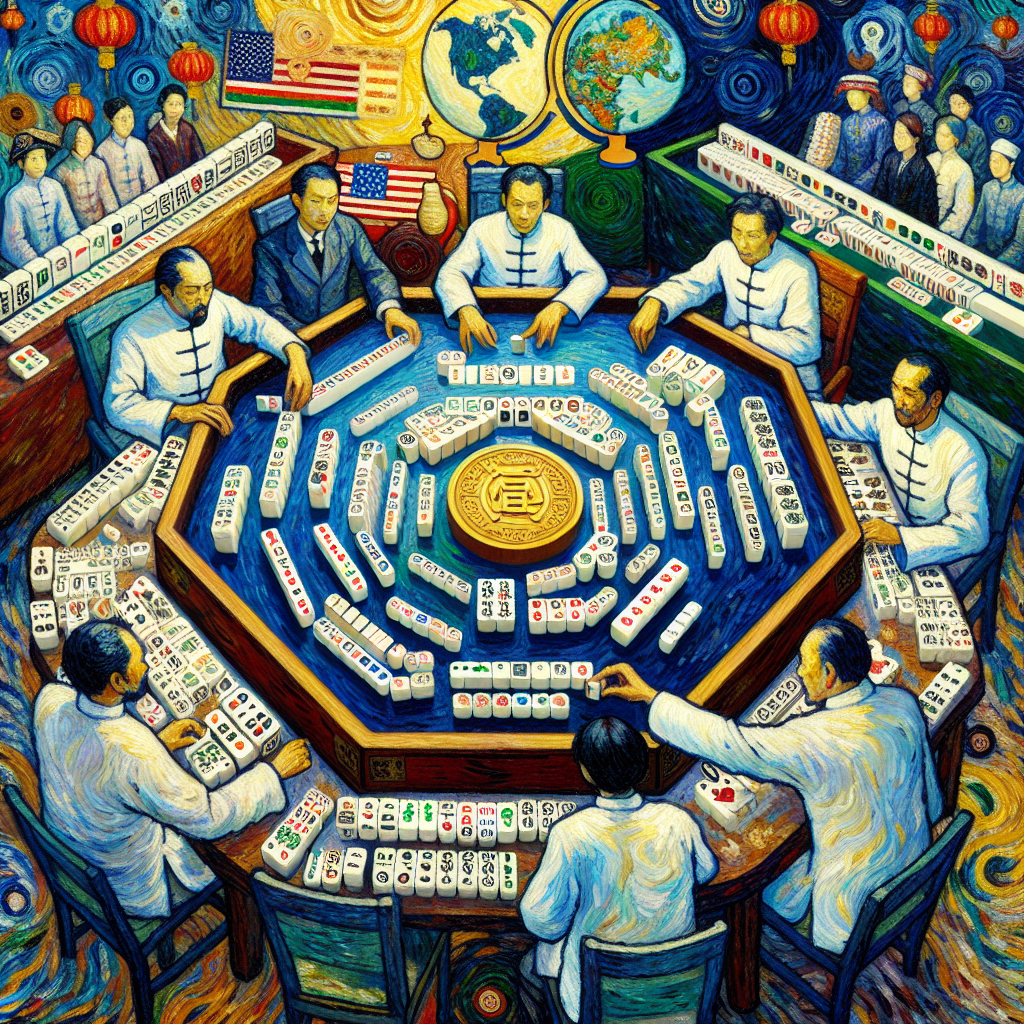
Poem
Checklist
Could Artificial Intelligence Change The Way We Build Strategies In Card Games? – A Checklist
Checklist: Navigating AI in Card Game Strategy
Heart (Emotional Appeals)
_____ Reflect on Connection: Consider how AI can enhance your connections with friends through improved shared experiences.
_____ Embrace Storytelling: Think about the narratives that unfold during gameplay. Does the inclusion of AI enrich these stories or detract from them?
_____ Celebrate the Challenge: Acknowledge the thrill of competition and the joy of unexpected outcomes in your games. What role does AI play in maintaining this excitement?
Head (Rational Appeals)
_____ Assess Algorithm Benefits: Evaluate how AI can process game data and provide insights to elevate your strategic thinking.
_____ Adapt Strategies Dynamically: Reflect on your ability to improve and modify your strategies in real-time. Can AI facilitate this?
_____ Learn from a Community: Consider how leveraging AI allows you to access collective knowledge from a global player community.
Gut (Ethical and Authority Appeals)
_____ Ethical Considerations: Ponder the ethical implications of using AI in your games. Does it maintain the spirit of competition and human connection?
_____ Regulate Play Fairness: Explore who determines fairness in gameplay when AI is involved. Are we still playing for the joy of the game?
_____ Embrace Responsibility: Be mindful of the potential consequences of relying on AI—how can you ensure that the human elements of creativity and unpredictability remain?
Narrative (Social Appeals)
_____ Share Impactful Stories: Think of games where AI could have changed the narrative significantly. What would that story look like?
_____ Foster Community Engagement: Reflect on how AI can serve as a tool to unite players rather than divide them. How does sharing AI knowledge enhance your gaming group?
_____ Value Personal Insights: Consider how your unique experiences can contribute to discussions about AI’s role in games. Are your strategies enriched when combined with technology?
Practical Applications
_____ Integrate AI Strategically: List practical ways you can start incorporating AI into your card games, such as using apps or software to analyze gameplay.
_____ Create a Balanced Approach: Develop a balanced strategy that leverages both AI and human intuition to enhance your gaming experience.
_____ Encourage Collaborative Learning: Promote discussions in your gaming community about ways to learn and grow together while embracing AI technology.
This checklist serves as a tool to thoughtfully navigate the intersection of AI technology and human connection in card game strategy, ensuring that both are celebrated in equal measure.

Checklist
At CardGameNews, we help people who love card games by collating information and news about card games.
Be sure to read our other related stories at CardGameNews to learn more about card games.


