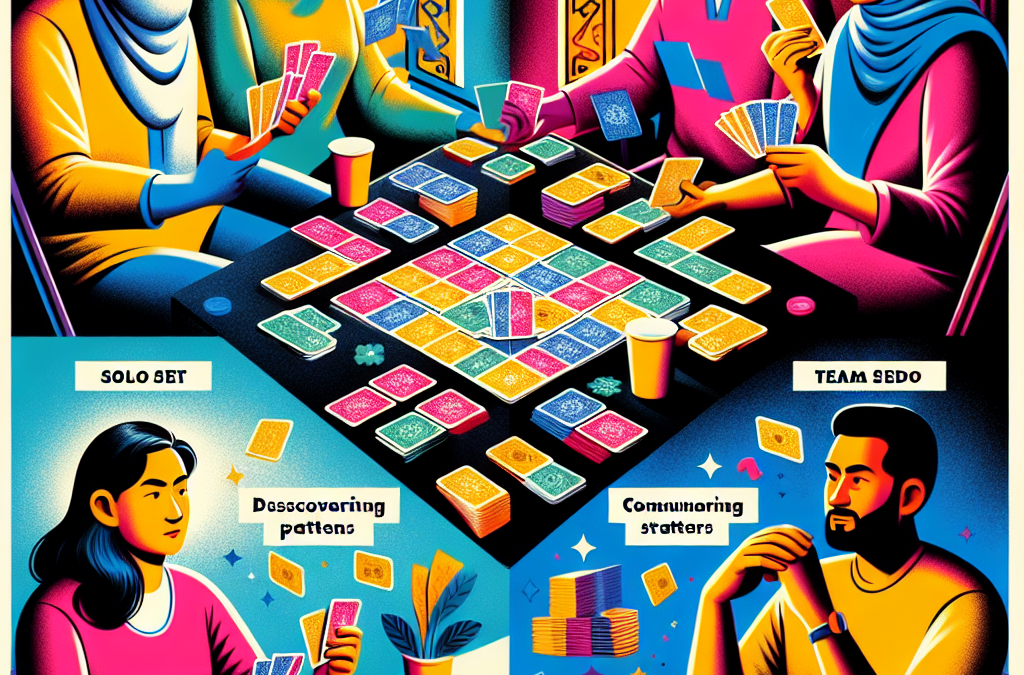
Discover Fun And Educational Card Games
By Tom Seest
At CardGameNews, we help people who love card games by collating information and news about card games.
Be sure to read our other related stories at CardGameNews to learn more about card games.
What Are Some Examples Of Educational Card Games?
When it comes to learning, the old saying “we learn best when we’re having fun” couldn’t be more accurate. And what better way to inject a dose of enjoyment into the education process than with card games? These little rectangles of printed paper aren’t just for your poker nights or family gatherings; they can be dynamic tools for sparking curiosity and enhancing knowledge in various subjects. Let’s dive into some educational card games that can make study time feel more like playtime.
First up, we have “Math Fluxx.” This game takes the standard card game and flips it upside down—literally. Here, players can change the rules with each turn. You might start off with a straightforward mission: add numbers to reach a target sum. But as the game evolves, so do the objectives and strategies. It’s a refreshing way to practice math skills without the monotony of traditional drills.
Next, let’s travel to the world of language with “Word on the Street.” This isn’t just your typical spelling game. In this fast-paced team relay, players race to capture letters by creating words. It requires quick thinking, creativity, and teamwork. The result? Vocabulary-building that sneaks in like a ninja during a race. You’re busy forming words, racing against the clock, and before you know it, you’ve expanded your lexicon, all while having a blast.
And how about a bit of history? “Timeline” invites players to arrange historical events in chronological order, transforming your breakfast table into a time machine of sorts. From the discovery of America to the invention of the printing press, it’s a competitive race through the ages. Not only do you learn about pivotal moments, but you also get a feel for how events interconnect in the tapestry of time.
If science is more your style, then “Dr. Eureka” could be your ticket to fun. Although it’s not a card game in the traditional sense, it’s a great combo of cards and scientific challenge. Players must solve liquid transfer puzzles using colored balls while racing against opponents. It’s a thrilling and tactile way to engage with scientific principles like reactions and transformations—making lab work seem like child’s play.
Lastly, let’s not overlook “The Game of Life: Card Game.” In a blend of fate and decision-making, this game allows players to create their own lifelines. Whether choosing education, careers, or even unexpected events, it provides a unique snapshot of adulting while imparting valuable lessons about choices and consequences.
These games, whether they target math, language, history, or science, show that learning doesn’t have to be a chore. By incorporating play into education, we foster a love for knowledge that sticks around long after the cards have been put away. So, shuffle those decks and get ready to make learning an adventure that’s hard to resist!

What Are Some Examples Of Educational Card Games?
What Are Some Examples Of Educational Card Games?
- Educational card games make learning enjoyable by integrating fun into the study process.
- “Math Fluxx” allows players to change rules every turn while practicing math skills in an engaging manner.
- “Word on the Street” encourages vocabulary-building through a fast-paced team relay that combines word creation with competition.
- “Timeline” invites players to arrange historical events chronologically, enhancing knowledge of interconnected events.
- “Dr. Eureka” involves solving liquid transfer puzzles using colored balls, making science interactive and exciting.
- “The Game of Life: Card Game” lets players make decisions about education and careers, teaching lessons about choices and consequences.
- These games demonstrate that learning can be fun and foster a lasting love for knowledge.

What Are Some Examples Of Educational Card Games?
Table Of Contents
- What Are Some Examples Of Educational Card Games?
- What Are Educational Card Games For Kids?
- How Do Card Games Improve Learning?
- What Subjects Can Be Taught With Card Games?
- What Age Groups Benefit From Educational Card Games?
- How Can I Incorporate Card Games In The Classroom?
- What Are The Benefits Of Using Card Games For Education?
- Are There Specific Card Games For Special Needs Education?
- How Can Parents Use Card Games To Support Learning At Home?
- What Are Some Popular Examples Of Educational Card Games?
- How Do I Choose The Right Educational Card Game For My Child?
- Can Card Games Enhance Critical Thinking Skills In Students?
- What Makes A Card Game Effective For Learning?
- How Do Cooperative Card Games Promote Teamwork In Learning?
- Are There Online Resources For Finding Educational Card Games?
- How Can I Create My Own Educational Card Game At Home?
- Conclusion
- Other Resources
- Glossary Of Terms
- Other Questions
- Haiku
- Poem
- Checklist
What Are Educational Card Games For Kids?
Educational card games for kids are like a secret weapon in the fight against boredom and the struggle for learning. They take the age-old charm of card games—those entertaining little cardboard pieces that have been around for centuries—and give them a twist that makes them not just fun, but also a tool for knowledge and skill development. Think about it: in a world filled with screens, these games bring us back to the basics, fostering face-to-face interaction, strategic thinking, and a sprinkle of good old-fashioned competition.
At their core, educational card games combine play with purpose. Imagine a group of kids gathered around a table, laughter echoing as they shuffle, deal, and strategize. Each turn isn’t just about winning; it’s a chance to practice math skills through counting points, enhance vocabulary through word games, or explore scientific concepts—all without the pressure of a formal classroom setting. These games create an environment where learning feels less like a chore and more like an exciting quest.
The beauty of educational card games lies in their versatility. They can range from simple counting games for preschoolers, where players match numbers and colors, to more complex strategy games for older kids that require critical thinking and teamwork. Whether it’s reinforcing spelling with a classic word game or diving into history with a fact-based trivia card set, there’s something for every age and interest.
And let’s not forget the social skills that come into play. In the midst of competition, children learn about sharing, taking turns, and handling wins and losses gracefully. This kind of interaction nurtures emotional intelligence and builds confidence—skills that are indispensable in today’s world. Plus, educational card games can be enjoyed by the whole family, bridging generational gaps and creating lasting memories.
Furthermore, they don’t take up much space or require expensive setups. A simple deck of cards can lead to countless hours of fun and learning. It’s a low-tech solution to high-tech distractions, and therein lies its power.
So, whether it’s a rainy day indoors, a family game night, or a break between homework sessions, educational card games prove that learning can and should be fun. They remind us that sometimes, the best education happens not in a classroom, but around a table, with laughter, camaraderie, and a strategic draw of the next card.

What Are Educational Card Games For Kids?
What Are Educational Card Games For Kids?
- Educational card games are effective tools for combating boredom and enhancing learning.
- They promote face-to-face interaction, strategic thinking, and healthy competition.
- These games make learning enjoyable and less formal by combining play with educational objectives.
- They cater to various skill levels, from simple counting games for preschoolers to complex strategy games for older children.
- Children develop social skills such as sharing, taking turns, and emotional intelligence while playing.
- Educational card games are easily accessible, requiring minimal space and resources.
- They provide a fun alternative to screen time, reinforcing that learning can happen in informal settings.

What Are Educational Card Games For Kids?
How Do Card Games Improve Learning?
Let’s face it: in a world filled with screens, distractions, and never-ending streams of information, it’s easy to overlook the simple elegance of a good old-fashioned deck of cards. Now, before you roll your eyes and think, “How can a game of cards possibly enhance learning?” buckle up, because the truth is as refreshing as a cold drink on a hot summer day.
To start with, card games pack a punch when it comes to cognitive development. Every time you shuffle that deck, you’re engaging multiple brain functions at once. From strategic thinking and problem-solving to memory recall and quick decision-making, card games serve as the ultimate workout for your brain. Whether you’re trying to remember which cards have been played, calculating odds, or planning your next move, each game exercises your mental muscles like a rigorous gym session.
Now let’s dig deeper. One of the magic ingredients in card games is their ability to foster social interaction. You’re not just flipping cards in a void; you’re at a table with real people, engaging in conversation, negotiating, and even bluffing your way to victory. This social dynamic enhances communication skills and teaches the subtle art of reading non-verbal cues. You learn to gauge your opponents, adapt your strategies, and navigate the complex tapestry of human interaction—all invaluable skills that extend beyond the table and into the real world.
Moreover, the sheer variety of card games makes them applicable to so many different learning styles. You’ve got games that focus on math, strategy, language, and even creativity. For example, consider a game of poker: sure, it’s about cards and chips, but it’s also a crash course in statistics, psychology, and risk assessment. Not to mention, it teaches patience—a virtue that rarely gets a nod in our go-go-go culture.
Let’s not forget about the thrill of competition. When the stakes are high, whether it’s pride or candy, learners are far more invested. This natural drive to win injects an element of fun into the learning process, transforming what could be mundane repetition into an engaging experience.
In essence, the humble card game is more than just a way to pass the time; it’s a vessel for learning that’s been around for centuries. So, the next time you shuffle that deck, remember—you’re not just playing a game; you’re sharpening your mind, enhancing your social skills, and laying the groundwork for learning in ways you might never have imagined. And who wouldn’t want a little more of that in their lives?

How Do Card Games Improve Learning?
How Do Card Games Improve Learning?
- Card games promote cognitive development, engaging multiple brain functions.
- They enhance strategic thinking, problem-solving, memory recall, and quick decision-making.
- Card games encourage social interaction, improving communication skills and non-verbal cue reading.
- They foster valuable skills like gauging opponents and adapting strategies in social contexts.
- The variety of card games caters to different learning styles, encompassing math, strategy, language, and creativity.
- Competition in card games increases investment and fun in the learning process.
- Playing card games sharpens the mind and facilitates skill development, making it a beneficial pastime.

How Do Card Games Improve Learning?
What Subjects Can Be Taught With Card Games?
When you think about card games, you might envision a lively gathering, laughter, and maybe a little friendly competition. But behind that veneer of fun lies a treasure trove of potential learning opportunities, ripe for educators looking to spice up their classrooms. Believe it or not, card games can serve as engaging teaching tools for subjects ranging from mathematics to history. So, let’s shuffle the deck and explore what subjects can be taught with a simple pack of cards.
First up, let’s talk about math. It’s an obvious choice, right? Cards are packed with numerical potential. Basic operations like addition and subtraction can become a high-speed card burn, where students race to solve problems using numbers drawn from their hand. For more advanced learners, you can introduce concepts like probability or even statistics. Students can track the different outcomes of drawing cards to understand odds, reinforcing their understanding of probability in a way that feels less like homework and more like a game night.
Then there’s language arts. Picture this—students create a story using cards as prompts. Each card drawn has a word, character, or setting, which requires the player to incorporate it into a narrative. Not only does this ignite creativity, but it also hones essential writing skills, making the whole process feel less like a chore and more like a creative adventure.
Let’s not overlook social studies, either. Card games can breathe life into historical events or figures. Games can be designed around events, allowing students to “play out” different scenarios while debating and discussing the implications. Imagine a game where students take on roles of historical figures, making decisions that could influence the outcome of critical events. They’ll walk away not only having fun but also with a deeper understanding of the past.
Science can also fit into this deck. Think about creating games that involve basic scientific principles—from categorizing animals to understanding ecosystems. A simple set of cards featuring different animals, plants, or elements can prompt students to group or classify based on specific attributes, reinforcing their knowledge of the natural world.
So, while you might think of a card game as just a way to pass the time, it’s clear that these versatile tools can engage learners across a spectrum of subjects. With a little creativity and a few office supplies, educators can transform a mundane lesson into a memorable experience that students will carry with them far beyond the classroom. Now, that’s what I call a winning hand!

What Subjects Can Be Taught With Card Games?
What Subjects Can Be Taught With Card Games?
- Card games create engaging learning opportunities for various subjects.
- In mathematics, card games help reinforce concepts like addition, subtraction, probability, and statistics.
- Language arts can be enhanced by using cards as prompts for creative storytelling, improving writing skills.
- Card games can bring social studies to life by allowing students to role-play historical figures and scenarios.
- Science education can be enriched through games that involve categorizing and classifying plants and animals.
- Card games transform traditional lessons into memorable experiences with a fun and interactive approach.
- With creativity, educators can leverage simple card games to enhance student engagement across subjects.

What Subjects Can Be Taught With Card Games?
What Age Groups Benefit From Educational Card Games?
When it comes to learning, age is just a number. Educational card games can be a treasure trove of knowledge for a wide spectrum of players. They’re not just for kids confined to the kindergarten classroom; folks of all ages can dive into this delightful blend of fun and learning. So let’s break it down by age groups and uncover how each demographic can benefit.
Preschoolers and Early Elementary (Ages 3-7)
Let’s start with the littlest learners. For children in this age bracket, educational card games act as a springboard into the world of numbers, letters, and social skills. Games that focus on colors, shapes, and basic counting can capture their attention like a shiny object in the sunlight. Not only do these games engage their imaginations, but they also foster critical thinking and cognitive development. When preschoolers play together, they’re not just having a blast—they’re learning about teamwork and communication, skills that’ll serve them well down the line.
Tweens and Early Teens (Ages 8-14)
As children morph into tweens and teenagers, their thirst for knowledge grows in tandem with their inquisitiveness. Educational card games designed for this age group can delve into more complex concepts—everything from strategy and logic to vocabulary enrichment. Consider games that require players to think critically or solve problems. These youngsters are developing their identities, and educational card games provide them with a platform to explore their interests while sharpening their analytical skills. Plus, let’s be honest: it’s a whole lot cooler to learn math by calculating points in a game than by sitting through a lecture.
High School Students and Young Adults (Ages 15-25)
Now, enter the realm of high school students and emerging young adults. At this stage, educational card games can offer a unique avenue for study and review. Think about games that incorporate history, literature, or science facts. They can serve as excellent study aids, turning a monotonous slog through textbooks into engaging, competitive fun. College students, in particular, often juggle intense schedules and mounting pressure. Educational card games can provide a refreshing break from the seriousness of academia while keeping the mind sharp.
Adults (Ages 26 and Up)
Finally, let’s not forget the grown-ups. Whether it’s a family game night or a gathering with friends, educational card games can stimulate discussions and build connections. They’re an opportunity for lifelong learning—a chance to explore new topics, enhance problem-solving skills, and even engage in a bit of friendly rivalry. After all, learning doesn’t have an expiration date; it just continues to evolve.
So, whether you’re a tiny tot or a wise elder, educational card games offer a world of possibilities. The benefits span generations, proving that the love of learning knows no bounds. Grab a deck and dive in—you might just surprise yourself!

What Age Groups Benefit From Educational Card Games?
What Age Groups Benefit From Educational Card Games?
- Educational card games provide learning opportunities for players of all ages.
- Preschoolers (Ages 3-7) benefit from games that teach numbers, letters, and social skills.
- Games for tweens and teens (Ages 8-14) focus on strategy, logic, and vocabulary enhancement.
- High school students and young adults (Ages 15-25) use card games for study and review, making learning more engaging.
- Adults (Ages 26 and up) enjoy educational card games for lifelong learning and social interaction.
- These games encourage critical thinking, teamwork, and communication skills across all age groups.
- Educational card games demonstrate that the love of learning transcends generational boundaries.

What Age Groups Benefit From Educational Card Games?
How Can I Incorporate Card Games In The Classroom?
Incorporating card games into the classroom can transform the learning experience, inject a dose of fun, and foster an environment where students learn through play. Now, before you conjure up images of chaotic card-slinging brawls amongst your students, let’s take a moment to unpack just how effective these little pieces of cardstock can be in promoting cognitive, social, and emotional skills.
First and foremost, card games are a versatile teaching tool. Depending on your objectives—be it honing math skills, enhancing memory, or developing strategic thinking—there’s a card game to match. For instance, a simple game of Uno can teach counting and color recognition while encouraging quick-thinking and decision-making. Tailoring these games to fit your lesson plans is as easy as shuffling that deck. Just think about your curriculum: multiplication? Try using a deck to create a game similar to “War,” where the highest product wins the round. Bonus! You’ll not only reel in some competitive spirit but also sharpen those math skills without the usual groans.
Now, let’s talk about social dynamics. In today’s education landscape, collaboration and teamwork are more important than ever. By introducing group card games, you can create a platform for students to learn valuable social skills, such as negotiation, communication, and, yes, even a little bit of healthy competition. Whether it’s teaming up in a game of “Go Fish” or strategizing in “Exploding Kittens,” these activities can build camaraderie and bond students in ways that traditional lecture formats simply can’t.
One of the biggest advantages of card games is their adaptability. Unlike high-tech gadgets or elaborate projects, a simple deck of cards can fit snugly into your lesson plans. You can use them as brain breaks during long sessions or as a reward for good behavior. Imagine a classroom where students are eagerly awaiting their turn to engage in math with a deck of cards instead of guessing what’s on the whiteboard.
Moreover, incorporating card games promotes critical thinking. Problem-solving is woven into the fabric of card games. They force students to think two or three steps ahead, predicting opponents’ moves just like a chess match, but with a bit more flair and a lot more laughter.
So, next time you’re brainstorming ways to make your classroom a more engaging place, remember that a simple deck of cards can open up a whole new realm of learning opportunities. Play is serious business, after all—especially in the classroom!

How Can I Incorporate Card Games In The Classroom?
How Can I Incorporate Card Games In The Classroom?
- Incorporating card games in the classroom enhances the learning experience and fosters a playful environment.
- Card games are versatile teaching tools that can target various skills, such as math, memory, and strategic thinking.
- Games like Uno can teach counting and color recognition while promoting quick thinking and decision-making.
- Group card games encourage the development of social skills, including negotiation, communication, and healthy competition.
- Card games are adaptable and can easily fit into lesson plans, serving as brain breaks or rewards.
- They promote critical thinking by encouraging students to plan ahead and anticipate opponents’ moves.
- A simple deck of cards can create engaging learning opportunities, proving that play is essential in education.

How Can I Incorporate Card Games In The Classroom?
What Are The Benefits Of Using Card Games For Education?
Let’s face it: when most people think of education, they might imagine stuffy classrooms, rigid schedules, and the stale odor of textbooks. But sprinkle in a deck of cards and suddenly, the avenues for learning expand like a well-loved road map. Using card games as educational tools isn’t just a novel idea; it’s a gateway to a richer, more engaging learning experience.
First off, let’s talk about engagement. In a world brimming with distractions—from smartphones to streaming services—a deck of cards can pull a kid back into the present with a snap. The excitement of drawing a card, making a strategic play, or watching a fellow player sweat over their next move adds an element of fun that textbooks simply can’t match. When kids are actively involved, they’re more likely to absorb information, and that’s a win for everyone.
Moreover, there’s no denying that card games can teach essential life skills. Whether it’s basic math skills through keeping score, strategic thinking when planning their moves, or social skills like communication and teamwork, these games pack a powerful educational punch. Children learn to handle wins and losses with grace, fostering emotional resilience that transcends the game itself. And let’s not forget the boost to critical thinking; when you’re calculating odds or predicting an opponent’s next move, your brain gets a workout that no educational app can replicate.
Then we have the versatility factor. Card games can be adapted to fit various subjects—math, history, even language arts. Want to teach fractions? Play a game of “Fraction War” where kids must simplify fractions in a race to win the most cards. Need to brush up on vocabulary? Create a customized game where specific words are key to winning. Each deck can be tailored to the lesson, allowing educators to fuse fun with curriculum objectives.
And let’s not ignore the social dimension. Card games build community. They invite collaboration and face-to-face interaction in a world that can often feel disconnected. Students learn to work together, communicate effectively, and navigate the complexities of group dynamics—all critical skills in today’s interconnected society.
So, whether it’s a quick round during recess or a structured lesson, card games serve as an effective bridge between play and education. By tapping into this timeless pastime, we can enhance learning in ways that make both kids and educators smile. Now that’s a deal worth shuffling.

What Are The Benefits Of Using Card Games For Education?
What Are The Benefits Of Using Card Games For Education?
- Card games offer an engaging alternative to traditional education methods, capturing students’ attention amidst distractions.
- Playing card games promotes active involvement, increasing retention of information as kids enjoy the learning process.
- Card games teach essential life skills, including math, strategic thinking, and social skills like communication and teamwork.
- They help develop emotional resilience by teaching children how to handle wins and losses gracefully.
- Card games can be adapted for various subjects, allowing educators to incorporate fun into the curriculum effectively.
- They foster social interaction and collaboration, preparing students for teamwork and group dynamics in today’s society.
- Card games create a bridge between play and education, enhancing the learning experience for both students and educators.
What Are The Benefits Of Using Card Games For Education?
Are There Specific Card Games For Special Needs Education?
When it comes to the realm of education for individuals with special needs, the right tools are everything. Enter card games—a delightful blend of engagement and education that can turn a mundane learning experience into a lively and interactive session. But here’s the kicker: not all card games are created equal. Some are tailor-made to cater to the unique challenges and learning styles of special needs individuals.
First off, let’s dive into the versatility of card games. They can serve multiple purposes, from enhancing cognitive skills to improving social interactions. Games such as “Go Fish” or “Uno” not only provide a dose of fun but also facilitate counting, color recognition, and teamwork. It’s in these seemingly simple mechanics that profound learning can occur. Cards can become an avenue for building foundational skills, all while participants enjoy the simple pleasure of companionship and play.
Now, when you get into the nitty-gritty, you’ll find a treasure trove of specially designed card games that address various educational goals. For example, “Feelings Bingo” incorporates emotions as part of its gameplay, helping players recognize and articulate feelings—a skill many may struggle to develop. Similarly, “Picture Match” encourages memory and concentration while promoting vocabulary expansion in a stress-free environment.
And let’s not overlook technology’s role in all this. In recent years, digital adaptations of these traditional card games have emerged, providing interactive experiences that can cater to varying levels of learning abilities. Touchscreen interfaces can provide immediate feedback, making the learning process dynamic and engaging. It’s like flipping the script on traditional education—one that embraces innovation while keeping the essence of connection and learning intact.
These games don’t just teach; they foster a sense of belonging. For many individuals with special needs, social skills can be a daunting hurdle. Card games often break down these barriers, creating opportunities for laughter, collaboration, and sometimes even a little healthy competition. The beauty lies in the shared experience, each game acting as a bridge to foster friendships and enhance social interactions.
The question isn’t just about whether card games exist for special needs education; it’s about how these tools can empower, educate, and uplift. Each shuffle of the deck presents a chance for growth, discovery, and connection—a chance to throw the right cards into the air and embrace the unexpected joy of learning together.

Are There Specific Card Games For Special Needs Education?
Are There Specific Card Games For Special Needs Education?
- Card games are effective educational tools for individuals with special needs.
- They enhance cognitive skills and improve social interactions through engaging gameplay.
- Games like “Go Fish” and “Uno” teach foundational skills such as counting and teamwork.
- Specially designed card games, like “Feelings Bingo” and “Picture Match,” address specific educational goals.
- Digital adaptations of card games offer interactive experiences suitable for various learning abilities.
- Card games help foster social skills and create opportunities for collaboration and bonding.
- These games empower individuals, encouraging growth, discovery, and connection through enjoyable learning..

Are There Specific Card Games For Special Needs Education?
How Can Parents Use Card Games To Support Learning At Home?
In a world filled with screens and digital distractions, it’s easy to forget about the simple joy of a good old-fashioned card game. But let me tell you—it’s not just about winning or losing; it’s about igniting a spark of curiosity and learning in your kids, right in the comfort of your home. Card games can be a versatile tool in your parenting toolbox, offering creative ways to blend fun and education seamlessly.
First off, let’s talk math. Simple card games like “War” or “Go Fish” aren’t just a way to pass the time; they can bolster a child’s counting skills and number recognition. As they flip cards and tally up points, they’re unwittingly sharpening their arithmetic skills. Want to up the ante? Try introducing a game of “21” to teach basic addition, or even use a standard deck to create fractions and percentages through various games. Who knew a regular deck could become a mini classroom?
Then there’s critical thinking. Games like “Rummy” or “Uno” demand a level of strategy and foresight that encourages kids to think ahead. Players must make quick decisions while assessing their opponents’ moves. This not only sharpens cognitive skills but fosters social skills, as they learn how to engage and negotiate with others. Let’s face it—whether they’re challenging you to a game or playing with siblings, the lessons they’ll learn about patience, sportsmanship, and resilience cannot be overstated.
Now, don’t overlook literacy. Card games can also be a surprisingly effective way to enhance reading and vocabulary skills. Take a game like “Old Maid” or “Go Fish” and incorporate vocabulary cards instead of traditional playing cards. This transforms the game into an engaging way to practice new words. You can encourage storytelling by having them explain the significance of the words they pull or create narratives around the characters or themes represented on the cards.
Finally, let’s not forget the power of family bonding. In a world that often pulls us in various directions, a card game is a great excuse to gather around the table. It opens the door to communication, laughter, and shared experiences, creating lasting memories that transcend the educational benefits.
So, shuffle that deck, deal out the cards, and watch as a simple game turns into an opportunity for learning, bonding, and plenty of fun. Perhaps the best lesson is that education doesn’t need to be rigid or serious. Sometimes, it’s just a game away.

How Can Parents Use Card Games To Support Learning At Home?
How Can Parents Use Card Games To Support Learning At Home?
- Card games provide a simple joy and a break from digital distractions.
- They serve as tools for enhancing math skills, such as counting and number recognition.
- Games like “21” can help teach basic addition and concepts like fractions and percentages.
- Card games encourage critical thinking and strategy, fostering cognitive and social skills.
- Literacy can be enhanced by incorporating vocabulary into games like “Old Maid” or “Go Fish.”.
- They promote family bonding through communication, laughter, and shared experiences.
- Education can be enjoyable and flexible, with learning happening through play.

How Can Parents Use Card Games To Support Learning At Home?
What Are Some Popular Examples Of Educational Card Games?
When it comes to combining fun with learning, few things hit the sweet spot quite like educational card games. They’re like the Swiss Army knife of the game world—versatile, portable, and ready to engage minds of all ages. You might be surprised to learn just how enriching a simple deck of cards can be. Let’s take a look at some popular examples that are making waves in classrooms and living rooms alike.
First up, we have Uno, a classic that’s beloved by families everywhere. Yeah, it’s not an educational game on the surface, but variations can teach important concepts like color recognition, numbers, and strategic thinking. Some educators have adapted the standard rules, integrating math challenges or language tasks that players must tackle in order to play a card. Turns out, nothing sharpens the mind like a little competition over a colorful hand of cards!
Next, we have Set, a game that’s all about patterns and critical thinking. Each card displays various shapes, colors, and numbers, and the object is to identify sets of three cards that share or differ in specific attributes. It’s an outstanding way to foster visual perception and logical reasoning. Not to mention, it will make you think twice before calling yourself an art critic when you’re staring at a Jackson Pollock!
Another fantastic option is Exploding Kittens, which seamlessly merges humor and strategic gameplay. The premise is simple yet clever: avoid drawing an exploding kitten while playing various action cards. It’s a playful twist that can easily be adapted to teach probability, strategy, and even storytelling, allowing players to create outrageous narratives as they battle it out.
Don’t forget Blokus, an award-winning game that promotes spatial reasoning. While it’s a bit more involved than just a card game, it also employs cards in its mechanics and teaches players about positioning and strategy in competitive play. It’s a clever way to sneak in some math and physics concepts without the kids even realizing they’re learning!
Lastly, there’s The Game of Life. This classic may be more board-based, but you can find card variants and adaptations that focus on decision-making, finance, and career paths. It opens up discussions about real-life choices and the consequences that come with them, making it a tool for growth beyond just the game itself.
So, whether you’re looking to pass the time or sneak in some learning, educational card games are a treasure trove of fun. They bring families and friends together while sharpening minds—a win-win situation in any book!

What Are Some Popular Examples Of Educational Card Games?
What Are Some Popular Examples Of Educational Card Games?
- Educational card games combine fun with learning, engaging all ages.
- Uno, while not overtly educational, can be adapted to teach color recognition, numbers, and strategic thinking.
- Set enhances critical thinking and visual perception through pattern recognition.
- Exploding Kittens integrates humor and strategy, teaching probability and storytelling.
- Blokus promotes spatial reasoning and stealthily teaches math and physics through competitive play.
- The Game of Life, through its card variants, focuses on decision-making and real-life consequences.
- Educational card games foster family bonding while providing enriching learning experiences.

What Are Some Popular Examples Of Educational Card Games?
How Do I Choose The Right Educational Card Game For My Child?
When it comes to picking the perfect educational card game for your child, it’s a bit like choosing the right tool for a job—it’s all about knowing what you’re working with and what you aim to accomplish. So, before you dive into the colorful world of card games, take a moment to consider the needs of your little learner.
First off, think about your child’s age and developmental stage. Just as a carpenter wouldn’t use a sledgehammer when a hammer and nail will do, you don’t want to overwhelm your child with complexity they’re not ready for. There are games specifically designed for toddlers that involve simple shapes or matching colors, while older children can handle more strategic games that encourage critical thinking and problem-solving. There’s a vast range of options, tailored to various age groups—so you’ll want to find one that hits the sweet spot between challenge and fun.
Next, consider the educational content of the game. Are you looking to reinforce math skills, enhance vocabulary, or perhaps introduce some science concepts? Games that blend curriculum standards with engaging gameplay can make learning a lot less of a chore. But remember, the best educational games won’t feel like reading a textbook. The key is to choose something that sparks curiosity and excitement, something that invites your child to explore and learn without them even realizing it.
Then there’s the matter of player count. If it’s just you and your child, you’ll want a game that caters to two players without sacrificing fun. On the other hand, if you’re preparing for family game night, a game that accommodates larger groups with ease might be the way to go. Make sure to check for scalability. A game that can grow with your family or adapt to different numbers can provide lasting value and keep that learning journey alive.
Finally, take a good, hard look at the game mechanics. Is it straightforward enough that your child can grasp the rules without burning out? Or does it involve intricate strategies that could frustrate them? A good educational card game should be challenging yet accessible, stimulating that little brain while keeping the game spirit intact.
Remember to have fun with it! A shared game session not only educates but also strengthens the bond between you and your child. So go ahead—shuffle those cards, roll the dice, and get ready to have an educational blast!

How Do I Choose The Right Educational Card Game For My Child?
How Do I Choose The Right Educational Card Game For My Child?
- Choosing the right educational card game requires understanding your child’s needs and developmental stage.
- Consider the child’s age; select games that match their complexity level to avoid overwhelming them.
- Look for games that align with educational goals, whether it’s math skills, vocabulary, or science concepts.
- Select games that are engaging and fun, avoiding those that feel like traditional learning tools.
- Evaluate player count; choose games that suit the number of players, whether it’s just the two of you or family game night.
- Assess game mechanics to ensure rules are simple enough for your child to understand without frustration.
- Remember to enjoy the process—playing together strengthens the bond and makes learning enjoyable.

How Do I Choose The Right Educational Card Game For My Child?
Can Card Games Enhance Critical Thinking Skills In Students?
When we talk about critical thinking skills—the kind of mental acuity that allows us to tackle real-world problems with finesse—many immediately think of math classes or science labs. But let’s take a moment to shuffle the deck and pull out an often-overlooked card of the educational experience: card games. Yes, those simple stacks of cardboard adorned with vibrant colors have far more to offer than just fleeting entertainment.
Picture a group of students gathered around a table, laughter punctuating their competitive banter as they plot their next strategic move. These moments are more than just social gatherings; they’re intensive workshops for muscle memory in critical thinking. Card games require players to assess their hand, predict opponents’ moves, and analyze outcomes based on incomplete information—all of which are vital skills in today’s whirlwind of technological advancement and complex societal issues.
Take something as classic as poker. Beyond the bluffing and betting lies a deep well of analytical skill. Players must weigh risk against reward, anticipate the likelihood of an opponent having a stronger hand, and deduce how their own actions communicate information to others. The subtleties of reading facial expressions, which can indicate confidence or hesitation, sharpen emotional intelligence—a facet that is increasingly critical in collaborative environments.
Then consider games like bridge or bid whist, which require teamwork and communication. Students need to discuss strategies, negotiate bids, and make split-second decisions about their game plan. This interaction fosters not only a culture of collaboration but also the necessity of understanding diverse perspectives—an invaluable asset in any field, from business to diplomacy.
And let’s not forget the role of failure. Losing a hand or a game isn’t just part of the fun; it’s an invitation for reflection. Why did that strategy backfire? What information was overlooked? These post-game analyses promote resilience and adaptability—two key components of effective problem-solving.
So, as you stand on the precipice of educational reform, consider this: card games might just be the unsung heroes in the quest for enhanced critical thinking skills. They’re more than a pastime; they are a stage where the drama of human intellect unfolds, teaching lessons that worksheets and lectures simply cannot replicate. In a world that demands innovation and adaptability, let’s never underestimate the power of a good hand. Keep the cards close, but the minds even closer.

Can Card Games Enhance Critical Thinking Skills In Students?
Can Card Games Enhance Critical Thinking Skills In Students?
- Critical thinking skills are often associated with math and science classes.
- Card games provide an engaging platform for developing critical thinking abilities.
- Playing card games involves assessing situations, predicting moves, and analyzing incomplete information.
- Games like poker enhance analytical skills and emotional intelligence through reading opponents’ cues.
- Team-oriented games like bridge foster collaboration and understanding diverse perspectives.
- Experiencing failure in card games encourages reflection and promotes resilience.
- Card games may substantially contribute to enhancing critical thinking in educational reforms.

Can Card Games Enhance Critical Thinking Skills In Students?
What Makes A Card Game Effective For Learning?
When you think about learning, it’s easy to picture a stuffy classroom filled with textbooks, desks, and the faint smell of chalk dust. But what if I told you that some of the most effective learning happens over a deck of cards? That’s right! Card games have an incredible knack for transforming information into something engaging and, dare I say, fun. So, what exactly makes a card game effective for learning? Let’s dig into the nitty-gritty.
First and foremost, the simplicity of cards allows for versatility. Whether you’re mastering complex math concepts, polishing a new language, or diving into science, a well-designed card game can be tailored to any subject matter. The key here is to keep the rules straightforward while allowing for intricacies that might challenge players’ thinking. This facilitates not just rote memorization, but critical thinking and problem-solving skills. You see, when a player is engaged in a card game, they’re not just stacking cards—they’re stacking knowledge, skill, and understanding in ways that traditional learning methods often fail to accomplish.
Now let’s talk about engagement. It’s a buzzword in education, and for good reason. Card games create an active learning environment where failure isn’t the end of the world; it’s merely a stepping stone on the path to mastery. Imagine drawing a card that completely flips the game on its head. Instead of feeling the weight of a wrong answer in a classroom, players experience the thrill of strategizing their next move or rethinking their approach when the chips are down. This hands-on experience cultivates resilience—a key trait for lifelong learning.
Additionally, card games foster social interaction. There’s something about sitting around a table with friends or family, bantering and challenging each other, that’s simply irreplaceable. These games spark discussions, debates, and the sharing of ideas. Players can communicate their thought processes, ask questions, and build upon each other’s knowledge, all while having a good time. Learning in isolation can be tedious, but in a social setting? It’s a whole different ballgame.
Finally, let’s not forget the element of fun. A game that’s enjoyable paves the way for repeated play. And the more you play, the more you learn. This repetition, combined with the enjoyment factor, makes knowledge stick—much more so than studying facts from a textbook ever could.
Effective learning isn’t just about acquiring knowledge; it’s about transforming that knowledge into a lived experience. A well-crafted card game does just that, merging enjoyment with education in a beautifully simple package. So next time you pull out a deck of cards, remember: you might just be on the road to learning something profound.

What Makes A Card Game Effective For Learning?
What Makes A Card Game Effective For Learning?
- Card games transform learning into an engaging and fun experience.
- The simplicity of card games allows for versatility across various subjects.
- They promote critical thinking and problem-solving skills beyond rote memorization.
- Card games create an active learning environment where failure is a stepping stone to mastery.
- They foster social interaction, encouraging discussions and idea sharing among players.
- Enjoyable games encourage repeated play, enhancing knowledge retention.
- A well-crafted card game merges enjoyment with education, making learning a lived experience.

What Makes A Card Game Effective For Learning?
How Do Cooperative Card Games Promote Teamwork In Learning?
When it comes to fostering teamwork, there’s something special about cooperative card games that transcends the ordinary and dives into the essence of collaboration. Picture this: a group of friends gathered around a table, cards in hand, laughter in the air, and a common goal driving their every move. In this lively atmosphere, the focus isn’t just on individual skills but on collective strategy—a dance of minds and hearts working as one.
Cooperative card games, unlike their competitive counterparts, shift the spotlight from self-interest to shared objectives. Players must communicate effectively, strategize together, and support one another, all while navigating the twists and turns of the game. It’s not just about winning; it’s about how well the team can maneuver through challenges as a unit. This reliance on each other cultivates a sense of responsibility—after all, each player’s actions directly affect the outcome for everyone involved.
At the core of these games lies a treasure trove of learning opportunities. Communication is paramount. Players must articulate their thoughts clearly, listen actively, and build on each other’s ideas. Whether it’s brainstorming tactics or discussing potential pitfalls, each conversation strengthens bonds and fosters a deeper understanding of teamwork—skills that spill over into real-life scenarios, from school to the workplace.
Moreover, the emotional stakes in cooperative card games can heighten the learning experience. When players face setbacks or triumphs together, they share a sense of camaraderie that’s hard to replicate elsewhere. This emotional connection encourages empathy, as individuals learn to appreciate each other’s strengths and weaknesses. Some might excel at strategic planning, while others shine in critical thinking. By recognizing and celebrating these differences, players learn to value diverse perspectives, which is crucial in any collaborative environment.
Additionally, these games often involve a level of problem-solving that requires creativity and innovation. Teams may need to come up with unconventional solutions to progress, nudging players outside their comfort zones. Such challenges not only sharpen cognitive abilities but also instill a sense of resilience—a reminder that success often hinges on the ability to adapt and learn from failure together.
Ultimately, cooperative card games serve as a microcosm of teamwork. They teach us that when we combine our strengths and face challenges united, we create something greater than the sum of our parts. In an increasingly individualistic world, these games remind us that collaboration is not only effective; it’s essential. So grab a deck and start building those bridges—your team will thank you for it.

How Do Cooperative Card Games Promote Teamwork In Learning?
How Do Cooperative Card Games Promote Teamwork In Learning?
- Cooperative card games enhance teamwork by emphasizing collaboration over competition.
- Players focus on collective strategy, fostering communication and support among teammates.
- Each player’s actions influence the group’s overall outcome, cultivating a sense of responsibility.
- These games provide valuable learning experiences in communication, actively listening, and sharing ideas.
- Emotional connections develop through shared experiences of setbacks and triumphs, encouraging empathy.
- Problem-solving in these games requires creativity and resilience, pushing players out of their comfort zones.
- Cooperative card games highlight the importance of collaboration in achieving greater success as a team.

How Do Cooperative Card Games Promote Teamwork In Learning?
Are There Online Resources For Finding Educational Card Games?
In the sprawling digital landscape we call the internet, the quest for educational card games is not only doable—it’s downright exciting. Thanks to the proliferation of websites, forums, and social media platforms, finding card games that blend fun with learning has never been easier. But just as we sift for gold in our proverbial rivers, it’s essential to know where to look.
First off, let’s talk about the bigger players. Websites like Education.com and Teachers Pay Teachers offer a treasure trove of pre-made card games spanning subjects from math to history. These platforms not only host a wide variety of user-created content, but they also provide peer reviews so you can gauge the effectiveness of the game before you commit. A critical detail, indeed! You wouldn’t buy a car without checking the reviews, right?
And then there are specialized game design sites. If you’re feeling a bit adventurous, sites like BoardGameGeek allow you to dive into a world chock-full of user-generated educational games. With a vibrant community of creators and enthusiasts, you can find everything from classic card games revived with an educational twist, to entirely new inventions crafted by passionate developers. You can even engage with the creators directly; that kind of interaction can yield invaluable insights about how to adapt the games for your own educational needs.
Social media groups and forums are another gold mine. Platforms like Reddit have communities dedicated to educational games—places where parents, educators, and enthusiasts share ideas, recommend games, and even provide DIY solutions. Simply by typing a few keywords, you can find discussions breathing life into your card game search and leading you to hidden gems.
Let’s not underestimate the impact of YouTube either. Many educators and content creators produce sharable videos demonstrating how to play various educational card games. Watching these games in action offers a unique perspective, allowing you to see first-hand the engagement levels and effectiveness of each game—no guesswork involved!
Finally, don’t forget about the ever-expanding realm of mobile apps. Many educational card games are now available on smartphones and tablets, providing easy access to fun learning on the go.
In short, if you’re looking for educational card games, the internet is your oyster. With the right tools and a bit of digging, you’ll find a bountiful collection of games that can foster learning and ignite curiosity, all while having a great time. Now get out there and start scouring!

Are There Online Resources For Finding Educational Card Games?
Are There Online Resources For Finding Educational Card Games?
- The internet offers a wealth of options for finding educational card games.
- Websites like Education.com and Teachers Pay Teachers provide a wide variety of pre-made card games with user reviews.
- Specialized game design sites such as BoardGameGeek feature user-generated educational games and active creator communities.
- Social media platforms, particularly Reddit, host communities sharing recommendations and DIY game solutions.
- YouTube showcases videos demonstrating how to play educational card games, providing visual insights into gameplay and engagement.
- Mobile apps offer convenient access to educational card games on smartphones and tablets.
- The internet serves as an excellent resource for discovering engaging educational card games.

Are There Online Resources For Finding Educational Card Games?
How Can I Create My Own Educational Card Game At Home?
Creating your own educational card game isn’t just a fun project; it’s a chance to exercise creativity, foster learning, and bring friends and family together around the table. So, let’s roll up our sleeves and dive into the nitty-gritty of crafting an engaging card game that could rival anything on the shelves of your local toy store.
Step 1: Define Your Theme and Purpose
Before you get lost in the thrill of design, take a moment to establish what you want to teach. Are you aiming to conquer multiplication tables, explore historical events, or unravel the mysteries of the ecosystem? Pinpoint your educational focus—whether it’s vocabulary, math, or science concepts—and ensure it aligns with the age group of your audience. A clear objective will guide the rest of your creation process.
Step 2: Develop Your Game Mechanics
Next, think about how your game will be played. Will it be competitive or cooperative? Is it a fast-paced race to the finish, or a mindful strategy game that requires patient planning? Write down basic mechanics—winning conditions, turn structure, and player interactions. You might want to consider incorporating quizzes or challenges that players must complete before taking their turn. Keep it simple and engaging; the goal is to make learning feel like play, not a chore.
Step 3: Design the Cards
Now it’s time to get creative with the cards themselves. If you’ve got a knack for drawing, grab some markers and start sketching. Otherwise, digital design tools can help produce polished graphics. Each card should convey clear information and be easily understandable. Be thoughtful about color, images, and text size—make it visually appealing and accessible for your target audience. Don’t forget about card backs as well; they play a crucial role in building an attractive overall game aesthetic.
Step 4: Playtest, Tweak, and Enjoy
With your cards in hand, gather a group of friends or family to test the game. Observe how they interact with the mechanics. Are there rules that are confusing? Does the game flow smoothly? Take note of their feedback, and be prepared to make adjustments. You want to create a seamless, enjoyable learning experience.
When everything feels right, it’s time to enjoy your creation. Share your card game with others and watch as learning happens in the most enjoyable way possible. Remember, creating an educational card game is less about perfection and more about the journey of exploration alongside those you treasure. So, dive in—there’s a world of knowledge waiting to be discovered!

How Can I Create My Own Educational Card Game At Home?
How Can I Create My Own Educational Card Game At Home?
- Creating an educational card game combines fun, creativity, and learning opportunities.
- Define your theme and purpose by pinpointing the educational focus, ensuring it aligns with the target audience.
- Develop game mechanics, deciding whether it will be competitive or cooperative, and establish basic rules and player interactions.
- Design the cards, ensuring clarity, visual appeal, and accessibility through thoughtful use of color and imagery.
- Playtest the game with friends or family to gather feedback and make necessary adjustments for a smooth experience.
- Enjoy the process of sharing your game, emphasizing the exploration and learning it brings.
- Remember, the journey of creating a card game is more important than achieving perfection.

How Can I Create My Own Educational Card Game At Home?
Conclusion
As we wrap up this exploration of educational card games, it’s clear that the humble deck of cards is much more than a vehicle for entertainment; it’s a formidable tool for learning. In a world fixated on screens and technology, these paper rectangles bring us back to face-to-face interaction, strategic thinking, and good old-fashioned fun. Whether you’re delving into math with “Math Fluxx,” flexing your vocabulary muscles with “Word on the Street,” or untangling the threads of history with “Timeline,” each game offers a unique pathway to knowledge.
Let’s not kid ourselves: education doesn’t have to be dry and tedious. In fact, when learning feels more like play, it sticks. Card games work their magic quickly, sneaking in lessons and skills while players are too busy having a blast to realize they’re expanding their minds. They encourage children and adults alike to grasp concepts through hands-on experiences, fostering critical thinking, collaboration, and even emotional intelligence.
Moreover, educational card games cater to a wide variety of learning styles, making them adaptable for different age groups and subject areas. From preschoolers mastering counting to high schoolers using strategy and logic, the versatility of card games means they can be tailored to meet the needs of virtually anyone. Imagine a classroom, living room, or even a family gathering transformed into an adventure where knowledge isn’t just a goal but a byproduct of a shared experience.
The beauty of these games doesn’t stop there. They also help build social skills that transcend the gaming table. Children learn about teamwork, empathy, and resilience, navigating wins and losses with grace while developing crucial communication skills. And for parents, educational card games foster quality family time—an excuse to gather around the table, laugh, and build lasting memories that mere screen time just can’t replicate.
At the end of the day, whether you’re a teacher looking to spice up lessons, a parent seeking engaging ways to mold young minds, or simply someone looking to have a good time with friends and family, educational card games are a home run. So, shuffle those cards, deal out the fun, and get ready to embark on a learning journey like no other—because the next great adventure in education might just be a card flip away!

Conclusion
Conclusion:
- Educational card games are effective tools for learning, beyond mere entertainment.
- They promote face-to-face interaction, strategic thinking, and enjoyable experiences.
- Games like “Math Fluxx,” “Word on the Street,” and “Timeline” provide unique learning pathways.
- Learning through play enhances retention of information and skills.
- Card games accommodate various learning styles and age groups, making them versatile educational tools.
- They foster social skills, teamwork, empathy, and resilience in players.
- Educational card games create opportunities for quality family time and memorable experiences.

Conclusion
Other Resources

Other Resources
Here is a list of other resources you can review online to learn more:
- “Math Fluxx”
- “Math Fluxx Card Game – Mathematical Adventure for All Ages”
- “Math Fluxx”
- “Think and Speak › Honeycomb Game – Clay Lane”
- “Math Fluxx Card Game”
- “Math Fluxx Card Game”
- “Eureka Math²® Card Games”
- “ADVANCED C1”
- “Developing Minds”
- “Scan – NSW Department of Education”
- “Award 23297 – School & Art Supplies (Statewide) – NY.gov”
- “college-catalog-2014-2016.pdf”
- “SAVING LITERACY”
- “The Basques of New York”
- “TRANSLINGUISTICS”
- “The Cinema of Attractions Reloaded”

Other Resources
Glossary Terms
What Are Some Examples Of Educational Card Games? – Glossary Of Terms
1. Card Game: A game played with a set of cards, which can be used for various educational purposes such as teaching skills, concepts, or facts.
2. Educational Game: A game designed with the primary purpose of teaching and enhancing learning through engagement and play.
3. Flashcards: Cards bearing information such as vocabulary words or mathematical problems on one side and their answers on the other, used to aid memorization.
4. Matching Game: A card game where players pair cards that have related images, words, or concepts, enhancing memory and recognition skills.
5. Bingo: A game where players match numbers or words on cards to those drawn randomly, encouraging listening and attention skills.
6. Trivia Cards: Cards that pose questions on various subjects, promoting knowledge acquisition and recall through competition.
7. Set: A card game where players identify sets of three cards that share or differ in defined attributes, improving critical thinking and pattern recognition.
8. Go Fish: A simple card game where players ask for cards to form pairs, fostering social interaction and memory skills.
9. Uno: A popular card game that involves matching numbers and colors, teaching strategy, number recognition, and color identification.
10. Rummy: A group of matching-card games that involve forming sets or runs, enhancing strategic thinking and decision-making skills.
11. Flash Card Games: Games that utilize flashcards in various interactive ways to reinforce learning concepts and vocabulary.
12. Story Cubes: A creative game involving cards with images, encouraging storytelling skills and narrative thinking.
13. Memory Card Game: A game where players take turns flipping over cards to find pairs, improving recall and concentration.
14. 21 (Blackjack): A card game focusing on strategy and probability, which can teach basic math and decision-making under pressure.
15. Word Builder: A game where players use cards with letters to form words, enhancing vocabulary and spelling skills.
16. Math War: A competitive game where players flip cards and perform mathematical operations with the goal of winning high value hands, reinforcing math skills.
17. Pictionary Cards: Cards used in a drawing game where players illustrate words for others to guess, promoting creativity and communication.
18. Card Sort: An educational activity where cards are categorized based on attributes or concepts, encouraging organizational skills and critical thinking.
19. Alphabet Cards: Cards that represent letters of the alphabet, used in various games to teach letter recognition and phonics.
20. Fraction Cards: Cards that display fractions in visual or numerical formats, assisting in teaching fraction concepts and comparisons.
21. Timeline Game: A card game where players arrange events or dates in chronological order, enhancing historical understanding and sequencing skills.
22. Percentage Cards: Cards that represent percentages, used in games to teach concepts related to ratios and proportion.
23. Science Card Game: A game centered on scientific concepts, encouraging learning about biology, chemistry, or physics in an engaging way.
24. Social Studies Cards: Cards that cover geography, history, and culture, used in games to foster an understanding of societal structures and events.
25. Phonics Cards: Cards that feature sounds or letter combinations, used to enhance early reading skills through associative learning.
26. Charades Cards: Cards that prompt players to act out words or phrases without speaking, promoting non-verbal communication and creativity.
27. Puzzle Cards: Cards that contain pieces of a broader picture or concept, which must be assembled, improving critical thinking and problem-solving skills.
28. Debate Cards: Cards that present topics for discussion or argument, enhancing public speaking, critical thinking, and persuasive communication skills.
29. Emotion Cards: Cards that depict emotional expressions, used to teach emotional literacy and empathy through discussion and role-play.
30. Civics Cards: Cards that focus on governmental concepts and civic responsibilities, designed to educate players about their role in society and citizenship.
These terms encompass a broad range of educational card games, highlighting their diverse functionalities and the skills they can help to develop in learners.

Glossary Of Terms
Other Questions
What Are Some Examples Of Educational Card Games? – Other Questions
If you wish to explore and discover more, consider looking for answers to these questions:
- What age groups are best suited for educational card games?
- What specific skills can children develop through card games?
- Are there any online platforms for purchasing educational card games?
- How can educational card games be adapted for different learning styles?
- What are some DIY educational card games for home use?
- Can card games be effective for remote or online learning environments?
- Are there any research studies supporting the use of card games in education?
- What are some favorite family-friendly card games that promote learning?
- How do cooperative card games differ from competitive ones in teaching teamwork?
- What challenges might teachers face when incorporating card games into their curriculum?

Other Questions
Haiku
What Are Some Examples Of Educational Card Games? – A Haiku
Cards in hand, we learn,
Math, words, and history flow—
Playtime sparks bright minds.

Haiku
Poem
What Are Some Examples Of Educational Card Games? – A Poem
Amidst the laughter and playful cheer,
A deck of cards brings learning near.
Education dances on printed squares,
Turning study time into joyful dares.
Math Fluxx twists rules with a grin,
Where numbers play, and chaos begins.
In Word on the Street, letters race,
Vocabulary blooms in a frantic chase.
Slide through Timeline, a historical feat,
Rewind the ages—feel time’s heartbeat.
With Dr. Eureka, science ignites,
As liquids swirl in colorful sights.
Game of Life teaches choices made,
In a card-world where futures are laid.
From preschool play to adulting plights,
Educational games spark minds, ignite lights.
Versatile tools across age and stage,
Cooperative games build bonds; teamwork’s the wage.
Logic and strategy blend seamlessly,
Reviving connections in community.
Each shuffle, a lesson; each draw, a chance,
To foster skills in a playful dance.
In a world of screens that often distract,
These simple cards remind us—learning is intact.
So gather your family, friends clasped tight,
In the circle of cards, everything feels right.
For in this blend of fun and learning’s embrace,
We conquer the classroom without leaving our place.

Poem
Checklist
What Are Some Examples Of Educational Card Games? – A Checklist
1. Define Learning Objectives
_____ Identify the educational goals (e. g. , math skills, vocabulary enhancement, historical knowledge).
_____ Choose an age-appropriate topic that engages your intended audience.
2. Choose Game Mechanics
_____ Decide if the game will be competitive or cooperative.
_____ Establish rules: How is the game played? What are the winning conditions?
3. Design the Cards
_____ Decide on the number of cards needed.
_____ Create clear and visually appealing designs, including images and text.
_____ Ensure content is age-appropriate and understandable.
4. Test and Iterate
_____ Playtest the game with friends or family to gather feedback.
_____ Observe players for confusion or difficulty with rules.
_____ Make necessary adjustments based on feedback to improve the game experience.
5. Incorporate Educational Content
_____ Ensure questions or challenges are aligned with curriculum standards.
_____ Include opportunities for critical thinking and problem-solving.
6. Foster Social Interaction
_____ Encourage communication and teamwork among players.
_____ Design activities that require players to discuss strategies or concepts.
7. Promote Fun and Engagement
_____ Incorporate elements of surprise and excitement to keep players engaged.
_____ Use prizes or incentives to enhance motivation and attention.
8. Explore Variations for Flexibility
_____ Prepare alternate rules or variations for different learning levels or group sizes.
_____ Include options for individual play and larger group dynamics.
9. Evaluate Learning Outcomes
_____ After playing, discuss with players what they learned.
_____ Assess whether the educational objectives were met and identify areas for improvement.
10. Create a Playable Environment
_____ Set up a comfortable gaming space free from distractions.
_____ Ensure all necessary materials and cards are easily accessible.
11. Have Fun!
_____ Embrace laughter and enjoyment during gameplay.
_____ Encourage a positive atmosphere where learning feels natural and enjoyable.
Feel free to use this checklist alongside the article to encourage readers to engage with educational card games effectively!

Checklist
At CardGameNews, we help people who love card games by collating information and news about card games.
Be sure to read our other related stories at CardGameNews to learn more about card games.