

Unveiling The Future Of Card Games With Artificial Intelligence
By Tom Seest
At CardGameNews, we help people who love card games by collating information and news about card games.
Be sure to read our other related stories at CardGameNews to learn more about card games.
Can Artificial Intelligence Change The Way We Play Card Games Forever?
In the quiet corners of living rooms and bustling cafes, card games have always served as more than just leisure—they’re a bridge connecting generations, a canvas for strategy, and often, an anchor in the stormy seas of life. As artificial intelligence creeps into every fiber of our daily existence, one has to wonder: can it change the way we play card games forever? Let’s pause and ponder.
Imagine sitting around a table, laughter ringing out like chimes, with friends and family piled high in anticipation of the next big play. Now, fast forward to an AI-enhanced gaming experience. This isn’t just about cards and clever combinations anymore; it’s about the melding of human intuition and machine precision. AI can analyze countless scenarios, predicting outcomes that our human minds may struggle to conceive. It could serve as an ultimate opponent or a supportive partner, leveling the playing field for novices while sharpening the skills of seasoned experts.
But here’s where it gets interesting—using AI in card games encourages us to embrace a deeper understanding of strategy and human psychology. When a thoughtful algorithm challenges you, it pushes you to improve. It fosters growth, igniting a fire in your belly to become better. This isn’t simply a game; it’s an evolution—a progression of our collective intelligence that mirrors life’s complexities.
However, let’s hit the brakes for a moment. Are we handing over too much of our experience to cold calculations? The ethical implications loom. Are we at risk of losing the very essence of camaraderie that sparks in the middle of a game? The heart of card games lies in those shared moments, the stolen glances, the playful banter, and the clever tricks up one’s sleeve. It’s a dance of minds, and no soulless machine can replicate that.
Yet, within this mix, there’s a potential for connection. Picture a child learning patience and resilience as they play against an AI. The stakes can be low, the pressure off, and the lessons profound. Socially, AI can create spaces where people from different corners of the world unite for a friendly match.
So, as we steer into this future of card games intertwined with AI, let’s hold close to what matters: the laughter, the lessons, and the bonds we forge around the table. The game may change, but the spirit of play need not wane. Engage with this technology thoughtfully, and who knows? It might very well usher in a new golden age of card games—one that honors our humanity while expanding our horizons.

Can Artificial Intelligence Change The Way We Play Card Games Forever?
Can Artificial Intelligence Change The Way We Play Card Games Forever?
- Card games serve as a connection across generations and a source of strategy and stability in life.
- AI has the potential to transform card games by enhancing gameplay through analysis and prediction.
- It can act as a formidable opponent or a supportive partner, helping both novices and experts improve their skills.
- Integrating AI into card games encourages a deeper understanding of strategy and human psychology.
- Concerns arise about losing camaraderie and personal connection essential to gaming experiences.
- AI can provide learning opportunities, teaching children patience and resilience in a low-pressure environment.
- Thoughtful engagement with AI in card games may lead to a new era that balances technological innovation with human connection.

Can Artificial Intelligence Change The Way We Play Card Games Forever?
Table Of Contents
- Can Artificial Intelligence Change The Way We Play Card Games Forever?
- Can Ai Create More Engaging Narratives In Gameplay?
- What Ethical Concerns Arise From Ai In Competitive Card Games?
- How Will Ai-Driven Opponents Challenge Our Strategic Thinking?
- Can Ai Help Us Preserve The Tradition Of Card Games?
- Will Ai Change Social Interactions During Card Games?
- Conclusion
- Other Resources
- Glossary Of Terms
- Other Questions
- Haiku
- Poem
- Checklist
Can Ai Create More Engaging Narratives In Gameplay?
In the world of gaming, every click, every card drawn, and every strategic move can create an emotional tapestry that weaves players together in a shared experience. “Can AI create more engaging narratives in gameplay?” is not merely a question of technology or algorithms; it’s a contemplation on the kind of stories we yearn to tell and live out. Imagine for a moment the moment when you draw that perfect card in a heated card game, sending you spiraling into a dance of elation and triumph. Your heart races; adrenaline surges. The stakes are high, and the stories aren’t just written—they’re lived.
With the advent of AI, we stand on the brink of a revolution in how narratives are crafted in gaming experiences. Consider the prospect: an AI that learns not just the rules of the game, but also the nuances of human emotion and strategy. It could tailor interactions that feel personal and meaningful. An opponent who understands your style, your weaknesses, your patterns. This isn’t just technology; it’s the buzz of a crowded card table, filled with laughter and camaraderie, where every player knows they’re part of a larger story.
Yet, we must pause to ponder the ethical dimension. Are we ready to embrace this technology that shapes our narratives? The responsibility lies with developers, creators, and even players. Trust must form the foundation upon which this new storytelling is built. We need to ensure that AI brings about deeper connections rather than mere spectacle, fostering shared experiences that resonate on a personal level. It’s about crafting stories that reflect who we are, our struggles, our victories, and our shared humanity, rather than generating soulless code.
The narrative potential is there, which begs us to consider: How can we lean into this collaboration? By embracing AI, we’re not relinquishing control; we’re enhancing our ability to engage with the narrative landscape. Picture a card game where every hand dealt isn’t just about winning or losing, but about the friendships formed, the rivalries ignited, and the tales told long after the cards are packed away.
It’s not just about the game or the technology; it’s about connection. Let’s step into this future with open hearts and brave spirits, ready to see how AI can elevate our stories, making them more engaging and profoundly intertwined with our lives.

Can Ai Create More Engaging Narratives In Gameplay?
Can Ai Create More Engaging Narratives In Gameplay?
- Every click in gaming creates a shared emotional experience among players.
- The potential of AI to craft engaging narratives is a reflection of the stories we want to tell.
- AI can learn human emotions and strategy, personalizing gameplay interactions.
- Trust and ethical considerations are crucial as we integrate AI into narrative development.
- AI should foster deeper connections and shared experiences rather than superficial engagements.
- Integration of AI can enhance our storytelling capabilities without losing control over narratives.
- The future of gaming lies in connection, friendships, and stories that resonate beyond the game.

Can Ai Create More Engaging Narratives In Gameplay?
What Ethical Concerns Arise From Ai In Competitive Card Games?
What Ethical Concerns Arise From AI In Competitive Card Games?
Let’s take a step back and consider the world of competitive card games. For many, it’s not just a pastime; it’s a cherished part of life that unites friends and strangers alike around a table. Yet, the introduction of AI into this vibrant ecosystem raises profound ethical questions that tug at our hearts, challenge our minds, and resonate deep in our guts.
Imagine sitting across from an opponent, shuffling your carefully chosen deck, strategizing every move with anticipation. Now, imagine you’re facing an AI that can calculate probabilities, anticipate your strategies, and execute its moves with clockwork precision. It’s impressive, but the thrill of competition shifts from skill and cunning to a race against a machine. The very essence of what makes card games human—intuition, emotion, and the unpredictability of human error—stands in jeopardy.
From an ethical standpoint, we have to ask ourselves: what does it mean for fair play when AI insights can be accessed by a select few? Traditional card games thrive on a level playing field, but introducing AI brings the risk of exacerbating disparities between those who can afford advanced tools and those who cannot. Should the heart of the game be available solely to the highest bidder, or should it nurture the spirit of competition among all?
Beyond fairness, there’s a narrative here that reflects our very humanity. Think about the moments when a friend reads your tell and calls your bluff. The laughter, the camaraderie—these can all be overshadowed by an AI programmed to play odds rather than foster connections. In the quest for victory, we must ask ourselves: are we losing the social bond that makes these games worth playing?
As we grapple with these questions, let’s remember that these competitive card games were built on trust—between players and friends. By allowing AI to invade this sacred space, we risk creating a divide not just between man and machine but also between the very players who make these games vibrant. So, let’s hold tight to what really matters. Let’s make choices that honor skill, creativity, and, most importantly, the shared human experience at the heart of competitive card games. It’s time to ensure that we play not just to win, but to celebrate what makes us truly alive.
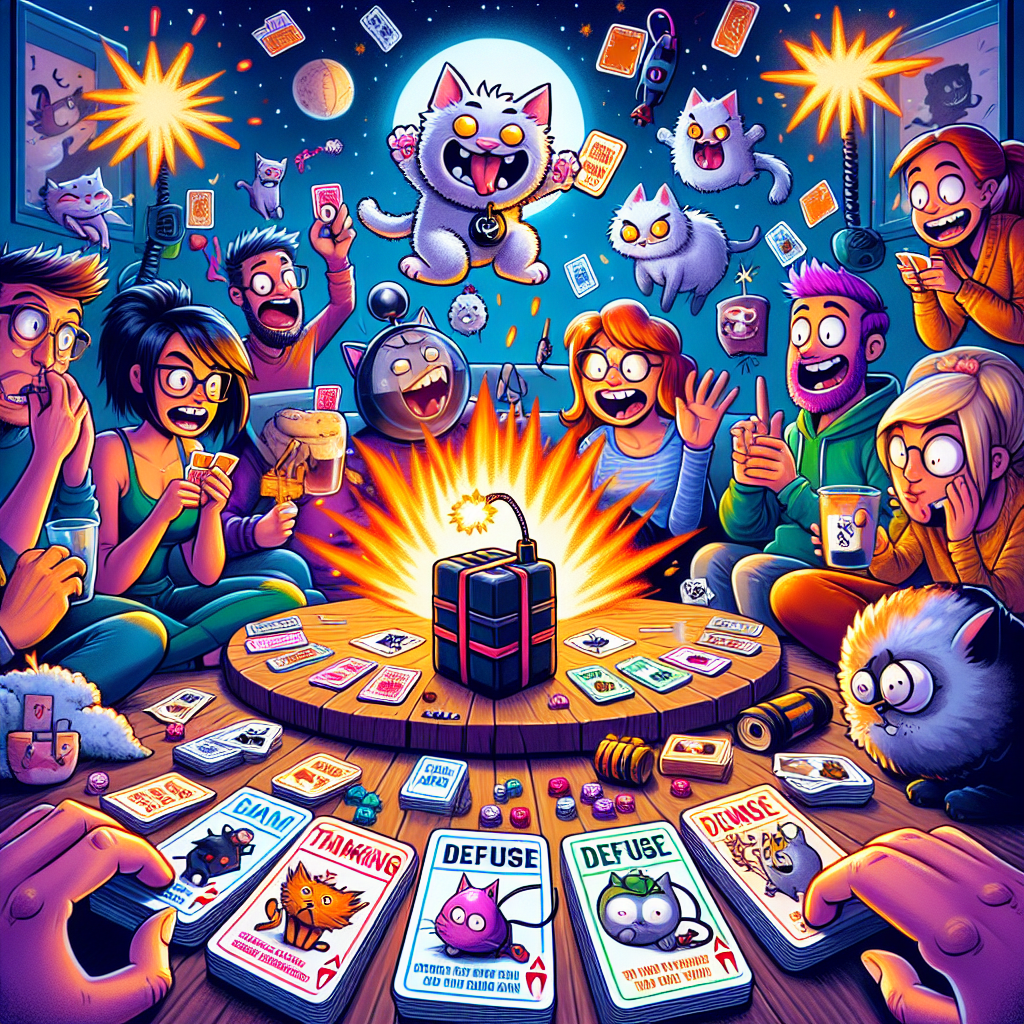
What Ethical Concerns Arise From Ai In Competitive Card Games?
What Ethical Concerns Arise From Ai In Competitive Card Games?
- The introduction of AI in competitive card games raises significant ethical concerns.
- AI can outperform human players by calculating probabilities and anticipating strategies, shifting the nature of competition.
- Access to AI insights may create disparities in fair play based on the financial ability to acquire advanced tools.
- AI’s presence can detract from the emotional and unpredictable aspects of human gameplay, essential for the game’s enjoyment.
- Traditional card games foster trust and camaraderie, elements that may be undermined by AI’s involvement.
- Concerns arise about losing the social bonds that make games meaningful in the pursuit of victory.
- Emphasis should be on honoring skill, creativity, and the human experience in competitive card games.

What Ethical Concerns Arise From Ai In Competitive Card Games?
How Will Ai-Driven Opponents Challenge Our Strategic Thinking?
How Will AI-Driven Opponents Challenge Our Strategic Thinking?
Picture yourself at a table, hands resting on a well-worn deck of cards—issues at stake, friendships hanging in the balance. It’s a classic card game, one where intuition often plays just as vital a role as logic. Now, introduce a newcomer to this game—a formidable AI opponent, analyzing every move not just in real time, but by sifting through mountains of data. What happens next? The stakes get higher, that’s for sure.
At first, the intuition we rely on—those gut feelings cultivated through experience—may feel threatened. Shouldn’t a game equally steeped in the human condition see us as the kings and queens? Instead of relinquishing power to cold calculations, we must remind ourselves that the essence of strategy is an art form, a blend of pattern recognition and the unpredictable nature of human emotion.
This is not merely a challenge; it’s an opportunity for growth. Imagine the conversations you’ll have, dissecting each new “hand” dealt by AI. You’ll strategize and adapt—not because you’re simply trying to beat a machine, but because it is pushing your lateral thinking into new territory. It’s like a dance: the opposition teaches you new steps in the complex choreography of negotiation, persuasion, and tactical planning.
But let’s not gloss over the ethics of it all. Our relationship with AI must be one of partnership, not an adversarial standoff. As these innovations evolve, it becomes our responsibility to ask: How do we ensure that technology serves the greater good? This contemplation will forge a fairer arena—a table not just for competition but for camaraderie.
So, what will this look like on a social scale? Consider the implications of real-time strategy adaptations in business, politics, or everyday life. Friends and rivals alike come together to share insights, pausing to reflect on not just the game, but each other. In this new landscape, we embrace trust as our greatest ally.
These AI-driven opponents won’t just challenge our strategic thinking; they will invite us to redefine it. As we gather at our table, hearts racing and minds buzzing, let’s remember this: it’s not just about winning; it’s about learning, growing, and connecting through the ever-evolving game of life. So, shuffle that deck, because the real game is just beginning.

How Will Ai-Driven Opponents Challenge Our Strategic Thinking?
How Will Ai-Driven Opponents Challenge Our Strategic Thinking?
- Introduction of AI opponents in strategic games raises the stakes significantly.
- Intuition, a hallmark of human strategizing, feels threatened by cold, calculated AI decisions.
- The essence of strategy combines art, pattern recognition, and human emotion.
- AI presents an opportunity for growth and adaptation in strategic thinking.
- Partnership with AI should be emphasized over adversarial competition for ethical considerations.
- Real-time strategy adaptations will impact business, politics, and social interactions.
- The focus shifts from merely winning to learning, growing, and connecting through the experience.

How Will Ai-Driven Opponents Challenge Our Strategic Thinking?
Can Ai Help Us Preserve The Tradition Of Card Games?
Can AI Help Us Preserve the Tradition of Card Games?
Imagine an evening filled with laughter, friendly banter, and the satisfying shuffle of well-worn cards. Card games are woven into the fabric of our communities, transcending generations, and bringing families and friends together around a simple table. Yet, as our lives become increasingly fast-paced and digital, these cherished traditions face the risk of fading into the background—relegated to memories of simpler times. But what if AI could breathe new life into our beloved card games, preserving not only the gameplay but also the camaraderie that comes with it?
At first glance, the thought might seem cold—machines stepping in where human hands once thrived. However, consider this: AI can act as an enhancer, creating tools that enrich our card game experiences. Imagine an intuitive app that connects players across spans of distance—grandparents in one state, grandchildren in another—sharing laughter and social interaction over a game of bridge. The technology doesn’t replace the heart of playing; it opens new avenues for connection, fostering relationships that distance might otherwise sever.
From a rational standpoint, the evolution of card games in the digital age has already begun. Many gamers now turn to virtual platforms, leaving behind physical cards as they immerse themselves in digital interfaces. Wouldn’t it be wise to embrace AI to maintain what we hold dear while adapting to the times? Through AI, we can not only recreate traditional games—complete with nuanced gameplay—but also customize them, making every experience unique and personal.
But let’s not forget the ethical consideration of preserving our cultural heritage. Card games carry stories, strategies, and histories that deserve to be honored and shared. Using AI to analyze, categorize, and teach these games not only preserves their essence but also passes them on to the next generation. Children can learn about their grandparents’ strategies while gaining insight into the culture and camaraderie associated with each game.
Engaging with AI doesn’t have to mean losing the heart of our traditions; instead, it can ignite a revival. Imagine a future where those age-old traditions adapt, evolve, and thrive, buoyed by the very technology we wield. By embracing this tool with open arms, we can ensure that card games remain a vibrant part of our social fabric, binding us together through shared joy and timeless competition. So, let’s pull up a chair, lay out the cards, and invite AI to join us at the table. After all, in the end, it’s about connection—now and for generations to come.

Can Ai Help Us Preserve The Tradition Of Card Games?
Can Ai Help Us Preserve The Tradition Of Card Games?
- Card games are a vital part of community and family traditions, fostering connection across generations.
- As society becomes more digital, there’s a risk of these traditions fading away.
- AI can enhance card game experiences through innovative tools, maintaining the essence of gameplay.
- AI can connect players across distances, allowing for shared gaming experiences among families.
- Embracing AI can help us adapt card games for the digital age while preserving their unique qualities.
- Utilizing AI for analysis and teaching can help preserve the cultural heritage associated with card games.
- By welcoming AI into our card playing, we can revitalize traditions and ensure they thrive in modern society.

Can Ai Help Us Preserve The Tradition Of Card Games?
Will Ai Change Social Interactions During Card Games?
As we sit around a table, cards in hand, sharing laughter and maybe a few friendly jabs, there’s a certain magic in the air. These moments, wrapped in anticipation and camaraderie, remind us why we play—and why we connect. But what happens when artificial intelligence becomes a part of this age-old ritual? Will AI change social interactions during card games, or will it enhance the human connections that have always defined them?
At its core, a card game is a tapestry woven from stories, strategies, and shared experiences. We rely on our instincts, reading not just the cards but the faces around us. There’s an unspoken bond forged over the table, a dance of trust where one missed bluff can be a catalyst for laughter or a spark for friendly rivalry. Enter AI, an entity designed to analyze every card, every statistic, and every player’s move with an unmatched precision. Initially, this might seem like a game-changer, offering strategic advice and leveling the playing field. But here’s the kicker: it might also dilute the very essence of our interactions.
Think about it—when decisions are dictated not by human instinct but by a cold algorithm, do we lose something crucial? The heart of card games lies not just in winning, but in the stories we craft along the way. AI can assist by enhancing our strategies, but if we lean too heavily on data, we risk losing the authentic connections that make the game worthwhile. Card games have always been as much about the people as they have been about the cards themselves.
Moreover, there’s an ethical dimension to consider. Introducing AI into our gaming circles raises questions about fairness and authenticity. Who holds authority over the game when a machine offers insights based on vast datasets? Are we still in it for the fun, or are we in a race against an unprecedented intellect? The answer may lie in balance. By embracing AI as a tool rather than a crutch, we can enjoy the thrill of competition while keeping the spirit of the game alive.
Ultimately, the true test of AI’s impact on social interactions during card games will lie not in statistics or strategies, but in how we choose to engage with each other. Whether we’re playing a casual game with friends or a heated match with rivals, it’s those shared glances and moments of hilarity that remind us of our humanity. Let’s use AI to enhance our experience, but let’s never forget the powerful bonds that make card games more than just games.

Will Ai Change Social Interactions During Card Games?
Will Ai Change Social Interactions During Card Games?
- Gathering around a table for card games fosters laughter and camaraderie.
- AI’s introduction raises questions about its impact on social interactions in card games.
- Card games are based on stories, strategies, and shared experiences among players.
- AI can provide strategic advice, but it risks diluting human connection and instinct..
- Heavy reliance on AI might overshadow the authenticity and fun of gameplay.
- Ethical concerns arise regarding fairness and the role of AI in decision-making.
- The focus should be on balancing AI’s assistance while preserving the spirit of human interactions.

Will Ai Change Social Interactions During Card Games?
Conclusion
As we stand on the precipice of a new era where artificial intelligence intertwines with the timeless tradition of card games, it’s crucial to reflect on the rich tapestry of human experience that these games embody. Card games have served as emotional anchors, social connectors, and platforms for friendly rivalry across generations. They are a testament to our humanity—a dance of minds where intuition, strategy, and spontaneity reign supreme. Yet, as AI disrupts the status quo, we must grapple with both its promises and perils.
Imagine sitting at a table, surrounded by laughter, navigating not just the cards, but the shared stories and bonds being woven with each play. AI can enhance this experience, transforming our traditional games by providing a highly skilled opponent or a cooperative partner that can help us refine our strategies. It’s an exhilarating prospect: facing down an AI that knows your playing style, nudging you to think creatively and broaden your tactical horizons. But while we welcome this challenge to our strategic thinking, we must also ask ourselves: at what cost?
The heart of card games lies in the connections they foster—those knowing glances, the playful banter, and the thrill of unexpected turns. Introducing AI into this vibrant ecosystem could risk diluting these moments, shifting our focus from the emotional to the clinical. What happens to the sweetness of victory when the opponent is a cold calculation, devoid of spirit and human insight?
Moreover, we need to consider the ethical implications. The uneven playing field that AI creates could strengthen divides where only those with access to advanced technology enjoy the full depth of the game. As we embrace AI, we must ensure it enhances rather than undermines the fundamentals of fair play, camaraderie, and shared experiences.
Let’s not forget that AI can also serve as a bridge—uniting players across distances, offering children a chance to connect with their elders through shared play. By using technology judiciously, we can preserve traditions, pass them on, and perhaps even revive excitement for card games that might otherwise fade in our fast-paced, digital lives.
As we shuffle those decks and deal the cards, let’s do so with a willingness to adapt and innovate, while holding fast to what matters most: our shared experiences, laughter, and the rich narratives that make each game uniquely our own. The game may change, but let’s ensure that the spirit of play remains unshaken. So here’s to embracing AI, and may it usher in a renaissance of connection, growth, and endless joy around the card table.

Conclusion
Conclusion:
- The integration of AI in card games reflects the blend of tradition and modern technology.
- Card games offer emotional connections and social interactions across generations.
- AI can enhance gameplay by providing skilled opponents and cooperative partners.
- There are concerns that AI may dilute the emotional experiences of card games.
- Ethical implications of AI include potential access divides that affect fair play.
- AI has the potential to unite players across distances and preserve card game traditions.
- Embracing AI should focus on innovation while prioritizing shared experiences and the spirit of play.

Conclusion
Other Resources

Other Resources
Here is a list of other resources you can review online to learn more:
- Root: The Riverfolk Expansion
- WordPress
- How to Play Podcast
- Asmodee
- Star Wars: Rebellion
- Food Chain Magnate
- War of the Ring (Second Edition)
- Rahdo Runs Through
- Portal Games
- Terraforming Mars
- Poker
- Meeple Mountain
- Root
- Lookout Games
- Victory Point Games
- Caverna: The Cave Farmers
Use This Prompt To Get More Resources With Your Favorite Online AI Tool: Please provide me with a list of online articles with their URLs in a bulleted list that I can read regarding Can Artificial Intelligence Change The Way We Play Card Games Forever?

Other Resources
Glossary Terms
Can Artificial Intelligence Change The Way We Play Card Games Forever? – Glossary Of Terms
1. Artificial Intelligence (AI): Computer systems designed to perform tasks that usually require human intelligence, such as learning, reasoning, and playing games.
2. Machine Learning (ML): A subset of AI focused on the development of algorithms that enable computers to learn from and make predictions based on data.
3. Deep Learning: A type of machine learning that uses neural networks with many layers to analyze various factors and improve decision-making, often applied in complex problem-solving.
4. Game Theory: A mathematical framework for modeling scenarios in which players make decisions that influence their outcomes, often used to analyze competitive situations.
5. Reinforcement Learning: A type of machine learning where an agent learns to make decisions by receiving rewards or penalties based on its actions in an environment.
6. Natural Language Processing (NLP): An area of AI focused on the interaction between computers and humans through natural language, enabling the development of conversational agents.
7. Card Game Simulator: Software that emulates the environment and rules of card games, allowing players to practice and engage without needing physical cards.
8. Playing Algorithms: Computational methods that encode strategies and rules for playing card games, often optimizing for the best possible moves.
9. AI Opponent: A virtual player powered by AI that competes against human players in card games, often challenging traditional gameplay dynamics.
10. Ethics of AI: The study of moral implications and responsibilities involved in the development and use of AI, particularly relevant when creating systems that may outperform humans.
11. User Experience (UX): The overall experience of a person using a system, particularly in relation to how enjoyable and efficient a game feels when AI is involved.
12. Augmented Reality (AR): Technology that blends digital content with the real world, potentially enhancing how card games are visualized and played.
13. Virtual Reality (VR): A simulated experience that can replicate or create real-world environments, possibly changing how players interact with card games.
14. Game Balance: The fairness of a game, ensuring that no player has an unfair advantage, which can be influenced by AI-improved strategies.
15. Player Analysis: The process of evaluating a player’s decisions and strategies, which AI can use to provide personalized feedback and improve gameplay.
16. Digital Card Games: Card games that are played online or on electronic devices, which often incorporate AI opponents and various interactive elements.
17. Smart Contracts: Self-executing contracts with the terms directly written into code, potentially applicable in digital card games for ensuring fairness and authenticity.
18. Predictive Analytics: Techniques that analyze current and historical data to make predictions about future outcomes, useful in determining strategies in card gameplay.
19. Adaptive Learning: An AI capability that modifies its strategies and techniques based on the opponent’s moves and tendencies, creating a dynamic gameplay experience.
20. Gamification: The incorporation of game-like elements into non-game contexts, enhancing engagement through AI-driven features in card games.
21. Crowdsourcing Strategies: Gathering diverse strategies and approaches from a community of players to improve AI’s gameplay and understanding of card games.
22. Turn-Based Gameplay: A style of game structure where players take turns making moves, which AI can analyze to optimize decision-making timing.
23. Multiplayer Online Games (MOGs): Games that allow multiple players to interact over the internet, where AI can play significant roles in balancing gameplay.
24. Behavioral Analytics: The study of player behavior and trends to improve game design and AI responsiveness in card games.
25. AI Moderation: The use of AI to oversee player interactions, ensuring fair play and addressing any cheating or harmful behaviors in card games.
26. Game Development: The process of creating a game, which increasingly involves AI to enhance gameplay mechanics and overall player experience.
27. Algorithmic Trading: Using algorithms to make trading decisions, analogous to strategies used in card games for developing winning tactics.
28. Feedback Loop: The system where the output of an AI influences future inputs, allowing for continuous improvement in game strategies over time.
29. Social Play: The social dynamics and interactions experienced while playing card games, which AI must account for to enhance player engagement.
30. Future of Play: Speculations and discussions regarding how innovations like AI will fundamentally alter the landscape and experience of playing card games.

Glossary Of Terms
Other Questions
Can Artificial Intelligence Change The Way We Play Card Games Forever? – Other Questions
If you wish to explore and discover more, consider looking for answers to these questions:
- What specific card games can benefit from AI integration?
- How does AI improve strategic thinking in card games?
- What role does human intuition still play in AI-driven card games?
- Can AI-generated opponents effectively replicate human behavior and psychology?
- How do players feel about competing against AI in card games?
- What technological advancements have been made in AI for gaming?
- How might AI alter the learning process for new card players?
- What are the potential downsides of relying on AI in card games?
- Can AI facilitate cross-generational play in card games?
- How can developers ensure fairness in AI-assisted card gaming?
- What measures can be taken to preserve the social aspects of card games in an AI-enhanced environment?
- What ethical guidelines should govern the use of AI in competitive gaming?
- How can AI contribute to the historical understanding of card games?
- In what ways might AI change the rules or structure of traditional card games?
- What are the implications of AI affecting the competitiveness of card games?

Other Questions
Haiku
Can Artificial Intelligence Change The Way We Play Card Games Forever? – A Haiku
AI at our tables,
Card games evolve, unite—
Hearts and minds entwined.

Haiku
Poem
Can Artificial Intelligence Change The Way We Play Card Games Forever? – A Poem
A Game of Hearts and Minds
In a room where laughter twirls like smoke,
Cards laid out, the stories spoke,
Generations bonded over strategies tight,
Whispers of friendship, glimmers of light.
Yet in shadows creeps a curious eye,
Artificial whispers, a machine can’t lie,
Challenging our wits with calculated grace,
Can it hold the warmth of a smiling face?
Imagine the fusion of flesh and steel,
As AI adapts, makes strategy real,
Predicting our moves, like a dance it learns,
With a flick of a card, a new fire burns.
Yet, pause we must, in thrill’s embrace,
Could we mask the human trace?
For camaraderie’s heartbeat hums in the game,
And machines can’t know the joy of our name.
What lessons can sprawl from algorithms vast?
A child can learn patience, skills unsurpassed,
Yet, trust must linger as we tread this path,
Or the soul of our games will face a new wrath.
The stakes rise higher, the challenge is clear,
As AI peers in, do we approach in fear?
Craft story anew, where the heart plays a role,
Flipping the cards, recounting our soul.
From the warmth of the table, we gather to share,
Holding tight to the laughter, the bonds of our care.
Let technology glow, yet honor our roots,
For in every game laughed, the spirit still shoots.
So let’s shuffle the deck, let’s play day and night,
With AI as ally, our futures are bright,
For every hand dealt, let connection be clear,
As long as we cherish, we’ll never disappear.
Together, we rise, in the dance of the game,
Humans and machines, not quite the same,
In the heart of the card, in the pulse of the play,
Let’s weave our stories, hand-in-hand, come what may.

Poem
Checklist
Can Artificial Intelligence Change The Way We Play Card Games Forever? – A Checklist
Checklist for Embracing AI in Card Games: Heart, Head, and Gut
Emotional Appeals (Heart)
1. Celebrate Shared Moments: Reflect on the laughter and camaraderie that comes from playing card games. How can you ensure these moments remain, even with AI?
2. Preserve Traditions: Consider how you would feel if card game traditions faded away. Think about ways to keep these traditions alive using AI.
3. Foster Personal Connections: Envision scenarios where AI could help bridge distances between friends and family. How can technology enhance those emotional bonds?
Rational Appeals (Head)
4. Assess the Benefits of AI: What data-driven advantages does AI offer in predicting outcomes, improving skills, and fostering strategic thinking? Make a list of specific benefits.
5. Evaluate Fairness: Analyze the potential inequalities AI might introduce in gameplay. Who has access to advanced AI tools, and how might that impact the fairness of competition?
6. Consider Learning Opportunities: Identify ways AI can help novice players learn the game and improve their skills through real-time feedback and personalized challenges.
Ethical Appeals (Ethics)
7. Address Ethical Concerns: Reflect on the moral implications of using AI in competitive games. What ethical standards should guide AI development and its use?
8. Define Fair Play: What does ‘fair play’ mean in the context of AI-enhanced games? Consider how to ensure the essence of competition remains intact.
9. Guard Against Dependency: Consider how to balance reliance on AI versus human intuition and decision-making. What strategies can you implement to avoid losing the human aspect of play?
Authority Appeals (Authority)
10. Seek Expert Opinions: Research insights from gaming experts and AI developers. What do they say about the future of card games with AI?
11. Follow Community Standards: Look into how card game communities are discussing and regulating the use of AI. How can you align with these standards?
12. Learn from Historical Context: Examine how past technological advancements in gaming were integrated. What lessons can be applied to the current AI era?
Narrative Appeals (Narrative)
13. Create Your Own Story: Think about how your experiences with card games can create a narrative. How would adding AI enhance or alter that story?
14. Share Success Stories: Collect anecdotes about players who’ve thrived using AI in their games. How can these stories inspire others to embrace technology?
15. Visualize the Future: Imagine a future card game session with AI. What does it look like? How do players interact, and how does AI enhance the experience?
Social Appeals (Social)
16. Engage in Conversations: Discuss with friends how AI could change your gaming experiences. What are their thoughts and feelings on the matter?
17. Build a Supportive Community: Consider ways to create or join groups that explore AI in gaming together—how can collaboration enhance the experience?
18. Encourage Feedback: If you try AI in card games, actively seek feedback from fellow players. What insights can they share about their playing experience?
Conclusion
As you embrace AI in the world of card games, remember to keep the balance between innovation and the heartfelt connections that make these games special. Use this checklist to guide your exploration and integration of AI while keeping the spirit of play alive!

Checklist
At CardGameNews, we help people who love card games by collating information and news about card games.
Be sure to read our other related stories at CardGameNews to learn more about card games.


