

Reimagining Card Strategy In The Age Of Ai
By Tom Seest
At CardGameNews, we help people who love card games by collating information and news about card games.
Be sure to read our other related stories at CardGameNews to learn more about card games.
How Does Artificial Intelligence Challenge the Heart Of Competitive Card Play?
In the dim light of a smoky back room, where card tables echo the laughter and tension of each dealt hand, competitive card play stands as a living testament to human ingenuity, strategy, and even deception. But nowadays, a new player has entered the game: Artificial Intelligence. While the thrill of a well-executed bluff or the careful calculation of a perfect play has long been the heart of the card game, AI challenges not only the skill involved, but the essence of what it means to compete.
At first glance, the rise of AI seems exciting. These algorithms can analyze patterns, calculate odds, and adapt strategies with lightning speed—capabilities no human rival possesses. For the analytically minded, it offers a chance to elevate the game, pushing players to sharpen their skills in response. Yet, with each calculated move from this digital adversary comes an unsettling reality: can we find meaning in a game where a silicon brain can outthink us at every turn? The thrill of uncertainty—the very pulse of a card game—is being replaced by the cold precision of logic.
And herein lies the ethical conundrum. In a world where algorithms dictate the future of competition, what happens to the camaraderie forged over worn-out decks? The laughter shared in the face of defeat, or the joy of a well-timed play, risks being overshadowed by a sterile pursuit of perfection. The social fabric that binds players together may fray as AI-driven strategies lead to a divide between the tech-savvy and the traditionalists. It raises the question: What do we value more—the art of the game or the victory that comes from machine-driven superiority?
But we needn’t abandon the joy of card play to embrace the future. Rather, we can blend the wisdom of human intuition with AI’s analytical prowess, creating a hybrid landscape where both can coexist. The competitive card game possesses the power to unite us, to challenge us, and to foster connections that are as rich as the history of the game itself. As we stand at this crossroads, it’s essential to remember that competition isn’t just about winning; it’s about the stories we craft and the relationships we nurture along the way. When players dare to embrace both grit and novelty, they can preserve the heart of the game while boldly stepping into the future.

How Does Artificial Intelligence Challenge the Heart Of Competitive Card Play?
How Does Artificial Intelligence Challenge the Heart Of Competitive Card Play?
- Competitive card play showcases human ingenuity, strategy, and deception.
- Artificial Intelligence has entered the card game, challenging traditional skills and the essence of competition.
- AI algorithms analyze patterns and adapt strategies quickly, elevating the game but replacing uncertainty with logic.
- The rise of AI raises ethical concerns about camaraderie and personal connections among players.
- There is a potential divide between tech-savvy players and traditionalists as AI-driven strategies evolve.
- It’s possible to blend human intuition with AI’s analytical skills for a hybrid gaming experience.
- Competition is about more than winning; it involves crafting stories and nurturing relationships in the game.

How Does Artificial Intelligence Challenge the Heart Of Competitive Card Play?
Table Of Contents
- How Does Artificial Intelligence Challenge the Heart Of Competitive Card Play?
- What Emotions Does AI Evoke In Traditional Card Players?
- How Does AI Change the Strategy In Card Games?
- Can AI Understand the Subtle Nuances Of Human Play?
- Is It Ethical for AI to Compete Against Human Players?
- How Does Human Intuition Compare to AI Decision-Making?
- Conclusion
- Other Resources
- Glossary Of Terms
- Other Questions
- Haiku
- Poem
- Checklist
What Emotions Does AI Evoke In Traditional Card Players?
When you sit down for a game night, the air is thick with anticipation. The camaraderie of friends, the weight of strategy, and the thrill of competition pull everyone into the moment. Yet, underneath the nostalgia of a traditional card game, a new player has entered the arena—artificial intelligence. This digital contender has sparked a range of emotions among seasoned card players that can’t be ignored.
Imagine the familiar shuffle of cards and the friendly banter exchanged around the table. For many, these gatherings are more than just a pastime; they are a sanctuary of connection and trust. Enter AI, and suddenly that sanctuary feels a bit different. Players may find themselves battling feelings of vulnerability and competition as they question whether a computer can truly understand the nuances of human interaction inherent in every game. The emotional stakes rise when the line between human and machine blurs, leaving players grappling with uncertainties about authenticity in their cherished moments.
The gut-level reactions are fascinating. Some players find a certain exhilaration in the challenge that AI presents—an opportunity to sharpen their skills against an opponent that can analyze patterns and predict moves in ways no human can. It ignites the pulse of competition and the thrill of the game, pushing players to strategize more deeply. Yet, lurking beneath that exhilaration lies a whisper of fear: will traditional players become obsolete? Will the joy found in casual games fade into algorithmic routines? This internal struggle forces them to confront what they value in the card game they love.
Rationally, players might recognize the benefits of AI in enhancing their skills and strategies. But ethically, they wrestle with the notion of fair play. Can a machine truly replicate the subtleties of bluffing or the psychology behind winning a hand? The narrative unfolds with every game, as players rediscover the heart of why they play: the moments of laughter, the shared experiences, and the triumphs that only come from human interaction.
In a time where technology is rapidly redefining leisure, the social fabric of traditional gaming is challenged yet enriched. AI may amplify our skills, but it can’t replicate the bonds forged over a table of cards. Embracing this change requires a delicate dance between fear and excitement, a reminder that the core emotion of gaming—connecting with others—remains firmly in our hands, cards and all.

What Emotions Does AI Evoke In Traditional Card Players?
What Emotions Does AI Evoke In Traditional Card Players?
- Game nights evoke anticipation, camaraderie, and competitive thrill among friends.
- The introduction of artificial intelligence challenges the nostalgia of traditional card games.
- Players experience vulnerability and competition as they question AI’s understanding of human interaction.
- AI offers a new challenge, pushing players to sharpen their skills against a formidable opponent.
- There are fears that traditional players may become obsolete as gaming evolves with AI.
- Ethical concerns arise over AI’s ability to replicate the subtleties of human behavior in games.
- While technology changes gaming, the essential connections formed during play remain irreplaceable.

What Emotions Does AI Evoke In Traditional Card Players?
How Does AI Change the Strategy In Card Games?
Imagine sitting at a table, the cards before you, each one a window into strategy and anticipation. The thrill of a card game is not merely about the luck of the draw; it’s about reading your opponent, gauging their intentions, and adjusting your plans at a moment’s notice. But as artificial intelligence finds its way into our beloved card games, it flips the script on everything we thought we knew—not just about strategy, but about connection, competition, and the very essence of play.
AI enters the arena like a fresh challenger, packing a powerful punch of analytical prowess. With algorithms capable of assessing vast amounts of data, AI doesn’t just play the game; it redefines what it means to strategize. It analyzes patterns, predicting moves before you’ve even laid your cards down. You can feel the weight of that challenge—a little excitement mixed with a splash of intimidation. Yet it’s not just a battle of the minds; it’s a call to rise above the noise, to hone our instincts, and adapt our gameplay.
On one hand, we could throw our hands up in surrender, harboring fears that human intuition would be rendered obsolete. But let’s face it—this isn’t just about machines crunching numbers. It’s a dance, one that can foster creativity. How many great stories have been told in the heat of competition? The stories woven in the moments of unexpected triumph, the comical missteps, and the glorious blunders often lead to deeper connections. When AI becomes part of the mix, it urges us to up our game, inviting us to embrace learning in ways we’ve yet to explore. Do we give in to the machine, or do we evolve?
And therein lies an ethical tug-of-war. As we see AI become a formidable opponent in card games, we must ask ourselves: how do we keep the spirit of camaraderie intact? Remember those evenings spent laughing over tabletop disputes and strategy debates? We can harness that nostalgia, that human connection and transform it, rather than lose it. By using AI as a tool rather than an adversary, we have the opportunity to elevate our experiences, drawing players closer together.
So, the next time you deal a hand, remember that AI is not just rewriting strategies—it’s a reminder of what makes us human: adaptability, creativity, and the joy of the game. Navigate this new terrain with enthusiasm, embrace the challenges, and turn them into stories worth sharing.

How Does AI Change the Strategy In Card Games?
How Does AI Change the Strategy In Card Games?
- The thrill of card games involves strategy, anticipation, and reading opponents, rather than just luck.
- AI introduces new dynamics to card games, redefining strategy and changing the essence of play.
- With powerful algorithms, AI analyzes data and predicts moves, adding excitement and intimidation to the game.
- The presence of AI challenges players to adapt their instincts and enhance their gameplay.
- Rather than fearing AI as a threat, it can inspire creativity and lead to memorable stories and deeper connections.
- The rise of AI prompts ethical considerations regarding the preservation of camaraderie and human connection in gaming.
- Embracing AI as a tool can elevate the gaming experience and reinforce the core qualities of adaptability, creativity, and joy.

How Does AI Change the Strategy In Card Games?
Can AI Understand the Subtle Nuances Of Human Play?
When we gather around a table for a card game, it’s more than just shuffling some pieces of cardboard; it’s a ritual, a coming together of hearts and minds. Picture the laughter, the friendly banter, the way tension hangs in the air as players bluff and strategize, often revealing more about themselves than their hands. This shared experience is rich with nuance—a smirk that means mischief, a sigh that tells a story of desperation. Can a machine ever grasp this tapestry of human interaction?
Our brains engage in a complex dance during these games, combining emotion with strategic foresight. The subtle art of reading a neighbor’s body language, gauging the slight twitch of their fingers, or the flicker of their eyes can lead to victory. These cues are what define us and our connections to one another. An AI, for all its processing power, struggles to translate the richness of these interactions into something meaningful. It processes data, yes, but it lacks the heartbeat behind the hand.
Consider the ethics of allowing a machine to navigate these social waters. Are we comfortable with an algorithm deciphering our nuances, profiting from our emotions while remaining devoid of empathy? Trust is built on the unspoken bonds formed in moments around that game table—an AI can’t experience that first-hand. It stands as an observer, a calculation of probabilities without the depth of understanding required to navigate the highs and lows of human play.
As we lean into the evolution of technology, it’s crucial to reflect on what we might lose. Think about the stories we share, the lessons learned, the friendships formed around a simple game. When the stakes feel high and emotions are raw, it’s human connection that ultimately guides our decisions. We can appreciate the strides AI has made in many fields, but part of what makes games, and life itself, meaningful lies in the unpredictability of the human spirit.
So, next time you gather for a game, remember: it’s not just about winning or losing. It’s about embracing the beauty of our shared experience—a celebration of humanity’s complexity that AI, for all its advancement, may never fully understand. We must advocate for a world that values these nuances and understands their role not just in play, but in forging connections that bind us together.

Can AI Understand the Subtle Nuances Of Human Play?
Can AI Understand the Subtle Nuances Of Human Play?
- Card games are a ritual that fosters human connection, blending laughter and tension.
- Players reveal their personalities through actions and body language, adding depth to the game.
- AI struggles to comprehend the emotional nuances and interpersonal dynamics inherent to gameplay.
- Trust and empathy are crucial elements that machines cannot replicate in social interactions.
- Reflecting on technology’s evolution is important to understand what we might lose in human connection.
- Human experiences, lessons, and friendships formed during games are invaluable compared to AI calculations.
- The essence of gaming lies in shared experiences and unpredictability that AI may never grasp.

Can AI Understand the Subtle Nuances Of Human Play?
Is It Ethical for AI to Compete Against Human Players?
When you sit down to play a card game, you’re engaging in a dance of strategy, intuition, and human connection. Each shuffle of the deck is an invitation, not just to test your skill, but to become part of something bigger. It’s where we bond with friends and strangers alike, share laughter, and occasionally, the sweet sting of defeat. But what happens when an artificial intelligence takes a seat at that table? Is it ethical for this digital opponent to compete against human players?
Let’s start at the heart: who or what are we really playing against? When we challenge an AI, we face not merely an algorithm but a reflection of our own ingenuity—a creation of human thoughts, desires, and, yes, flaws. Those lines of code represent the brilliance of the very same species that created the complexities of joy and sorrow, risk and reward. Yet, a question lingers: can a synthetic mind truly understand what it means to play? Can it feel the thrill of victory or the crushing weight of loss? Can it share in the spirit of the card game, where every match is steeped in history and every player’s backstory contributes to the unfolding drama?
Turning to the rational side, consider the benefits an AI might introduce. It can analyze patterns and strategies at lightning speed, challenging players in ways we’ve never encountered before. By pushing us to adapt, it can teach us valuable lessons and sharpen our skills. But, here’s where the gut comes in—what if that edge transforms the essence of our beloved games? Suddenly, the competition seems too daunting, the joy feels diminished, and the human touch fades for mere calculations. The very foundation of connection in gameplay seems at risk.
Ethically, we must ask: where do we draw the line? Is it right for an AI—designed to learn, adapt, and, in some instances, outsmart human players—to blur the lines of traditional gameplay? Alongside this concern lies a collective yearning for fairness and the desire for meaningful experiences shaped by human interaction.
It’s about balance. The excitement of innovation must coexist with the respect for what makes us human. As we navigate this delicate landscape, we must remind ourselves that every card flipped, every challenge faced, and every laugh shared is a testament to our shared humanity. Together, let us forge a path where both AI and humanity can coexist, enriching the games that bind us rather than competing against the very spirit of play.

Is It Ethical for AI to Compete Against Human Players?
Is It Ethical for AI to Compete Against Human Players?
- Playing card games involves strategy, intuition, and forging human connections.
- Introducing AI into card games raises ethical questions about competition between humans and digital opponents.
- AI represents human ingenuity, reflecting our thoughts, desires, and flaws through its algorithms.
- Questions arise about whether AI can truly understand and share in the emotional aspects of gameplay.
- AI can enhance gameplay by analyzing strategies and pushing players to improve their skills.
- Concerns exist that AI’s involvement may diminish the joy and human connection in traditional games.
- A balance must be struck between innovation and the preservation of human experiences in gaming.

Is It Ethical for AI to Compete Against Human Players?
How Does Human Intuition Compare to AI Decision-Making?
In the grand play of life, decision-making often feels like a high-stakes card game, where the stakes are bad beats and golden opportunities. Picture yourself at a table, each choice a card flipped over, revealing a slice of fate. Now, you might think that artificial intelligence, all numbers and algorithms, plays a different game entirely. But the truth is more nuanced; it’s a blend of art and science, intuition and computation.
Let’s start with the heart. Think about the last time your gut told you to take a leap of faith—perhaps leaving a secure job to chase a passion. In that moment, your emotional intelligence took the lead, guiding you through the unknown. Humans have an innate ability to read emotions, pick up social cues, and make decisions that resonate on a deeply personal level. We connect with each other through stories, experiences, and the unspoken bond we share. AI, on the other hand, relies on data, devoid of this rich tapestry of human experience. Its decisions can analyze patterns efficiently, but they lack the warmth of understanding that comes from years of navigating the complexities of human emotion.
Then there’s the head—the cold, hard logic that drives decisions. Here, AI shines like a diamond in the rough. With heaps of data to crunch, AI can sift through mountains of information in the blink of an eye, revealing trends and insights that a human might overlook. This rational side is critical, especially in situations demanding precision, like medical diagnostics or financial forecasting. Yet, while AI can outthink us on factual grounds, it grasps the heart of decisions only superficially.
Now, let’s not forget the ethical dimension. Who should be making decisions when lives hang in the balance? Sharing the decision-making responsibility fosters a partnership. We can use AI’s analytical prowess while infusing human values into the mix, ensuring choices are not only informed but also aligned with our moral compass.
So, next time you’re at that metaphorical card table, consider the blend of intuition and intellect. Whether playing your hand or letting AI deal the cards, remember: it’s not just about winning—it’s about how we play the game. Together, we can leverage the best of both worlds, creating a future that respects human connection while embracing the power of technology. The key lies in recognizing that heart, head, and gut can collaborate for decisions that are as informed as they are human.

How Does Human Intuition Compare to AI Decision-Making?
How Does Human Intuition Compare to AI Decision-Making?
- Decision-making in life can be compared to a high-stakes card game, where choices reveal our fate.
- Artificial intelligence (AI) combines art and science, blending intuition with computation.
- Human emotional intelligence plays a pivotal role in decision-making, guiding choices through gut feelings and personal connections.
- AI excels in logical decision-making due to its ability to process vast amounts of data quickly and identify patterns.
- Despite its strengths, AI lacks the deep understanding of human emotions and ethical considerations in decision-making.
- Collaborating with AI allows for informed decisions that incorporate human values and ethics, especially in critical situations.
- The future of decision-making relies on harmonizing human intuition and AI’s analytical capabilities to respect human connection while using technology.
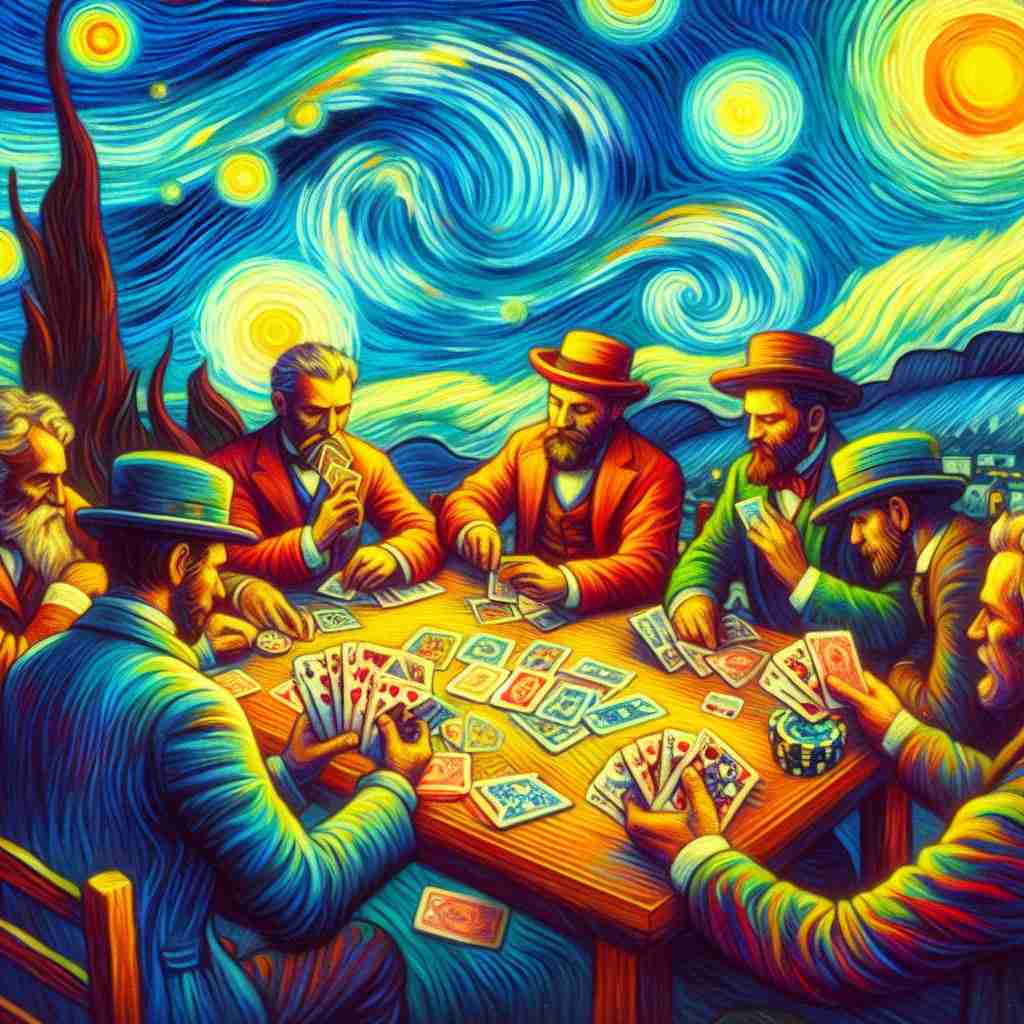
How Does Human Intuition Compare to AI Decision-Making?
Conclusion
Competitive card play has always been more than just a game; it’s a tapestry of strategy, emotion, and connection. In those smoky corners where laughter mingles with tension, players build friendships, revel in friendly rivalry, and experience the raw thrill of human interaction. Yet, as artificial intelligence steps onto this cherished stage, the dynamics of card games are being reshaped in ways we could never have anticipated.
AI brings a data-driven precision to the table, analyzing patterns and recalibrating strategies at lightning speed, rendering human intuition vulnerable. It’s an exhilarating challenge, pushing players to refine their skills. However, this evolution raises a fundamental question: What happens to the heart and soul of a game steeped in human experience? Would a machine’s cold calculations replace the warmth of camaraderie forged over countless hands of poker? The essence of competition cannot be reduced to algorithms; it’s the shared stories and the unpredictable human spirit that infuse life into the game.
With AI in the mix, players grapple with a cocktail of emotions—fear of obsolescence looms large as they wonder whether the thrill of victory will be diminished to a sterile algorithmic efficiency. Ethical considerations emerge, too. Can we ethically compete against a creation that, despite its cleverness, lacks the capacity for genuine human connection? Amid these conundrums, the narrative remains clear: card players across the globe must adapt, embracing the shifting landscape without sacrificing the very essence of why they play.
Rather than seeing AI purely as an adversary, it can be a tool—an opportunity to elevate the game to new heights. By learning from AI’s analytical capabilities, players can nurture and enhance their skills while cherishing the beautiful unpredictability that human intuition brings to the table. The possibility of collaboration beckons us to envision a future where the heart of human card play persists in harmony with the advancements of technology.
Ultimately, it’s about finding balance. The thrill lies not solely in winning but in the journey—the laughter shared, the relationships forged, and the moments of spontaneity that define every game. As we shuffle the cards of our future, let’s ensure that our humanity remains at the forefront, celebrating the connections forged around the table while inviting innovation to join the dance. In the end, it’s our shared experiences that will keep the spirit of competitive card play alive, bridging the gap between tradition and the exciting potential that AI brings.

Conclusion
Conclusion:
- Competitive card play encompasses strategy, emotion, and connection among players.
- AI is reshaping the dynamics of card games, introducing data-driven precision and recalibrating strategies.
- This evolution challenges players to refine their skills while questioning the essence of human experience in games.
- Concerns arise about losing the camaraderie and unpredictable spirit typically present in card play.
- Emotions like fear of obsolescence and ethical implications of competing against AI become prominent topics.
- AI can be viewed as a tool to enhance skills rather than just an adversary, fostering collaboration between human players and technology.
- Finding balance is crucial; the joy of card play lies in shared experiences and maintaining human connections amidst technological advancements.

Conclusion
Other Resources

Other Resources
Here is a list of other resources you can review online to learn more:
- Terraforming Mars
- Tzolk’in: The Mayan Calendar
- Eurogamer
- Pandemic Legacy: Season 1
- Food Chain Magnate
- The Crew: The Quest for Planet Nine
- Castles of Burgundy: The Dice Game
- Cool Mini or Not (CMON)
- Mansions of Madness: Second Edition
- Brass: Birmingham
- Hanabi
- Queen Games
- Spirit Island: Branch & Claw Expansion
- Rio Grande Games
- Flying Frog Productions
- Hearts
- Dominion
- 7 Wonders Duel
- Solitaire
Use This Prompt To Get More Resources With Your Favorite Online AI Tool: Please provide me with a list of online articles with their URLs in a bulleted list that I can read regarding How Does Artificial Intelligence Challenge the Heart Of Competitive Card Play?

Other Resources
Glossary Terms
How Does Artificial Intelligence Challenge the Heart Of Competitive Card Play? – Glossary Of Terms
1. Artificial Intelligence (AI): Computer systems designed to perform tasks that typically require human intelligence, such as learning, reasoning, and problem-solving.
2. Competitive Card Play: The action of playing card games at a skilled level, often involving strategy, skill, and psychology to outsmart opponents.
3. Algorithm: A set of rules or calculations used by AI to analyze data and make decisions in gameplay.
4. Machine Learning: A subset of AI that enables systems to learn from data and improve performance over time without explicit programming.
5. Game Theory: A mathematical study of strategic interactions between rational decision-makers, often used to determine optimal strategies in card games.
6. Bluffing: A strategy in card play where a player pretends to have a stronger hand than they actually do, which AI can analyze and detect.
7. Human Intuition: The instinctive understanding and gut feelings that players rely on during competitive play, challenging AI’s calculated decision-making.
8. Data Analysis: The process of inspecting and interpreting data to inform AI’s understanding of patterns in gameplay.
9. Neural Networks: AI systems modeled after the human brain that can process information and learn complex patterns in card play strategies.
10. Simulation: The use of AI to replicate card games in a controlled environment, allowing for the testing and refinement of strategies.
11. Opponent Modeling: AI’s ability to predict an opponent’s actions or strategies based on their past behaviors and tendencies.
12. Decision Trees: A model used by AI to map out possible actions and their outcomes, aiding strategic choices in card play.
13. Nash Equilibrium: A situation in game theory where players reach a strategy from which no player can benefit by changing their strategy unilaterally.
14. Psychological Warfare: The mental tactics used in card games to unsettle opponents, which AI may struggle to understand fully.
15. Pattern Recognition: The capability of AI to identify trends and regularities in playing styles or card sequences.
16. Bet Sizing: The strategic decision regarding how much to bet in a game, which can be influenced by psychological factors and AI calculations.
17. Reinforcement Learning: A type of machine learning where AI learns through trial and error by receiving rewards or penalties based on its actions in card plays.
18. Card Counting: A strategy used by players to track the ratio of high to low cards remaining in the deck, which AI can help calculate.
19. Adaptive Strategies: Techniques employed by AI that evolve based on the behavior and tactics of opponents during gameplay.
20. Information Asymmetry: A situation in card games where one player has more or better information than others, affecting strategic decisions.
21. Endgame Strategy: Tactics specifically employed in the later stages of a card game, where AI can analyze previous moves to optimize performance.
22. Bluff Detection: AI’s capability to identify when a player may be bluffing, which can shift the dynamics of a game.
23. Strategic Depth: The complexity of potential strategies in card games, influencing both human players and AI decision-making.
24. Feedback Loop: The process where AI refines its strategies based on the results of previous games, improving its competitiveness over time.
25. Human-AI Collaboration: The combination of human intuition and AI insights to enhance overall performance in competitive card play.
26. Ethical Considerations: The moral implications of using AI in games, such as fairness and the impact on traditional gameplay dynamics.
27. Cognitive Load: The mental effort required by players to process information during card games, which AI aims to reduce through analysis.
28. Error Margin: The range of potential inaccuracies in AI predictions or calculations, impacting its performance in critical gameplay situations.
29. Strategic Advantage: A position in card play that provides a higher probability of winning, often leveraged by both AI and skilled players through analysis.
30. Game Dynamics: The underlying mechanics and interactions within a card game that influence player strategy and AI algorithms.

Glossary Of Terms
Other Questions
How Does Artificial Intelligence Challenge the Heart Of Competitive Card Play? – Other Questions
If you wish to explore and discover more, consider looking for answers to these questions:
- What are the specific ways AI analyzes patterns in card games?
- How have traditional card strategies evolved with the introduction of AI?
- What emotions do AI competitors evoke in new players versus seasoned players?
- Are there specific card games where AI has shown to be more effective than humans?
- What ethical guidelines should govern AI in competitive gaming?
- How do players feel about AI taking the place of traditional gameplay elements?
- What potential benefits does AI bring to casual card play?
- How can players maintain human connection in a game increasingly dominated by AI?
- What are the risks of over-reliance on AI in card games?
- Can AI ever replicate the emotional connections formed during gameplay?
- What future innovations might further integrate AI into card games?
- What role does nostalgia play in the resistance to AI in traditional games?
- In which situations could human intuition still outshine AI decision-making?

Other Questions
Haiku
How Does Artificial Intelligence Challenge the Heart Of Competitive Card Play? – A Haiku
Cards shuffle, hearts race,
AI’s cold logic looms large.
Yet, we play for kin.

Haiku
Poem
How Does Artificial Intelligence Challenge the Heart Of Competitive Card Play? – A Poem
In smoky rooms where laughter rings,
A dance of strategy and heart begins,
Cards shuffled, stories spun,
Each hand a tale of loss and fun.
But lo, a challenger, bold and bright,
A silicon mind, a calculating sight,
AI enters, strategies sharp as a knife,
Turning our game into a clash of life.
Excitement and dread, they intertwine,
A digital rival to our play divine,
But as cards lay bare our hopes and fears,
What happens to joy amidst data’s sneers?
The camaraderie forged in years gone past,
Laughter interrupted, connections at last,
Yet in the shadows of this new terrain,
AI’s cold logic looms, a looming chain.
Can it fathom the nuances of a friend’s sly grin?
Can it understand the depths within?
Though algorithmic prowess may lead the attack,
The warmth of our hearts, will it hold back?
We sit and question, tugged by ethics,
Is true play lost in these numerical metrics?
Yet, embrace we must this blend of the two,
A chance to sharpen and grow, renew.
For what is a game without tales to weave?
The stories of triumph that hearts receive,
From bluffs to cheers, in a world we create,
Let’s merge human instinct with what tech can translate.
So gather your friends, let the cards take flight,
In this dance of the intellect, hold tight to what’s right:
For winning is not just in the score we keep,
But in bonds that we nurture and memories deep.
Together we forge paths anew,
With heart, head, and gut, we’ll speak true,
In every shuffle, a promise to find,
The essence of play—ever human, ever kind.

Poem
Checklist
How Does Artificial Intelligence Challenge the Heart Of Competitive Card Play? – A Checklist
Checklist for Navigating Competitive Card Play in the Age of AI
Emotional Appeals
_____ Reflect on the camaraderie and joy of playing card games with friends and family.
_____ Identify emotions that arise during gameplay (excitement, tension, vulnerability).
_____ Consider personal stories that highlight the importance of human connection in gaming.
Rational Appeals
_____ Analyze how AI can help improve game strategies and skills.
_____ Evaluate the benefits of using AI for data analysis in gameplay decisions.
_____ Assess times when strategic innovation (both human and AI) has enhanced your game experience.
Ethical Considerations
_____ Discuss the implications of AI competing against human players.
_____ Determine what role fairness and authenticity play in your gaming experience.
_____ Reflect on the potential loss of personal connection with AI involvement in games.
Authority Perspectives
_____ Research experts’ opinions on AI in competitive gaming.
_____ Explore case studies of AI’s impact on card games and player dynamics.
_____ Stay informed about ongoing discussions and regulations concerning AI in gaming.
Narrative Insights
_____ Create narratives around memorable game experiences—what made them meaningful?
_____ Consider how your gameplay stories change with the introduction of AI.
_____ Share anecdotes that highlight the unpredictability of human play vs. AI decisions.
Social Dynamics
_____ Evaluate how AI changes the social fabric of competitive card play.
_____ Identify feelings towards the divide between traditional players and tech-savvy individuals.
_____ Encourage conversations about preserving the essence of human interaction in gaming.
Practical Application
_____ Experiment with integrating AI tools into your game strategy while maintaining human elements.
_____ Organize game nights that prioritize storytelling and connection regardless of AI presence.
_____ Set personal reminders to focus on the recreational aspect of card play, not just winning.
Use this checklist to enhance your understanding and engagement with competitive card play in the age of AI, reinforcing connections and strategies that highlight the essence of human interaction.

Checklist
At CardGameNews, we help people who love card games by collating information and news about card games.
Be sure to read our other related stories at CardGameNews to learn more about card games.


