Unprecedented Ai Insights On Player Strategies
By Tom Seest
At CardGameNews, we help people who love card games by collating information and news about card games.
Be sure to read our other related stories at CardGameNews to learn more about card games.
Can Artificial Intelligence Predict Player Strategies In Ways We Never Imagined?
Picture this: a simple card game. Two players face off, the tension crackling like a summer storm. They shuffle their decks, deal their hands, and dive into a dance that’s as old as humanity itself—strategy, deception, and chance all swirling together. But, what if I told you that tucked away in a corner of the digital world, artificial intelligence is quietly revolutionizing the way we understand these age-old contests? You see, AI is no longer just a sidekick; it’s becoming a poker partner and a chess master rolled into one, capable of predicting player strategies in ways we never imagined.
At first glance, the idea seems unfathomable. How could a machine, devoid of human emotion and intuition, grasp the subtleties of human decision-making? Yet, when hundreds of thousands of games are analyzed in the blink of an eye, patterns emerge. AI can strip away the chaos, revealing what lies beneath—the psychological quirks and tendencies that make each player unique. In a game where reading your opponent can feel like deciphering ancient hieroglyphics, this insight is pure gold.
Now, let’s engage your mind for a moment. Imagine how this ability changes the landscape of competitive play—not just for high-stakes tournaments but for casual weekends with friends. Players who once relied solely on gut instinct find themselves facing a formidable opponent that understands their strategies better than they do. The stakes are raised, and the thrill of the game intensifies. But with this newfound power comes a wave of ethical questions. Are we losing the essence of skill and chance if machines hold the upper hand? Is there a risk of diminishing the human spirit of competition that makes these experiences so exhilarating?
Ultimately, it’s about connection—with the game, with our opponents, and with ourselves. AI in the realm of card games enhances the experience, unraveling deeper layers of strategy and mentorship. Imagine the possibilities: seasoned players mentoring novices, sharing insights that were once hidden beneath years of experience. The card table might transform into a classroom, where everyone learns not just to play the game but to appreciate its artistry.
Harnessing the power of AI presents an opportunity for growth, for camaraderie, and for forging bonds that transcend mere competition. When we embrace these advancements, we’re not just improving our game; we’re enriching our human experience, ensuring that the card game remains timeless—forever a beloved chapter in our collective story.

Can Artificial Intelligence Predict Player Strategies In Ways We Never Imagined?
Can Artificial Intelligence Predict Player Strategies In Ways We Never Imagined?
- Card games spark tension and strategy between players, blending deception and chance.
- Artificial intelligence is revolutionizing our understanding of these games, acting as both a poker partner and a chess master.
- AI analyzes countless games rapidly, uncovering unique player patterns and psychological traits.
- This capability changes the dynamics of competitive play, raising stakes for both casual and high-stakes tournaments.
- Ethical questions arise regarding the impact of AI on skill, chance, and the human spirit in competition.
- AI enhances game experiences and facilitates mentorship between seasoned and novice players.
- Embracing AI in card games enriches human connections and preserves the timeless nature of these competitions.

Can Artificial Intelligence Predict Player Strategies In Ways We Never Imagined?
Table Of Contents
- Can Artificial Intelligence Predict Player Strategies In Ways We Never Imagined?
- What If Ai Could Uncover Hidden Strategies In Gameplay?
- How Do Player Behaviors Change With Ai Insights?
- Can We Trust Ai To Guide Our Gaming Decisions Ethically?
- What Stories Could Unfold As Ai Predicts Player Moves?
- How Do Top Gamers Feel About Ai Analyzing Their Strategies?
- Conclusion
- Other Resources
- Glossary Of Terms
- Other Questions
- Haiku
- Poem
- Checklist
What If Ai Could Uncover Hidden Strategies In Gameplay?
What If AI Could Uncover Hidden Strategies In Gameplay?
Imagine sitting around a table, cards in hand, the air thick with anticipation. The tension in a card game is palpable, and every decision counts. We’ve all been there, right? The thrill of bluffing, the heart-pounding rush of a high-stakes play. It’s not just a game; it’s a clash of minds, a dance of strategy. Now, what if artificial intelligence could peel back the layers of human intuition and reveal hidden strategies lurking beneath the surface? What if it could take those moments of uncertainty and amplify them into something extraordinary?
When we think about AI in gameplay, it’s easy to get lost in algorithms and data. But at its core, the promise is about enhancing the human experience. Picture an AI companion that doesn’t just track which cards have been played but analyzes the strategies of everyone at the table. It could identify patterns, spot weaknesses, and suggest bold moves, potentially transforming how we approach the game. Suddenly, your go-to buddy’s reckless strategy could be fine-tuned, the timid player might unlock a daring approach, and every hand dealt becomes a learning opportunity rather than just a round of luck.
Now, I get it; there’s a fine line between innovation and losing the essence of what makes a card game enjoyable. But think about it: this isn’t just about winning; it’s about growing. AI can serve as a guide, an additional voice at the table that encourages players to think outside their box and explore new tactics. It’s social and ethical at once, bridging the gap between the expertise of seasoned players and the eager curiosity of newcomers.
Moreover, consider the broader implications of such technology. As AI reveals hidden strategies, it fosters a sense of community. Players from diverse backgrounds can unite, share insights, and elevate their skills together, nurturing an environment where collaboration thrives. Isn’t that what games are all about? Gathering around a table, forming connections, and sharing unforgettable experiences?
So, let’s not shy away from the possibility. Let’s imagine a world where we, the players, harness AI not as a crutch, but as a catalyst for innovation in tomorrow’s gameplay. We can embrace the opportunity to create richer narratives, challenge ourselves, and inspire generations to come—because in the end, it’s more than just a card game; it’s a chance to engage, learn, and grow.

What If Ai Could Uncover Hidden Strategies In Gameplay?
What If Ai Could Uncover Hidden Strategies In Gameplay?
- The excitement and intensity of card games involve mind strategy and decision-making.
- Artificial Intelligence (AI) could reveal hidden strategies and improve gameplay by analyzing player patterns.
- AI can enhance the player experience by offering insights and suggestions that transform traditional play.
- The integration of AI can help players grow, encouraging experimentation with new tactics.
- AI can bridge the gap between experienced players and newcomers, fostering a collaborative learning environment.
- Utilizing AI promotes community by allowing players to share insights and elevate skills together.
- Embracing AI in gameplay can create richer narratives and opportunities for engagement and growth.

What If Ai Could Uncover Hidden Strategies In Gameplay?
How Do Player Behaviors Change With Ai Insights?
How Do Player Behaviors Change With AI Insights?
When you think about the timeless appeal of a good card game, it brings to mind moments of connection, strategy, and even a little bit of luck. But what happens when you toss artificial intelligence into the mix? You might expect robots to take over the table, but instead, they enhance our understanding of player behaviors, turning every hand dealt into an opportunity for growth.
Let’s take a moment to imagine your usual game night. You shuffle the deck, draw your cards, and engage in some healthy competition. It’s not just about the wins or losses; it’s about the connection—life stories unfolding between shuffles and deals. Now, consider the AI insights quietly observing in the background, gathering data not just on your play style but your emotional responses through each turn.
From the heart, these insights reveal the intricate tapestry of human behavior that makes a card game truly special. AI doesn’t just evaluate your odds; it helps you understand why you take risks or play conservatively. It taps into the rawest emotions, guiding players to make informed choices, transforming their experience into something more profound—a kind of self-discovery mixed with a dash of strategy.
From a rational point of view—this is where it gets interesting. Using AI, players can learn about patterns and probabilities that would usually take years of experience to master. Imagine being able to adapt in real-time as the game unfolds. You’re not merely relying on instinct; you’re backed by insights that empower you to make analytical decisions. This newfound prowess fosters confidence that ripples beyond just the game itself.
Ethically speaking, AI can bridge gaps in gameplay experience. Newer players can rise alongside veterans, learning from collective wisdom and refining their skills. Social dynamics stabilize, and friendships flourish, all thanks to technology leveling the playing field.
So, next time you gather around a table for a card game, remember that AI is more than a tool. It becomes a trusted ally in your quest for understanding—not just of the game, but of yourself and your fellow players. It invites curiosity and fosters a community where both novices and veterans can thrive, reinforcing that timeless bond of companionship built on shared experiences. It’s a game-changer, in more ways than one.

How Do Player Behaviors Change With Ai Insights?
How Do Player Behaviors Change With Ai Insights?
- AI enhances understanding of player behaviors in card games, promoting growth and connection.
- During gameplay, AI observes not just strategy but also emotional responses, enriching the experience.
- Insights from AI facilitate self-discovery, helping players understand their risk-taking and conservative plays.
- Players can recognize patterns and probabilities through AI, enabling real-time adaptation and analytical decision-making.
- This newfound confidence in gameplay extends beyond games, benefiting players in other areas of life.
- AI levels the playing field, allowing newer players to learn from experienced ones, fostering friendship and stabilizing social dynamics.
- Ultimately, AI serves as a trusted ally in the card game experience, promoting community and shared understanding among players.

How Do Player Behaviors Change With Ai Insights?
Can We Trust Ai To Guide Our Gaming Decisions Ethically?
When we think about the role of artificial intelligence in our gaming decisions, particularly in something as personal and strategic as a card game, one can’t help but feel a tangle of excitement and apprehension. After all, we’re living in a time where machines are capable of complex strategies, analyzing human behavior, and even predicting outcomes. Yet, the heart of gaming—especially a card game—rests not just in the logic or algorithms behind it, but in the connections we forge and the tales we weave around the table.
Picture this: you sit down for a Saturday night fight—cards shuffled, friends gathered, laughter, and a hint of rivalry in the air. Each hand played is a mix of skill, chance, and instinct. Do we really want to relinquish that experience to a sterile algorithm? Sure, AI can crunch numbers, revealing optimal plays or potential strategies. But what about the stories? It’s the moments of triumph and failure, the gasps, and the high-fives that give weight to a card game, not merely the end result.
Furthermore, there’s the ethical angle to ponder. Trust is built on transparency and integrity. Can we rely on an AI’s guidance when we know it might favor profit drives over our enjoyment or well-being? Especially when many AI systems are developed by companies whose primary goal is to keep us engaged, even at the cost of our experience. It’s our prerogative to question—what motivates the prompts we receive? It’s a thoughtful pause necessary to develop a true moral compass in our gaming experiences.
Then, there’s the rational aspect. AI suggests strategies based on vast datasets and trends, but consider this: those numbers represent others’ experiences rather than our own. Embracing AI’s recommendations can be like letting someone else write your story—it may not feel authentic, and it may lead to less fulfilling outcomes. After all, isn’t it our unique decisions that lead to unforgettable moments around the card table?
The power lies in self-awareness. Use AI as a tool, not a crutch. Engage with it wisely, and remember that gaming is ultimately about connection, creativity, and the thrill of each unpredictable moment. Harness what AI offers, but keep your heart in the game, for it ultimately leads to richer experiences and deeper ties. Let’s navigate this new terrain together, asking questions and sharing the journey, ensuring that every card played brings us closer—both at the table and beyond.

Can We Trust Ai To Guide Our Gaming Decisions Ethically?
Can We Trust Ai To Guide Our Gaming Decisions Ethically?
- The role of AI in gaming induces both excitement and apprehension, especially in personal and strategic card games.
- Card games are built on connections and storytelling, not just logic or algorithms.
- AI can analyze strategies and outcomes, but it may detract from the shared moments of triumph and failure.
- Ethics play a significant role in trusting AI, as its guidance may prioritize profit over enjoyment.
- AI strategies are based on data from others’ experiences, which might not feel authentic to individual players.
- Self-awareness is crucial in using AI; it should serve as a tool rather than a crutch.
- Gaming should focus on connection, creativity, and the unpredictability of each moment.

Can We Trust Ai To Guide Our Gaming Decisions Ethically?
What Stories Could Unfold As Ai Predicts Player Moves?
What Stories Could Unfold As AI Predicts Player Moves?
Picture this: you’re seated around a table, surrounded by friends, the air thick with anticipation and laughter. A simple card game transforms into a battleground of wits and strategy, where each move can shift the tide. Now, imagine introducing artificial intelligence—a keen observer, a silent analyst—into this mix. What stories would unfold as the AI starts predicting player moves?
At first glance, some might see the machine as a cold algorithm, devoid of the warmth of human interaction. Yet, this is where the magic begins. When AI analyzes tendencies and patterns, it doesn’t just predict outcomes; it unveils the deeply human stories behind each player’s strategy. From the nervous newcomer laying low to the seasoned veteran bluffing like a poker pro, each decision offers snippets of their life experiences—triumphs, failures, and quirks that make them who they are.
Imagine the thrill of a player, once confident in their strategic prowess, now faced with the realization that AI knows their every tell. Suddenly, it’s not just a game anymore; it becomes a narrative about vulnerability, ego, and the relentless pursuit of improvement. This newfound layer of pressure can inspire players to adapt, evolve, and sharpen their skills. They learn not just to outmaneuver the AI but to outsmart themselves, exploring the realms of creativity and strategy like never before.
The ethical questions arise, too. Should we trust an algorithm with our social interactions? Is there a line between analyzing moves and undermining the essence of play? These conversations breed deeper connections among players, as they grapple with the implications of technology in a realm traditionally grounded in humanity. It invites discussions about competition versus cooperation, sparking conversations that linger long after the last card is played.
Ultimately, as we embrace this intertwining of human emotion and machine intelligence, we foster a shared journey. The stories we tell at that table—of brash victories, nail-biting losses, and unexpected alliances—become richer and more complex. We inspire one another not just to play better but to connect more profoundly. So the next time you shuffle those cards, remember: beneath those numbers and symbols lies a canvas where our shared experiences and evolving strategies can transform an evening of fun into something remarkable. Advisory, thrilling, and ultimately, human.

What Stories Could Unfold As Ai Predicts Player Moves?
What Stories Could Unfold As Ai Predicts Player Moves?
- Artificial intelligence (AI) can enhance card games by predicting player moves and analyzing tendencies.
- AI reveals the personal stories and strategies behind each player’s tactics, reflecting their life experiences.
- The pressure of being analyzed by AI challenges players‘ confidence and encourages self-improvement.
- Players begin to explore creativity and strategy in ways they haven’t before, pushing their boundaries.
- Ethical questions emerge about the role of AI in social interactions and its impact on the essence of play.
- Discussions about competition versus cooperation foster deeper connections among players.
- The interaction between human emotion and machine intelligence transforms gaming experiences into rich narratives.

What Stories Could Unfold As Ai Predicts Player Moves?
How Do Top Gamers Feel About Ai Analyzing Their Strategies?
In the world of gaming, where strategy reigns supreme and every decision counts, the emergence of AI analysis has stirred a complex brew of emotions among elite players. Picture this: the tension during a high-stakes card game, where warriors of wit face off, crafting intricate strategies with each draw. There’s something almost sacred in the art of gameplay, where choices are made not just for victory, but as an expression of the player’s unique identity. Now, insert AI into this delicate dance, and you’ve got a recipe for feelings that run deep.
On one hand, many top gamers embrace AI with open arms, drawn to its promise of precision and insight. They see it as a tool—a trusted ally that can sift through the mountains of data and present crystal-clear strategies that might elude even the sharpest human minds. This perspective resonates on a rational level, invoking the authority of numbers and algorithms. After all, isn’t progress the very reason we continue to push ourselves? These gamers believe that AI can elevate their game, providing them the edge needed to conquer formidable opponents. They are proud to harness technology, integrating it into their playbooks and expanding their horizons.
Yet, there’s a countercurrent. Many seasoned players express a pang of concern, fearing that too much reliance on AI could lead to a dilution of the very essence of gaming. For them, the thrill of a spontaneous decision—perhaps a bold bluff in a tense card game—captures the spirit of the competition in a way that cold calculations cannot. They worry that as AI offers a path lined with data-driven certainties, it will sap the unpredictability and excitement out of the game they love. In their hearts, they yearn for the raw, unfiltered moments that only human emotion can provide.
At the heart of this debate lies a deeper, ethical question about what defines mastery in gaming. Is it the ability to follow a guide crafted by an algorithm, or is it the capacity to think creatively on one’s feet? The dialogue continues, prompting gamers to engage with each other, to rally around a shared love for the craft, and to explore the potential of AI not as a gatekeeper, but as a companion on their journey. In a world where technology is advancing faster than ever, the challenge—and perhaps the beauty—lies in finding a harmonious balance that respects tradition while embracing innovation.

How Do Top Gamers Feel About Ai Analyzing Their Strategies?
How Do Top Gamers Feel About Ai Analyzing Their Strategies?
- The rise of AI analysis in gaming has sparked strong emotions among elite players.
- Many top gamers view AI as a valuable tool for enhancing strategy through data-driven insights.
- AI is seen as a method to elevate gameplay and gain an edge against tough opponents.
- Conversely, some seasoned players are concerned that over-reliance on AI undermines the essence of gaming.
- Critics believe AI could diminish the thrill of spontaneous human decision-making and unpredictability.
- The debate raises important ethical questions about what constitutes mastery in gaming.
- Gamers are encouraged to find balance between tradition and innovation in their craft.

How Do Top Gamers Feel About Ai Analyzing Their Strategies?
Conclusion
As we wrap up our exploration of Artificial Intelligence in the world of card games, let’s take a moment to reflect on what this all means for us—not just as players, but as humans sharing experiences. Picture that familiar gathering: friends clattering chairs, laughter punctuating the air, a deck of cards waiting to become the canvas for stories yet to be told. In that sacred space, strategy, skill, and the thrill of the game intermingle with our emotions, creating connections deeper than the table itself.
Now, enter AI. At first glance, it might seem like another peripheral character in our human drama. But in truth, it’s the emerging director—one that can analyze gameplay in ways we never imagined, revealing hidden strategies, unique player tendencies, and even emotional undercurrents that shape our decisions. How incredible it is that a machine, understood by many as cold and calculating, could foster a deeper understanding of human behavior at the table? Here’s where it gets interesting. The incorporation of AI isn’t merely about winning; it’s about enriching our collective experience. It offers us insights that can turn casual players into strategists, novices into confidants, and friendships into thriving communities. AI has the potential to transform game nights into gatherings of growth—an adventure of discovery that celebrates tradition while embracing innovation.
However, we must tread carefully. As we let AI into our realm, we face ethical questions: Are we losing that visceral essence—the joy, the spontaneity? When a machine guides our decisions, do we compromise the very emotions that make us human? Where lies the fine line between enhancement and exploitation? This is the narrative we must engage with—a rich dialogue that honors the artistry of play, creativity, and fellowship.
In the end, AI doesn’t have to overshadow the timeless thrill of competition; rather, it can augment it. It’s about wielding these tools wisely, keeping our hearts in the game and remembering that success isn’t just about beating the algorithm. It’s also about learning, connecting, and sharing unforgettable moments around that table. So when you shuffle the cards next time, remember: it’s about more than just the game or winning a hand; it’s about engaging with one another, creating stories, and celebrating the spirit of camaraderie. As we navigate this evolving landscape together, let’s ensure that every card played strengthens our bonds, propelling us into a future rich in both technology and humanity. In the end, it’s not only about the cards we play but the stories we create along the way.
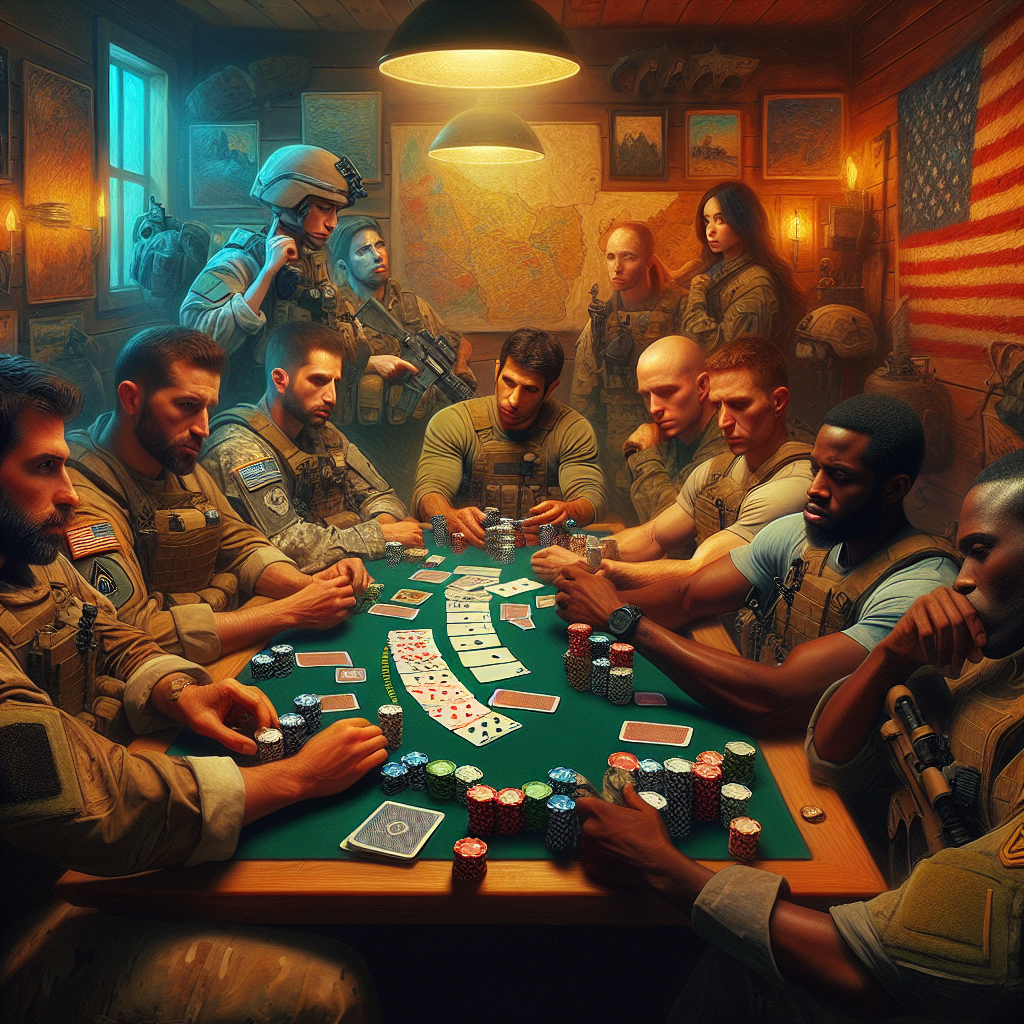
Conclusion
Conclusion:
- The integration of Artificial Intelligence (AI) in card games enhances player experiences and fosters deeper human connections.
- AI acts as a director in gameplay, analyzing strategies, player tendencies, and emotional dynamics.
- This technology has the potential to transform casual players into more strategic participants, enriching communal game nights.
- However, the introduction of AI raises ethical questions about the balance between enhancing and exploiting the gaming experience.
- AI should complement, not overshadow, the excitement of competition and human emotions tied to gameplay.
- Success in card games involves more than winning; it focuses on learning, connecting, and creating memorable moments.
- Ultimately, the goal is to use AI to strengthen human bonds and celebrate the spirit of camaraderie embedded in the game.

Conclusion
Other Resources

Other Resources
Here is a list of other resources you can review online to learn more:
- Tichu
- Power Grid
- Caverna: The Cave Farmers
- Cards Against Humanity
- Aeon’s End
- Kemet
- Hive
- Tabletop Gaming News
- Roxley Games
- GamesRadar+
- Watch It Played
- Pandasaurus Games
- Goliath Games
- Geek and Sundry
- AEG
- No Pun Included
- 2F-Spiele
- Eurogamer
Use This Prompt To Get More Resources With Your Favorite Online AI Tool: Please provide me with a list of online articles with their URLs in a bulleted list that I can read regarding Can Artificial Intelligence Predict Player Strategies In Ways We Never Imagined?

Other Resources
Glossary Terms
Can Artificial Intelligence Predict Player Strategies In Ways We Never Imagined? – Glossary Of Terms
1. Artificial Intelligence (AI): The simulation of human intelligence processes by machines, especially computer systems, including learning, reasoning, and self-correction.
2. Machine Learning (ML): A subset of AI that uses statistical techniques to enable computers to learn from data and improve their performance over time without being explicitly programmed.
3. Deep Learning: A specialized form of machine learning that uses neural networks with multiple layers to analyze data patterns and make predictions.
4. Predictive Analytics: Techniques used to make predictions about future events based on historical data using algorithms and statistical methods.
5. Game Theory: The study of mathematical models of strategic interaction among rational decision-makers, often applied in economics, political science, and psychology.
6. User Profiling: The process of analyzing user data to understand preferences, behaviors, and strategies, which aids in predicting future actions.
7. Behavioral Analytics: Techniques that analyze and interpret user actions to understand patterns that can be used to anticipate future behavior.
8. Reinforcement Learning: A type of machine learning where an agent learns to make decisions by taking actions in an environment to maximize cumulative reward.
9. Neural Networks: Computational models inspired by the human brain that are used in machine learning to recognize patterns and classify data.
10. Data Mining: The process of discovering patterns and knowledge from large amounts of data, often used in predictive analysis.
11. Natural Language Processing (NLP): A subfield of AI that focuses on the interaction between computers and humans through natural language, enabling machines to understand and respond to human speech.
12. Real-time Analysis: The immediate processing of data and generation of insights as soon as the data is received, essential for adapting strategies dynamically.
13. Simulation: The imitation of the operation of a real-world process or system over time, often used to model player behavior in games.
14. Predictive Modeling: The process of creating a mathematical model to predict future outcomes based on input data.
15. Strategy Optimization: Techniques aimed at finding the most effective strategies to achieve a desired outcome within a competitive environment.
16. Opponent Modeling: The process of understanding and predicting an opponent’s strategies and behaviors in competitive scenarios.
17. Anomaly Detection: The identification of rare items, events, or observations that raise suspicions by differing significantly from the majority of the data.
18. Collaborative Filtering: A recommendation technique used in AI to predict a user’s interests by collecting preferences from many users.
19. Data Visualization: The graphical representation of information and data, making it easier to spot patterns and insights.
20. Ethics in AI: The study of moral issues related to the development and use of AI, particularly in decision-making contexts.
21. Adaptability: The ability of an AI system to change its strategies or approaches based on new information or changing conditions.
22. Feedback Loop: A system where the output from a process is used as input for future actions, allowing for continual improvement and adjustment.
23. Heuristic Algorithms: Techniques that find practical solutions to complex problems by approximating, useful in optimizing player strategy prediction.
24. Contextual Awareness: An AI’s ability to assess and consider environmental variables and situational factors when making predictions or decisions.
25. Behavioral Game Theory: A framework that integrates psychological insights into traditional game theory to better predict player actions.
26. Complex Systems: Systems characterized by intricate interdependencies and interactions, such as those found in competitive gaming environments.
27. Data Enrichment: The process of enhancing existing data by adding relevant information from various sources to improve predictive capabilities.
28. Algorithm Bias: Occurs when an algorithm produces unfair outcomes due to flawed data or underlying assumptions, impacting strategic predictions.
29. Player Engagement: The level of interest and involvement a player has in a game, which can be analyzed and predicted by AI.
30. Outcome Prediction: The ability of AI to forecast the results of player strategies based on historical data and machine learning algorithms.

Glossary Of Terms
Other Questions
Can Artificial Intelligence Predict Player Strategies In Ways We Never Imagined? – Other Questions
If you wish to explore and discover more, consider looking for answers to these questions:
- How does AI actually analyze player strategies?
- What specific games can benefit the most from AI insights?
- What are the limitations of using AI in predicting player behavior?
- How does AI impact the learning curve for new players?
- What ethical guidelines should be established for using AI in gaming?
- Can AI’s ability to predict strategies lead to predictable gameplay?
- How can AI enhance the mentorship between experienced players and novices?
- What are the potential negative consequences of AI in competitive settings?
- How has the introduction of AI changed the perception of skill in card games?
- What role does human emotion play in the strategy compared to AI analysis?
- Are there any examples where AI has successfully predicted game outcomes?
- How do players balance AI assistance with their own instincts and creativity?
- What technological advancements are needed for AI to improve its accuracy?
- What stories or narratives have emerged from AI’s involvement in gameplay?
- How do different demographics of players view the role of AI in gaming?

Other Questions
Haiku
Can Artificial Intelligence Predict Player Strategies In Ways We Never Imagined? – A Haiku
AI in the card game,
Patterns whisper, hearts collide.
Skill, trust intertwine.

Haiku
Poem
Can Artificial Intelligence Predict Player Strategies In Ways We Never Imagined? – A Poem
At the Card Table of Tomorrow
Gather ‘round the table, friends,
The cards are dealt, anticipation bends;
In this sacred space where strategies collide,
Lives a tension thick, like the ocean tide.
In the shadows lurks a silent mind,
Not of flesh, but wires intertwined.
Artificial Intelligence, keen and astute,
Peels back layers of the game’s pursuit.
With the precision of a hawk in flight,
It analyzes, learns, and sheds new light;
On bluffs and tells, on fears and plays,
Transcending mere chance in life’s complex maze.
Yet, we ponder deeply—what price must we pay?
Will the heart of the game slowly decay?
As intuition dances with data’s embrace,
Are we losing our spirit in this high-tech race?
From the echoes of laughter, camaraderie bloomed,
All gathered together, where memories loomed;
But now an AI mentor enters the fray,
Offering wisdom in the most curious way.
It breaks down the walls between novice and sage,
A bridge of connection at every age;
To learn and to grow, not just to compete,
A classroom of cards—how wondrous, how sweet!
Still, ethical queries swirl like a storm,
In pixels and patterns, what should we form?
As stories unfold with each play’s insight,
Do we trust the machine to guide us aright?
Let’s weave our tales between human and code,
For beneath every number, a heartbeat is owed.
In triumph and loss, our spirits must soar,
The narratives live as we play evermore.
So embrace the new era with open hearts wide,
Yet keep in your hand the human inside.
For in the dance of strategy and chance alike,
Lies the essence of joy, where our passions ignite.
In this game of life—every shuffle, every deal—
Let us treasure connection; let us truly feel.
With AI as ally, let’s write our own song,
At the card table of tomorrow, together we belong.

Poem
Checklist
Can Artificial Intelligence Predict Player Strategies In Ways We Never Imagined? – A Checklist
Checklist for Embracing AI in Gameplay: Balancing Emotion, Rationality, and Ethics
1. Emotional Connection
_____ Reflect on your experiences around the gaming table. What stories and connections have you formed through gameplay?
_____ Consider how AI integration can deepen your appreciation for the artistry and strategy of the game.
_____ Share your thoughts with fellow players on the emotional aspects of gameplay and how AI may enhance or detract from it.
2. Rational Understanding
_____ Analyze how AI can provide insights into game strategies. What specific patterns or tendencies can you learn from AI analysis?
_____ Evaluate the potential advantages AI offers, including faster learning curves and improved decision-making.
_____ Assess the balance between relying on AI insights and maintaining your unique gameplay style.
3. Ethical Considerations
_____ Discuss the ethical implications of using AI in gameplay with your peers. Does it undermine the essence of competition?
_____ Explore the potential consequences of relying on AI for strategic decisions. Are you comfortable with AI influencing your choices?
_____ Identify how transparency in AI algorithms can impact your trust in its recommendations.
4. Authority and Expertise
_____ Seek out knowledgeable sources, such as expert gamers or data analysts, who can provide insights on AI’s role in strategic gameplay.
_____ Engage with communities or forums discussing the intersection of technology and traditional gaming. What are their views on AI?
_____ Stay updated on developments in AI as it relates to gaming. How do top gamers and industry leaders perceive it?
5. Community and Collaboration
_____ Encourage discussions within your gaming circle about integrating AI into your play. How can it foster camaraderie and learning?
_____ Plan a game night where you can experiment with an AI companion. Share feedback about how it affected gameplay dynamics.
_____ Consider creating mixed experiences by pairing seasoned players with newcomers, facilitated by AI insights to promote collaboration.
6. Narrative Exploration
_____ Document the stories that emerge from sessions involving AI insights. How do player strategies evolve?
_____ Reflect on the outcomes of specific hands in gameplay—how does AI predict you and your opponents’ moves?
_____ Chronicle shared experiences and changes in player behavior when AI is involved. What narratives unfold?
Concluding Thoughts:
Utilize this checklist not only to navigate the intersection of AI and human creativity in gaming but to foster a deeper dialogue about the role of technology in enhancing our beloved leisure activities. Balancing emotional connectivity, rational understanding, and ethical considerations is key to enriching our gaming experiences collectively.

Checklist
At CardGameNews, we help people who love card games by collating information and news about card games.
Be sure to read our other related stories at CardGameNews to learn more about card games.