

Ai: The Ultimate Card Game Spoiler?
By Tom Seest
At CardGameNews, we help people who love card games by collating information and news about card games.
Be sure to read our other related stories at CardGameNews to learn more about card games.
Can Artificial Intelligence Take The Fun Out Of Your Favorite Card Games?
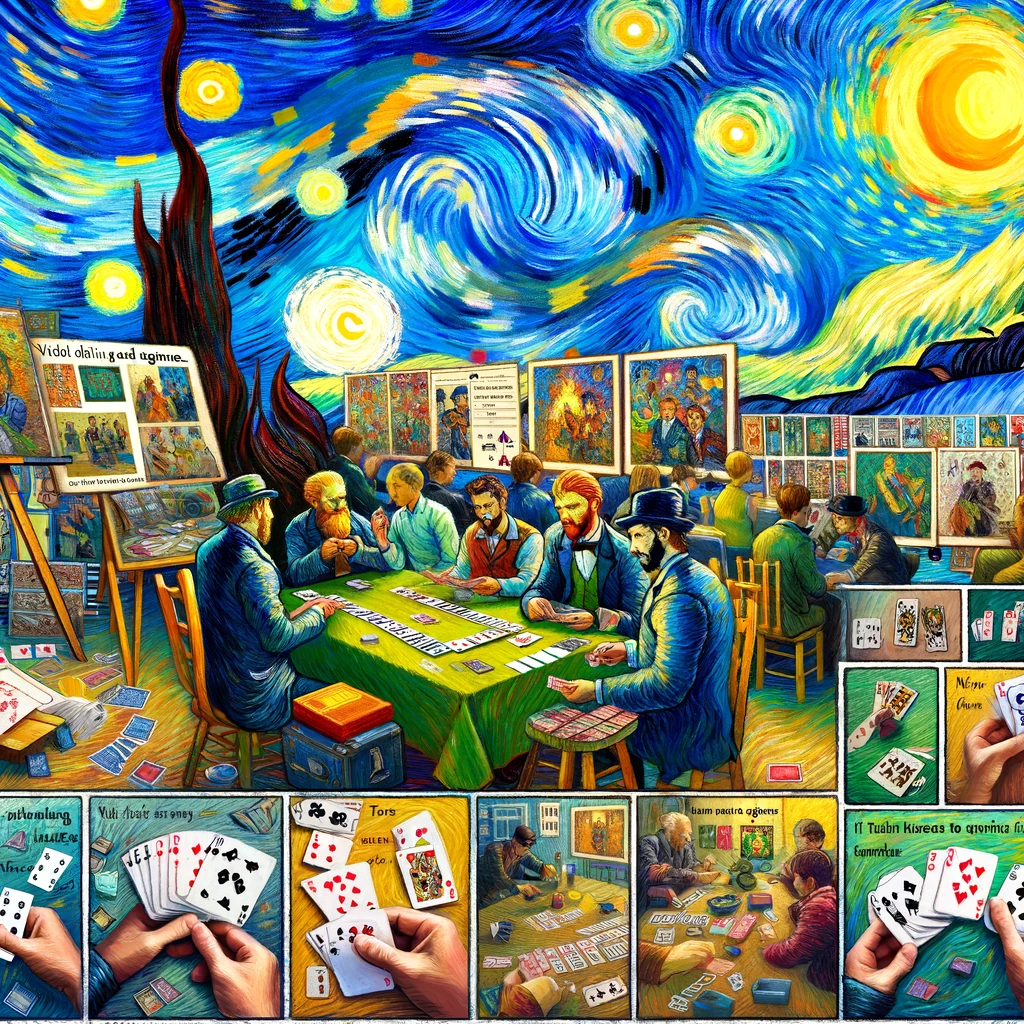
As we gather around the table, a deck of cards in hand, there’s something undeniably magical about the ritual of a card game. The shuffle, the deal, the familiar banter between friends and family—it’s a tapestry of laughter, tension, and unforgettable stories woven with every round played. But as we chase that fleeting thrill, an unsettling question looms: Could artificial intelligence strip away the very essence of this cherished pastime?
Let’s be honest—there’s a profound connection that pulses through a good card game. Whether you’re bluffing your way to victory in poker or strategizing your next move in rummy, each game is a human experience, filled with raw emotion and heart-pounding decisions. The gut instinct of knowing when to fold or hold isn’t just a skill; it’s a delicate dance of risk, intuition, and social interaction. With an AI handling your decisions, that visceral thrill might be lost, resulting in a sterile exchange devoid of camaraderie and laughter.
From a rational standpoint, the AI can certainly “know” the odds better than any of us, calculating probabilities faster than a blink. It can analyze trends, spot patterns, and execute strategies that give you the most optimal chance of winning. But that very efficiency raises an ethical quagmire. Are we willing to trade the richness of our social interactions and the stories forged at the table for an algorithm? While a computer can play a perfect hand, it can’t replace the warmth of a chuckle or the suspense in the air when someone calls your bluff.
Moreover, consider the implications of making card games mere data-driven experiences. As more people opt for AI-driven platforms, are we creating a world where the joy of competition and bonding over a simple deck of cards turns into a cold algorithmic confrontation? The irony lies in this: the very thing meant to entertain may end up isolating us.
So the next time you reach for that deck, be it for a game of hearts or Texas hold ’em, pause for a moment. Embrace the imperfections, the friendly rivalries, and the joy that comes with every shuffling card. After all, it’s not just a game; it’s a vital stitch in the fabric of our relationships that ought to be preserved, cherished, and celebrated.

Can Artificial Intelligence Take The Fun Out Of Your Favorite Card Games?
Can Artificial Intelligence Take The Fun Out Of Your Favorite Card Games?
- The ritual of card games fosters a magical atmosphere filled with laughter and stories.
- Human experiences like bluffing and strategizing are central to the emotional connection in card games.
- Using AI for decision-making may strip away the visceral thrill and social interaction of gaming.
- While AI can calculate odds and analyze patterns, it lacks the emotional warmth of human interaction.
- Shifting to AI-driven card games raises ethical concerns about the loss of social bonding.
- There is a risk of turning card games into data-driven experiences that isolate players.
- Embracing the imperfections and rivalries in card games enhances relationships and should be celebrated.

Can Artificial Intelligence Take The Fun Out Of Your Favorite Card Games?
Table Of Contents
- Can Artificial Intelligence Take The Fun Out Of Your Favorite Card Games?
- How Does Ai Change Our Emotional Connection To Card Games?
- Are We Losing The Thrill Of Unpredictability With Ai In Games?
- How Do You Feel When An Ai Wins Against A Human In A Card Game?
- Is The Use Of Ai In Games Fair To Those Who Play For Enjoyment?
- Do Card Games Still Hold Value When Ai Plays Better Than Humans?
- Conclusion
- Other Resources
- Glossary Of Terms
- Other Questions
- Haiku
- Poem
- Checklist
How Does Ai Change Our Emotional Connection To Card Games?
How Does AI Change Our Emotional Connection To Card Games?
It’s fascinating to think about how technology shapes our experiences. Imagine a rainy Saturday afternoon, two friends hunched over a deck of cards, laughter mixing with the shuffle of the game. Each card played isn’t just a move—it’s a piece of strategy woven together with memories that span years. Now, enter artificial intelligence. At first glance, it seems cold and distant, a mere algorithm crunching numbers. However, ask yourself: how does AI change that intimate bond we share over a card game?
Let’s be honest. With every advancement in technology, there’s a natural tug-of-war between delight and apprehension. We might wonder whether AI will replace the human element of strategy, bluffing, and camaraderie. But what if AI could enhance our experience instead? Imagine a system that analyzes decades of gameplay, a virtual coach that offers tips and strategies tailored just for you. It could help sharpen your skills, boosting your confidence—making every match against a friend not just a game, but a pathway to connection and growth.
Let’s not forget the ethical side of this interaction. We can utilize AI responsibly, crafting our experiences without undermining the essence of what we love about card games. Think of how online platforms harness AI to create inclusive spaces—connecting players from around the world. It opens doors to cultures, stories, and friendships that transcend borders. We’re not just playing a card game; we’re participating in a global community.
There’s something deeply relatable about this balance of innovation and humanity. When we gather for a card game, we’re not just competing; we’re weaving our lives together through shared moments. The stakes may seem small, yet each victory, each defeat, resonates in our hearts. As AI enters this sphere, it can serve as a bridge, telling our stories through gameplay, while also adding a twist that keeps us engaged.
So, as we sit across the table, the cards laid out before us, consider how integrating AI can enhance our emotional engagement with card games. It invites us not only to play but to grow—to understand the beautiful amalgamation of human intuition and artificial insight. Trust in this interaction—it can inspire not just a deeper passion for the game, but an enriched connection with one another. Let’s embrace the evolution together, celebrating the richness it adds to our time-honored tradition.

How Does Ai Change Our Emotional Connection To Card Games?
How Does Ai Change Our Emotional Connection To Card Games?
- Technology influences our emotional experiences, including those related to card games.
- AI may seem cold but can enhance the bond shared during gameplay.
- It offers personalized tips and strategies, boosting player confidence and skills.
- Responsible use of AI can preserve the essence of card games while enhancing enjoyment.
- Online platforms utilizing AI foster global connections and cultural exchanges among players.
- AI serves as a bridge in storytelling through gameplay, maintaining player engagement.
- Integrating AI encourages growth and deepened emotional connection in gameplay experiences.

How Does Ai Change Our Emotional Connection To Card Games?
Are We Losing The Thrill Of Unpredictability With Ai In Games?
In the world of gaming, there was a time when unpredictability was the lifeblood of the experience. In those moments, we felt combined excitement and dread with every move played in a card game. Each shuffle of the deck, each flip of a card, held the promise of surprise or disaster. It was a dance of chance, a conversation with fate, where the outcome was known only to the mysterious forces of the universe—or, perhaps, the random whims of a particular player sitting across the table. Those little thrill-seeking moments engendered a sense of community, as players leaned in, collectively holding their breath, wondering which way the game might swing.
But as we turn our gaze toward the alluring glow of artificial intelligence, we may be left wondering: Are we accidentally trading that heart-pounding unpredictability for something far less exhilarating? While AI can bring remarkable efficiencies and deeper storylines into our games, it can also drain the drama from the experience. Think about it—what’s the joy in defeating an opponent if every move is calculated in advance, every outcome predetermined by algorithms that have studied our habits down to the last quirk? That’s not just a loss of unpredictability—it’s a loss of soul.
The statistics might tell us that AI can enhance game engagement and satisfaction. However, our hearts crave the connection made through shared struggle, surprise victories, and that gut-wrenching moment of an unexpected twist. When was the last time an algorithm left your jaw agape or reached deep into your emotional core?
There’s an ethical conversation to be had here. The allure of AI exists, but we must ask ourselves: What do we want from our games? The sterile precision of AI-driven outcomes or the beautiful, chaotic messiness of human intuition? Should we allow machines to dictate the rhythm of our gameplay or retain autonomy over our fate? The battleground of choice is just as vital as the game itself.
As we navigate this brave new digital world, let’s champion the unpredictable, fostering those moments that connect us not just as players, but as humans. For in the end, isn’t that what gaming is really about? Embracing the chaos, yes, but more so cultivating camaraderie, laughter, and stories to last a lifetime. Because when the cards are shuffled, it’s the thrill of the unexpected that brings us back to the table.

Are We Losing The Thrill Of Unpredictability With Ai In Games?
Are We Losing The Thrill Of Unpredictability With Ai In Games?
- The thrill of unpredictability was essential to the gaming experience, creating excitement and dread in card games.
- Every shuffle and flip brought suspense, fostering a sense of community among players as they experienced shared anticipation.
- Artificial intelligence enhances efficiency and storytelling in games but risks diminishing the drama and unpredictability.
- Calculated moves and predetermined outcomes reduce the emotional engagement and thrill that come from surprise victories.
- There’s an ethical debate about whether we should prioritize AI-driven precision or the chaotic nature of human intuition in gaming.
- As we embrace digital advancements, it’s important to champion unpredictability and human connection in games.
- The essence of gaming lies in cultivating camaraderie, laughter, and unforgettable stories through unexpected moments.

Are We Losing The Thrill Of Unpredictability With Ai In Games?
How Do You Feel When An Ai Wins Against A Human In A Card Game?
How Do You Feel When An AI Wins Against a Human in a Card Game?
When you find yourself on the brink of a thrilling showdown at the card table, anticipation courses through your veins. The stakes are high; a simple card game becomes a clash of wits, strategy, and a pinch of luck. But then, out of nowhere, the AI, that unfeeling concoction of algorithms and data, plays its hand with unwavering precision. and it wins.
How does that make you feel? On one hand, there’s that gut punch of defeat—a visceral reaction that tugs at pride and leaves a sour taste. You think about the hours you’ve spent honing your skills, the way you’ve studied opponents, read their tells, and absorbed the psychology of the game. There’s a bitter irony when a soulless machine triumphs over your human intuition, like losing to a calculator in math class.
But let’s step back, and engage your head for a moment. This isn’t just about a card game; it’s about evolution. We’re witnessing the dawn of a new era where artificial intelligence partners with our human experience. Think about it: an AI’s victory showcases the astounding capabilities we’ve developed. It serves as a reminder of our intellect and creativity, the very qualities that birthed this technology. You can’t help but marvel at the sophistication of the code behind that algorithm, a testament to human ingenuity itself.
Now, let’s dig deeper, appealing to our shared ethics and sense of community. We’re tempted to view this through a lens of competition, but what if we reframed it? What if the AI’s win doesn’t diminish our humanity but enhances it? In that moment, perhaps we can choose to view the game as a collaborative experience rather than a battleground—a chance to learn from each other. There’s value in sharing the table with a machine that challenges our assumptions and urges us to adapt and think differently.
As we reflect on this experience, we should also recognize its narrative. Each card dealt is a story unfolding—strategies crafted, stories told over years of play. Winning and losing become a part of a larger tale about growth. So the next time you face off against an AI in a card game, remember: it’s not just about winning or losing; it’s about a journey we’re all on together—humans and machines alike, navigating the complexities of intellect and creativity with every shuffle of the deck. Embrace it, and let the game inspire you to play on.

How Do You Feel When An Ai Wins Against A Human In A Card Game?
How Do You Feel When An Ai Wins Against A Human In A Card Game?
- The card game creates a thrilling atmosphere filled with anticipation and high stakes.
- AI’s precise victory can evoke feelings of defeat and challenge personal pride.
- Defeating a human, the AI represents a bittersweet irony of technology surpassing human intuition.
- The situation highlights the evolution of AI as a partnership with human experiences and creativity.
- Reframing the AI’s win as a collaborative opportunity can enhance human understanding and adaptability.
- Every card dealt in the game tells a story of strategies and personal growth.
- The game symbolizes a shared journey between humans and machines in navigating intellect and creativity.

How Do You Feel When An Ai Wins Against A Human In A Card Game?
Is The Use Of Ai In Games Fair To Those Who Play For Enjoyment?
In the world of gaming, where joy and escape intertwine, the advent of artificial intelligence raises an important question: Is the use of AI in games fair to those who play for enjoyment? Let’s not sugarcoat it; this is a topic that resonates deeply with gamers, many of whom pour their hearts into the experience, seeking camaraderie, challenge, and pure fun. Imagine sitting at a table playing your favorite card game with friends, laughter erupting at every misplayed hand, strategy unfolding in delightful twists. Now, picture a machine calculating the odds, anticipating your every move, and shuffling the deck of possibilities. The thrill diminishes, doesn’t it?
At its essence, gaming is about connection. It’s that palpable feeling when your buddy, in an unexpected twist of fate, pulls off a brilliant victory—one that elicits not just cheers, but stories for years to come. AI, with its algorithms and analytical prowess, can deliver a level of challenge and strategy that humans might find difficult to match. Yet, what is the cost of that challenge? Are we losing the raw, unfiltered joy of human interaction as we surrender our experiences to the relentless calculus of technology?
The analytical side of this debate is just as compelling. Many industry leaders tout AI’s ability to enhance gameplay, providing a tailored experience that can adjust to individual skill levels. While this sounds appealing—and it is—there’s a nagging question: does it reduce the unpredictability that makes gaming exhilarating? After all, the joy of a well-fought battle, the satisfaction of outsmarting an opponent, and the excitement of those unpredictable moments at the card table are what keep us coming back.
Ethically, we must tread carefully. Is it right to replace a shared experience with a coded algorithm? Gaming culture thrives on spontaneity, on the unexpected moments that bind players together. When we lean too heavily on AI’s precision, we risk losing the essence of what makes games special: the human experience.
Ultimately, the answer to whether AI in games is fair to those who play for enjoyment lies not solely in technology’s capacity but in our willingness to remain engaged with one another. So, as we navigate this brave new world of gaming, let’s ensure we hold tight to the joy of connection, the beauty of competition, and the laughter of friendship that are the heart of any game worth playing. Take a step back and remember: it’s not just about winning—it’s about the moments we share and the joy we create together.

Is The Use Of Ai In Games Fair To Those Who Play For Enjoyment?
Is The Use Of Ai In Games Fair To Those Who Play For Enjoyment?
- The introduction of AI in gaming raises questions about fairness for players who seek enjoyment.
- Gaming is fundamentally about connection, camaraderie, and shared experiences.
- AI can enhance challenge and strategy but may diminish the excitement of human interaction.
- While AI offers tailored gameplay, it can reduce the unpredictability that makes games thrilling.
- The essence of gaming culture lies in spontaneity and unexpected moments among players.
- Ethically, replacing shared experiences with algorithms risks losing the human element in games.
- Ultimately, the value of AI in gaming depends on our commitment to maintaining connections and joy in playing together.

Is The Use Of Ai In Games Fair To Those Who Play For Enjoyment?
Do Card Games Still Hold Value When Ai Plays Better Than Humans?
In a world where artificial intelligence can crunch numbers and predict strategies faster than the human mind ever could, we’re left to ask: Do card games still hold value when AI plays better than humans? It’s a question that resonates deeply, tugging at the very fabric of our social fabric.
At first glance, the answer might seem like a no-brainer. After all, who wouldn’t favor a slick algorithm over a shuffling human? But let’s take a moment to dig deeper. Think of the thrill in your chest as you draw that perfect card, the gut-wrenching tension at the table as stakes rise, or the laughter shared with friends over a simple game of poker. These experiences are woven into our human experience far more than any scoreboard or algorithm can quantify.
Card games have always been about more than just winning; they represent a space where we forge connections. When four old friends gather around a table, each holding their cards close, there’s an unspoken bond that emerges. These games become a backdrop for stories, banter, and sometimes even deep conversations that linger long after the last card has been played. This is the emotional heartbeat of the game, something AI simply cannot replicate.
From a rational perspective, we find that even in the rise of AI, there’s an opportunity for growth. Players can refine their strategies and adapt, learning from both wins and losses. This is the essence of sport—competition driving us to be better, not just against machines but against ourselves. The story of human resilience shines here; in a world dominated by technology, it’s our innate ability to learn and adapt that keeps us relevant.
Ethically, the rise of AI poses questions about authenticity. If we allow machines to dominate the card tables, what happens to the joy of the game? We must champion the idea that experiences matter more than outcomes, and that community is fostered in the thrill of the imperfect hand.
So, here’s the twist: card games might just hold MORE value because of the challenges posed by AI. As we sit across from the likes of advanced algorithms, we’re reminded of what makes us human—our love for the game, our imperfect strategies, and the stories shared around the table. In embracing this spirit, we invite everyone back to the table, reminding us that it’s not just about winning; it’s about playing. That’s where the real value lies.

Do Card Games Still Hold Value When Ai Plays Better Than Humans?
Do Card Games Still Hold Value When Ai Plays Better Than Humans?
- AI can outperform humans in card games, prompting questions about the value of the games.
- Card games offer thrilling experiences that go beyond mere competition, such as the excitement of winning and shared laughter.
- The games create connections among players, fostering bonds and enabling storytelling.
- Card games encourage personal growth and strategy refinement, highlighting human adaptability.
- The rise of AI raises ethical concerns regarding authenticity and the true joy of playing games.
- Despite AI’s dominance, card games may hold greater value as they emphasize human qualities like love for the game and shared experiences.
- The essence of playing—rather than winning—is what brings real value to card games in an AI-dominated world.

Do Card Games Still Hold Value When Ai Plays Better Than Humans?
Conclusion
As we reflect on the intricate relationship between artificial intelligence and our beloved card games, let’s remember that the essence of these games is rooted in human connection. The ambiance of a card table—filled with laughter, tension, and maybe a few good-natured jabs—is something that transcends the mere act of playing. It’s a cherished ritual, one that nourishes our relationships and fosters communities. But as AI strides into this arena, we find ourselves at a crossroads, grappling with an uncanny possibility: could our excitement and camaraderie be reduced to mere data-driven calculations?
At its core, a game of cards is a dance of intuition, emotion, and spontaneity. There’s a visceral thrill that accompanies each bluff or gamble, an instinctive understanding that can’t be captured by an algorithm. While AI might boast an impressive ability to calculate odds and strategize opponents’ moves, it lacks the warmth of human interaction—the genuine chuckles and groans that color our gameplay with life. The irony is poignant; the very technology designed to enhance our experiences might end up insulating us, converting shared joy into sterile outcomes.
Yet, we shouldn’t overlook the potential benefits AI can bring to our games. Imagine a scenario where AI acts more as a partner than a competitor. Picture a virtual coach offering guidance based on your individual play style, allowing you to grow, adapt, and even approach your friends’ games with newfound confidence. In this way, AI could become an ally in sharpening our skills, ultimately leading us deeper into the heart of what makes these experiences special: connection.
However, we must tread carefully and ensure that the technology does not eclipse the human elements that matter most. The thrill of unpredictability—the breathtaking moment when everything could change with one draw—those moments are what enrich our time together, what imprints memories that linger long after the last hand is played. We have to ask ourselves where our priorities lie. Is it in the cold certainty of algorithmic perfection or the beautiful uncertainty that makes every game a story worth telling?
In navigating the landscape of AI in gaming, let us hold fast to the communal spirit of card games, drawing those we care about closer instead of allowing technology to pull us apart. The value of these games, as we shuffle our decks and share our laughter, lies not in unyielding victory but in the connections we forge and the stories we create. So, as you settle into your next game—cards in hand—remember: it’s more than just winning; it’s about being together, and that is where the true magic lies.

Conclusion
Conclusion:
- The essence of card games is rooted in human connection and shared experiences.
- AI may enhance strategic gameplay but lacks the warmth of human interaction.
- Card games are characterized by intuition, emotion, and spontaneity, which AI cannot replicate.
- AI has the potential to act as a partner or coach, improving players’ skills and confidence.
- Care must be taken to ensure technology does not replace the human elements essential to gaming.
- The unpredictability in card games enriches relationships and creates lasting memories.
- Ultimately, it’s about the connections we make, not just the outcomes of the games.
Conclusion
Other Resources

Other Resources
Here is a list of other resources you can review online to learn more:
- Watch It Played
- Cool Mini or Not (CMON)
- Czech Games Edition
- Keyflower
- Agricola (Revised Edition)
- Caverna: The Cave Farmers
- Poker
- Eagle-Gryphon Games
- Clank!: A Deck-Building Adventure
- Keyforge
- Piatnik
- Kingdom Death: Monster
- Alchemists
- Cryptozoic Entertainment
- Board Game Atlas
- Board Game Quest
- Puerto Rico (with two expansions)
Use This Prompt To Get More Resources With Your Favorite Online AI Tool: Please provide me with a list of online articles with their URLs in a bulleted list that I can read regarding Can Artificial Intelligence Take The Fun Out Of Your Favorite Card Games?

Other Resources
Glossary Terms
Can Artificial Intelligence Take The Fun Out Of Your Favorite Card Games? – Glossary Of Terms
1. Artificial Intelligence (AI): The simulation of human intelligence processes by machines, especially computer systems, to perform tasks that typically require human intelligence.
2. Card Games: Games that are played using a deck of cards as the primary device, involving strategy, skill, and sometimes luck.
3. Machine Learning (ML): A subset of AI that involves the development of algorithms that allow computers to learn from and make predictions based on data.
4. Deep Learning: A type of machine learning that uses artificial neural networks to model complex patterns in large datasets, often employed in AI like game strategies.
5. Game Theory: A mathematical study of strategic interaction among rational decision-makers, used to analyze competitive situations in card games.
6. Player Experience: The overall enjoyment and engagement a player has while participating in a game, which may be affected by AI involvement.
7. Algorithm: A set of rules or instructions given to an AI program to help it make decisions and solve problems, including those in card games.
8. Automated Play: When a computer program or AI plays a game autonomously without human intervention, often leading to a different gameplay dynamic.
9. Skill-Based Game: A game that emphasizes player skill over luck, often requiring practice, strategy, and experience, including many popular card games.
10. Artificial Opponent: An AI system designed to compete against human players in card games, such as bots in online poker.
11. Contextual Understanding: The ability of an AI to comprehend and respond to the rules and nuances of a game situation, impacting its decisions and interactions.
12. Competitive Edge: The advantage that an AI may provide players in a game, leading to concerns about balance and fairness in gameplay.
13. Human Factor: Elements of human behavior, emotion, and social interaction that contribute to the enjoyment of card games but may be lacking with AI opponents.
14. Social Interaction: The communication and engagement between players during card games, a key component of enjoyment that may be diminished with AI.
15. Game Balance: The fairness and competitiveness of a game, which can be disrupted if AI plays at a consistently higher level than human players.
16. Adaptability: The ability of an AI to change its strategy based on the gameplay and tactics of human opponents, enhancing or diminishing the challenge.
17. Entertainment Value: The enjoyment derived from playing games, which may be influenced negatively or positively by the presence of AI.
18. Feedback Loop: The continuous cycle of input and response between players and AI, which can affect the dynamics of gameplay in card games.
19. Randomness: The influence of chance in card games, which can be altered by AI that may employ deterministic strategies.
20. Real-Time Decision Making: The ability of players or AI to make rapid choices during gameplay, determining strategies and outcomes.
21. User Interface (UI): The space where interactions between humans and computers occur, which can affect how players engage with AI in card games.
22. Game Dynamics: The interaction between players and the game itself, including how AI changes these interactions and affects player enjoyment.
23. Player Retention: The likelihood of players continuing to engage with a game over time, which can be influenced by AI’s role and impact.
24. Tactics: The short-term actions players take within a game to achieve a goal, which may be altered by adaptive AI strategies.
25. AI Fairness: The ethical consideration of how AI competes against human players, ensuring that gameplay remains equitable.
26. Customization: The ability for players to modify game settings, including AI difficulty levels, to tailor their gaming experience.
27. Emotional Engagement: The feelings of excitement, frustration, and satisfaction players experience during games, affected by AI’s interactions.
28. Augmented Gameplay: The enhancement of traditional gaming experiences through technology or AI, potentially adding new dimensions to card games.
29. Gamification: The application of game design elements in non-game contexts, which can influence how AI is integrated into card gaming experiences.
30. Nostalgia: The sentimental longing for past experiences in card games, which AI may disrupt by changing traditional play styles and interactions.

Glossary Of Terms
Other Questions
Can Artificial Intelligence Take The Fun Out Of Your Favorite Card Games? – Other Questions
If you wish to explore and discover more, consider looking for answers to these questions:
- What are the benefits of playing card games with AI versus traditional human players?
- Can AI enhance the skills of players or just make them reliant on technology?
- How do different cultures perceive the role of AI in traditional games?
- What role does nostalgia play in the enjoyment of card games as AI takes a more central role?
- Are there specific card games that benefit more from AI integration than others?
- What ethical guidelines should be considered when using AI in competitive settings?
- How do players of different skill levels feel about the presence of AI in their games?
- Are there instances where AI collaboration can enhance the card game experience?
- What potential future developments could change how we view AI in card games?
- How are game designers adapting traditional card games to incorporate AI?

Other Questions
Haiku
Can Artificial Intelligence Take The Fun Out Of Your Favorite Card Games? – A Haiku
Cards shuffle and deal,
Laughter mingles with the stakes—
AI can’t replace.

Haiku
Poem
Can Artificial Intelligence Take The Fun Out Of Your Favorite Card Games? – A Poem
The Shuffle of Humanity: A Card Game’s Call
Around the table, laughter rises,
With cards in hand, the heart devises.
A shuffle speaks, like whispers of fate,
In friendly rivalry, we celebrate.
Yet shadows loom, tech’s cold embrace,
Can AI steal the warmth from this space?
Algorithms hum in silent boast,
At what cost do we gain this ghost?
In poker’s bluff, in rummy’s dance,
Lives the thrill of chance, the human romance.
With every draw, each heartbeat quickens,
Are we losing the magic that golden friendship thickens?
“O wondrous game, a tapestry spun,
Of shared mistakes, and games never won.
Is it merely numbers, the odds we weigh,
Or the stories we forge over cards on display?”
Rational minds proclaim it clear—
AI’s precision may bring on fear,
That sterile wins eclipse the fun,
And turn close friends to rivals undone.
Yet, could it be a chance to enhance?
A coach on the sidelines, a new kind of dance.
To learn, to grow, to sharpen our wit,
With each deal, the plot thickens, we don’t quit.
As we ponder the fairness in this wild,
Let joy dominate—be free, be a child!
The essence of play lives in bonds that hold tight,
As friendships are forged, hearts igniting the night.
So let’s embrace both tech and our heart,
In this brave new world, let’s play our part.
For when cards are shuffled and destinies spun,
It’s not just the winning—it’s the journey begun.
Remember the ties that laughter entwines,
Each unpredictable moment, where friendship aligns.
As we gather anew at the cool table’s glow,
The spirit of gaming is the love we bestow.

Poem
Checklist
Can Artificial Intelligence Take The Fun Out Of Your Favorite Card Games? – A Checklist
Checklist: “Embracing the Soul of Card Games in the Age of AI”
Emotional Appeal:
1. Reflect on Memories: Recall your favorite card game moments and the laughter shared. Write them down.
2. Embrace Imperfection: Note at least three times where unpredictability in a game led to unforgettable experiences.
3. Sharing Stories: Plan a card game night where you share not just the game but personal stories linked to it.
4. Connection Moments: Think of a time when a card game just felt special due to the people involved; capture that feeling.
Rational Appeal:
1. Analyze Game Strategies: Review a recent card game you played. Identify one strategy that worked and one that didn’t.
2. Balance AI and Human Play: List pros and cons of AI playing card games versus human play; discuss this with friends.
3. Set Personal Goals: Create a strategy improvement plan for your gameplay that you can try out in your next session.
4. Explore AI’s Role: Investigate an AI system related to card games and summarize its potential benefits and limitations.
Ethical Appeal:
1. Question the Implications: Write a paragraph about whether you think AI improves or diminishes the card gaming experience.
2. Community Focus: Consider how AI might change community engagement. List ways to counteract possible isolation caused by AI in games.
3. Authenticity Check: Discuss with friends what makes a game ‘authentic’ for you and what you’d miss if that aspect was lost.
4. Encourage Inclusion: Think of inclusive gaming practices that both AI and human players can adopt to foster community.
Authority Appeal:
1. Research Game Theory: Read and summarize one article on game theory’s evolution with AI to inform your understanding.
2. Follow Industry Leaders: Identify and follow three experts in AI or gaming to stay updated on future trends.
3. Engage with Online Communities: Join forums or groups discussing AI in gaming; contribute and share insights.
4. Connect with game Designers: Reach out to a game designer about their thoughts on AI’s impact on card games.
Narrative Appeal:
1. Tell Your Story: Write a short personal narrative about your best card game experience incorporating themes of connection and unpredictability.
2. Create a Game Background: Invent a simple card game story or fictional background that emphasizes human connection rather than competitive edge.
3. Share Lessons Learned: Document and share how a particular card game taught you valuable life lessons beyond the table.
4. Future Vision: Envision a future card game session with AI as a partner and share how that narrative would play out.
Social Appeal:
1. Host Community Events: Organize a local card game night that emphasizes social interaction; invite both novices and experts.
2. Engagement Challenge: Start a weekly challenge with friends to play different card games, sharing observations afterward.
3. Encourage Diverse Participation: Encourage others from different backgrounds to join your games—and document the stories that arise.
4. Online Gaming Connections: Connect with players worldwide through online platforms; discuss your experiences and insights about AI and the essence of card games.
Each item on this checklist aims to inspire deeper reflection and action on the emotional, rational, ethical, authority, narrative, and social aspects of playing card games in an increasingly AI-driven world. Enjoy the blend of technology and human connection at the card table!

Checklist
At CardGameNews, we help people who love card games by collating information and news about card games.
Be sure to read our other related stories at CardGameNews to learn more about card games.


