
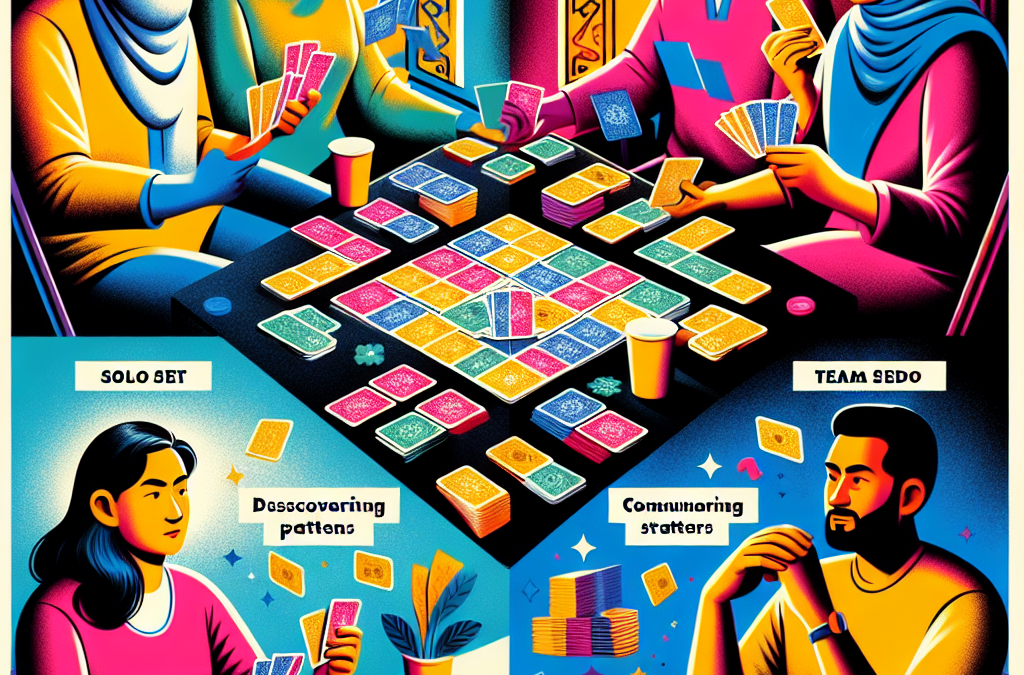
Discovering The Origins Of Team Card Play
By Tom Seest
At CardGameNews, we help people who love card games by collating information and news about card games.
Be sure to read our other related stories at CardGameNews to learn more about card games.
What Is The History Of Partnership Card Games?
Partnership card games have a rich and varied history that reflects the evolution of social interaction, strategy, and culture itself. The roots of these games can be traced back to the early days of card playing, which gained popularity in the late 14th century in Europe. As cards made their way across the continent, they sparked not just a pastime but also an avenue for camaraderie and competition.
Initially, card games were played in small circles, often among family and friends. But as they grew in popularity, the concept of partnerships emerged, introducing a cooperative dynamic. Games like Whist and its offshoot, Bridge, became the darlings of social gatherings in the 18th and 19th centuries. Whist, in particular, was known to draw high society together in elegant parlors, where strategy unfolded with each carefully played hand, and partnerships were both a test of skill and a reflection of social ties.
The transformation from solitary play to partnership games can be attributed to the thrill of collaboration. Teammates had to communicate through subtle cues and gestures, enhancing the psychological elements of play. This aspect drew players deeper into the game, where a shared understanding between partners often tipped the scales between victory and defeat.
As the Industrial Revolution unfolded, card games became more accessible to the masses. With the rise of public spaces, such as saloons and gaming houses, the partnership format found its footing in a wider audience. Games like Pinochle and Canasta emerged, showcasing regional flair while maintaining the core essence of team play. Each game told a story of the people and the times, from the smoke-filled rooms of urban America to the sunlit porches of small-town gatherings.
In the latter half of the 20th century, the world witnessed a resurgence of interest in card games. The invention of televised tournaments and the advent of online gaming opened new doors for players and enthusiasts alike. Partner play saw renewed vigor, with platforms enabling teams from different parts of the globe to face off in real-time.
Today, partnership card games remain a testament to human connection. They encapsulate strategy, wit, and the joy of cooperation. While rules and styles may vary, the core principles have endured—at their heart, these games are about coming together to share a moment, a challenge, and maybe a little bit of friendly rivalry.

What Is The History Of Partnership Card Games?
What Is The History Of Partnership Card Games?
- Partnership card games reflect the evolution of social interaction, strategy, and culture.
- The origins trace back to the late 14th century in Europe, where card playing gained popularity.
- Partnerships emerged as card games transitioned from solitary play to cooperative dynamics.
- Games like Whist and Bridge became popular in 18th and 19th-century social gatherings.
- The thrill of collaboration and communication between teammates deepened the psychological aspects of play.
- The Industrial Revolution made card games more accessible, with new formats like Pinochle and Canasta emerging.
- Today, partnership card games continue to promote human connection through strategy and cooperation.

What Is The History Of Partnership Card Games?
Table Of Contents
- What Is The History Of Partnership Card Games?
- What Are The Origins Of Partnership Card Games?
- How Have Partnership Card Games Evolved Over Time?
- What Are The Most Popular Partnership Card Games Today?
- What Cultural Influences Shaped The Development Of These Games?
- How Do Rules Differ Among Various Partnership Card Games?
- What Strategies Can Improve Success In Partnership Card Games?
- What Are Common Misconceptions About Partnership Card Games?
- How Have Partnership Card Games Influenced Social Interactions?
- What Role Do Partnership Card Games Play In Competitive Settings?
- How Have Technology And Online Platforms Changed These Games?
- Conclusion
- Other Resources
- Glossary Of Terms
- Other Questions
- Haiku
- Poem
- Checklist
What Are The Origins Of Partnership Card Games?
Partnership card games have a storied history that intertwines culture, strategy, and social interaction. These games, which require two or more players to team up, can be traced back centuries and span continents. But where did they originate, and what made them so appealing across different societies?
The roots of partnership card games can be linked to early civilization’s love for competition and camaraderie. Ancient cultures, from the Chinese with their “domino” style games to the Persians and the introduction of card games in the Middle East, crafted activities that didn’t just entertain but also fostered relationships. These games often echoed the social structures of their time—strategic alliances and rivalries that mirrored real-life dynamics.
Fast forward to the 15th century in Europe, where card games began to proliferate across various regions, adapting and evolving as they went. France, in particular, was a hotbed of innovation in card game mechanics. It was here that partnership games took on a life of their own. With games like Belote and its variants, players started forming teams, creating a sense of shared accountability. The thrill of strategizing with a partner brought a new layer of excitement that solo games just couldn’t match.
It’s no wonder that by the 19th century, partnership card games had become a staple in social gatherings, spreading like wildfire. Families and friends gathered around tables, not just to play but to bond, laugh, and sometimes, to settle scores. The psychological aspect of these games—reading your opponent, communicating with your partner through subtle signals—added depth and complexity that appealed to the human instinct for cooperation and competition.
Furthermore, the expansion of these games was propelled by the migration of people and cultural exchange. As communities blended, so too did the games they played. For instance, Bridge, which emerged in the early 20th century, drew elements from earlier partnership games like Whist, yet it presented a wholly new experience that captivated players worldwide.
Today, partnership card games continue to evolve. They’ve transitioned from smoke-filled rooms to coffee shops, family living rooms, and online platforms, adapting to modernity without losing the core values that originated them—teamwork, strategy, and social interaction. Whether gathered around a table or connected through screens, the essence of partnership card games remains the same: they unite us, challenge our minds, and remind us that, in the end, it’s about the connections we forge with each other.

What Are The Origins Of Partnership Card Games?
What Are The Origins Of Partnership Card Games?
- Partnership card games have a rich history rooted in culture, strategy, and social interaction.
- The origins trace back to ancient civilizations that emphasized competition and camaraderie.
- Games like “domino” from China and those from Persia contributed to early card game development.
- By the 15th century, Europe, particularly France, became a hub for innovative partnership card games such as Belote.
- Partnership games grew in popularity during the 19th century, becoming staples in social gatherings.
- The evolution of these games was influenced by migration and cultural exchange, leading to new forms like Bridge.
- Today, partnership card games thrive in both physical and online spaces, maintaining core values of teamwork and social interaction.

What Are The Origins Of Partnership Card Games?
How Have Partnership Card Games Evolved Over Time?
When we talk about partnership card games, we’re diving into a world that’s as rich and intricate as any historical tapestry. From the dimly lit taverns of centuries past to today’s brightly lit digital platforms, these games have undergone an evolution driven by culture, technology, and a sprinkle of human ingenuity.
Let’s take a stroll down memory lane. Picture a time when folks gathered around wooden tables, the scent of pipe smoke mingling with the laughter and competitive banter. Card games like Whist were the cornerstone of social gatherings. Originating in the 16th century, Whist was a game of simplicity and strategy, setting the stage for what was to come. It wasn’t just about playing cards; it was about the connections forged over them—friendships strengthened, rivalries ignited, and communities bonded.
Fast forward a century or two, and we see the birth of Bridge. This game, emerging in the late 19th century, took the foundations of Whist and elevated them, introducing bidding and a level of strategy that turned casual evening entertainment into a competitive sport. Bridge clubs sprouted up, transforming how people engaged with one another through play. Suddenly, cards were not just a pastime; they became a means to showcase intellect and skill.
However, evolution is incessant. The mid-20th century ushered in a wave of change. With the advent of portable gaming, we saw the introduction of games like Canasta and Pinochle, catering to the changing societal structures and group dynamics. They embraced a more inclusive approach to partnership, welcoming different styles and backgrounds to the table.
Today, the landscape resembles a vast digital playground. Online platforms have revolutionized the way we engage with these games. From smartphones to computer screens, players can connect across continents. Major tournaments and local games thrive in this virtual environment, transcending geographical boundaries and enabling a global camaraderie.
In this digital age, we also see a resurgence of classic games, revamped with new rules and formats. Developers are testing the waters with hybrid versions that keep the spirit alive while appealing to a tech-savvy demographic. Gamification and interactive features offer players new ways to engage with old favorites, ensuring that partnership card games remain relevant in our rapidly changing world.
So, as we reflect on this evolution, we see that partnership card games are more than just cards and rules. They are a reflection of society—a continuous narrative of how we connect, compete, and ultimately, enjoy each other’s company. It’s not just about the game; it’s about the people you play with.

How Have Partnership Card Games Evolved Over Time?
How Have Partnership Card Games Evolved Over Time?
- Partnership card games have evolved from historical roots to modern digital platforms, influenced by culture and technology.
- Whist, originating in the 16th century, was foundational for social gatherings, promoting connections and community bonding.
- Bridge emerged in the late 19th century, enhancing Whist’s framework with bidding and competitive elements.
- The mid-20th century introduced games like Canasta and Pinochle, reflecting changing social dynamics and increasing inclusivity.
- Today, online platforms have transformed how players engage with card games, fostering global connectivity.
- Classic games are experiencing a resurgence, adapted with new rules and formats to attract tech-savvy audiences.
- Partnership card games exemplify societal reflections, emphasizing connection and enjoyment among players.

How Have Partnership Card Games Evolved Over Time?
What Are The Most Popular Partnership Card Games Today?
Partnership card games have been a staple of social interaction for centuries, bringing people together over a shared deck and a handful of rules. Today, these games continue to thrive, attracting players from all walks of life who appreciate a mix of strategy, camaraderie, and a little bit of competition. So, let’s dive into the most popular partnership card games that are keeping folks entertained around the table these days.
First on our list is Bridge, the granddaddy of partnership card games. Originating in the 19th century, it has created a legacy that resonates in card rooms worldwide. In Bridge, players form two partnerships, taking turns to bid and play cards with the goal of winning tricks and accumulating points. It requires not only skill but also teamwork and communication—a perfect blend for those who relish a mental challenge. The beauty of Bridge lies in its complexity; with endless variations and tactical possibilities, players often find themselves coming back for more, year after year.
Then there’s Euchre, a simpler yet equally engaging game that has stood the test of time, particularly in North America. It revolves around a deck of 24, 28, or 32 cards and is typically played by four players divided into two teams. With its fast-paced nature and the opportunity for strategic deception, Euchre allows players to embrace their inner card shark while enjoying the company of friends. Plus, who doesn’t like a game where you can call for a trump card and shake things up?
Next, let’s not forget about Pinochle, a game steeped in tradition and a touch of nostalgia. Played primarily in the United States, Pinochle is a trick-taking game that uses a 48-card deck and is played by four players in two partnerships. It requires careful planning and a keen ability to read your partner’s signals, fostering a deep sense of teamwork. The blend of strategy and social interaction keeps the game lively and full of surprises.
Lastly, there’s Canasta, another partnership game that has captivated players since its rise in the mid-20th century. Played with two decks of cards, the goal is to create melds and “go out” before the opposing team. It’s a game that encourages collaboration and strategic thinking, with the added thrill of chasing those elusive wild cards.
In a world buzzing with technology, these partnership card games remind us of the power of face-to-face interaction, hearty laughter, and the simple joy of shared experiences. Whether you’re a seasoned pro or a curious newcomer, there’s a spot for you at the card table.

What Are The Most Popular Partnership Card Games Today?
What Are The Most Popular Partnership Card Games Today?
- Partnership card games have long been a vital part of social interactions, enjoyed by diverse groups.
- Bridge is the most recognized partnership card game, demanding skill, teamwork, and communication.
- Euchre offers a faster-paced, simpler game experience focused on strategic deception and fun.
- Pinochle is a traditional game that fosters teamwork and requires careful planning and signal reading.
- Canasta, played with two decks, emphasizes collaboration and strategic thinking in gameplay.
- These card games promote face-to-face interaction, laughter, and shared experiences in a tech-driven world.
- There is an inclusive atmosphere at the card table for both experienced players and newcomers.

What Are The Most Popular Partnership Card Games Today?
What Cultural Influences Shaped The Development Of These Games?
When we delve into the rich tapestry of video game history, it’s impossible to overlook the cultural influences that have guided their development. Each pixel, each line of code, is infused with the spirit of its time—reflecting everything from societal norms to technological advancements, and even the zeitgeist of entire generations.
Take a trip back to the early 1980s, for example. The emergence of arcade gaming wasn’t just a leap in technology; it was a mirror to the social landscape. Bars and pizza joints suddenly evolved into bustling hubs of camaraderie, as youngsters gathered around machines like *Pac-Man* and *Donkey Kong*. These games were more than mere entertainment; they became symbols of a burgeoning youth culture that thrived on competition and shared experiences. The bright colors and catchy soundtracks echoed the optimism of the era, while the simple yet challenging mechanics allowed players to escape the mundane routines of daily life. In this way, arcade games captured the heart of a generation eager for thrills and community, paving the way for the home console revolution.
Fast forward to the 1990s, and the cultural narrative shifts again. The advent of more complex storytelling and character-driven plots reflects a deeper philosophical engagement with existential themes, societal issues, and personal identity. Titles like *Final Fantasy VII* and *The Legend of Zelda: Ocarina of Time* not only delivered immersive gameplay but also wove intricate stories that resonated with players. The influence of anime and Japanese culture permeated these narratives, showcasing how cross-cultural dialogue can enhance creativity within the gaming industry. Amid this evolution, darker themes emerged, tackling everything from war to mental health, mirroring the anxieties of a world grappling with rapid change.
The turn of the millennium introduced another layer of cultural influence: the internet. Online multiplayer games shattered the boundaries of local participation, transforming gaming into a global phenomenon. Suddenly, players could connect and collaborate with those across oceans, leading to diverse communities and interactions that shaped game design. Titles like *World of Warcraft* didn’t just create worlds; they birthed cultures. The dynamics of teamwork, competition, and even social responsibility began to reflect broader societal issues, such as the impact of technology on human connection.
In essence, video games have always been a dialogue with the world around them. From the arcades of the past to the online realms of today, each phase in their evolution is shaped by the cultural currents of the time, with creators pulling inspiration from the very fabric of society. They don’t just entertain; they tell our stories, one level at a time.

What Cultural Influences Shaped The Development Of These Games?
What Cultural Influences Shaped The Development Of These Games?
- Video games reflect cultural influences, capturing societal norms, technological advancements, and generational zeitgeist.
- The early 1980s arcade gaming era transformed social spaces, turning bars and pizza joints into hubs for camaraderie and competition.
- Games like *Pac-Man* and *Donkey Kong* symbolized a youth culture focused on shared experiences, offering an escape from daily life.
- The 1990s introduced complex storytelling and character-driven plots, addressing existential themes and societal issues.
- Games such as *Final Fantasy VII* and *The Legend of Zelda: Ocarina of Time* showcased the influence of anime and cross-cultural dialogue.
- The advent of the internet in the early 2000s transformed gaming into a global phenomenon, fostering diverse communities.
- Overall, video games serve as a dialogue with the world, reflecting cultural currents while narrating stories through gameplay.

What Cultural Influences Shaped The Development Of These Games?
How Do Rules Differ Among Various Partnership Card Games?
When it comes to partnership card games, the rules can vary as wildly as the personalities of the players sitting around the table. You’ve got to adapt to the shifting tides of gameplay, much like a sailor adjusting his sails depending on the wind. What might be the established code of play in one household could send shockwaves through another when outsiders join the fray.
Take Bridge, for instance. This venerable classic is steeped in tradition. It’s a game that demands communication—subtle nods and not-so-subtle signals form a complex language that goes beyond mere words. The rules are set in stone, with a dedicated following that clings to their conventions like sailors clutching worn maps. Here, the partnership isn’t just an advantage; it’s a vital component of strategy.
Now, shift your gaze to Spades. While it may still embrace a partnership format, the atmosphere is a bit more relaxed. Players often engage in lighthearted banter, with rules that can morph based on house preferences. Some might break out “Chicago” scoring, where teams vie to be the first to reach a specific point total over several hands. And don’t get me started on those rule variations regarding nil bids—each household has its own manual carved into the family lore, often eliciting spirited discussions on the proper play.
Then, we have Pinochle, which introduces its own brand of idiosyncrasy. This partnership game can be played with two, four, or even six players, resulting in a rich tapestry of strategies that hinge upon melding, bidding, and trick-taking. But here’s the kicker: the rules can diverge dramatically based on regional or familial preferences. Some players swear by the “double deck,” while others insist that a single deck is the only way to go.
Don’t forget about Mexican Train, where the camaraderie you find in a partnership can take on a more relaxed flavor. Here, players often work in pairs but may opt to invoke “house rules” at any given moment, allowing for a casual environment that encourages creativity.
The beauty of partnership card games lies in their adaptability. Each variation caters to the quirks and traditions of the players involved. Whether it’s the stately precision of Bridge or the easygoing nature of Spades, what spills out onto the table is more than just rules—it’s a shared experience crafted by laughter, rivalries, and, let’s be honest, a fair bit of strategy.

How Do Rules Differ Among Various Partnership Card Games?
How Do Rules Differ Among Various Partnership Card Games?
- Partnership card games have diverse rules that can vary among different players and households.
- Bridge is a traditional game requiring communication through subtle signals and has fixed rules.
- In Bridge, partnership is crucial for strategy and has a dedicated following that respects its conventions.
- Spades offers a more relaxed environment, with flexible rules that might change based on house preferences.
- Pinochle can be played with varying player counts and features divergent rules based on regional or familial traditions.
- Mexican Train allows for casual play, where “house rules” can enhance creativity and enjoyment.
- The adaptability of these games creates unique shared experiences filled with laughter, rivalries, and strategy.

How Do Rules Differ Among Various Partnership Card Games?
What Strategies Can Improve Success In Partnership Card Games?
When it comes to partnership card games, success isn’t just about the cards in your hand; it’s about how you play the game with your partner and how you read the landscape around you. It’s a delicate dance of communication, strategy, and a splash of good old-fashioned psychology. Let’s break down some key strategies that can tilt the odds in your favor.
1. Establish Clear Communication:
Now, you might think of communication as simply talking to your partner. But in card games, you need a subtle, almost unspoken language. Whether it’s a nod, a glance, or a well-timed smile, every bit of non-verbal communication counts. Discuss your strategies openly before the game. Establish what signals mean what and ensure that both partners are on the same page. A well-timed wink can convey so much more than a loud declaration ever could!
2. Develop Trust:
Just like a well-oiled machine, trust is the lubricant that keeps everything running smoothly. Trust your partner’s instincts, even if they occasionally lead to a blunder. When players are confident in one another, they are liberated to take calculated risks. Create an environment where mistakes are seen as learning opportunities rather than setbacks—this will bolster your partnership in the long run.
3. Know the Odds:
Understanding the odds isn’t just for poker players. Whether you’re playing Bridge, Spades, or another partnership card game, having a good grasp of what cards are still in the deck can be a game changer. Familiarize yourself with the ratios and probabilities of certain plays. With this knowledge, you’ll make smarter decisions that can turn the tide in your favor.
4. Play the Long Game:
It’s tempting to take the high-risk, high-reward route for immediate gratification, but longevity in card games is often earned through patience and strategy. Focus on the bigger picture rather than getting caught up in individual rounds. Play defensively when needed, and don’t be afraid to sacrifice a hand now for a more significant win later.
5. Reflect and Adapt:
After each game, sit down with your partner and reflect on what worked and what didn’t. Self-analysis may feel uncomfortable, but it’s a crucial part of improving your gameplay. Adapt your strategies based on your reflections, adjusting your methods for future matches.
Whether you’re at a casual family gathering or a competitive tournament, remember that partnership card games aren’t just about the cards you hold; they’re a tapestry woven from teamwork, strategy, and those little moments of shared understanding. So gear up, play smart, and let the games begin!

What Strategies Can Improve Success In Partnership Card Games?
What Strategies Can Improve Success In Partnership Card Games?
- Partnership card games require effective communication and strategy between partners.
- Establish a subtle, unspoken language with your partner to enhance non-verbal communication.
- Build trust in your partner’s instincts to encourage risk-taking and learning from mistakes.
- Understand the odds and probabilities of the game to make informed decisions.
- Focus on long-term strategy rather than immediate wins; patience is key.
- Reflect on gameplay and adapt strategies to improve for future matches.
- Card games are about teamwork and shared understanding, not just the cards in hand.

What Strategies Can Improve Success In Partnership Card Games?
What Are Common Misconceptions About Partnership Card Games?
Partnership card games, like bridge or spades, often come bundled with misconceptions that can baffle newcomers and even frustrate seasoned players. Let’s unpack some of these myths and get to the heart of what’s true and what’s not in the world of cards.
First off, many people believe you need to be a math whiz to excel at partnership card games. While it’s true that a sprinkle of arithmetic can come in handy—calculating odds or counting cards—most of the action is based on strategy and communication. You don’t need to don a lab coat or break out the calculator unless you really want to impress your friends. What you do need is a willingness to read your partner, anticipate plays, and develop an instinct for the flow of the game.
Another common misconception is that these games are only for the elderly or those in retirement communities. Sure, you might find a solid game of bridge happening in a sunlit room filled with retirees, but partnership card games have a diverse player base that spans generations. From college students tackling spades in dorm rooms to young professionals battling it out over a post-work meetup, card games are a universal pastime enjoyed by many, regardless of age.
Some folks also underestimate the importance of teamwork. They think it’s all about individual skill, but the essence of partnership card games lies in collaboration. You are not just playing your own hand; you’re working in tandem with your partner. A successful player understands their partner’s style, cues, and strategies. Communication is key—this isn’t just a competition; it’s a dance that involves mutual respect and understanding.
Finally, many assume that winning is the ultimate goal. While victory can be sweet, the real joy of partnership games lies in engagement and camaraderie. It’s an opportunity to bond, laugh, and sometimes commiserate over missed plays. Friendship blossoms over a shared deck of cards, and memorable moments often take the spotlight over mere statistics.
So, whether you’re sneaking in a game during a lunch break or gathering for a weekend marathon, remember that the world of partnership card games is rich with depth. It’s not just about the cards you hold; it’s about the relationships you build along the way. So, shuffle up and deal, and don’t let misconceptions hold you back from exploring this engaging world.

What Are Common Misconceptions About Partnership Card Games?
What Are Common Misconceptions About Partnership Card Games?
- Partnership card games like bridge and spades are often misunderstood, leading to misconceptions that confuse newcomers.
- While math skills can be helpful, success in these games primarily relies on strategy and communication rather than numerical skills.
- Partnership card games are not exclusive to older adults; they attract a diverse range of players across generations.
- Teamwork is essential, as winning involves collaboration and understanding between partners rather than just individual performance.
- Winning isn’t the sole objective; the enjoyment and camaraderie shared during games are equally important.
- These games create opportunities for friendship and memorable experiences, overshadowing mere statistics or competition.
- Engagement in partnership card games enriches relationships, making the experience much more than just about the cards themselves.

What Are Common Misconceptions About Partnership Card Games?
How Have Partnership Card Games Influenced Social Interactions?
Partnership card games have long served as a bridge, drawing people together in ways that go beyond the simple act of play. These games are more than just a shuffle of cards; they’re a shared experience that fosters camaraderie, sharpens communication skills, and even adds a little spice to the mix of human relationships.
First and foremost, the essence of partnership card games lies in collaboration. When players team up, they engage in a delicate dance of strategy and trust. You can’t simply rely on your own hand; you’ve got to sync up with your partner, reading their cues, understanding their style, and often anticipating their moves. This interplay cultivates a kind of unspoken bond that can transcend the game itself. Strong partnerships can turn into lifelong friendships, forged in the fires of competitive banter and shared victories.
Picture a rainy afternoon, the glow of a lamp casting a warm light over the table where friends gather. Laughter ripples through the air amid the clatter of cards, but listen closely, and you’ll hear the subtext of teamwork and dialogue. Players engage in a constant negotiation, making decisions together, crafting a narrative that enhances the experience. This dynamic interaction inevitably improves vital social skills—listening, empathy, and patience, to name a few. Participants learn the art of compromise, as they must often balance their own strategies with those of their partner—a delicate exercise in shared responsibility.
While the competitive element adds an exciting twist, it’s the social layer that truly enriches the experience. Imagine the late-night card games at family reunions or the friendly tournaments at community centers. Whether it’s a casual game among acquaintances or a fierce competition between seasoned veterans, these scenarios create natural opportunities for bonding. For many, these games become a cornerstone of social life, a reason to gather, reconnect, and share stories.
But the influence doesn’t stop there. Partnership card games offer a canvas for communication styles to flourish. Players might adopt playful banter, hilarious jabs, or insightful commentary as they engage with one another. This playful exchange can break down barriers, making way for deeper conversations and stronger social networks.
So next time you find yourself at a table, cards in hand, take a moment to appreciate the unseen connections being made. Partnership card games, with their blend of strategy, trust, and social interaction, continue to shape our relationships, one hand at a time.

How Have Partnership Card Games Influenced Social Interactions?
How Have Partnership Card Games Influenced Social Interactions?
- Partnership card games create a shared experience that enhances camaraderie and communication skills.
- The essence lies in collaboration, requiring players to trust and strategize with their partners.
- These games cultivate strong bonds that can evolve into lifelong friendships.
- Constant negotiation during play improves vital social skills such as listening, empathy, and patience.
- Competitive elements enrich the social experience, creating opportunities for bonding during gatherings.
- Partnership games foster various communication styles, promoting playful exchanges and deeper conversations.
- Overall, they shape our relationships through a blend of strategy, trust, and social interaction.

How Have Partnership Card Games Influenced Social Interactions?
What Role Do Partnership Card Games Play In Competitive Settings?
Partnership card games have a unique and compelling presence in competitive settings, serving not just as games but as a tapestry of strategy, cooperation, and psychological maneuvering. At first glance, one might see a simple deck of cards and think little of the complexities lying beneath the surface. However, these games are a microcosm of teamwork and communication, elevating the simple act of playing cards into an intricate dance of intellect and intuition.
In many competitive environments, success in partnership card games often hinges on more than just skill with the cards in hand; it’s about the synergy between players. A well-coordinated partnership can outmaneuver even the most skilled individuals playing solo. When teams work together effectively, they can anticipate each other’s moves, adapt strategies on the fly, and create an aura of unpredictability that keeps opponents guessing. This dynamic fosters a deeper level of engagement that transcends individual play, turning a game into a shared experience.
Strategically, these games force players to evaluate risks and rewards in real time, a skill that proves advantageous in many aspects of life. The essence of partnership games is the balancing act of revealing and concealing information. A swift nod or a determined glance can signify a world of strategy. It’s about reading your partner as much as you read the table, constructing an unspoken language that can tip the scales of fortune in your favor. This interplay of signals adds a psychological element that is exhilarating and often as crucial as the cards themselves.
Moreover, the competitive spirit inherent in these games cultivates resilience. The tightrope of wins and losses can fluctuate based on a single hand, requiring players to maintain focus and composure. The ability to handle pressure and recover from setbacks is cultivated through countless hours spent at the table, where players learn not only to celebrate victories but also to graciously accept defeats.
Thus, in tournaments and casual settings alike, partnership card games carve out a niche that melds skill and interaction into a rich, competitive tapestry. Whether battling it out in a high-stakes tournament or enjoying a friendly game at home, these games offer more than just entertainment; they embody the age-old value of collaboration, teaching us that success is often the result of working together and embracing the highs and lows of shared endeavors.

What Role Do Partnership Card Games Play In Competitive Settings?
What Role Do Partnership Card Games Play In Competitive Settings?
- Partnership card games combine strategy, cooperation, and psychological tactics, enriching competitive environments.
- Success hinges on the synergy between players, allowing coordinated teams to outperform solo players.
- Effective teamwork enhances adaptability and creates unpredictability, fostering deeper engagement.
- Players must evaluate risks and rewards in real time, a skill beneficial in various life contexts.
- Communication involves balancing the revelation and concealment of information through nonverbal cues.
- The competitive nature of these games builds resilience, teaching players to handle pressure and recover from setbacks.
- Partnership card games blend skill and interaction, highlighting the importance of collaboration and shared experiences.

What Role Do Partnership Card Games Play In Competitive Settings?
How Have Technology And Online Platforms Changed These Games?
In a world that seems to pivot on the axis of a smartphone app or a high-speed internet connection, the way we play games has morphed into something that would baffle the pioneers of gaming’s early days. Gone are the days when a cardboard box and a set of dice were enough to ignite imagination. Today’s gaming landscape is defined by technology, transforming humble pastimes into expansive digital universes.
Take traditional tabletop games, for example. Once relegated to living rooms or cramped basement corners, these games have found a second life on online platforms. Virtual tabletop simulators allow players to gather around a digital table, rolling virtual dice and moving pieces with a simple click of a mouse. Friends separated by miles can now experience the thrill of a Dungeons & Dragons campaign without ever leaving their homes. It’s a remarkable feat of connectivity, but it also raises a question: does it preserve the spirit of the game?
Then, there are the chat functionalities and video call integrations that make the experience feel almost intimate. Players can exchange banter or share a laugh in real-time, blurring the lines between the tactile joy of face-to-face interaction and the convenience of a digital gathering. High-definition graphics and sound design further elevate these games, immersing players in worlds they once only squinted at through dim light.
Similarly, classic card games have adapted to this tech-driven era. Online platforms have not only digitized the decks but also introduced a realm of possibilities. With the click of a button, players can join global tournaments, engage in real-time strategy adjustments, or even play against artificial intelligence that learns from their every move. It’s a blend of tradition and innovation that lends itself to an experience unbounded by the restrictions of physical space.
Moreover, the rise of mobile gaming has snuck in like a ninja, turning casual gamers into regular competitors. Where once you might have gathered around a table, now you can whip out your phone and jump into a game during a commute, a lunch break, or while waiting in line. These little pocket-sized wonders have democratized gaming, making it accessible to everyone from the steadfast strategist to the casual aficionado.
Technology and online platforms have taken the foundations of these games and expanded them into infinite possibilities. They’ve made the world smaller while simultaneously creating vast, interconnected ecosystems where players can share experiences, strategies, and memories—proving that while the tools may change, the core enjoyment of gaming remains timeless.

How Have Technology And Online Platforms Changed These Games?
How Have Technology And Online Platforms Changed These Games?
- The gaming landscape has evolved significantly, moving from traditional methods like dice and cardboard to expansive digital universes.
- Tabletop games have transitioned online, allowing remote players to engage with each other through virtual platforms, raising questions about preserving the game’s essence.
- Chat and video call features enhance the gaming experience, blending the intimacy of in-person interaction with the convenience of digital play.
- Classic card games have adapted to technology, offering global tournaments and real-time strategy updates through online platforms.
- Mobile gaming has emerged as a casual option, enabling players to engage in games during routine activities and expanding access to a wider audience.
- Technology has transformed traditional games into limitless experiences, fostering interconnected gaming ecosystems for sharing experiences and strategies.
- Despite technological advancements, the core enjoyment of gaming remains a timeless aspect of the experience.

How Have Technology And Online Platforms Changed These Games?
Conclusion
Partnership card games are more than mere entertainment; they are a living testament to human connection, strategy, and the evolution of social interactive experiences. Since their origins in the smoke-filled parlors of 14th-century Europe, these games have bridged divides, brought people together, and fostered moments of joy and rivalry. As we’ve journeyed through history, we’ve noticed how these games, initially reserved for small gatherings, blossomed into grand social spectacles, evolving alongside societal changes, technological advancements, and cultural exchanges.
At the crux of partnership card games is a delightful dance of cooperation. Players aren’t merely opponents; they’re teammates navigating a complex web of strategy, intuition, and a dash of psychological acumen. The likes of Whist, Bridge, and Pinochle have carved their places not just in the annals of gaming but in the hearts of players who cherish the camaraderie they promote. The thrill goes beyond winning; it’s about shared experiences, whispered strategies, and cultivated trust. These games foster relationships that often transcend the boundaries of the card table, laying the groundwork for lasting friendships.
Today, we see partnership card games thriving in myriad formats—from traditional gatherings to the expansive realms of digital play. Technology has seamlessly integrated into the fabric of these games, amplifying their reach and accessibility. Whether via a virtual meeting or a mobile app, players can connect and engage in transcendent gameplay across borders, proving that the strength of these games lies not just in their mechanics but in their ability to unify.
Moreover, the competitive arenas where these games shine remind us that victory and defeat are natural extensions of life’s journey. They challenge players to hone their skills, adapt their strategies, and develop resilience. Here, players learn to navigate triumphs and setbacks, reinforcing bonds both at the table and beyond.
As we reflect on the historical trajectory and contemporary relevance of partnership card games, it’s clear: they are more than games; they are rituals of connection, embodying the essence of teamwork, strategy, and the joy of shared moments. So, whether you’re diving into a highly strategic game of Bridge or enjoying a casual round of Spades with friends, remember that each hand dealt reinforces the fundamental truth of these games—it’s all about the connections we forge and the laughter we share along the way. Go shuffle those cards, gather your tribe, and let the games begin!

Conclusion
Conclusion:
- Partnership card games signify human connection and strategy, evolving from 14th-century Europe.
- These games foster camaraderie, joy, and rivalry, bridging divides among players.
- The essence of these games lies in teamwork, strategy, and psychological insight.
- Popular games like Whist, Bridge, and Pinochle promote lasting friendships beyond the card table.
- Partnership card games thrive in various formats, including digital play and mobile apps.
- Victory and defeat in these games teach players resilience and adaptability in life.
- Ultimately, partnership card games celebrate connection, teamwork, and shared joyful moments.

Conclusion
Other Resources

Other Resources
Here is a list of other resources you can review online to learn more:
50 Card Games and the Stories Behind Them – Stacker
Contract Bridge – Wikipedia
Whist | Definition, Rules, History, & Facts – Britannica
Spades Online – Play free card game
Use This Prompt To Get More Resources With Your Favorite Online AI Tool: Please provide me with a list of online articles with their URLs in a bulleted list that I can read regarding What Is The History Of Partnership Card Games?

Other Resources
Glossary Terms
What Is The History Of Partnership Card Games? – Glossary Of Terms
1. Partnership: A cooperative arrangement between two players working together against another pair in card games.
2. Trick-taking: A type of gameplay where players play cards in rounds (tricks) and the highest-ranking card wins the trick.
3. Bridge: A popular partnership card game that originated in the 19th century, characterized by its bidding system and point counting.
4. Whist: A classic trick-taking game for four players which led to the development of modern card games like Bridge.
5. Evolution: The gradual development of partnership card games from simple to more complex rules and structures throughout history.
6. Deck: A standard set of playing cards, usually consisting of 52 cards in four suits used in most card games.
7. Bidding: The process by which players declare their intentions, often determining how many tricks they aim to win based on the strength of their hand.
8. Trump Suit: A suit designated to have higher power than other suits during the play, adding a strategic element to the game.
9. Contract: An agreement in games like Bridge where players promise to win a certain number of tricks based on their bidding.
10. Scorecard: A document used to keep track of points scored by players or teams throughout a card game.
11. Game Theory: The study of strategic interaction among rational decision-makers, applicable to card game strategies and partnerships.
12. Variations: Different forms of a game that may introduce unique rules or changes, leading to diverse styles of play.
13. Origin: The beginning or source of a game that lays the foundation for its evolution and adoption over time.
14. Social Play: The informal engagement in card games, often in a home setting, emphasizing friendship and leisure.
15. Competitive Play: Organized forms of play with structured rules often leading to tournaments and championships.
16. Finesse: A tactic employed in card games where a player cleverly plays a card to win a trick with minimal risk.
17. Dummy Hand: In games like Bridge, the hand of the player’s partner that is laid face-up on the table for strategic play.
18. Partnership Communication: The system of signals and bids that partners use to convey information about their hands and strategies.
19. Historical Context: The circumstances and events that shape the development and popularity of partnership card games through different eras.
20. Regional Variations: Local adaptations of card games that reflect cultural elements and preferences unique to specific areas.
21. Colloquial Names: Informal or popular terms used to refer to various forms or adaptations of partnership card games.
22. Gentleman’s Game: A term often used to describe card games played among the upper class, emphasizing etiquette and strategy.
23. Melding: A phase in some card games where players reveal specific combinations of cards to earn points or advantages.
24. Tactics: Planned actions or strategies players employ during a game to gain an advantage over opponents.
25. Rulebook: A guideline document outlining the official rules, scoring, and procedures governing card games.
26. Deck Composition: The arrangement and structure of cards within a deck, affecting the dynamics and outcomes of gameplay.
27. Play Sequence: The order in which players take turns and play their cards, which can significantly impact the game’s outcome.
28. Online Gaming: The adaptation of traditional partnership card games to digital platforms, increasing accessibility and participation.
29. Modernization: The process of updating the rules and formats of card games to reflect contemporary play styles and preferences.
30. Community: The group of players, enthusiasts, and organizations that promote the playing and appreciation of partnership card games.

Glossary Of Terms
Other Questions
What Is The History Of Partnership Card Games? – Other Questions
If you wish to explore and discover more, consider looking for answers to these questions:
- What are the most played partnership card games around the world?
- What are the rules specific to each popular partnership card game?
- What are some famous tournaments or events for partnership card games?
- How do cultural differences influence the way partnership card games are played?
- What strategies are unique to specific games within partnership card games?
- How do historical events influence the popularity of certain partnership card games?
- What resources are available for beginners to learn partnership card games?
- How has the popularity of partnership card games changed over the years?
- What online platforms are best for playing partnership card games?
- How do players handle disputes or disagreements over rules during games?
- What role do social gatherings play in the popularity of partnership card games?
- How do variations in rules affect gameplay and strategy among different groups?
- What psychological benefits might arise from playing partnership card games?
- Are there any notable partnership card game communities or clubs?

Other Questions
Haiku
What Is The History Of Partnership Card Games? – A Haiku
Cards in our hands,
Partners unite with laughter,
Strategy unfolds.

Haiku
Poem
What Is The History Of Partnership Card Games? – A Poem
In the echo of history, where friendships entwine,
Partnership card games arose, through the ages they shine.
From the candlelit parlors of Europe, so grand,
To the smoky old taverns where laughter would stand.
In the fourteenth century’s embrace, they first took their flight,
Simple decks brought together both family and knight.
As leisure evolved and society danced,
Came Whist, then came Bridge—an enchanting romance.
With strategic finesse, two partners would play,
Their silent cues spoken in elegant sway.
Communion in cards, a shared language they’ve spun,
In triumphs and losses, together, they won.
From the salons of Paris to new shores afar,
Euchre and Pinochle—each game a bright star.
As townsfolk gathered ’round, both maintaining and forging,
Old ties and new bonds; their laughter resourcing.
A revolution surged, through technology’s grace,
Now cards travel swiftly, transcending all space.
Online tables gleaming, players worldwide intertwine,
With just a swift click, their partnerships shine.
Yet beneath all the strategy, scores, and the thrills,
It’s the moments we cherish, the community it builds.
Each shuffle and deal is a bridge, a embrace,
As we gather together to savor this space.
So raise up your cards, let the games all commence,
For in partnership play, the heart finds its sense.
A tapestry woven from laughter and strife,
In the world of card games, we share in this life.

Poem
Checklist
What Is The History Of Partnership Card Games? – A Checklist
Understanding the Fundamentals
_____ Research the origins of card games in the late 14th century Europe.
_____ Identify key historical games that contributed to the partnership format (e. g. , Whist, Bridge).
_____ Explore how card games have adapted over centuries to reflect social interactions.
Exploring Popular Games
_____ Familiarize yourself with popular partnership card games today, such as:
_____ Bridge
_____ Euchre
_____ Pinochle
_____ Canasta
_____ Understand the unique rules and gameplay mechanics of each game.
Cultural and Social Impact
_____ Investigate how partnership card games foster social connections and communication skills.
_____ Reflect on how geographical and cultural influences shaped various card games.
_____ Analyze the impact of partnership games in both casual and competitive settings.
Gameplay Strategies
_____ Master effective communication techniques with your partner during gameplay.
_____ Build trust with your partner to enhance teamwork and decision-making.
_____ Learn and discuss the odds associated with common partnership card games.
_____ Develop long-term strategies focused on the overall game rather than individual hands.
_____ Create a habit of reflecting on gameplay to continuously improve tactics.
Addressing Misconceptions
_____ Identify and discuss common misconceptions about partnership card games.
_____ Engage in conversations to share experiences that counter stereotypes (e. g. , age-appropriateness).
Leveraging Technology
_____ Explore how online platforms have transformed the way we play partnership card games.
_____ Analyze the balance between traditional gameplay experiences and digital adaptations.
_____ Consider how technology has made these games accessible to a wider audience.
Competitive Aspects
_____ Understand the dynamics of teamwork and strategy within competitive environments.
_____ Discuss the psychological elements involved in partnership card games.
_____ Reflect on the value of sportsmanship and handling victories and defeats.
Use this checklist as a guide to deepen your exploration of the fascinating world of partnership card games, whether you are a seasoned player or new to the experience!

Checklist
At CardGameNews, we help people who love card games by collating information and news about card games.
Be sure to read our other related stories at CardGameNews to learn more about card games.


