

Revolutionizing Card Games With Ai Integration
By Tom Seest
At CardGameNews, we help people who love card games by collating information and news about card games.
Be sure to read our other related stories at CardGameNews to learn more about card games.
How Are Game Developers Integrating Artificial Intelligence In Card Game Mechanics?
In the world of card games, where strategy, chance, and psychology collide, the integration of artificial intelligence has revolutionized the way players engage with their favorite pastime. Imagine sitting down for a game of your favorite card game, the familiar anticipation bubbling within you—the clash of wits, the trust in your instincts, the thrill of clever plays. Artificial intelligence is no longer just a concept of the future; it’s here, shaping the very mechanics that make these games not only challenging but profoundly engaging.
At its core, AI is redefining the landscape by offering players a more dynamic experience. Picture this: you and your friends gather around a table, laughing and strategizing, when suddenly an AI opponent interrupts the flow, analyzing and adapting to your every move. This isn’t just a programmed algorithm; it’s a catalyst for deeper interaction. The AI provides players with a true test of skill—pushing you to think several moves ahead, not just to win but to evolve as a player. It engages not just the head but the gut, igniting that fire in your belly to improve, adapt, and outsmart a digital rival that learns from each encounter.
Moreover, the ethical dimensions of using AI in card games cannot be ignored. Developers are keenly aware of the balance between fun and fairness. Actions taken by AI opponents are carefully calibrated, ensuring that the thrill of victory feels hard-won rather than handed out like candy on Halloween. This transparency fosters trust, enabling players to engage freely, fully knowing they are competing against a system that respects the spirit of the game.
Consider the social element too. Card games are often vessels for building connections—between friends, family, and even strangers. When AI integrates smoothly into these relationships, it enhances rather than detracts. Players can engage with AI companions when friends aren’t around, practicing strategies or simply enjoying the game. This fosters a sense of community, making card games not just solitary endeavors but shared experiences—allowing players to bond over triumphs and defeats.
The evolution of card games through artificial intelligence offers not merely an enriched gameplay experience. It invites us to explore our capabilities, to reflect on ethics—as developers navigate the tightrope of engagement and fairness—and to connect with others in ways we never thought possible. So, the next time you shuffle your deck, remember: the future of card gaming is not just in the cards, but in the intelligent dance between you and your adversaries, real or virtual. The game is evolving, and so are we.

How Are Game Developers Integrating Artificial Intelligence In Card Game Mechanics?
How Are Game Developers Integrating Artificial Intelligence In Card Game Mechanics?
- The integration of artificial intelligence (AI) has transformed card games, enhancing player engagement through strategy and psychology.
- AI offers a dynamic gameplay experience, adapting to players’ moves and challenging them to think ahead and improve their skills.
- AI opponents are designed to ensure a fair and thrilling game, maintaining the excitement of competition without undermining the spirit of the game.
- Transparency in AI actions builds trust among players, ensuring a balanced and competitive environment.
- AI enhances the social aspect of card games, allowing players to engage and practice even when friends aren’t available.
- The evolution of card games through AI encourages exploration of ethics, engagement, and community building among players.
- The future of card gaming lies in the interplay between players and AI, marking an evolution in both the game and player capabilities.

How Are Game Developers Integrating Artificial Intelligence In Card Game Mechanics?
Table Of Contents
- How Are Game Developers Integrating Artificial Intelligence In Card Game Mechanics?
- How Can Ai Create More Immersive Experiences In Card Games?
- What Ethical Concerns Arise From Using Ai In Game Design?
- How Does Ai Enhance Player Decision-Making In Card Games?
- Can Ai Algorithms Truly Understand Player Emotions While Gaming?
- What Are The Implications Of Ai On Game Balance And Fairness?
- Conclusion
- Other Resources
- Glossary Of Terms
- Other Questions
- Haiku
- Poem
- Checklist
How Can Ai Create More Immersive Experiences In Card Games?
How Can AI Create More Immersive Experiences in Card Games?
Imagine gathering around a table with friends, the scent of fresh pizza wafting through the air as laughter fills the room. You shuffle your favorite deck of cards, each one a gateway to laughter, camaraderie, and maybe even a bit of healthy competition. Now, picture this scene with a twist—artificial intelligence standing in as your trusty game master, adjusting the gameplay in real time, crafting challenges tailored to your skill level, and even whispering strategic tips when you’re stuck. It’s not merely about playing a card game; it’s about creating a living, breathing experience that mirrors your unique group dynamic.
At its core, AI can analyze player behavior, preferences, and tendencies, ensuring that every game feels fresh and engaging. It’s as if your cards have come alive, shifting their personalities to suit the diverse mix of personalities around your table. Maybe you’ve got a competitive spirit who thrives on intense challenges, while another player just wants a lighthearted, fun experience. With AI, you can create an atmosphere that caters to everyone, allowing your group to bond over shared experiences rather than breakdowns in communication.
Now, let’s talk ethics. Imagine a system that not only keeps things balanced but encourages sportsmanship and camaraderie. AI has the potential to analyze gameplay, rewarding not just winning but creative strategies that celebrate the brainpower behind every move. This fosters an environment where the journey is valued just as much as the destination. Now that’s a game-changer.
But real immersion comes from narrative. Think of issuing your own quests and storytelling that weaves through your card games. AI can craft rich storylines that evolve based on player decisions. Each card becomes a part of a larger narrative tapestry, creating a shared history that binds players together. Those stories linger long after the game ends, fostering friendships and building memories that might just outlast the pizza leftovers.
In this ever-modernizing world, merging traditional card games with AI isn’t just about keeping up with the times; it’s about building connections, learning, and developing strategies in a safe yet thrilling environment. So let’s embrace this fusion of technology and humanity, and watch as our card games transform into unforgettable adventures—one shuffle at a time. Let your next round not just be played, but experienced.

How Can Ai Create More Immersive Experiences In Card Games?
How Can Ai Create More Immersive Experiences In Card Games?
- AI enhances traditional card games by acting as a game master, tailoring gameplay in real-time.
- Player behavior and preferences are analyzed by AI, ensuring every game remains fresh and engaging.
- AI fosters a diverse gaming atmosphere, accommodating competitive and casual players alike.
- Ethical considerations are integral, promoting sportsmanship and rewarding creative strategies.
- Narrative immersion is enhanced as AI crafts evolving storylines based on player decisions.
- Shared experiences and memories are built through engaging storytelling within card games.
- Merging AI with card games fosters connections, learning, and strategic development in a fun environment.

How Can Ai Create More Immersive Experiences In Card Games?
What Ethical Concerns Arise From Using Ai In Game Design?
In the vast realm of game design, the rise of AI has opened doors to unprecedented creativity and innovation. However, it also beckons a set of ethical concerns that we can’t afford to overlook. Imagine settling down for an evening of fun, exploring a new card game, the excitement hanging in the air. Yet, what if that game was not crafted by human hands, but rather generated by algorithms, drawing on patterns and data, devoid of the soul that comes from genuine creativity?
Let’s take a pause. At the heart of great design are human experiences—moments of joy, conflict, and resolution. When we rely heavily on AI to create games, we risk losing the richness of our shared narratives. Think about the hours spent gathering friends around a card table, the stories exchanged over hands of poker, or the laughter that erupts from a playful jab. AI may simulate these experiences, but can it authentically participate in them? There’s a critical gap between data-driven decisions and emotional connections—one that makes us all human.
From a rational perspective, while AI can analyze vast swathes of player preferences and optimize gameplay, it can also skew towards repetitive, formulaic designs. This raises a question: are we willing to sacrifice the diversity of thought and creativity for efficiency? An emotionally resonant game should reflect a multitude of voices, perspectives, and experiences, grounding us in a vibrant community. If we let algorithms dictate our designs entirely, we risk homogenizing an art form that thrives on variety and uniqueness.
Then there lies the ethical dimension. We must grapple with who controls the mechanics of play. Decisions informed primarily by profit margin can overshadow player well-being, leading to addictive themes or exploitative monetization practices. This can transform what should be an enjoyable pastime into a vehicle of consumerism, undermining the very relationship we cultivate with our games.
Ultimately, engaging with AI in game design isn’t merely about leveraging technology—it’s about harnessing it to enhance our humanity rather than diminish it. By acknowledging these ethical concerns, we invite conversation and reflection, ensuring that the games we adore remain a testament to our shared experiences and moral values. Open your heart, sharpen your mind, and hold steadfast to the belief that creativity, at its core, should always bear the essence of our humanity.

What Ethical Concerns Arise From Using Ai In Game Design?
What Ethical Concerns Arise From Using Ai In Game Design?
- The rise of AI in game design fosters creativity but raises ethical concerns.
- AI-generated games may lack the soul and genuine creativity of human design.
- Human experiences are central to great design, enriching narratives and connections.
- Relying too much on AI can lead to repetitive, formulaic game designs.
- Efforts to optimize gameplay through AI might sacrifice diversity in creativity.
- Ethical issues arise regarding the control of game mechanics and profit-driven decisions.
- Engaging with AI should enhance humanity in game design, not diminish it.
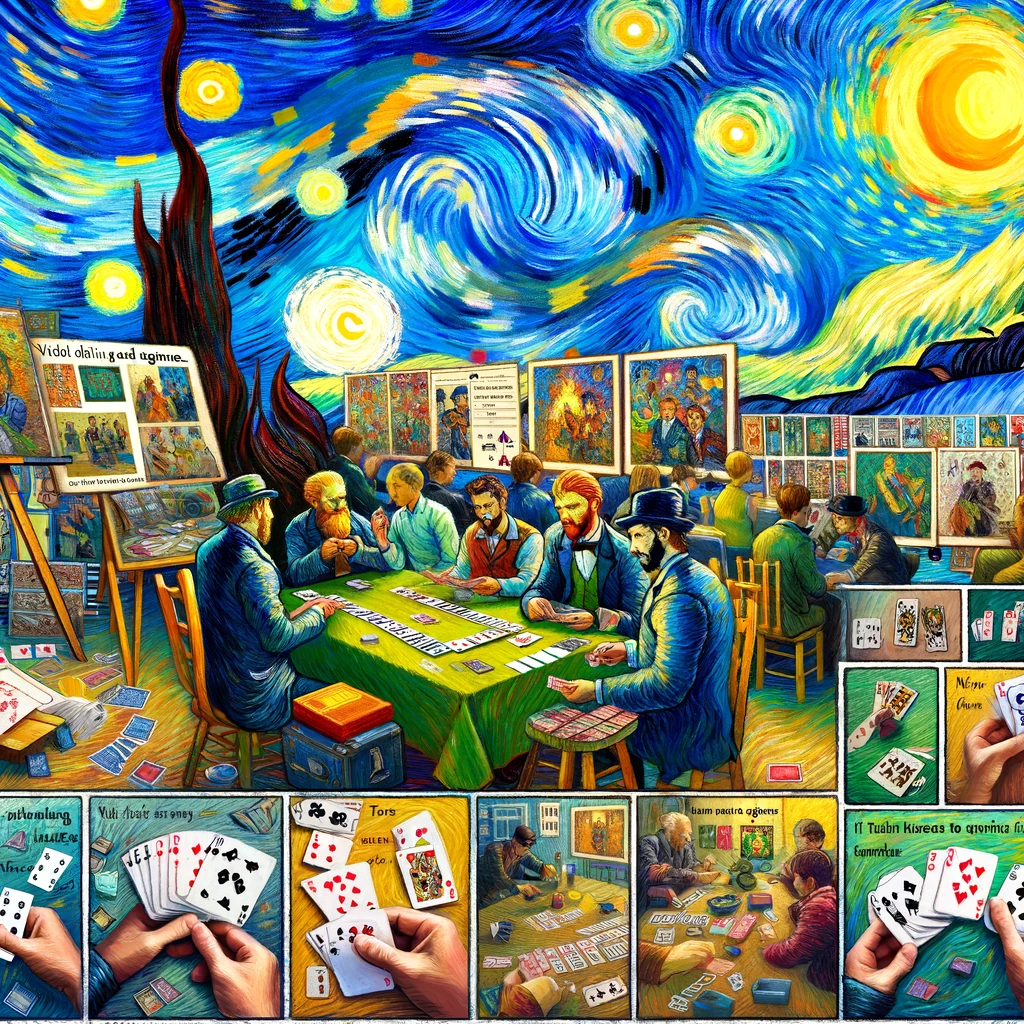
What Ethical Concerns Arise From Using Ai In Game Design?
How Does Ai Enhance Player Decision-Making In Card Games?
How Does AI Enhance Player Decision-Making In Card Games?
Imagine sitting at a table, surrounded not only by friends but also by the ever-watchful eye of artificial intelligence, quietly crunching numbers and analyzing moves. Now, before your mind wanders to a future where machines dominate every aspect of our lives, let’s take a beat. The reality is that AI is here to enhance—not replace—our experiences, especially in the world of card games.
When we engage in a card game, we’re not merely playing; we’re embracing a dance of intuition, strategy, and cunning. Each decision, whether it’s a bold bluff or a carefully calculated play, carries weight. Now throw AI into this mix, and what do you get? A partner who deepens your understanding of the game. This isn’t just about stats and charts; it’s about nurturing that gut feeling we rely on as players. By analyzing countless outcomes in real time, AI helps uncover patterns, guiding you toward decisions that might have eluded your instincts alone.
But let’s not ignore the emotional aspect. Picture a personal coach whispering suggestions in your ear during a tense moment. It’s reassuring, right? AI can serve as that trustworthy advisor, empowering you to make sound decisions while boosting your confidence. By demystifying the complexities of the game, AI allows for a more enriching experience, removing the fear of embellishing your skills or making inevitable mistakes. Instead of feeling lost amidst swirling strategies, you’re left with clarity—an invaluable gift in any competitive setting.
As players, we share a sacred bond over the table—everyone eager to outperform while relishing the camaraderie that card games foster. This is where social appeal becomes crucial. With AI acting as a bridge between seasoned veterans and newcomers, it levels the playing field, encouraging engagement through friendly competition. The result? A vibrant community where everyone, armed with newfound insights from AI, can thrive.
Let’s not forget the ethical dimension here, either. While AI enhances our decision-making, it does so with integrity. It doesn’t play for you; it equips you, ensuring that at the heart of every play lies the essence of your own judgment. So, as you shuffle those cards for your next game night, remember: with AI by your side, you’re not just playing a card game; you’re embarking on a journey toward smarter, more informed, and yes, even more enjoyable decision-making.

How Does Ai Enhance Player Decision-Making In Card Games?
How Does Ai Enhance Player Decision-Making In Card Games?
- AI enhances player experiences in card games by analyzing moves and crunching numbers.
- It supports players in making intuitive and strategic decisions, allowing for deeper understanding of the game.
- AI uncovers patterns and guides decisions that may be overlooked by players’ instincts.
- It acts as a personal coach, providing suggestions that boost players’ confidence during tense moments.
- AI demystifies complex game strategies, offering clarity and removing the fear of making mistakes.
- It promotes social engagement by leveling the playing field between experienced and novice players, fostering community.
- AI enhances decision-making ethically, equipping players while ensuring they retain control over their judgment.

How Does Ai Enhance Player Decision-Making In Card Games?
Can Ai Algorithms Truly Understand Player Emotions While Gaming?
In the ever-evolving landscape of gaming, the question looms large: can AI algorithms truly comprehend the complex tapestry of player emotions? Picture a group of friends huddled around a table, laughter spilling forth as cards are shuffled and strategies are born in the heat of a thrilling card game. There’s something undeniably human about those moments, a rich cocktail of joy, frustration, triumph, and defeat simmering in the air. It’s a feeling that runs deep; one that’s hard to replicate—let alone decode—with mere lines of code.
Yet, as video games continue to bridge reality and the virtual realm, developers are harnessing the power of artificial intelligence to paint a broader emotional picture. Sure, algorithms can analyze patterns, predict moves, and even adapt to player strategies, but can they grasp the weight of a meaningful moment? Can they sense the exhilaration of a well-timed victory or the heartache of losing your last life? It’s an ethical quandary worth considering: can we trust algorithms to respect the psychological nuances that make gaming an emotional adventure, a shared experience that binds us?
Studies suggest that when AI utilizes machine learning, it can begin to tease apart emotional cues through player behavior and input. This is where it gets interesting. A skilled algorithm can analyze the pacing of a player’s movements during a tense match or detect a spike in adrenaline during a close win. However, the crux of the matter lies in the heart of human connection. Can an AI truly resonate with the cathartic sigh that follows a dramatic game-ending moment? Can it respond compassionately to a player’s frustration, perhaps offering a glimmer of hope in the form of a clever hint or a character’s well-placed, uplifting dialogue?
At its core, gaming is about story—the story we share, the challenges we conquer, and the emotional journeys we embark on. This fosters trust and camaraderie among players. If AI is to earn its keep in this sacred space, it must be more than an observer; it must be a true partner in our adventures. As we navigate this delicate balance of technology and emotion, one can only hope that the algorithms of tomorrow will recognize the stakes involved in understanding our human hearts—because in the end, it’s the shared moments, the connections made over a card game or a pivotal battle, that truly matter. Embrace the journey; let’s inspire the algorithms to reflect the best of our humanity.

Can Ai Algorithms Truly Understand Player Emotions While Gaming?
Can Ai Algorithms Truly Understand Player Emotions While Gaming?
- The complexity of player emotions in gaming poses a challenge for AI algorithms.
- Human moments in gaming, such as joy and frustration, are difficult for AI to replicate or understand.
- AI is being used in video games to analyze player behavior and emotions.
- Algorithms can detect emotional cues based on player movements and game outcomes.
- The ethical question arises: can AI respect the nuances of emotional experiences in gaming?
- For AI to be effective, it must become a partner in the gaming experience, not just a tool.
- Ultimately, the goal is for AI to enhance human connection through shared gaming moments.

Can Ai Algorithms Truly Understand Player Emotions While Gaming?
What Are The Implications Of Ai On Game Balance And Fairness?
What Are The Implications Of AI on Game Balance and Fairness?
Imagine this: you’re sitting around a table playing your favorite card game with friends, the atmosphere thick with laughter and playful banter. Each shuffle, each draw of the card, is filled with possibility—the thrill of strategy, the joy of competition. What happens when artificial intelligence steps into this cherished space, ready to challenge your tactical prowess? It’s a question that stirs both excitement and unease.
AI, with its power to analyze data at lightning speed, can recalibrate the nuances of game balance. Picture a world where your opponent—be it a human or a machine—can adapt to your play style, countering your every move with surgical precision. While AI can make card games more dynamic and engaging, it also raises a crucial question: Does this enhance or undermine fairness? This isn’t just about enjoyment; it’s about the essence of competition itself.
On a cognitive level, an AI’s ability to learn and evolve creates a new playing field. It pushes players to think outside the box, to innovate in ways they never thought possible. But are we prepared for the emotional toll? Imagine the helplessness of facing an opponent that seems to know your strategies better than you do. The joy of a hard-fought victory could diminish beneath the weight of an algorithmic mastermind, leaving players feeling like mere pawns in a calculated game.
Ethically, we grapple with another layer: is it right to integrate AI into something as fundamentally social as gaming? Card games have always thrived on camaraderie, shared experiences, and the unpredictable nature of human interaction. Introducing AI risks diluting these connections. The stories we share, the laughter that reverberates around the table—these are irreplaceable.
With every technological advancement, we must draw lines and establish fair play. Trust in an AI system that governs balance rests on transparency and accountability. Players must trust that the algorithm serves to enhance—rather than exploit—their experience. As we negotiate this complex relationship, it’s crucial to engage in conversations that foster connection, asking ourselves who we want our opponents to be: fellow strategists or unyielding machines?
The future of AI in card games can be bright, filled with innovation and excitement, but only if we navigate these waters carefully. Together, let’s ensure that we strike a harmonious balance—one that cherishes the human spirit within every game.

What Are The Implications Of Ai On Game Balance And Fairness?
What Are The Implications Of Ai On Game Balance And Fairness?
- AI has the potential to enhance game balance by analyzing data and adapting to player strategies.
- The introduction of AI in games raises questions about fairness and the essence of competition.
- AI can challenge players cognitively, pushing them to think innovatively and outside the box.
- Facing a highly adaptive AI opponent may lead to feelings of helplessness among human players.
- Integrating AI into gaming may undermine the social aspects and camaraderie inherent in traditional card games.
- Establishing trust in AI systems requires transparency and accountability to ensure fair play.
- The future of AI in card games is promising but requires careful navigation to maintain the human spirit in gaming.

What Are The Implications Of Ai On Game Balance And Fairness?
Conclusion
As we reach the end of this exploration into the integration of artificial intelligence in the mechanics of card games, it’s essential to pause and take stock—not just of the technology, but of what it means for us as players and for the very heart of gaming itself. Picture this: you’re gathered around a table with friends, laughter echoing, as the cards shuffle and strategies unfold. In this familiar setting, an AI partner joins the fray, not to dominate or overshadow, but to enrich and elevate the experience, igniting a spark of creativity in every player involved.
This isn’t merely a game of ones and zeros; it’s about human connection. When AI enhances gameplay, it nurtures a bond that transcends the digital and the real. AI adaptively reads the room—tailoring challenges based on individual player styles and tendencies, and even whispering strategy tips when anxieties run high. It reminds us that we’re not alone in this journey; whether competing against friends or a virtual adversary, we’re all in it together, navigating a landscape that celebrates both triumph and defeat.
Ethically, we’ve got to tread thoughtfully. Trust isn’t just a buzzword; it’s the cornerstone of any engaging game experience. Developers are stepping up to ensure that the engagement remains genuine, fostering transparency so players know that fairness prevails—a necessary balance between competitive spirit and equal opportunity. After all, gaming is meant to be enjoyable, to amplify our interactions, not diminish them.
Now, consider the bigger picture: as AI becomes more entrenched in gaming, so too does its potential for storytelling. Rather than simply providing algorithms, we find narratives that evolve based on our decisions, creating shared histories that linger long after the game concludes. A well-designed AI can serve as a bridge, allowing new and experienced players alike to find common ground, cultivating a vibrant community through shared victories and emotional moments.
At the end of the day, gaming is about us—the emotions we share, the stories we create, and the memories forged in moments of play. So, as you shuffle that deck for your next match, remember this: we’re not just engaging with cards; we’re embarking on an evolving adventure that recognizes the essence of our humanity. With AI by our side, we have the opportunity to elevate our game nights into experiences that celebrate connection, creativity, and the thrill of competition. Let’s embrace this journey, responsibly and joyfully, ensuring that as we advance, we always remember the beating heart of what makes gaming so special: each other.

Conclusion
Conclusion:
- AI integration in card games enhances the gaming experience without overshadowing human interaction.
- AI promotes creativity and connection among players during gameplay.
- The technology adapts to individual player styles and provides strategic guidance when needed.
- Trust and transparency are vital for maintaining an engaging and fair gaming experience.
- AI can enhance storytelling by creating narratives that evolve with player decisions.
- A well-designed AI fosters community among players, bridging the gap between new and experienced individuals.
- Gaming is ultimately about shared emotions and experiences, emphasizing the importance of human connection.

Conclusion
Other Resources

Other Resources
Here is a list of other resources you can review online to learn more:
- Planly
- Uno
- Clans of Caledonia
- Gaia Project
- Alchemists
- Tigris & Euphrates
- Amigo
- GeekWire
- Smash Up
- Flickr
- Line
- Matagot
- Sushi Go!
- Battlestar Galactica: The Board Game
- Sherlock Holmes Consulting Detective: The Thames Murders & Other Cases
- The Broken Meeple
- What’s Your Game?
- Clank!: A Deck-Building Adventure
- Hearts
Use This Prompt To Get More Resources With Your Favorite Online AI Tool: Please provide me with a list of online articles with their URLs in a bulleted list that I can read regarding How Are Game Developers Integrating Artificial Intelligence In Card Game Mechanics?

Other Resources
Glossary Terms
How Are Game Developers Integrating Artificial Intelligence In Card Game Mechanics? – Glossary Of Terms
1. AI (Artificial Intelligence): The simulation of human intelligence processes by computer systems, including learning, reasoning, and self-correction.
2. Algorithm: A step-by-step procedure or formula for solving a problem. In card games, algorithms can determine behaviors and strategies of AI opponents.
3. Card Simulation: The process of creating a virtual representation of card actions and outcomes, often using AI to predict or analyze game scenarios.
4. Bot: An AI-controlled player that can take actions in the game, simulate human behavior, and provide a challenge to human players.
5. Machine Learning: A subset of AI where the system learns from data and improves performance over time without being explicitly programmed for each task.
6. Neural Networks: Computing systems inspired by the human brain’s neural networks, used by AI to recognize patterns and improve decision-making in complex game scenarios.
7. Procedural Generation: The algorithmic creation of game content such as cards, levels, and quests, often enhanced by AI to create varied and engaging experiences.
8. Deck Building: The process of constructing a set of cards for gameplay, which can be influenced by AI suggestions based on effective combinations and strategies.
9. Predictive Analytics: Techniques that use AI to analyze data and make predictions about future card play outcomes, enhancing strategic gameplay.
10. Game Balancing: Adjusting the mechanics and card capabilities to ensure fair play, often assisted by AI that tests various outcomes and player interactions.
11. Dynamic Difficulty Adjustment: An AI mechanism that modifies the game’s difficulty level in real-time based on the player’s skill and performance.
12. Natural Language Processing (NLP): AI technology that enables machines to understand and interpret human language, used in games for chatbots or narrative development.
13. Reinforcement Learning: A type of machine learning where an AI learns to play by receiving rewards or penalties from its actions, improving gameplay strategies over time.
14. Player Profiling: AI techniques that analyze player behavior and preferences to tailor game experiences and card suggestions to individual users.
15. Meta-Game Analysis: The study of overarching strategies and players’ behaviors in the game environment, often driven by AI to inform updates and game design.
16. Behavior Trees: A hierarchical structure used in AI to control the behavior of game characters, allowing for complex decision-making processes.
17. Opponent Modeling: Techniques used by AI to predict and understand the tactics and strategies of human players, improving the AI’s competitive edge.
18. State Space: The total set of possible scenarios or conditions within a game, which AI navigates to determine optimal plays and outcomes.
19. Turn-Based Mechanics: Game mechanics in which players take turns playing their cards, often influenced by AI analysis to suggest the best move in response to previous plays.
20. Feedback Loop: A process where an AI system learns from the outcomes of previous games to refine its strategy and card play over time.
21. Stochastic Modeling: A form of analysis that incorporates randomness and probability to predict card game outcomes under uncertainty.
22. Decision Trees: A model used by AI to make decisions based on branching scenarios and potential outcomes, helping the AI choose optimal card plays.
23. Game Theory: The study of mathematical models of strategic interaction among rational decision-makers, applicable in designing AI opponent strategies.
24. Card Archetypes: Different categories or roles that cards can fulfill within a game, which AI can analyze to provide balance and synergy recommendations.
25. Game State Evaluation: The process of assessing the current game situation to determine the best possible moves, using AI algorithms to analyze board conditions.
26. Training Data: Data sets used to teach AI systems, including past game performances, player strategies, and card interactions to enhance learning.
27. User Experience (UX): The overall experience a player has with a game, influenced by AI through personalized content, adaptive challenges, and narrative elements.
28. Intelligent Tutoring Systems: AI systems that help players learn card game mechanics and strategies through tailored guidance and feedback.
29. Emergent Gameplay: Complex situations that arise from simple rules and player interactions, which AI can analyze to create unexpected challenges or opportunities.
30. Virtual Assistant: An AI-driven helper within games that can provide strategic advice, card suggestions, and real-time analysis to enhance gameplay.

Glossary Of Terms
Other Questions
How Are Game Developers Integrating Artificial Intelligence In Card Game Mechanics? – Other Questions
If you wish to explore and discover more, consider looking for answers to these questions:
- What specific card games have successfully integrated AI so far?
- How can AI learn and adapt to different player strategies in real-time?
- What are the most common algorithms used in AI for card games?
- How do players generally react to playing against AI compared to human opponents?
- What measures are being taken to ensure fairness in AI interactions with players?
- Can AI truly replicate the social dynamics that human players contribute to card games?
- What are the long-term implications of AI integration for traditional card game designers?
- How does AI impact the learning curve for new players in card games?
- What role does AI play in enhancing game narratives and storytelling in card games?
- What are the limitations of AI in understanding and responding to player emotions?
- How can game developers address ethical concerns related to AI in card games?
- What feedback mechanisms exist for players to communicate their experiences with AI opponents?
- How do AI-powered mechanics compare to classic game mechanics in terms of player satisfaction?
- What is the future of AI in the broader context of gaming beyond card games?

Other Questions
Haiku
How Are Game Developers Integrating Artificial Intelligence In Card Game Mechanics? – A Haiku
Cards shuffle, hearts race,
AI sharpens our minds’ play—
Joy in every hand.

Haiku
Poem
How Are Game Developers Integrating Artificial Intelligence In Card Game Mechanics? – A Poem
The Future of Play: A Card Game’s Heart
In the gathering glow of laughter shared,
Cards shuffled close, a world prepared.
With strategy’s dance, and chance’s embrace,
AI emerges, reviving the chase.
A silent partner, keen and wise,
In the thrill of the game, it gently applies
Its gaze, a tutor, a challenger true,
Pushing us forward, our skills to renew.
Oh, the heart knows the joy, the thrill of the play,
The warmth of connection in every sway.
But tell me, dear friend, can machines understand
The pulse of our victories, the weight of our hand?
Through algorithms rich, it learns and it molds,
Adapting our game, as each story unfolds.
Yet the ethics of AI loom large overhead;
Is it fair when a bot feels as if it’s bred?
For camaraderie thrives in the space of the heart,
It’s laughter, it’s banter, where friendships impart.
AI brings depth but risks losing the soul,
In pursuit of the win, does it swallow us whole?
Let’s weave through this game with a watchful eye,
Trust in the dance, let our spirits fly high.
As decks are reshuffled, embrace what is new,
For in every encounter, it’s us that rings true.
So gather your friends, let the stories ignite,
With AI to assist, let’s play through the night.
A future of gaming, alive and profound—
In the fusion of hearts, meaning can be found.
Together we rise, both man and machine,
Enhancing our journey, where joy reigns supreme.
Each card a connection, each round a new chance—
In this evolving tale, let’s continue the dance.

Poem
Checklist
How Are Game Developers Integrating Artificial Intelligence In Card Game Mechanics? – A Checklist
Checklist: Leveraging AI in Card Games for a Better Experience
Emotional Appeals (Heart)
_____ Foster Connections: Prioritize playing to build relationships and shared memories.
_____ Create Joyful Experiences: Aim for games that evoke laughter and enjoyment through engaging mechanics.
_____ Embrace the Drama: Look for AI features that enhance emotional highs and lows, making every victory and defeat feel significant.
Rational Appeals (Head)
_____ Enhance Strategy: Assess how AI can improve your strategic thinking through real-time feedback and analysis.
_____ Understand Game Dynamics: Consider how AI optimizes game mechanics while ensuring fairness.
_____ Cultivate Continuous Learning: Utilize AI’s ability to analyze your gameplay to identify areas for improvement.
Ethical Considerations (Ethical)
_____ Promote Fairness: Ensure that AI opponents operate under rules that maintain the spirit of competition.
_____ Value Human Creativity: Advocate for a balanced approach, where human narrative and AI-driven gameplay coexist.
_____ Encourage Responsible Gaming: Be critical of monetization practices and push for ethical AI implementations that enhance rather than exploit.
Authority Recognition (Authority)
_____ Engage with Experts: Seek out insights from game developers and designers on the implications of AI in gaming.
_____ Learn from Case Studies: Explore successful implementations of AI in popular card games to understand best practices.
_____ Stay Updated: Keep up with industry trends regarding AI advancements and their ethical discussions in gaming.
Storytelling Elements (Narrative)
_____ Craft Your Unique Story: Encourage AI to help build narratives that adapt to player decisions, adding depth to gameplay.
_____ Build Shared Histories: Focus on games that foster shared experiences through storytelling, creating richer bonds among players.
_____ Celebrate Moments: Document pivotal moments that occur during gameplay and share stories to strengthen the community.
Community Impact (Social)
_____ Promote Inclusivity: Ensure that AI enhances game accessibility for players of all skill levels, encouraging broader participation.
_____ Create Collaborative Experiences: Look for AI that facilitates teamwork and cooperation rather than just competition.
_____ Encourage Practice Sessions: Use AI companions when friends aren’t available, maintaining engagement with the game and improving your skills.
Practical Implementation
_____ Test AI Features: Experiment with different AI capabilities in card games to see which adjustments you like best.
_____ Share Insights with Friends: Discuss your experiences with AI-enhanced games to encourage others to explore this technology.
_____ Provide Feedback: Actively participate in forums or surveys on AI in gaming to help shape future developments.

Checklist
At CardGameNews, we help people who love card games by collating information and news about card games.
Be sure to read our other related stories at CardGameNews to learn more about card games.


