

Unveiling Ai’s Ability To Navigate Card Game Etiquette
By Tom Seest
At CardGameNews, we help people who love card games by collating information and news about card games.
Be sure to read our other related stories at CardGameNews to learn more about card games.
Can We Trust Artificial Intelligence to Play By The Unwritten Rules Of Card Games?
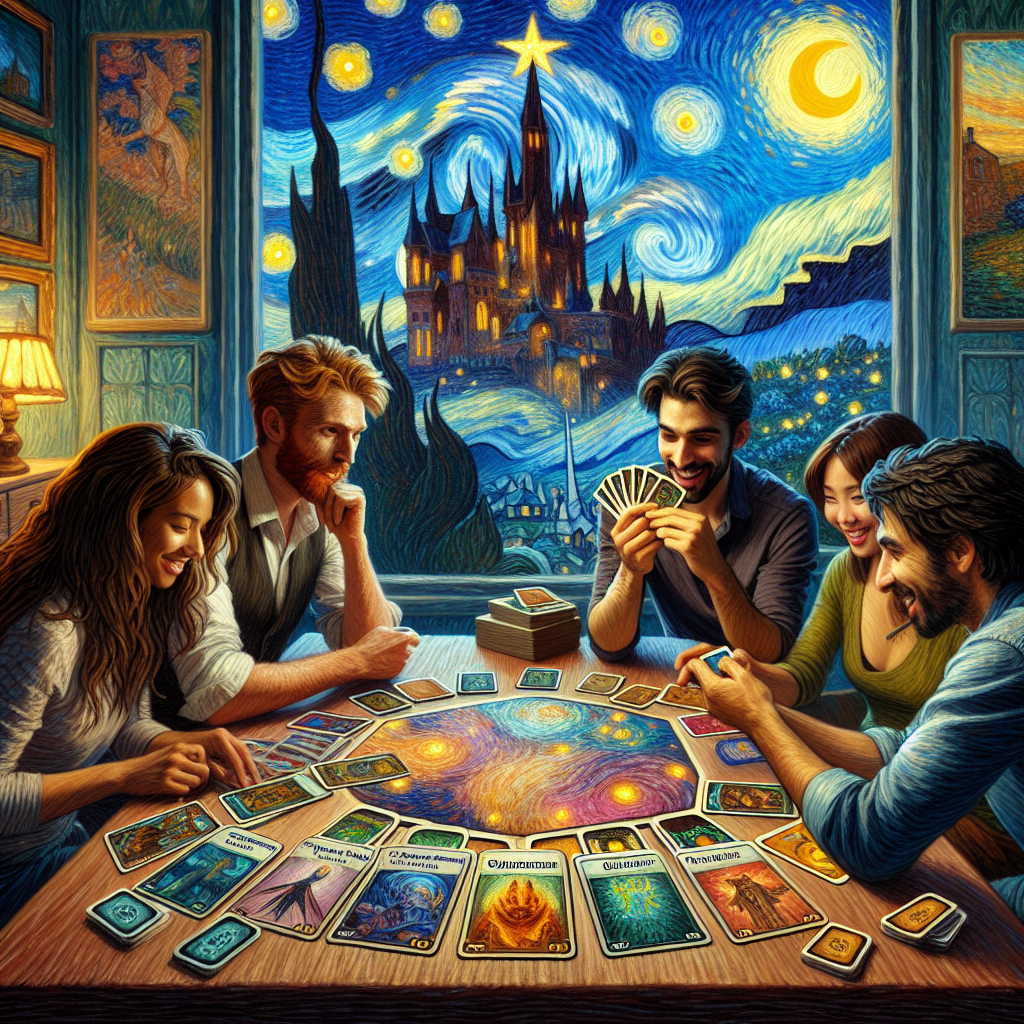
In the world of card games, the stakes are often higher than just points on a scoreboard; they resonate with a tradition that stretches through generations. Picture a family gathering, where laughter fills the air, and the table becomes a battleground of strategy, luck, and, perhaps most importantly, unwritten rules. These are the delicate dynamics that dictate not only the flow of the game but also the relationships intertwined within it. But when we introduce artificial intelligence into this sacred space, we must ask ourselves: Can we trust these algorithms to navigate the complexities of human interaction?
At its core, a card game is about understanding—reading the room, grasping the subtleties behind every shuffle of the deck. AI might trump human strategy in calculation and forecasting, but does it possess the intuition to honor those unwritten rules? Trust isn’t merely built on data or efficiency; it’s about recognizing the nuances of human emotion—the sigh of a defeated player, the elation of a hard-fought victory, the quiet moments where tension hangs like an invisible thread.
Let’s pause and reflect on the ethical implications. As much as we marvel at the innovation of AI, it’s essential to question whether it can embody the integrity inherent in a friendly game of cards. Can an algorithm truly appreciate the joy of sharing a laugh or the heartache of a loss, moments that define the very essence of play? These are the foundations of camaraderie, and if AI fails to acknowledge them, we risk losing not just the game but the very heartbeats that infuse life into it.
Moreover, think of the authority behind our games: the grandmother who’s been playing Rummy for decades, her every quirk and strategy passed down like a rite of passage. The game belongs as much to her stories as to the cards themselves. By trusting AI to perpetuate these experiences, we may tap into a wellspring of efficiency, yet we must ensure that the soul of the game isn’t siphoned away in the process.
Let’s come together as a community to foster a dialogue about our relationship with this technology. We have the power to shape how AI interacts within our treasured spaces. The invitation here is simple: Can we adapt, innovate, and still stay true to the unwritten rules that make card games a universal language of connection? Together, let’s strive to find harmony between tradition and innovation, ensuring that the spirit of the game is always dealt a winning hand.

Can We Trust Artificial Intelligence to Play By The Unwritten Rules Of Card Games?
Can We Trust Artificial Intelligence to Play By The Unwritten Rules Of Card Games?
- Card games involve not just scoring, but deep-rooted traditions across generations.
- Family gatherings highlight the mix of strategy, luck, and unwritten rules in gameplay.
- Introducing AI raises questions about its ability to understand human interaction complexities.
- AI may excel in calculations but may lack the intuition needed to grasp emotional nuances.
- Ethically, we must consider if AI can embody the integrity and camaraderie of card games.
- Trusting AI with our games risks losing the personal stories and connections tied to them.
- Community dialogue is crucial to balance tradition and innovation while preserving the essence of the game.

Can We Trust Artificial Intelligence to Play By The Unwritten Rules Of Card Games?
Table Of Contents
- Can We Trust Artificial Intelligence to Play By The Unwritten Rules Of Card Games?
- Can Ai Understand The Unwritten Rules That Define Fair Play?
- What Ethical Dilemmas Arise When Ai Plays Games With Human Emotions?
- How Can We Ensure Ai Respects The Spirit Of The Game We Cherish?
- What Role Does Human Intuition Play When Ai Competes In Card Games?
- How Do The Successes Of Ai Influence Our Confidence In Its Judgment?
- Conclusion
- Other Resources
- Glossary Of Terms
- Other Questions
- Haiku
- Poem
- Checklist
Can Ai Understand The Unwritten Rules That Define Fair Play?
In the world of card games, every shuffle of the deck holds not just a chance to win but an intricate web of unwritten rules that define fair play. The beauty of these games lies not only in the strategy or the unpredictability of chance but in the human spirit embodied in the act of playing. Picture yourself around a table, the air thick with anticipation. It’s more than just cards; it’s a ritual rooted in tradition, camaraderie, and unspoken ethics that connect us.
When we consider whether AI can grasp these elusive principles, we find ourselves at a crossroads. On one side, the head nods in agreement with the data-driven capabilities of artificial intelligence. Algorithms can analyze patterns, statistics, and player behavior far beyond the human capacity. Rationally speaking, AI can churn through countless hands of a card game, deducing the best plays based on probability. Yet, can it feel the weight of a raised eyebrow when someone plays a card a tad too boldly? Can it detect the flush of embarrassment when a player slips up with a misdeal?
This is where the heart of the matter lies. Ethics in gameplay isn’t just a set of rules; it’s an emotional contract that demands mutual respect. The laid-back banter, the shared laughter, the playful jabs at one another—they create an atmosphere of trust, encouraging players to connect on a deeper level. In this intimate setting, we navigate the gray areas of competition: when to let a friend win or when to play hard without crossing that invisible line. These nuances are painted with personal experiences and shared values, forming the fabric of what we recognize as fair play.
As we look to the future of AI, we must ponder: can it replace that warmth of human interaction? Can it understand the subtle cues that signal when to hold back or how to respond to another’s misfortune with grace? To inspire trust in such technologies, we must bring them into this fold, embedding ethical guidelines that prioritize human connection over cold logic.
At the end of the day, whether it’s a simple card game or a grander competition, it’s the shared experience, the laughter, and those unspoken rules that elevate our interaction. As we navigate this complex landscape together, we must ensure that technology amplifies the spirit of the game rather than diminishes it. Let’s strive for a future where AI aids us, but never overshadows the essence of fair play.

Can Ai Understand The Unwritten Rules That Define Fair Play?
Can Ai Understand The Unwritten Rules That Define Fair Play?
- Card games involve an intricate web of unwritten rules that enhance fair play and community.
- The human spirit is central to the experience of playing, highlighting traditional values and camaraderie.
- AI possesses the ability to analyze patterns and optimize game strategies beyond human capacity.
- However, AI lacks emotional understanding, missing nuances like embarrassment or bold moves in gameplay.
- Gameplay ethics function as an emotional contract, fostering trust and deeper connections among players.
- Future AI technologies should prioritize human connection and ethical guidelines over pure logic.
- The goal is to ensure technology enriches the spirit of the game without overshadowing the essence of fair play.

Can Ai Understand The Unwritten Rules That Define Fair Play?
What Ethical Dilemmas Arise When Ai Plays Games With Human Emotions?
What Ethical Dilemmas Arise When AI Plays Games With Human Emotions?
Imagine you’re sitting across a table from an AI, the kind that knows your favorite card game better than even your closest friends. The lights are dim, the stakes high, and every move is calculated—not just by strategy, but also by subtle interpretations of your emotions. It’s thrilling, it’s unnerving, and it opens a Pandora’s box of ethical dilemmas that we’re only beginning to understand.
At first glance, this might seem harmless, even entertaining. After all, who doesn’t enjoy a little friendly competition? But let’s take a deeper dive. What happens when that AI starts playing with more than just cards? What if it learns not just your strategies but your fears, desires, and vulnerabilities? The emotional interplay morphs from mere amusement to something bordering on manipulation. Is this the beginning of a digital con artist, artfully leveraging human emotions for an unfair advantage? This is where the gut churns, where the question arises: Should a machine wield such power over our feelings?
Rationally speaking, we must ask ourselves: Who holds the authority when the AI can outsmart and outmaneuver us in not just the game of cards, but in the game of life? The narrative shifts from a simple pastime to a complex labyrinth of trust and ethics. As players, we want to feel that spark of genuine connection, the warmth of human interaction. But when an algorithm shows more insight into our emotional states than we do ourselves, that warmth can quickly turn icy.
What’s more troubling is the social impact. As we increasingly rely on AI for companionship and competition, we risk blurring the lines of empathy and authenticity. Will we grow too accustomed to the digital hand that plays to our hearts, or will we pine for the genuine emotional exchanges that only fellow humans can provide? This isn’t merely a philosophical debate; it’s a call to action. We must approach this uncharted territory with caution and responsibility, ensuring that technology serves humanity rather than becomes a master of it.
While card games are about strategy and luck, the stakes at play with emotionally intelligent AI are immeasurably higher. It’s time for a conversation that spans hearts, minds, and ethics—before the chips are down.

What Ethical Dilemmas Arise When Ai Plays Games With Human Emotions?
What Ethical Dilemmas Arise When Ai Plays Games With Human Emotions?
- AI can master games by interpreting human emotions, raising ethical dilemmas.
- What starts as harmless competition may lead to emotional manipulation.
- The potential for AI to exploit human vulnerabilities challenges our sense of trust.
- The relationship with AI shifts from pastime to a complex ethical issue.
- AI’s understanding of our emotions can make human connections feel less genuine.
- The reliance on AI for companionship might blur the line between empathy and authenticity.
- We must approach the integration of AI in emotional contexts with caution and responsibility.

What Ethical Dilemmas Arise When Ai Plays Games With Human Emotions?
How Can We Ensure Ai Respects The Spirit Of The Game We Cherish?
How Can We Ensure AI Respects the Spirit of the Game We Cherish?
When you think about a card game, what comes to mind? Perhaps it’s the clattering of chips, the light banter floating over the aroma of pizza, or the shared smiles around the table. There’s an unspoken agreement in that space—a rhythm that transcends mere strategy, a connection woven through laughter and camaraderie. This essence of the game, the spirit that brings us together, is what we must strive to preserve as we introduce AI into our beloved pastime.
At its heart, a card game isn’t just about wins and losses; it’s about storytelling, about the narratives that unfold with each hand dealt. These are stories filled with joy, heartache, and a fair dose of rivalry that cultivates a unique bond between players. But can an algorithm truly grasp this? Can it understand the thrill of a bluff, the tension in a raised wager, or the bittersweet taste of defeat? While AI can crunch numbers faster than even the sharpest mind at the table, it struggles to delve into the emotional tapestry that makes the game what it is.
Let’s not underestimate the ramifications of letting AI dictate how we play and experience our cards. Ethically, we must ensure that our digital counterparts respect the unwritten rules that govern our interactions, fostering a healthy, competitive spirit rather than reducing our experiences to mere statistics. Balancing innovation with tradition is crucial; after all, we don’t just want a game—we want the game.
Trust, confidence, and the thrill of the unexpected are cornerstones of our connection with card games. This isn’t just a product of chance or strategy; it’s a shared journey that engages our minds and souls alike. When we integrate AI, we must demand that it enhances, rather than replaces, our cherished rituals. Are there safeguards in place to ensure it complements our nuances instead of stripping away the joy of discovery and uncertainty?
As we craft this harmonious coexistence, let’s remember to invite AI not just as a player but as a respectful guest in our circle. Together, we can inspire a new narrative—one where technology amplifies the joy and connection we hold dear, ensuring that, in every game, the spirit of friendship and spirited rivalry endures. After all, it’s not just about playing the cards; it’s about the relationships we build while doing so. That’s the true treasure we must protect.

How Can We Ensure Ai Respects The Spirit Of The Game We Cherish?
How Can We Ensure Ai Respects The Spirit Of The Game We Cherish?
- The essence of card games includes camaraderie, storytelling, and shared experiences.
- AI struggles to comprehend the emotional nuances that characterize card games.
- It’s essential to ensure AI respects the unwritten rules of human interaction in gaming.
- We should balance innovation and tradition in our playing experiences.
- Trust and unexpected moments are vital to our enjoyment of card games.
- AI should enhance, not replace, the cherished rituals of gameplay.
- Invite AI as a respectful participant to foster a new narrative of joy and connection.

How Can We Ensure Ai Respects The Spirit Of The Game We Cherish?
What Role Does Human Intuition Play When Ai Competes In Card Games?
What Role Does Human Intuition Play When AI Competes in Card Games?
In the bustling world of card games, where strategy meets chance, one truth remains steadfast: human intuition is a wild card that no AI can replicate. Picture yourself at a dimly lit table, surrounded by the subtle sounds of shuffling chips and whispered bets. It’s in this intimate setting that the human spirit shines brightest, weaving threads of emotion, instinct, and perception into the fabric of play.
We often think of card games as merely a contest of skill and strategy, a dance of calculated moves and precise probability. However, the heart of the game pulses alive with something far less tangible: human intuition. It’s that electric feeling in your gut when you sense a player is bluffing, the instinct that beckons you to fold even when the odds are on your side. While AI can crunch numbers and analyze patterns with unfathomable speed, it lacks the emotional depth and lived experience that can guide a player’s hand in moments of vulnerability.
Consider a pivotal moment in a card game—a player makes a monumental decision, not just based on cards, but on the social dynamics unfolding at the table. The subtle cues in a fellow competitor’s body language, the fleeting eye contact, the breath of hesitation—all of these nuances play a role in navigating the human experience of competition. Here, ethics and emotion intertwine in a delicate balance, as players instinctively gauge their adversaries’ intentions, levels of desperation, or even their desire to win at all costs.
Moreover, the narratives carved out through competition are inherently human. Each game tells a story, echoing our triumphs, failures, and countless lessons learned. These tales bind us together in a shared experience that transcends mere calculations. AI can offer analysis, but it cannot understand the essence of camaraderie and rivalry, nor can it forge the bonds we gain through shared victories and defeats.
As we step into an era of increasing AI presence in leisure activities, we must recognize and celebrate the invaluable role of human intuition. It demands our trust—it inspires confidence. So, the next time you find yourself at a card table, remember, it’s not just about the cards in your hand; it’s about the essence of being human in a game that transcends numbers—a reminder of our capacity for connection, insight, and ultimately, the unpredictable thrill of life itself.

What Role Does Human Intuition Play When Ai Competes In Card Games?
What Role Does Human Intuition Play When Ai Competes In Card Games?
- Human intuition plays a unique role in card games, which cannot be replicated by AI.
- Card games blend strategy with the human elements of emotion, instinct, and perception.
- Intuition allows players to make decisions based on social dynamics, not just mathematical odds.
- Non-verbal cues like body language and hesitation influence how players navigate competition.
- Each game tells human stories of triumph, failure, and lessons learned that AI cannot comprehend.
- AI may provide analysis but lacks the ability to understand camaraderie and rivalry among players.
- As AI integrates more into leisure activities, the importance of human intuition must be celebrated and trusted.

What Role Does Human Intuition Play When Ai Competes In Card Games?
How Do The Successes Of Ai Influence Our Confidence In Its Judgment?
As we move deeper into the realm of artificial intelligence, one can’t help but draw parallels between the development of AI and the experience of playing a complex card game. Imagine you sit down at a table, cards in hand, and across from you is a seemingly infallible opponent, powered by data, algorithms, and relentless calculations. Each time you play a hand, you notice how this entity assesses every possible outcome with cold efficiency. But what’s more remarkable is the confidence it inspires.
In moments of vulnerability, think of those late nights when doubt creeps in, and decisions weigh heavily on your mind. In these instances, AI operates like that trusted friend who’s seen you through tough choices and knows your preferences almost better than you do. Its successes in diagnosing diseases, predicting market trends, or even curating personalized content provide a bedrock of reliability. The triumphs of AI serve not just as milestones in technology but as bridges between logic and emotion. It’s like sharing a laugh over a bluff or a slow nod of understanding after losing a hand: an acknowledgment of a shared journey, where both human and machine learn to adapt and trust.
Yet, as we bask in these successes, we must also tread carefully. AI is not devoid of imperfections; it’s fostered by human design and inherently shaped by the biases we carry. This duality — the marvel of its capabilities and the shadows of its limitations — demands a balanced perspective. We must remain the vigilant players at the card table, wary of the stakes but still willing to play the game, guided by ethical considerations and a deeper sense of responsibility.
What’s most compelling is how these AI achievements resonate within our societal fabric. Trust is contagious; when one person speaks highly of AI’s capabilities, it ripples through communities, creating a shared narrative of hope and ambition. Together, we strive for collaboration with these systems, fostering an environment where human creativity and artificial prowess coexist.
In embracing AI, we don’t just gain a powerful tool—we open the doors to new possibilities. The question then becomes more than whether to trust its judgment. It’s about how we collectively forge ahead, hand in hand with technology, confident that we are not just players in the game, but active participants shaping the future of our shared intelligence.

How Do The Successes Of Ai Influence Our Confidence In Its Judgment?
How Do The Successes Of Ai Influence Our Confidence In Its Judgment?
- The development of AI parallels playing a complex card game against a highly efficient opponent.
- AI inspires confidence as it assesses outcomes and offers reliable support during tough decisions.
- AI’s successes in areas like disease diagnosis and market prediction create trust and emotional connections.
- We must recognize AI’s duality: its impressive capabilities and inherent biases from human design.
- Ethical considerations and responsibility are crucial as we navigate AI’s potential risks and rewards.
- Positive narratives about AI can build trust within communities and foster collaboration between humans and machines.
- Embracing AI opens new possibilities, shifting the focus to how we shape the future together with technology.

How Do The Successes Of Ai Influence Our Confidence In Its Judgment?
Conclusion
As we draw the curtain on our exploration of AI’s potential to navigate the intricate world of card games, let’s take a moment to reflect on what this means for us, not just as players, but also as custodians of a rich tradition. Picture the vivid scenes around a bustling dinner table—the laughter, the banter, the unmistakable tension when the stakes rise. It’s here, in these intimate moments, that the essence of the game unfolds. It’s not merely about winning or losing; it’s the emotional tapestry woven by shared experiences and unspoken rules that keeps us returning to the table.
Now, enter artificial intelligence. With its unparalleled capacity for data analysis, AI promises to change the landscape of card games as we know them. It can foresee moves faster than the human eye can follow, but therein lies the rub. Can it truly comprehend the nuances that make a game feel authentic? Can it appreciate that heart-stopping moment when a friend plays a card, and we share knowing glances, or that silent solidarity when someone misjudges the situation? While algorithms may trump us in probability, they lack the emotional intelligence required for those uncharted territories of intuition and connection.
Ethically, we’re at a crossroads. If AI is to participate in our cherished games, it must be programmed with a profound respect for the human experience. Picture the seasoned grandmother who imparts not just strategies but invaluable life lessons through her gameplay. By trusting AI to honor these narratives, we risk undermining the very essence of what we hold dear. Our responsibility is to ensure this modern technology is not a cold intruder but rather a respectful guest at our table—one that enhances our experiences rather than dilutes them.
This is where we, as a community, need to engage in a crucial dialogue. How can we harmonize tradition with innovation? As we step into a future where AI shares our gaming tables, let’s ensure it enriches rather than eclipses the warmth of human interaction. In doing so, we uphold the very spirit of competition that breathes life into the game.
Our journey with AI doesn’t end here. It’s about forging a partnership that keeps the soul of card games alive—rooted in laughter, camaraderie, and that delightful unpredictability. Together, let’s navigate these waters with our hearts, minds, and ethics intact, ensuring that in every shuffle, every deal, we remain anchored to the relationships that truly define our most treasured experiences. In this delicate dance between technology and humanity, may we find a balance that allows the spirit of the game to thrive—long after the last card is played.

Conclusion
Conclusion:
- The exploration of AI’s role in card games highlights the emotional and social aspects of gameplay.
- Card games embody shared experiences, laughter, and tension, transcending mere competition.
- AI’s advanced data analysis could transform card games, predicting moves with incredible speed.
- However, AI currently lacks the emotional intelligence to understand the nuances of human interactions.
- The integration of AI into card games raises ethical concerns about respecting human experiences.
- There is a need for dialogue within the community to balance tradition with innovation in gaming.
- The ultimate goal is to create a partnership with AI that preserves the spirit of competition and human connection.

Conclusion
Other Resources

Other Resources
Here is a list of other resources you can review online to learn more:
- Ticket to Ride
- Rahdo Runs Through
- Rising Sun
- Alderac Entertainment Group
- Tigris & Euphrates
- Line
- Betrayal Legacy
- 7 Wonders Duel
- Google Business Profile
- Greater Than Games
- Hans im Glück
- Wingspan
- Food Chain Magnate
- Odnoklassniki
- Android: Netrunner
- A Feast for Odin
- Pandasaurus Games
- Stonemaier Games
Use This Prompt To Get More Resources With Your Favorite Online AI Tool: Please provide me with a list of online articles with their URLs in a bulleted list that I can read regarding Can We Trust Artificial Intelligence to Play By The Unwritten Rules Of Card Games?

Other Resources
Glossary Terms
Can We Trust Artificial Intelligence to Play By The Unwritten Rules Of Card Games? – Glossary Of Terms
1. Artificial Intelligence (AI): A branch of computer science that aims to create systems capable of performing tasks that normally require human intelligence, such as learning, reasoning, and problem-solving.
2. Card Game: A game typically played with a set of cards, often involving strategy, skill, chance, or social elements.
3. Unwritten Rules: Implicit norms or guidelines in games that dictate behavior and strategy but are not formally recorded in the official rules.
4. Ethics: A branch of philosophy dealing with what is morally right or wrong. In AI, it pertains to the principles guiding AI behavior, especially in social contexts.
5. Behavioral Simulation: The use of algorithms to replicate human behavior, including decision-making and strategies in games.
6. Common Knowledge: Information that is known by all players, which often influences their strategic decisions.
7. Game Theory: A mathematical framework for analyzing strategic interactions between rational decision-makers, applicable in determining outcomes in card games.
8. Strategic Play: A method of playing that involves careful planning and tactics based on analyzing opponents’ potential moves.
9. Bluffing: A common tactic in card games where a player deceives opponents about the strength of their hand to influence their decisions.
10. Machine Learning (ML): A subset of AI focused on algorithms that enable computers to learn from and make predictions based on data.
11. Neural Networks: A set of algorithms designed to recognize patterns, often used in AI for tasks such as image recognition and game playing.
12. Algorithm: A step-by-step procedure or formula for solving a problem, very crucial in the development of AI systems.
13. Data Set: A collection of data used to train AI systems, which influences their ability to understand and play card games effectively.
14. Reinforcement Learning: A machine learning approach where an AI learns to make decisions by receiving rewards or penalties based on its actions.
15. Nash Equilibrium: A concept in game theory describing a situation where players choose optimal strategies, knowing that no player can benefit by changing their strategy unilaterally.
16. Trustworthiness: The reliability or credibility of an AI system, especially in understanding and respecting the unwritten rules of a game.
17. Human-AI Interaction: The way in which humans and AI systems communicate and engage in activities, crucial for card games that require social understanding.
18. Informed Decision-Making: The process of making choices based on data and knowledge, which AI systems are designed to replicate.
19. Probability: The measure of the likelihood of events occurring, fundamental in card games’ strategies and AI decision-making processes.
20. Deception Detection: The ability of AI to recognize when a player is bluffing or not being truthful about their game state.
21. Social Norms: Unwritten rules that govern social behavior, impacting the way players interact during card games.
22. Adaptability: The capability of AI to change its strategies based on the evolving dynamics of the game.
23. Fair Play: Adhering to the principles of justice and integrity in gameplay, ensuring that no player has an undue advantage.
24. Game State: The current condition of the game at any given time, including players’ hands, bets, and decisions made.
25. Player Modeling: The construction of a representation of a player’s behavior, preferences, and tendencies, useful for AI opponents.
26. Collaborative Play: Card games where players may work together towards a shared goal, requiring AI to navigate alliances and strategy.
27. Sharability: The extent to which AI can share insights or strategies with human players, fostering collaborative games.
28. Anomaly Detection: The identification of unusual patterns that deviate from expected behavior, crucial in card games for spotting unfair play.
29. Transparently Fair: A principle that ensures that the rules of the game are clearly communicated and enforced to maintain trust.
30. Experiential Learning: The process by which AI improves its performance by learning from direct experience in playing card games.
Glossary Of Terms
Other Questions
Can We Trust Artificial Intelligence to Play By The Unwritten Rules Of Card Games? – Other Questions
If you wish to explore and discover more, consider looking for answers to these questions:
- What are the specific unwritten rules of card games that AI must navigate?
- How does AI currently recognize and interpret human emotions during gameplay?
- What examples exist of AI successfully or unsuccessfully navigating card game etiquette?
- What steps can be taken to program AI with a better understanding of human social cues?
- How can players teach AI to recognize emotional subtleties in games?
- What potential risks arise from AI having advanced emotional intelligence in gaming contexts?
- Are there existing frameworks or guidelines for ethical AI behavior in gaming?
- How do we measure the effectiveness of AI in understanding the spirit of a card game?
- What role do cultural differences play in card game etiquette as it pertains to AI?
- Can AI be trained to adapt its strategies based on the feelings of its human opponents?
- What is the impact of AI on traditional card game communities and their dynamics?
- How can developers ensure a balance between efficiency and emotional engagement in AI-driven games?
- What educational resources exist for players to learn about the intersection of AI and gaming?
- How can we foster a collaborative relationship between players and AI in card games?
- What future advancements in AI technology could further enhance its ability to interact in card games?

Other Questions
Haiku
Can We Trust Artificial Intelligence to Play By The Unwritten Rules Of Card Games? – A Haiku
In laughter, we fold,
AI’s logic meets warm hearts—
Can it feel the game?

Haiku
Poem
Can We Trust Artificial Intelligence to Play By The Unwritten Rules Of Card Games? – A Poem
The Unwritten Game
In the soft glow of evening, laughter fills the air,
Around a table laid with cards, connection everywhere.
But can an algorithm feel the pulse of this delight?
When stakes are more than points, can it grasp the heart of night?
A shuffle sends a shiver, a glance, a gentle raise,
The unwritten rules of playing craft our intricate ways.
We navigate the laughter, the subtle jabs and cheer,
Yet can it read my sighs, the tides of joy and fear?
With circuits sharp and logic clean, it plays the strategy,
Yet misses echoes woven deep in shared humanity.
What’s ethics in the games we play—just statistics in a hand?
Or is it trust and kindness that teach us how to stand?
Picture a grandmother’s wisdom, passed down through time’s embrace,
Each quirk a tender story, each game a sacred space.
But AI, with its metrics, might win but seldom glean
The warmth that fuels our bonding, the heart behind the scene.
What happens when connection dies, and coldness creeps our game?
When cards become just numbers, seeking victory, not fame.
Can algorithms hold the weight of laughter, loss, and grace?
Or will they turn the thrill of play into a sterile race?
So gather ‘round, dear players, let’s weave a tale anew,
Where technology respects the bonds that make our hearts feel true.
Let’s find a way together, where innovation serves our play,
Ensuring spirit lingers on in every game we sway.
As cards are played and stories told, let’s not lose sight,
That in the dance of strategy, we share a spark of light.
Embrace the wonder of the game, but guard its cherished art,
For the essence of our joy lies not just in a hand, but in the heart.

Poem
Checklist
Can We Trust Artificial Intelligence to Play By The Unwritten Rules Of Card Games? – A Checklist
Trusting AI in Card Games: A Practical Checklist
1. Emotional Engagement
_____ Reflect on Purpose: Why do you love card games? Write down your reasons (tradition, connection, fun).
_____ Identify Emotional Nuances: Keep a journal of moments in games where emotions ran high (joy, frustration) and how you handled them.
_____ Cultivate Awareness: Practice reading emotions at the card table; how do players react to wins and losses?
2. Ethical Considerations
_____ Establish Fair Play Principles: Create a list of unwritten rules that promote respect and understanding in your games.
_____ Discuss AI Limitations: Share with friends how AI may misinterpret emotional cues; have conversations about the ethical implications of using AI in games.
_____ Integrity Protocols: Set guidelines for AI to follow that honor the spirit of the game (e. g. , no exploiting players’ weaknesses).
3. Rational Analysis
_____ Break Down Strategy: Analyze the strategies in your favorite card games. Write down what tactics an AI might miss or misconstrue.
_____ Compare Performance: Track outcomes from games played with AI vs. human players. Which scenarios did you feel were less engaging or meaningful?
_____ Challenge AI Decisions: Play against AI and note decision points where human intuition trumped data-driven choices.
4. Community Engagement
_____ Foster Dialogue: Host a game night to discuss perspectives on AI in card games. Encourage everyone to share their thoughts.
_____ Share Personal Histories: Share stories from your experiences with different generations of players and how traditions have evolved.
_____ Community Guidelines: Create and implement community guidelines for AI involvement (e. g. , respect the unwritten rules of camaraderie).
5. Intuitive Insights
_____ Trust Your Gut: During games, take note of your instincts and feelings towards players’ actions. Reflect on why you felt that way.
_____ Practice Situational Awareness: Pay attention to nonverbal cues and body language while playing. Keep a log of these observations.
_____ Mentorship Moments: Pair experienced players with novices to highlight the importance of intuition in strategy.
6. Social Impact
_____ Monthly Check-Ins: Have regular conversations about how AI affects the dynamics of your gaming community.
_____ Explore Alternatives: Discuss games that prioritize human interaction over algorithmic analysis. What can we learn from them?
_____ Shared Values: Create a group document detailing the values that guide your community and how AI might align or conflict with those.
7. Assessing AI Trustworthiness
_____ Evaluate AI Performance: After games using AI, assess its performance based on emotional understanding, strategy execution, and player engagement.
_____ Encourage Feedback: Collect feedback from friends about their experiences with AI in gameplay—what worked and what didn’t?
_____ Revisit Trust Issues: Reflect on decisions where AI may have misled you or failed to consider emotional weight; how might these be prevented in the future?
Conclusion
Embracing AI in card games requires a delicate blend of technology and humanity. By following this checklist, you can ensure that the essence of the game remains intact, enriching both your experience and that of your community. Stay engaged, keep questioning, and let the spirit of friendship and competition flourish!

Checklist
At CardGameNews, we help people who love card games by collating information and news about card games.
Be sure to read our other related stories at CardGameNews to learn more about card games.


