

Unveiling The Power Of Ai In Card Game Strategy
By Tom Seest
At CardGameNews, we help people who love card games by collating information and news about card games.
Be sure to read our other related stories at CardGameNews to learn more about card games.
Can Artificial Intelligence Predict Your Moves In Card Games with High Accuracy?
When you sit down for a good old-fashioned card game, whether it’s poker around the kitchen table or bridge in a community center, it’s not just about the cards — it’s about the connection. It whispers of rivalry and camaraderie, of shared laughter and heartfelt banter. But imagine this: an artificial intelligence, sifting through your every move, predicting your next action with uncanny precision. The thought sounds almost sinister, yet here we are, standing at the intriguing intersection of technology and tradition.
At the core, AI isn’t just a soulless algorithm. Picture it as a relentless student, absorbing the nuances of your style, your tells, your quirks. It picks apart your bluff, studies your habits for breakfast, and learns from every winning hand. This data-driven approach could enhance your gameplay or potentially undermine the very essence of camaraderie that makes a card game enjoyable. Is there a moral line here? It’s worth pondering. What happens when our human instincts are outsmarted by a machine that has no stake in the pot?
Just think about it. How would you feel sitting across from an opponent who relies on AI’s predictions to master their game? At first, it might feel like a fair challenge, but soon, that nagging unease creeps in. There’s something inherently human about making decisions that come from gut feelings rather than calculated probabilities. The question flits around the room like a shadow—does this technology take the soul out of our cherished card games?
Yet, let’s step back and consider the opportunities. What if your local community center hosts a friendly AI-assisted tournament? Experts from the realm of data science could merge their knowledge with your experiences, leading to a shared understanding that enhances both gameplay and friendships. This alliance could elevate everyone’s game while preserving the heart of competition.
This isn’t just about artificial intelligence mastering card games; it’s about exploring how technology can deepen our understanding of an age-old pastime. The human spirit is resilient and adaptive. Instead of viewing AI as a threat, let’s embrace it as a companion that teaches us not just how to play the game better, but how to play life itself—a journey where every decision counts, and every connection matters. So let’s shuffle the deck and see where this new game takes us.

Can Artificial Intelligence Predict Your Moves In Card Games with High Accuracy?
Can Artificial Intelligence Predict Your Moves In Card Games with High Accuracy?
- Card games are about connection, rivalry, and camaraderie, not just the cards.
- AI can analyze player movements and predict actions, creating a tension between technology and tradition.
- AI learns player habits, which may enhance gameplay but could undermine the essence of camaraderie.
- Players may feel discomfort when facing opponents who rely on AI for strategic decisions.
- The impact of AI on human instincts raises questions about the soul of card games.
- Potential exists for AI-assisted tournaments that combine data science with player experiences.
- Embracing AI as a companion in gaming can enhance understanding and foster connections in life.

Can Artificial Intelligence Predict Your Moves In Card Games with High Accuracy?
Table Of Contents
- Can Artificial Intelligence Predict Your Moves In Card Games with High Accuracy?
- How Do Ethical Concerns Shape The Development Of Ai In Gaming?
- Should Ai In Card Games Be Seen As A Rival Or A Tool For Improvement?
- How Can Storytelling From Ai Opponents Enhance Our Gaming Experience?
- Are We Losing The Joy Of Human Connection In Competitive Card Games?
- How Much Trust Should We Place In Ai To Guide Our Gameplay Decisions?
- Conclusion
- Other Resources
- Glossary Of Terms
- Other Questions
- Haiku
- Poem
- Checklist
How Do Ethical Concerns Shape The Development Of Ai In Gaming?
How Do Ethical Concerns Shape The Development Of AI In Gaming?
Picture this: you’re engaged in an intense round of your favorite card game, sweat beading on your forehead, as you strategize your next move. The stakes are high, the tension palpable, and each decision weighs heavily on your shoulders. Now, imagine if there was an AI at the table—one that could not only read your every move but adapt and counterattack with chilling precision. This scenario might sound thrilling, but it also brings forth a host of ethical considerations that require deep reflection.
As gaming evolves, so too does the responsibility that comes with it. Developers are faced with a significant choice: create captivating experiences that draw players into immersive worlds, while remaining guardians of fairness and ethicality. In an industry that thrives on the unpredictability of human emotion, the encroachment of AI evokes a spirit of wariness. We must ask ourselves: should our digital opponents have the capacity to exploit our weaknesses for the sake of victory? The answer lies not merely in the thrill of the game but in the notion of respect for the players—us.
Consider this: each player makes emotional investments in their time and choices at the gaming table. And when ethical concerns come into play, they become more than just pixels on a screen; they transform into a shared social experience that fosters connection. Gamers appreciate honesty not just in gameplay, but in how AI behaves. Will it manipulate data to provide an unfair edge, or will it create an environment that celebrates transparency and camaraderie?
The cognitive dissonance about AI’s role in gaming isn’t limited to the players; it also calls upon developers to process their ethical obligations. As creators, they wield significant power in determining the gaming narrative and shaping player experiences that resonate with moral principles. Striking that delicate balance requires introspection and genuine dialogue, elevating the gaming experience from mere play to a sustained conversation about integrity.
So, the next time you sit down to play a card game, remember that the stakes aren’t just personal. They resonate within a larger community, evoking a shared sense of responsibility. As players and developers, we have the power to shape a gaming landscape that reflects our values, prioritizing trust and fairness above all. It’s a journey worth embarking on—one that invites us to engage in the ethical complexities of gaming while inspiring each other to create better, more meaningful experiences.

How Do Ethical Concerns Shape The Development Of Ai In Gaming?
How Do Ethical Concerns Shape The Development Of Ai In Gaming?
- The integration of AI in gaming introduces significant ethical considerations for developers and players.
- Developers face the challenge of creating engaging experiences while ensuring fairness and ethicality.
- AI’s capability to adapt and counteract players raises concerns about exploiting weaknesses for advantage.
- Players emotionally invest in their gaming experiences, making transparency and honesty crucial in AI behavior.
- Developers must reconcile their power in narrative creation with their ethical responsibilities towards players.
- The gaming experience should be more than just play; it should foster ongoing conversations about integrity.
- Both players and developers share a responsibility to shape a gaming landscape that prioritizes trust and fairness.

How Do Ethical Concerns Shape The Development Of Ai In Gaming?
Should Ai In Card Games Be Seen As A Rival Or A Tool For Improvement?
Should AI in Card Games Be Seen as a Rival or a Tool for Improvement?
In the world of card games, there’s a familiar scene that plays out around tables everywhere: friends gathered, laughter ringing through the air as players shuffle, deal, and strategize under the watchful eyes of their opponents. It’s a vibrant tapestry woven with competition, camaraderie, and a shared passion for the game. But in this scene, a newcomer has emerged, often viewed with suspicion—Artificial Intelligence. Is this digital challenger a rival, or can it be a trusty ally in our pursuit of mastery?
Picture this: you sit down at your favorite card game, eager to crack the code of your competitor’s strategy. The thrill of triumph hangs in the air, mingling with the smell of snacks and the sound of shuffling cards. Now imagine an AI-powered platform stepping in, offering insights, analyzing your moves, and providing tailored feedback. Suddenly, what once felt like an insurmountable mountain of strategy transforms into a series of attainable footholds. Instead of seeing AI as a foe, consider it a tool—an advanced companion assisting you in honing your skills.
Rationally, we know that the best players are those who never stop learning. Research backs this up; studies show that interaction with AI can improve decision-making skills, sharpen critical thinking, and foster innovation. When we embrace AI not as a threat but as a collaborative partner, we open ourselves up to new possibilities. We’re not simply reacting to the machines; we’re learning from them—to the delight of both gut and heart.
Ethically, we should reflect on how we engage with this technology. Are we fostering a community grounded in respect and support? When we approach AI with an exploratory spirit rather than defensiveness, we cultivate an environment where everyone can thrive. This is especially important in the realm of card games, where connection and social interaction fuel our passion.
Sharing tales of how AI has enriched our game nights can spark enthusiasm and trust. Imagine your friends smiling as they recount how they improved their game thanks to AI suggestions, or how a challenging app became the catalyst for a spontaneous tournament, drawing everyone closer. Together, let’s transform our view of AI in card games—not just as a rival but as a tool that lifts us all, inspiring us to play better, connect deeper, and enjoy the journey as much as the destination.

Should Ai In Card Games Be Seen As A Rival Or A Tool For Improvement?
Should Ai In Card Games Be Seen As A Rival Or A Tool For Improvement?
- AI in card games is often viewed with suspicion but can be seen as either a rival or a tool for improvement.
- An AI-powered platform can provide insights and tailored feedback, aiding players in mastering strategies.
- Research shows that engaging with AI can improve decision-making skills and foster innovation.
- Viewing AI as a collaborative partner opens up new opportunities for learning and growth in gameplay.
- Ethical engagement with technology can create a respectful and supportive community among players.
- Sharing positive experiences of AI’s impact on gameplay can enhance camaraderie and excitement among friends.
- Transforming our perspective on AI can inspire deeper connections and more enjoyable gaming experiences.

Should Ai In Card Games Be Seen As A Rival Or A Tool For Improvement?
How Can Storytelling From Ai Opponents Enhance Our Gaming Experience?
How Can Storytelling From AI Opponents Enhance Our Gaming Experience?
At the heart of every truly memorable gaming experience lies a story – a sprawling narrative that pulls us in, challenges our notions of right and wrong, and forces us to confront our deepest ambitions and fears. Now, imagine a card game that doesn’t just offer you a set of intricate strategies but breathes life into its characters, allowing them to evolve with each encounter. This is where AI opponents come into play, transforming a mere pastime into an unforgettable journey.
Consider the ethical implications of our digital counterparts. When we face off against AI, we’re not just playing cards; we’re engaging in a spirited debate with entities that learn from our decisions. This dynamic challenges us to reflect on our choices in ways we might never have anticipated. What does it say about us when we employ a ruthless strategy? How does it feel when an AI opponent outsmarts us at our own game? The exchange becomes more than just about winning; it’s a mirror reflecting our own humanity.
Now, let’s engage the head. AI-driven storytelling can weave compelling narratives that respond to our play styles, creating a unique experience every time we sit down to shuffle that deck. The rational side of us loves the idea of an adaptable opponent, one that grows and changes, adjusting to our every move. Why? Because it keeps us on our toes and ensures no two sessions are ever the same. The thrill of the unexpected awaits, and who doesn’t crave a challenge that rewards ingenuity and quick thinking?
But let’s not overlook the gut. The visceral feeling of connection — whether it’s the joy of outsmarting a clever AI or the frustration of miscalculation — is what drives us deeper into the world of gaming. Every victory, every loss, carries weight, transforming our interactions with these artificial rivals into narratives that resonate well beyond the confines of the screen.
Moreover, think about the social aspect. When we share our experiences with friends — recounting tales of our epic battles against surprisingly human-like AI opponents — we’re fostering a community that thrives on shared stories. It becomes a collective journey, a shared tapestry made richer through collaboration and competition.
In a world increasingly filled with the predictable, the unpredictable flare of AI storytelling in gaming invites us to step outside our comfort zones. Embrace the challenge, lean into the story, and let each game remind us that every card played can lead to an adventure worth recounting. So, grab your deck, and prepare for a journey unlike any other. Your most intriguing opponent awaits.

How Can Storytelling From Ai Opponents Enhance Our Gaming Experience?
How Can Storytelling From Ai Opponents Enhance Our Gaming Experience?
- Storytelling is central to memorable gaming experiences, drawing players into deep narratives.
- AI opponents can enhance gameplay by allowing characters to evolve, transforming games into unique journeys.
- The ethical implications of gaming with AI prompt reflection on player choices and strategies.
- AI-driven storytelling creates adaptable narratives that respond to player styles, ensuring varied gameplay experiences.
- Players experience strong emotional connections through victories and losses against AI opponents, enhancing engagement.
- Sharing game experiences with friends fosters community and enriches the gaming narrative.
- AI storytelling encourages players to embrace unpredictability and embark on adventures beyond their comfort zones.
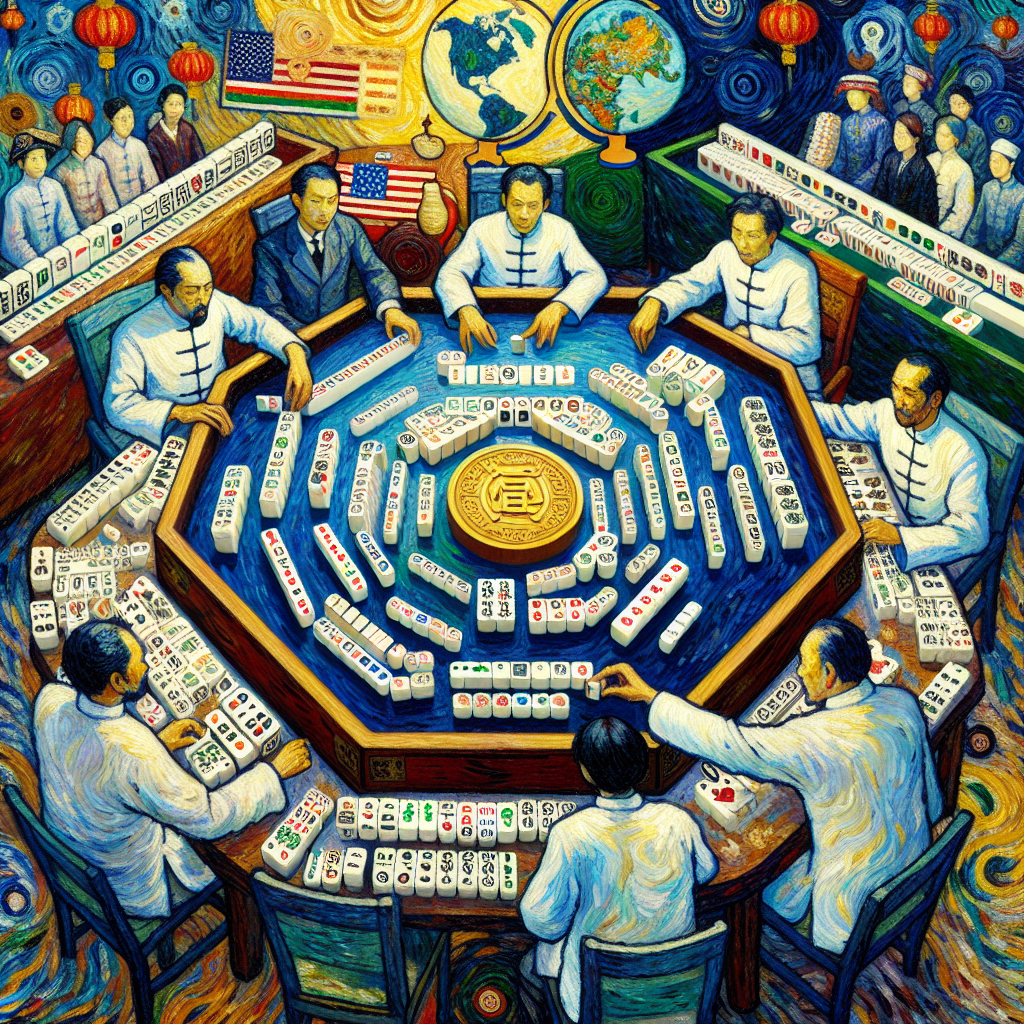
How Can Storytelling From Ai Opponents Enhance Our Gaming Experience?
Are We Losing The Joy Of Human Connection In Competitive Card Games?
The Heartbeat of Connection in Card Games
In a world where competitive card games have evolved into high-stakes arenas, one has to wonder: are we losing something pure, something deeply human? Picture this: you’re seated at a table surrounded by friends, laughter echoing off the walls, the smell of fresh popcorn wafting through the air. As you shuffle the deck — the familiar sound of cards sliding against one another igniting anticipation — it’s not just the game that enchants you. It’s the connection, the shared moments of triumph and defeat that forge bonds stronger than the mightiest of hands.
Yet, today’s card game landscape can feel more akin to a battleground than a sanctuary. Players come armed with meticulously researched strategies and cutthroat tactics, all in pursuit of victory. The thrill is palpable, but it often obscures what truly matters: the stories behind those cards, the friends you share them with, and the lessons learned along the way. We might win matches and accolades, but at what cost to our humanity?
Think for a moment about why you first fell in love with card games. It wasn’t just about winning or losing; it was about the joy of playing together. A truly great card game holds an innate power to unite us, to foster a sense of community even among rivals. But as competition turns fierce, we risk forgetting that the essence of these games lies not in the win/loss ledger but in the shared laughter and whispered strategies exchanged during gameplay.
There’s an ethical layer to consider here as well. If we treat our fellow players merely as obstacles in our quest for glory, we undermine the respect and camaraderie that form the foundation of any great game. True sportsmanship invites us to recognize that, at the end of the day, we’re all just folks looking for that universal thrill — the rush of connection, the exhilaration of being part of something bigger than ourselves.
So, as we embrace the evolving world of card games, let’s not allow competition to overshadow our shared experience. Make it a point to connect, to trade stories along with cards, to celebrate not just the victories but the bonds that weave us together. After all, in the grand tapestry of life, isn’t that what truly counts?

Are We Losing The Joy Of Human Connection In Competitive Card Games?
Are We Losing The Joy Of Human Connection In Competitive Card Games?
- The evolution of card games has transformed them into high-stakes competitive arenas.
- Playing card games fosters deep human connections and shared experiences among friends.
- Modern competition often prioritizes strategies and tactics over the enjoyment of the game.
- The joy of card games comes from the camaraderie and community they create, not just winning or losing.
- Disregarding fellow players as mere obstacles diminishes respect and camaraderie essential to gaming.
- True sportsmanship encourages appreciation of the thrill of connection over competition.
- Players are urged to focus on shared experiences and bonds rather than just accolades and victories.

Are We Losing The Joy Of Human Connection In Competitive Card Games?
How Much Trust Should We Place In Ai To Guide Our Gameplay Decisions?
In the world of gaming, particularly when it comes to complex card games, the feeling of uncertainty can be as thick as a stack of unplayed cards. We’ve all been there, sitting at the table, looking down at our hand, facing a multitude of choices. Our gut instinct tells us one thing, but the shiny algorithms spitting out potential moves tempt us with their crystal-clear logic. It’s a clash of feelings: the heart wants to play from passion and intuition, while the head scours through the calculated probabilities served up by AI.
Here’s where things get interesting. The emotional allure of your favorite card game—the thrilling rush when you draw that one card you were hoping for—can sometimes overshadow the rational side of gameplay. It’s easy to become attached to that feeling, to pursue it like a moth to a flame, but often, that can lead us astray when we neglect the strategic insights offered by intelligent tools. Think about it: why do we embrace technology in the first place? It amplifies our human ability, enhancing our decision-making while preventing analysis paralysis.
Yet, let’s pause for a moment and consider the ethical implications. Relying too heavily on AI might feel like cheating, even if everyone in the game is doing it. Do we sacrifice our personal growth, our instincts, and our unique style for a shortcut? Playing a card game is about more than just winning; it’s an experience driven by creativity, community, and connection. So, we must strike a balance. Lean into the authority of what technology offers us, but also honor the spirit of the game that makes our hearts race.
Imagine sitting at the table, sharing a laugh with friends, and recalling that moment when your instincts led you to an unexpected victory. It’s not just about the cards; it’s about forging bonds, creating memories, and feeling alive with each play. Trusting both your gut and AI can create an extraordinary synergy, allowing you to play smarter while still relishing the joy of each hand dealt.
So, as you sit down for your next game, embrace the tools available to you but don’t forget to listen to yourself. Harness the wisdom of AI while letting your passion guide you. After all, the ultimate victory lies not just in winning but in the connections forged at the table.

How Much Trust Should We Place In Ai To Guide Our Gameplay Decisions?
How Much Trust Should We Place In Ai To Guide Our Gameplay Decisions?
- Gaming, especially complex card games, creates feelings of uncertainty and multiple choices.
- Players often face a dilemma between their intuition and calculated moves suggested by AI.
- The emotional thrill of a card game can overshadow rational gameplay insights.
- Technology enhances decision-making and can prevent analysis paralysis.
- There are ethical considerations in relying on AI, possibly sacrificing personal growth and unique styles.
- Playing cards is about creativity, community, and connection, not just winning.
- Balancing AI insights with personal instincts can enhance the gaming experience and forge connections.

How Much Trust Should We Place In Ai To Guide Our Gameplay Decisions?
Conclusion
As we shuffle the deck at the intersection of tradition and technology, we find ourselves wrestling with a question that’s as ancient as card games themselves: how can we evolve our beloved pastime without losing the heart of what makes it truly special? Imagine your next poker night — laughter bounces off the walls, chips clink, and that familiar tension fills the air as strategies unfurl. Now throw in an Artificial Intelligence at the table, calibrated to predict your every move and push the limits of your gameplay. Scary, right? But let’s take a moment to turn that unease on its head.
This technology isn’t just a threat; it’s a potential ally. Think of AI as a formidable partner — one that’s gleaning wisdom from countless hands played, yet devoid of the emotional stakes that come with human connection. Yes, it analyzes your habits, identifies your tells, and offers insights, but it also presents a unique opportunity for deeper interactions. At community centers, friendly tournaments could meld AI with timeless camaraderie, spurring friendships while sharpening skills.
Moreover, what do we stand to lose in this digital age? Our emotions, instincts, and gut feelings enrich these experiences, fostering bonds that win at the social game, even if the score doesn’t tip in our favor. Let’s confront the ethical dimensions as well. Trust is paramount in gameplay. When we lean too heavily on AI, do we strip the spirit from competition? Our investment in one another, in shared laughter and stories, matters more than any win-loss record.
But here’s the hopeful twist: embracing AI can elevate our connections. Imagine swapping tales about surprise losses to cunning AI opponents, sharing tips, and orchestrating local tournaments where technology and tradition meet. There’s a beautiful dance here, a balance where we honor our instincts while embracing tools that enhance our skill sets.
So, as you gather your cards for the next game, consider how AI can amplify human connection rather than diminish it. Approach your next round with open curiosity — trust your instincts, engage with technology, and preserve the spirit of fellowship that defines card games. In the end, it’s about the stories we create together, the friendships we foster, and the joy found within every hand dealt. Let’s shuffle the cards and embark on this new journey, discovering the depth of connection in every match, as the stakes rise not just in wins, but in heart.

Conclusion
Conclusion:
- The intersection of tradition and technology raises questions about evolving card games while maintaining their essence.
- AI can act as a partner in gameplay, enhancing strategies without emotional stakes.
- Community centers can host tournaments that blend AI with human interaction, fostering friendships and skill development.
- Emotions and instincts play a crucial role in social connections, beyond just winning or losing.
- There are ethical considerations regarding trust and the spirit of competition when using AI in gameplay.
- Embracing AI can enhance storytelling and interactions among players, enriching the gaming experience.
- The focus should be on preserving human connections and joy in card games while integrating technology.

Conclusion
Other Resources

Other Resources
Here is a list of other resources you can review online to learn more:
- Cribbage
- Food Chain Magnate
- Robinson Crusoe: Adventures on the Cursed Island
- Euchre
- Geek and Sundry
- Boss Monster
- Star Realms
- Gaming Rules!
- Kemet
- MailChimp
- Rummy
- Pegasus Spiele
- Memoir ’44: Pacific Theater
- Mage Knight Board Game
- Arkham Horror: The Card Game
- Threads
Use This Prompt To Get More Resources With Your Favorite Online AI Tool: Please provide me with a list of online articles with their URLs in a bulleted list that I can read regarding Can Artificial Intelligence Predict Your Moves In Card Games with High Accuracy?

Other Resources
Glossary Terms
Can Artificial Intelligence Predict Your Moves In Card Games with High Accuracy? – Glossary Of Terms
1. Artificial Intelligence (AI): The simulation of human intelligence processes by machines, especially computer systems, including learning, reasoning, and self-correction.
2. Machine Learning (ML): A subset of AI that enables systems to learn from data, identify patterns, and make decisions with minimal human intervention.
3. Predictive Modeling: A statistical technique used to predict future outcomes based on historical data and analysis.
4. Game Theory: A mathematical framework for analyzing situations in which players make decisions that are interdependent, often used in strategic interactions.
5. Neural Networks: A set of algorithms modeled after the human brain, designed to recognize patterns and classify data for tasks like prediction.
6. Reinforcement Learning: A type of machine learning where an agent learns to make decisions by receiving rewards or penalties based on its actions.
7. Data Mining: The process of analyzing large datasets to discover patterns, trends, and correlations that can inform predictions.
8. Card Game Strategy: A planned approach to gameplay that considers probabilistic outcomes, opponents’ behaviors, and optimal actions.
9. Opponent Modeling: The process of creating a model or representation of an opponent’s behavior, intentions, and strategies to improve decision-making.
10. Player Profiling: Analyzing a player’s historical actions and tendencies to predict future moves and improve competitive strategies.
11. Simulation: The imitation of the operation of a real-world process or system over time, often used in training AI models.
12. Monte Carlo Methods: A set of computational algorithms that rely on random sampling to obtain numerical results, often used for predicting outcomes in games.
13. Feature Extraction: The process of transforming raw data into a set of measurable properties or characteristics, useful for AI model training.
14. Supervised Learning: A type of machine learning where a model is trained on labeled data, allowing it to make predictions on new, unseen data.
15. Unsupervised Learning: A machine learning paradigm where the model learns patterns from unlabeled data, identifying intrinsic structures without external guidance.
16. Natural Language Processing (NLP): An AI discipline focused on the interaction between computers and human language, crucial for understanding verbal strategies in games.
17. Behavioral Economics: A study of psychological and emotional factors that influence the economic decisions of individuals, relevant to player choices in card games.
18. Deep Learning: A specialized form of machine learning using deep neural networks to analyze vast amounts of data and identify complex patterns.
19. Overfitting: A modeling error that occurs when a machine learning model learns the training data too well, failing to generalize to new data.
20. Cross-validation: A technique used to evaluate the effectiveness of an AI model by partitioning data into subsets for training and testing.
21. Strategy Optimization: The process of refining strategies to maximize potential winnings or minimize losses in a competitive environment.
22. Random Strategy: A method of play where decisions are made randomly, serving as a benchmark for evaluating the performance of AI models.
23. Nash Equilibrium: A concept in game theory where no player has anything to gain by changing their strategy if the other players keep theirs unchanged.
24. Turn-based Games: Games where players take turns making moves, providing a distinct framework in which AI can predict actions based on previous moves.
25. Real-time Strategy (RTS): A genre of games where players manage resources and make decisions instantly, requiring sophisticated AI for effective prediction.
26. Probabilistic Reasoning: The method of reasoning and making predictions based on the likelihood of various outcomes occurring.
27. AI Ethics: The study of moral implications and decisions related to the creation and implementation of artificial intelligence.
28. Behavioral Pattern Recognition: The capability of AI to observe and analyze trends in a player’s actions to anticipate future moves effectively.
29. Algorithmic Trading: Utilizing AI algorithms to make financial trading decisions, highlighting how predictive models operate in competitive scenarios.
30. Elo Rating System: A method for calculating the relative skill levels of players in two-player games, important for assessing AI performance against human players.

Glossary Of Terms
Other Questions
Can Artificial Intelligence Predict Your Moves In Card Games with High Accuracy? – Other Questions
If you wish to explore and discover more, consider looking for answers to these questions:
- What specific algorithms do AI use to predict moves in card games?
- How accurate are AI predictions compared to human strategies?
- Can AI learn and adapt to different players’ styles over time?
- What are some examples of AI successfully used in popular card games?
- How does the use of AI in card games affect beginner players?
- What measures are in place to ensure fair play when using AI tools?
- Are there existing regulations governing the use of AI in gaming?
- How do players perceive AI opponents in competitive settings?
- What role does player feedback play in refining AI algorithms?
- Can AI be used to enhance social interactions in gaming?
- What future developments can we expect in AI and card games?
- How does cultural context influence the acceptance of AI in card games?
- What are some ethical dilemmas developers face when creating AI for card games?
- How can players ensure that they maintain a competitive edge without over-reliance on AI?
- What are the potential psychological impacts of playing against AI in games?

Other Questions
Haiku
Can Artificial Intelligence Predict Your Moves In Card Games with High Accuracy? – A Haiku
At the table’s heart,
AI learns our every play—
Can we trust our hearts?

Haiku
Poem
Can Artificial Intelligence Predict Your Moves In Card Games with High Accuracy? – A Poem
In the Game of Hearts: A Reflection on Technology and Connection
In the warm glow of laughter, cards elegantly fly,
Amidst friends and banter, shared glances caught our eye.
The deck, a storyteller, where moments intertwine,
Yet lurking in shadows, a machine softens the line.
Could artificial whispers, so precise and so cold,
Predict with sharp clarity the moves we once controlled?
What feels like a fair duel now dances with unease,
As the essence of play wrestles with algorithms’ tease.
Yet pause for a heartbeat; let’s ponder the light—
What if this learning companion fuels our insight?
An ally in strategy, a guide to refine,
Could AI’s embrace illuminate paths toward the divine?
In every card placed, choices resonate wide,
From the gut’s wild impulse to the mind’s careful stride.
But what of the bond, the soul of the game?
Do we risk losing joy, in pursuit of the fame?
For it’s more than mere digits on a screen that we seek,
It’s the stories, the laughter, the moments unique.
As we juggle this future, let’s cherish our grace,
For each hand is a journey; each rival, a face.
So let’s shuffle and deal, embracing what’s new,
With trust in technology, yet holding our view.
For the heart of connection beats strongest and true,
In the dance of the game, it’s our spirit that grew.
Let’s forge a new path where AI helps us ascend,
Where strategy and humanity joyfully blend.
In this vibrant tableau, with cards that align,
Each play is a heartbeat, a chance to refine.
So gather your friends, let the games recommence,
With trust in our instincts, let’s deepen the sense.
For in the intricate dance between gut, heart, and head,
Lies the harmony of future—lets’ revel in what’s said.

Poem
Checklist
Can Artificial Intelligence Predict Your Moves In Card Games with High Accuracy? – A Checklist
Checklist: Embracing AI in Card Games While Preserving Human Connection
Emotional Appeals (Heart)
_____ Reflect on Connections: Take a moment to think about the friendships and shared moments created during card games.
_____ Celebrate Togetherness: Share at least one story from a past game night that highlights camaraderie and fun with friends.
_____ Prioritize Experience Over Victory: Remind yourself that it’s about enjoying the game and connections, not just winning.
Rational Appeals (Head)
_____ Assess AI Tools: Research and evaluate the available AI-powered tools that can assist in improving your gameplay strategy.
_____ Combine Intuition with Data: Create a strategy that blends your gut feelings with insights from AI recommendations.
_____ Enhance with Learning: Commit to learning at least one new strategy or AI insight from every gaming session.
Ethical Appeals (Ethics)
_____ Consider Fair Play: Reflect on the ethical implications of using AI in games. How can you ensure fair gameplay for yourself and others?
_____ Promote Transparency: Advocate for open discussions about how AI should be developed and used in competitive settings.
_____ Respect Fellow Players: Acknowledge and respect the efforts and skills of your opponents, regardless of the technology they use.
Authority Appeals (Authority)
_____ Stay Informed: Follow updates from credible sources regarding advancements in AI within gaming.
_____ Engage with Experts: Seek advice or insights from data scientists or game developers on responsible AI usage.
_____ Participate in Discussions: Join communities or forums discussing the relationship between AI, gaming, and ethics.
Narrative Appeals (Narrative)
_____ Share Stories of AI Impact: Discuss personal experiences of how AI has changed your approach to a game or improved your skills.
_____ Create a Game Diary: Keep a record of your games that notes how AI influenced your decisions and outcomes.
_____ Encourage Collective Narratives: Invite friends to share their experiences with AI in games to build a rich narrative fabric.
Social Appeals (Social)
_____ Organize AI-Assisted Game Nights: Plan a game night with AI tools to explore collaborative strategies and enhance the gaming experience.
_____ Foster Community Engagement: Connect with local gaming groups to discuss the role of AI and human connection in card games.
_____ Encourage Experiential Sharing: Create a platform (online or offline) for players to recount stories and strategies influenced by AI.
Conclusion
This checklist is intended to help you find a harmony between the evolving role of AI in card games and the timeless essence of human connections. By incorporating these elements into your gaming practices, you can create a more enriching and enjoyable experience for yourself and those around you.

Checklist
At CardGameNews, we help people who love card games by collating information and news about card games.
Be sure to read our other related stories at CardGameNews to learn more about card games.


