

Navigating The Ethical Terrain Of Ai In Card Games
By Tom Seest
At CardGameNews, we help people who love card games by collating information and news about card games.
Be sure to read our other related stories at CardGameNews to learn more about card games.
How Does Artificial Intelligence Challenge Traditional Card Game Ethics and Fair Play?
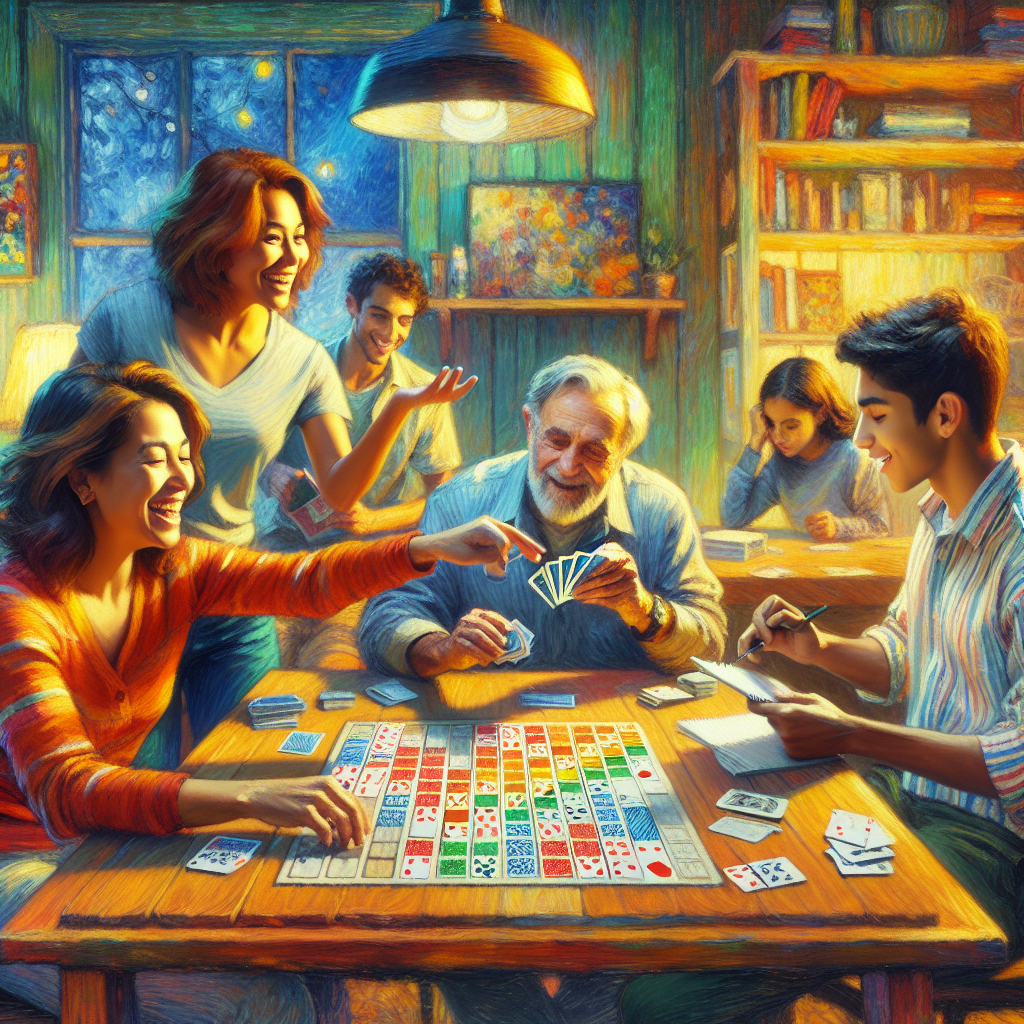
When you shuffle a deck of cards, you’re engaging in a dance as old as civilization itself—a blend of strategy, luck, and human connection. Every card game unfolds like a story, where each player brings their history, their emotions, and their hopes to the table. It’s about more than just winning; it’s about shared moments and the thrill of uncertainty. But now, as artificial intelligence enters the fray, this timeless ritual finds itself at a crossroads.
Imagine sitting down for a friendly game of poker after a long week. The banter, the tension, and the thrill of each hand create an electric atmosphere. You know that everyone at the table is using their wits and instincts, not to mention a bit of bluff and bravado. But what happens when an AI steps in? This isn’t just a computer participating; it’s an algorithm, meticulously analyzing patterns and probabilities with a precision that no human can match. Suddenly, the human element—the intuition, the psychology—gets overshadowed by a calculating machine that doesn’t feel emotions or experience the highs and lows that make card games so captivating.
This challenge doesn’t merely poke at the mechanics of gameplay; it rolls up its sleeves and digs into the ethical mud. Is it fair when one player sits down with years of experience while another has access to an AI that’s processed thousands of games in an instant? Here, we touch the core of what it means to play. Are we upholding the spirit of the game, or just the thrill of winning? The questions multiply. Does that algorithm’s cold efficiency take away the joy of the gamble, the risk, and the reward?
The stories we tell around the card table are rooted in our humanity. They evoke trust, camaraderie, and sometimes even rivalry. And yet, with AI’s rise, we must reckon with our definitions of ethics and fair play. The challenge isn’t just about who wins and loses; it’s about preserving the very essence of our shared experiences.
As we navigate these uncharted waters, let’s not forget that the heart of any game isn’t found on a leaderboard. It lies in the laughter, the stories shared, and the connections formed. It’s time to ask ourselves—how do we adapt without losing what makes card games an integral part of our social fabric? The answer lies in embracing innovation while holding tight to the values that bind us as human players.

How Does Artificial Intelligence Challenge Traditional Card Game Ethics and Fair Play?
How Does Artificial Intelligence Challenge Traditional Card Game Ethics and Fair Play?
- Shuffling cards is a timeless ritual that blends strategy, luck, and human connection.
- Card games evoke emotions and stories, where players share moments beyond just winning.
- AI introduces a new dynamic by analyzing patterns and probabilities with unmatched precision.
- The human elements of intuition and psychology can be overshadowed by AI’s cold efficiency.
- Ethical considerations arise regarding fairness between experienced players and those using AI.
- The essence of card games revolves around trust, camaraderie, and shared experiences.
- We must balance innovation with preserving the social fabric and values of traditional gameplay.

How Does Artificial Intelligence Challenge Traditional Card Game Ethics and Fair Play?
Table Of Contents
- How Does Artificial Intelligence Challenge Traditional Card Game Ethics and Fair Play?
- What Emotions Arise When AI Alters the Spirit Of Card Games?
- Is Fairness Compromised When AI Plays Better Than Humans?
- How Does AI Impact Trust In Card Game Competition?
- Should AI Be Held to the Same Standards Of Sportsmanship As Humans?
- What Responsibilities Do Game Developers Have Towards Ethical AI Use?
- Conclusion
- Other Resources
- Glossary Of Terms
- Other Questions
- Haiku
- Poem
- Checklist
What Emotions Arise When AI Alters the Spirit Of Card Games?
When we gather around a table, shuffling a deck of cards and sharing laughter and stories, it’s more than just a game; it’s a tapestry woven with the threads of human connection. As artificial intelligence begins to shape the spirit of card games, a swirl of emotions emerges. We find ourselves caught between the enticing allure of innovation and a nostalgic yearning for the cherished simplicity of face-to-face interaction.
Imagine the thrill of a high-stakes poker match. Every glance, every suppressed smirk, every tension-laden silence is a dance of human expression that reveals our deepest emotions and instincts. Technology can simulate the mechanics of a card game flawlessly; it can even anticipate our strategies with mind-bending precision. But where does that leave the human element? The joy of bluffing isn’t just about the cards. It’s about the stories we tell and the bonds we form. When we replace soul with code, we risk losing the nuances that make these games feel alive.
Yet, let’s not dismiss the potential of AI too hastily. It challenges traditional norms and widens the scope of who can participate. People who may have felt excluded due to geographical, financial, or even health-related barriers can now join in the fun through digital platforms. That’s where the gut feels a pang of hope. This technology can foster new connections across distances, enabling friendships that might never have bloomed otherwise. We can harness AI to create an experience that blends advantages of both worlds – the strategic depth of card games amplified by technological prowess while still honoring the roots of human connection.
However, this evolution compels us to wrestle with ethical dilemmas. What does it mean for the integrity of the game if we imbue it with algorithms that resemble our decision-making processes? As a community, we have a responsibility to ensure that our cherished card games remain awash in the warmth of camaraderie. The authority of authentic experiences must prevail, reminding us that even in a world increasingly dominated by machines, our human emotions should take the lead.
When the cards are dealt, and friendships are forged or tested, it’s not just about winning or losing; it’s about the memories captured in those fleeting moments. Let us be mindful stewards of this digital frontier, preserving the spirit of our beloved card games while welcoming the innovations that enrich our connected lives.

What Emotions Arise When AI Alters the Spirit Of Card Games?
What Emotions Arise When AI Alters the Spirit Of Card Games?
- Gathering around a table for card games fosters human connection through shared laughter and stories.
- The rise of artificial intelligence in card games stirs a conflict between innovation and the desire for face-to-face interaction.
- High-stakes games reveal deep human emotions and instincts that technology cannot replicate.
- AI can enhance participation by breaking down barriers for those excluded due to geography or health, creating new connections.
- There is potential for a hybrid experience that honors the strategic depth of card games while integrating technology.
- Ethical dilemmas arise around the integrity of card games when decision-making processes are influenced by algorithms.
- Preserving the emotional essence of card games is essential as we embrace digital innovations for a richer experience.

What Emotions Arise When AI Alters the Spirit Of Card Games?
Is Fairness Compromised When AI Plays Better Than Humans?
Picture this: a group of friends gathered around a table, laughter and friendly banter filling the air as they engage in a card game. It’s more than just a game; it’s a bonding ritual, a way to connect, to compete, and to savor the thrill of unpredictability. Now, imagine an artificial intelligence taking a seat at that table. At first glance, you might see this as a thrilling challenge, an opportunity to see how well human intuition holds up against the precision of a machine. But let’s pause for a moment. What happens to the easy camaraderie when the AI, unfazed by emotions or fatigue, begins to dominate the game, making decisions that leave its human competitors bewildered?
Rationally, this seems like progress—a marvel of technology at play. Artificial intelligence can process countless scenarios in an instant, bring insights and strategies far beyond human capacity. But what about the essence of the game? The laughter dims, the stakes feel skewed, and suddenly, a simple card game transforms into a high-stakes showdown with an opponent that lacks the vulnerability we all share. It raises a gut-wrenching question: Is enjoyment sacrificed at the altar of efficiency?
Moreover, we must ponder the ethical dimensions of placing AI in our cherished pastimes. What value do we place on our human experiences? Can we clasp our hearts around moments of joyous defeat or triumphant victory when the outcome is predetermined by data, rather than the rich tapestry of human emotion? We lean into that raw, vulnerable space in the hope of connection, yet AI offers none of that.
And let’s not forget the social consequences. When AI enters realms once ruled by human spirit, we risk creating a divide; those who embrace AI’s prowess versus those who cling to the magic of human interplay. Balancing innovation with authenticity is crucial.
In this delicate dance, we must recognize that amidst the technological marvels, our encounter with AI shouldn’t dilute our humanity. Rather, it should amplify it—leading us to a new understanding of fairness in competition. It’s a challenge to celebrate collaboration over competition, innovation over isolation. We must stride confidently into this future, ensuring that laughter and connection remain at the heart of our games, artificial or not.

Is Fairness Compromised When AI Plays Better Than Humans?
Is Fairness Compromised When AI Plays Better Than Humans?
- A group of friends enjoys a card game as a bonding ritual filled with laughter and connection.
- Introducing AI into the game presents a challenge to human intuition and emotional dynamics.
- The AI’s ability to dominate may overshadow the enjoyment and camaraderie of the game.
- While AI offers advanced strategies, it raises questions about the essence and emotional value of human experiences in gaming.
- We must consider the ethical implications of AI involvement in our cherished pastimes.
- The integration of AI risks creating a divide between those who accept it and those who value human interaction.
- Future advancements should enhance, not dilute, our humanity, emphasizing collaboration and connection in gaming.

Is Fairness Compromised When AI Plays Better Than Humans?
How Does AI Impact Trust In Card Game Competition?
In the world of card games, triumph often emerges from a mix of strategy, skill, and a bit of luck. Players gather around tables, faces alight with anticipation, each hand dealt a unique chance to outwit and outplay the competition. Yet, as artificial intelligence makes its mark on this cherished pastime, we find ourselves standing at a crossroads between tradition and innovation—a place where the fusion of human experience and machine learning reshapes the trust we place in our games.
Picture this: a tense showdown, cards shuffled and emotions running high. Humans, with their gut instincts and nuance, bring something irreplaceable to the table—an emotional depth and understanding that algorithms simply can’t replicate. Yet, as AI increasingly becomes a partner in this arena, concerns arise. Will players trust the insights gleaned from a computer more than their own instincts? This brings forth a host of ethical questions. Is it fair when a machine learns from countless games, potentially outsmarting even the most seasoned players?
Rationally speaking, AI can enhance our games by offering players analytical tools that leave no strategy unturned. It can predict probabilities and offer tactical advice, arming us with knowledge that can elevate the competition. This creates a thrilling narrative where we can harness technology to refine our methods and amplify our skills. However, the heart of card game competition is not just in winning; it’s about shared experiences, camaraderie, and even the occasional misplay that brings about laughter.
Consider the social aspect; after all, isn’t that why we gather? Imagine the conversations sparked by an AI’s recommendations—watching players interpret and debate its analysis, weaving a richer tapestry of engagement. With the right approach, AI can be a trusted companion, not a competitor, fostering collaboration rather than simply aiming to conquer.
The invitation is clear: embrace this new chapter while holding onto the essence of what makes card games enchanting. We can start by integrating AI in a way that bolsters the spirit of fair play, melding cutting-edge technology with age-old strategies. Let us ensure that, as we adopt these tools, we always place value on the human touch in our competitions. By moving forward together, we can inspire trust in both our fellow players and the technological tools we employ, ensuring that the heart of the game beats stronger than ever.

How Does AI Impact Trust In Card Game Competition?
How Does AI Impact Trust In Card Game Competition?
- Card games thrive on strategy, skill, and luck, creating unique opportunities for players to outsmart one another.
- The integration of artificial intelligence into card games presents challenges and opportunities in balancing tradition with modern innovation.
- Human players bring emotional depth and intuition to the game, which AI cannot replicate.
- Concerns arise about trust in AI insights compared to instinctual human judgments and the ethics of machines outperforming seasoned players.
- AI can enhance gameplay by providing analytical tools, predicting outcomes, and suggesting strategies to improve player skills.
- The social dynamics of card games, such as shared experiences and discussions sparked by AI recommendations, enrich player engagement.
- Embracing AI while preserving the essence of card games can foster collaboration and build trust among players and technology.

How Does AI Impact Trust In Card Game Competition?
Should AI Be Held to the Same Standards Of Sportsmanship As Humans?
When we think about sportsmanship, we often picture a young athlete shaking hands with a rival at the end of a hard-fought match, sweat-drenched and breathing heavy, a mutual respect forged in the crucible of competition. But what if that athlete was an algorithm, crunching numbers and probabilities instead of perspiration and pulse? Should we hold artificial intelligence to the same standards of fair play as our cherished human competitors? It’s a question that strikes deep into our values and beliefs about competition, fairness, and what it means to win.
Imagine a card game where the stakes are high, and the atmosphere is thick with tension, laughter, and the unspoken rules learned over countless evenings spent with friends. Each player brings their own personality, humanity, and flair to the table. There’s an ethical responsibility that entrenches itself in these social gatherings — a sense of honor that binds us to the expectations of good sportsmanship. In this context, AI seems alien, devoid of emotion, yet it has the capability to outperform humans with ruthless efficiency. This disparity ignites a fiery debate: can we allow a machine to taint the essence of competition?
At the core of sportsmanship lies a shared narrative of respect and integrity. When we play a game, we’re not just battling for victory; we’re cultivating relationships, understanding the nuances of fair play, and cherishing the lessons learned from both winning and losing. It’s a celebration of our humanity, where the stakes go far beyond mere numbers. So do we want our games populated by cold calculations—by entities that understand the rules but lack the soul behind them?
While AI can excel in strategy and execution, there’s a critical distinction between intellect and emotional intelligence. The authority that defines true sportsmanship emerges from the human experience; it’s about empathy, humility, and the ability to recognize the value of another’s effort. If we allow machines to take the reins without accountability, we risk not only the integrity of the game but the very spirit of camaraderie that uniting us in competition.
As we ponder this dilemma, let’s take a step back. Our sports, our games, and our competitions are reflections of ourselves. They are platforms for storytelling, celebrating perseverance, and embodying the triumph of the human spirit. So, should AI be held to the same standards of sportsmanship? We must ask ourselves: what kind of legacy do we want to carve in this brave new world? We have the power to shape it.

Should AI Be Held to the Same Standards Of Sportsmanship As Humans?
Should AI Be Held to the Same Standards Of Sportsmanship As Humans?
- Sportsmanship often conjures images of human athletes showing mutual respect post-competition.
- The question arises: should AI be held to the same standards of fair play as human competitors?
- In social gatherings like card games, players demonstrate personality and humanity, embodying sportsmanship through ethical responsibility.
- The efficiency of AI challenges the essence of competition and raises concerns about its impact on sportsmanship.
- True sportsmanship is rooted in respect, integrity, and emotional intelligence, which AI lacks despite its strategic capabilities.
- Allowing AI to dominate competitions risks undermining the camaraderie and spirit inherent in human interactions.
- The legacy we choose to create in this evolving landscape of sports and competition is within our control.

Should AI Be Held to the Same Standards Of Sportsmanship As Humans?
What Responsibilities Do Game Developers Have Towards Ethical AI Use?
When we think about game developers, we often picture the creative minds behind immersive worlds and captivating stories. Yet, lurking within the lines of code and graphics is a responsibility that stretches far beyond entertainment. The rise of ethical AI in gaming calls for a principled approach, and game developers must carry this weight with conviction, especially in the age of increasingly complex card games and interactions.
Consider a moment where a player, perhaps a child, immerses themselves in a game that employs AI. They might be unknowingly engaging with algorithms that adapt not just to their preferences but also to their habits and vulnerabilities. This reality is a call to action—developers have a duty to ensure these systems promote fair play and foster positivity rather than exploitation. The gut-wrenching feeling of knowing you’ve been manipulated sticks with us. Nobody wants to feel like a pawn in an elaborate game where the odds are stacked against them.
Now let’s engage the head a bit. Ethical AI isn’t just a moral choice; it’s a business imperative. Developers don’t want to release a product that ends up facing backlash from the community or worse, regulatory scrutiny. A card game could easily become infamous for using predatory mechanics or misleading AI behaviors. By prioritizing ethics, developers resonate with a broader audience who values integrity—more players mean more passion and connection to the game.
This isn’t merely about avoiding scandal; it’s about creating a safe space where gamers can explore, learn, and connect. A good game should bring people together, not tear them apart. Developers who recognize this build not just games, but communities. Through empathy in their design process, they can elicit joy, excitement, and a sense of belonging, fostering loyalty that goes beyond the screen.
Finally, let’s not forget the power of narrative. Every game tells a story, and the story behind its development matters. When developers openly address how they integrate ethical AI, they cultivate trust. Players are inspired by transparency and a genuine commitment to nurturing an inclusive environment.
Embracing this responsibility isn’t merely a checkbox; it’s a chance to elevate the gaming landscape. Developers must recognize that each line of code reaches far beyond the digital realm, shaping values and behaviors in players everywhere.

What Responsibilities Do Game Developers Have Towards Ethical AI Use?
What Responsibilities Do Game Developers Have Towards Ethical AI Use?
- Game developers hold a significant responsibility in the realm of ethical AI, extending beyond entertainment.
- Players, especially children, may unknowingly interact with algorithms that adapt to their habits and vulnerabilities.
- Developers must ensure AI systems promote fair play and positivity, avoiding manipulation and exploitation.
- Ethical AI is both a moral choice and a business imperative to prevent community backlash and regulatory scrutiny.
- Creating safe gaming environments fosters community, joy, and loyalty, enhancing the player experience.
- Transparency in how ethical AI is integrated builds trust and encourages inclusivity among players.
- Each line of code has the potential to shape player values and behaviors, emphasizing the importance of ethical considerations in game development.

What Responsibilities Do Game Developers Have Towards Ethical AI Use?
Conclusion
As we gather around the table to share a deck of cards, we engage in more than just a game; we partake in a centuries-old tradition that ignites laughter, camaraderie, and the excitement of storytelling. This deep-rooted essence of connection is now at a pivotal moment, thanks to the rise of artificial intelligence. The introduction of AI into card games creates a profound challenge to the core values of ethics and fair play. Imagine the shift in atmosphere when a cold, calculating algorithm joins the mix, analyzing probabilities and strategies far beyond what any human could process. While AI can add an intriguing layer to gameplay, it risks overshadowing the emotional richness— the thrills of bluffing, the bonds formed, and the unexpected twists that make each game memorable.
This tension compels us to confront essential questions about fairness and trust. Is it fair for one player to wield the analytical prowess of AI while another relies solely on instinct and experience? Does this new dynamic enhance or strip away the enjoyment that arises from uncertainty and shared experience? Every card dealt is a moment filled with potential, and we must ensure that our interactions remain steeped in humanity, not reduced to mere numbers.
Moreover, as we navigate this digital frontier, we must recognize the ethical obligations that arise for game developers. They have the responsibility to craft experiences that respect player autonomy and promote fair play, rather than exploit vulnerabilities. Embracing ethical AI isn’t just a principled stance; it serves a broader purpose in creating safe, inclusive gaming environments and communities. Developers that prioritize ethics stand to gain loyal players who appreciate the transparency and integrity behind their games.
At the heart of this discussion lies a critical realization: while technology evolves, it’s imperative that we hold on to the values that make card games special. Encouraging innovation without losing our humanity is essential. By melding the strategic advantages of artificial intelligence with the warmth of genuine human connection, we can redefine fairness and maintain the joy of competition. As we forge ahead, let’s remain committed to preserving the delightful unpredictability of card games, ensuring that our shared experiences and the laughter that accompanies them stay front and center. After all, the real victory lies not just in the outcome of the game but in the connections we build along the way.

Conclusion
Conclusion:
- Playing card games is a centuries-old tradition that fosters laughter and camaraderie.
- The rise of artificial intelligence (AI) in card games poses ethical challenges to fairness and enjoyment.
- AI’s ability to analyze probabilities can overshadow the emotional richness of gameplay, such as bluffing and bonding.
- Essential questions arise regarding trust and fair play when one player uses AI while others rely on human instincts.
- Game developers have ethical responsibilities to create experiences that respect player autonomy and promote fair play.
- It’s crucial to embrace innovation in gaming technology without sacrificing the human connection that makes games special.
- The true victory in card games lies in the connections formed, not just the outcomes of the games.

Conclusion
Other Resources

Other Resources
Here is a list of other resources you can review online to learn more:
- Space Cowboys
- Cool Mini or Not (CMON)
- Pandemic Legacy: Season 2
- White Wizard Games
- Carcassonne
- Arcane Wonders
- Miniature Market
- Osprey Games
- IGN
- Geek and Sundry
- The Broken Meeple
- Santorini
- The Secret Cabal Gaming Podcast
- Lucky Duck Games
- Nürnberger-Spielkarten-Verlag (NSV)
- Race for the Galaxy
Use This Prompt To Get More Resources With Your Favorite Online AI Tool: Please provide me with a list of online articles with their URLs in a bulleted list that I can read regarding How Does Artificial Intelligence Challenge Traditional Card Game Ethics and Fair Play?

Other Resources
Glossary Terms
How Does Artificial Intelligence Challenge Traditional Card Game Ethics and Fair Play? – Glossary Of Terms
1. Artificial Intelligence (AI): Computer systems capable of performing tasks that typically require human intelligence, such as decision-making and pattern recognition.
2. Ethics: A set of moral principles that govern behavior, especially in relation to what is right or wrong within a specific context.
3. Fair Play: The principle of treating all players equally, ensuring that no one has an unfair advantage during a game.
4. Card Games: Games that use playing cards as the primary device for gameplay, often involving strategy, skill, and chance.
5. Algorithm: A step-by-step procedure or formula for solving a problem, often used in AI to make decisions based on data.
6. Player Transparency: The extent to which the processes and motivations behind a player’s decisions are visible and understandable to others.
7. Cheating: The act of breaking established rules to gain an unfair advantage in a game.
8. Machine Learning: A subset of AI that uses algorithms to allow machines to learn from data and improve their performance over time.
9. Game Theory: A mathematical framework for analyzing competitive situations where the outcome depends on the actions of multiple agents.
10. Decision-Making: The cognitive process of selecting a course of action among multiple alternatives, relevant in both AI and human players.
11. Automation: The use of technology to perform tasks without human intervention, which can impact how games are played and managed.
12. Integrity: The quality of being honest and having strong moral principles, essential in maintaining trust in gameplay.
13. Multiplayer Dynamics: The interactions and relationships between multiple players in a game, influencing strategy and ethics.
14. Predictive Analytics: Techniques that use AI to analyze data and predict future outcomes, potentially giving certain players an edge.
15. Bots: Software programs designed to play games autonomously, which can challenge traditional player dynamics and ethics.
16. Fairness: The quality of treating all participants in a game equitably, ensuring unbiased treatment throughout the competition.
17. Bias: A tendency to prefer one outcome over another based on preconceived notions, which can arise in AI algorithms.
18. Digital Rights: The legal rights and freedoms that users have regarding their online activities, including fairness in gameplay.
19. Transparency Protocols: Guidelines that dictate how algorithms and AI decisions are revealed to players, ensuring fairness.
20. Strategic Deception: Tactics used by players to mislead opponents, which can conflict with ethical gameplay when AI is involved.
21. Skill-based vs. Luck-based: The distinction between games influenced by player skill versus those determined primarily by chance.
22. Feedback Loop: A situation in which the output of a system feeds back into the system as input, affecting future outcomes and strategies.
23. Regulatory Framework: Rules and guidelines established to govern the use of AI in gaming, ensuring fair play and ethical standards.
24. Unintended Consequences: Outcomes of actions that were not anticipated, particularly in AI decision-making within games.
25. User Experience (UX): The overall experience and satisfaction of players while engaging with a game, influenced by AI integration.
26. Competitive Advantage: A condition that allows players or AI to outperform others, potentially raising ethical concerns.
27. Game Balance: The fairness achieved when all players have equal chances of winning based on skill rather than external factors.
28. Ethical Gameplay: The practice of engaging in games with respect for rules and fairness, regardless of the involvement of AI.
29. Transparency in AI: The clarity and openness of AI operations and decision-making processes in gaming environments.
30. Human-AI Collaboration: The partnership between human players and AI systems, exploring how they can work together while maintaining ethical standards.

Glossary Of Terms
Other Questions
How Does Artificial Intelligence Challenge Traditional Card Game Ethics and Fair Play? – Other Questions
If you wish to explore and discover more, consider looking for answers to these questions:
- What specific ethical dilemmas arise from using AI in card games?
- How do players perceive the introduction of AI in traditional card games?
- What are the potential benefits of integrating AI into card games?
- Are there examples of successful implementation of AI in card games?
- How can game developers ensure that AI enhances rather than detracts from the player experience?
- What measures can be taken to maintain fairness in games where AI is involved?
- How can AI be designed to respect the human elements of card games?
- What role does transparency play in the use of AI in gaming?
- How can players ensure their experiences are not compromised by AI’s superior capabilities?
- What guidelines should be established for AI behavior in competitive play?

Other Questions
Haiku
How Does Artificial Intelligence Challenge Traditional Card Game Ethics and Fair Play? – A Haiku
Cards dealt, hearts laid bare,
AI taps into our dance—
Can we trust the game’s soul?

Haiku
Poem
How Does Artificial Intelligence Challenge Traditional Card Game Ethics and Fair Play? – A Poem
In a world where cards once danced in hands of friends,
Tradition thrived on laughter, stories with no end.
A shuffle, a deal, each game a tale to unfold,
But an algorithm looms, meticulously bold.
The essence of play, a mix of luck and heart,
Now faces a challenge, tearing worlds apart.
When AI joins the table, calm and devoid of soul,
Will we cherish the journey, or just chase the goal?
The thrill of the bluff, the game’s subtle touch,
Risk and reward, memories worth so much.
Yet here comes the question, echoing deep inside:
Is fair play forgotten when a machine’s our guide?
Trust and connection once reigned in each match,
But will cold calculations rob joy from our catch?
A tapestry fragile, woven with care,
At risk of unraveling in this digital affair.
Innovation beckons, yet nostalgia grips tight,
We stand on a threshold, sensing the plight.
In every exchange, as we ponder what’s right,
Let’s ensure our games shine with humanity’s light.
Developers, creators, hear the plea from the crowd:
Forge games that foster connection, and make us proud.
Embrace the new era, yet honor our threads,
For the heart of the game lies where empathy spreads.
So play with the cards, let technology blend
With the spirit of camaraderie, the laughter we send.
A new chapter awaits, let’s navigate with grace—
For in every hand dealt, it’s our stories we chase.

Poem
Checklist
How Does Artificial Intelligence Challenge Traditional Card Game Ethics and Fair Play? – A Checklist
Checklist for Navigating AI in Card Games: Ethics and Fair Play
Heart
_____ Emotional Engagement: Reflect on how AI affects the emotional dynamics of your favorite card games. Are the human connections being overshadowed by cold calculations?
_____ Value of Stories: Consider the narratives and memories that card games create among friends. How can we preserve these stories in a tech-driven environment?
_____ Shared Experiences: Think about the laughter and camaraderie experienced around the table. Are you ensuring these elements remain central in any gameplay involving AI?
Head
_____ Understanding AI Benefits: Assess the advantages and insights AI brings to the game. Does it enhance your strategic thinking or complicate the experience?
_____ Ethical Considerations: Evaluate the fairness of using AI against human players. Does this create an uneven playing field, and how do you feel about it?
_____ Rational Play: Analyze how AI impacts trust and decision-making during games. Are you willing to rely on AI recommendations, or do you trust your own instincts more?
Gut
_____ Intuition vs. AI: Reflect on your gut feelings about fairness in competition. Is your enjoyment of the game affected by AI’s presence?
_____ Emotional Integrity: Consider how AI influences the emotional stakes of gameplay. Are you finding joy in the thrill of competition, or does it feel diminished?
_____ Hope for Connection: Embrace the potential for AI to foster new friendships. Are you open to leveraging technology to connect with distant players, while maintaining human integrity?
Ethical
_____ Sportsmanship Standards: Contemplate whether AI should adhere to the same sportsmanship standards as human players. What ethical implications arise in this context?
_____ Developer Responsibilities: Acknowledge the ethical obligations of game developers in creating AI. Are they promoting fair play, or are there risks of manipulation?
_____ Community Building: Reflect on how ethical AI practices can create a safe and positive gaming community. Are developers considering the broader impacts of their AI systems?
Authority
_____ Trust in AI: Investigate the credibility of AI in card games. Can you trust AI advice, and how does this affect your gameplay experience?
_____ Expert Opinions: Seek out resources or expert analyses on AI’s impact on traditional card games. What do thought leaders in gaming say about preserving human essence in AI-infused play?
_____ Regulatory Awareness: Stay informed about potential regulations regarding AI in gaming. Are you aware of the implications on gameplay fairness and ethical standards?
Narrative
_____ Personal Stories: Document your experiences with AI in card games. How does the narrative change when playing with AI versus human opponents?
_____ Community Narratives: Share stories within your gaming community about the impact of AI on gameplay. What lessons can be learned collectively?
_____ Future Possibilities: Envision a future where AI and humans coexist in gaming. How can this new narrative unfold while preserving the spirit of competition?
Social
_____ Connection through AI: Consider the social implications of incorporating AI in card games. How does this technology affect your social interactions?
_____ Inclusivity in Gaming: Reflect on how AI can open doors for underrepresented players. Are you supportive of efforts to make games more inclusive?
_____ Group Dynamics: Observe shifts in group dynamics when AI is involved in gameplay. Are friendships strengthened or tested in competitive scenarios involving AI?
Checklist
At CardGameNews, we help people who love card games by collating information and news about card games.
Be sure to read our other related stories at CardGameNews to learn more about card games.


