

Ai’s Impact On Fair Play In Card Games
By Tom Seest
At CardGameNews, we help people who love card games by collating information and news about card games.
Be sure to read our other related stories at CardGameNews to learn more about card games.
Could Artificial Intelligence Redefine The Concept Of Fair Play In Card Games?
Imagine gathering around a table with friends, all eyes fixed on the cards in hand, the room filled with laughter and light banter. A card game isn’t just about the cards; it’s a tapestry woven with emotion, competition, and camaraderie. Memories are made with every dealt hand, and while the stakes can be low—just bragging rights—or high, the heart of the game rests in the principles of fair play. But what happens when artificial intelligence enters the arena? Could it redefine our understanding of fairness amidst the shuffle of cards?
At first glance, the introduction of AI may feel like a disruption, a kind of cold, calculated presence where spontaneity and intuition used to reign. However, let’s take a moment to consider this from a different angle. The beauty of a card game lies in its unpredictability—a player’s instincts, a well-timed bluff—these elements create a thrilling atmosphere that keeps friends coming back for more. Yet, what if AI could elevate this experience rather than diminish it? Imagine an intelligent system that ensures the game’s integrity, preventing cheating and ensuring that every player, novice or expert, has an equal shot at victory.
Now, let’s engage our heads. Fair play is rooted in the ideal of equity; it’s about making sure everyone gets a fair chance under the same set of rules. AI can analyze countless scenarios, learning from each game to recognize patterns that may escape the human eye. It can arm players with insights that enhance their strategic thinking, ultimately elevating their gamesmanship. This means that as we embrace technology, we could actually deepen our understanding of strategy and cultivate a richer playing experience.
But what does this mean ethically? Are we sacrificing the heart of the game in favor of algorithms? Fortunately, AI can become a partner rather than a sovereign. By handing over the reins of fairness to a neutral entity, we can restore trust among players. We all want to feel confident that we’re competing on a level playing field, where honesty prevails, and skill determines the victor—not deceit.
As we navigate this brave new world, let’s remember that card games are about connection, laughter, and competition. Embracing AI doesn’t mean losing the soul of our beloved pastimes; it means enriching our experiences. With thoughtful integration, we can foster a space where friendships flourish and fair play reigns supreme.

Could Artificial Intelligence Redefine The Concept Of Fair Play In Card Games?
Could Artificial Intelligence Redefine The Concept Of Fair Play In Card Games?
- Card games create memorable experiences filled with emotion, competition, and camaraderie.
- The introduction of AI may initially seem disruptive but can enhance the game instead.
- AI can ensure the integrity of the game by preventing cheating and promoting fair play.
- It offers insights that can improve players’ strategic thinking and deepen their understanding of the game.
- Ethically, AI should serve as a partner for fairness, restoring trust among players.
- Players desire a level playing field where skill, not deceit, determines victory.
- Integrating AI thoughtfully can enrich the gaming experience while preserving the connections and joy of card games.

Could Artificial Intelligence Redefine The Concept Of Fair Play In Card Games?
Table Of Contents
- Could Artificial Intelligence Redefine The Concept Of Fair Play In Card Games?
- Can Ai Truly Understand The Emotional Stakes In Card Games?
- Does Relying On Ai Undermine The Thrill Of Human Competition?
- How Can Ai Ensure Fairness Without Stripping Away Human Intuition?
- Are Ai-Driven Strategies Creating An Uneven Playing Field?
- What Ethical Implications Arise From Ai In Competitive Gaming?
- Conclusion
- Other Resources
- Glossary Of Terms
- Other Questions
- Haiku
- Poem
- Checklist
Can Ai Truly Understand The Emotional Stakes In Card Games?
When you sit down at a table for a card game, you step onto a battleground of sorts—a microcosm of life filled with risk, strategy, and unexpected twists. The stakes aren’t just the chips in front of you; they’re the bonds of friendship, the thrill of rivalry, and the sheer unpredictability of human emotion. Can an algorithm grasp this intricate emotional tapestry? That’s the question that hovers in the air like the perfectly timed pause before the final showdown.
Imagine a high-stakes poker game: the tension drips like sweat from your brow as you lock eyes with your opponent, parsing every flicker of their expression. Here lies the essence of human intuition—the ability to read body language, to gauge reactions, to sense fear or confidence. While AI can crunch numbers faster than the best of us, can it truly decode the subtle whispers of emotion that inform your next move? This isn’t just a question of calculations; it touches the very core of what makes us human.
Yet, let’s bring some rationality to the table. AI thrives on data. It can analyze thousands of hands played across a myriad of scenarios, optimizing its gameplay with mechanical precision. However, this leads us to the ethical dilemma: if we task computers with understanding our emotional stakes, do we risk losing the very essence of what makes card games compelling? The heart and gut of every matchup are steeped in human dynamics that algorithms can mimic but never fully embody. It’s about connection and the camaraderie developed over shared victories and defeats.
In our world increasingly guided by screens and bots, there’s a yearning for authenticity, a craving for genuine interaction. Card games provide just that; they forge bonds among players that transcend a win or a loss. Let’s not forget the stories that swirl around the table, the laughter, the cheers, and even the sighs of disappointment—each a thread in the tapestry that AI, no matter how advanced, might never fully appreciate.
So, where does that leave us? As we venture into this brave new world of artificial intelligence, let’s remember the glue that holds our card games—and our relationships—together. It’s our ability to feel, to connect, and to share those emotional stakes that keep us coming back for another round, one heartfelt play at a time. If AI can learn this, maybe it can truly play the game. But until then, there’s no substitute for the warmth that comes from human hands holding the cards.

Can Ai Truly Understand The Emotional Stakes In Card Games?
Can Ai Truly Understand The Emotional Stakes In Card Games?
- Card games act as a microcosm of life, blending risk, strategy, and emotion.
- The stakes involve more than just chips; they encompass friendships, rivalry, and unpredictability.
- Human intuition is crucial in reading opponents’ emotions through body language and reactions.
- AI excels at data analysis but struggles to grasp the subtle emotional cues in gameplay.
- Tasking AI with understanding emotional stakes raises ethical questions about authenticity in card games.
- Card games foster genuine connections and camaraderie, which AI cannot replicate.
- As AI evolves, the importance of human emotion and connection in gaming remains irreplaceable.

Can Ai Truly Understand The Emotional Stakes In Card Games?
Does Relying On Ai Undermine The Thrill Of Human Competition?
In a world where technology consistently edges closer to the realm of human capability, a pressing question lingers: Does relying on AI undermine the thrill of human competition? Picture a classic card game—each player sitting around a worn table, the air thick with tension and laughter, the kind of atmosphere that transforms mere play into an exhilarating contest of wit, chance, and camaraderie. This is where the magic happens; the art of bluffing, the sweat of anticipation, and the electric thrill that buzzes through the veins when a clever move is executed. Yet, we stand at a crossroads where AI could change everything.
Let’s break this down from the ground up. The head knows the merits of AI: it processes data faster than we can blink, analyzes patterns with pinpoint accuracy, and levels the playing field in ways previously unimaginable. Yet, as we lean on these digital prodigies, the heart aches a little. The thrill—the very essence of competition—derives from our human imperfections, the misread tells, and those moments of sheer luck. These elements forge connections that AI simply cannot comprehend. It’s a dance of souls, a celebration of our shared humanity.
From a social standpoint, the repercussions run even deeper. As we surrender more of our challenges, big and small, to our algorithms, we risk silencing the beating hearts of competition. What happens to the stories we weave through our battles? The narrative of struggle, grit, and resilience gives meaning to our endeavors. It’s not merely about winning or losing; it’s about how we rise, fueled by our passions. This is intuitive; it echoes in the minds of our ancestors who once fought tooth and nail, be it at card tables or on battlefields.
Now, ethically speaking, we need to consider what we want our future to look like. Is it a world of human ingenuity, or one dominated by cold calculations? Trust is earned not just through efficiency but through connection and authenticity. While AI can assist, it should never overshadow the human touch that brings warmth and excitement to our pursuits.
So perhaps the question isn’t whether AI will replace the thrill of competition, but how we can harness its power without losing the essence of what makes us human. That essence is found in shared stories, genuine emotions, and the indomitable spirit of competition. Let’s champion a future where we celebrate both innovation and the beautiful struggle that unites us around that very card table.

Does Relying On Ai Undermine The Thrill Of Human Competition?
Does Relying On Ai Undermine The Thrill Of Human Competition?
- The rise of AI prompts the question of whether it diminishes human competition.
- The excitement of traditional games lies in the human elements of bluffing, anticipation, and camaraderie.
- AI excels in processing data and pattern recognition, creating a level playing field.
- However, the essence of competition is rooted in human imperfections and shared experiences.
- Surrendering challenges to AI might silence the core narratives of struggle and resilience.
- Ethically, we must choose between a future of human ingenuity and one led by algorithms.
- The goal should be to harness AI’s strengths while preserving the human touch that fuels competition.

Does Relying On Ai Undermine The Thrill Of Human Competition?
How Can Ai Ensure Fairness Without Stripping Away Human Intuition?
Finding Balance Between Algorithms and Empathy
Imagine sitting around a table with friends, playing a card game. There’s laughter, banter, and that exhilarating moment when you bluff your way to victory. Everyone knows the rules, yet the heart of the game lies in the unspoken connections and intuitive leaps we make in the heat of competition. Now, consider this: as we increasingly lean on artificial intelligence to guide our decisions, how do we maintain that human element without stripping away our inherent intuition?
At first glance, AI might seem like it knows best. Algorithms can process data faster than you can shuffle those cards, providing insights that are, mathematically speaking, flawless. But life isn’t just a series of numbers and outcomes. Behind every decision—be it hiring, lending, or law enforcement—are real people, each carrying their unique stories, histories, and aspirations. This is where empathy meets ethics. We must ensure that our algorithms don’t just churn out impartial results but also account for the nuanced complexity of human experience.
Let’s get real: AI can mirror our biases if we aren’t diligent. Imagine an AI-powered card game that not only plays according to the rules but also learns from every interaction, echoing our flaws along the way. Without careful guidance, AI can become biased, just as a player might become overly aggressive or overly cautious in attempts to win. It’s our responsibility to apply not only technological oversight but also emotional wisdom, ensuring fairness doesn’t come at the cost of humanity.
What if we could reimagine AI as a partner rather than a player, an ally that augments our intuition rather than replaces it? By fostering collaboration between human insights and machine learning, we can create systems that reflect accountability and trust. Think of it as a duet, where the musician and the machine harmonize rather than overshadow one another.
To build that connection, we need voices of authority—experts in the fields of ethics, sociology, and data science—to guide the conversation. But every one of us has a role, too. We participate in shaping the narrative of AI; it’s not just about algorithms, but about a collective commitment to fairness that resonates with us.
Just as every card game unveils layers of strategy and surprise, the journey of AI and human intuition together is a path best walked with consciousness, compassion, and a firm grip on the human experience. So, let’s not just play the game; let’s redefine it.

How Can Ai Ensure Fairness Without Stripping Away Human Intuition?
How Can Ai Ensure Fairness Without Stripping Away Human Intuition?
- AI is increasingly influencing decision-making in various fields, demanding a balance between algorithms and human empathy.
- While algorithms provide fast and precise data-driven insights, they lack the emotional context of real human experiences.
- Empathy is essential in ensuring that AI applications account for the complexities of individual human stories.
- AI can reflect human biases if not carefully overseen, risking fairness and ethical outcomes.
- Reimagining AI as a collaborative partner can enhance intuition rather than replace it, fostering trust and accountability.
- Experts in ethics, sociology, and data science are crucial in guiding AI development, while everyone has a role in shaping its narrative.
- The journey of integrating AI with human intuition requires consciousness, compassion, and awareness of the human experience.

How Can Ai Ensure Fairness Without Stripping Away Human Intuition?
Are Ai-Driven Strategies Creating An Uneven Playing Field?
In the high-stakes world of AI-driven strategies, it often feels like we’re playing a card game where the rules tip heavily in favor of a select few. Picture a vibrant community gathering, full of talent and potential, yet some players have their hands dealt with aces while others struggle with a pair of twos. This is not just about technology; it’s about livelihoods, dreams, and the very fabric of our shared future.
On one side, we have industry giants and tech-savvy players equipped with algorithms that can analyze vast troves of data in seconds. They hold the cards close to their vest, leveraging their advantages to monopolize markets and outmaneuver their competitors. Meanwhile, the small business owner in the corner, armed with sheer grit and determination, finds themselves at a distinct disadvantage. This is more than a game; it’s an ethical dilemma. Should we allow a few to dominate simply because they have the resources to invest in technology that others cannot?
In a society that champions the underdog and the innovative spirit, it’s disheartening to witness this chasm grow. How can we create a level playing field when AI strategies seem to reinforce existing hierarchies? Those who’ve dedicated their lives to building businesses and serving their communities can find themselves sidelined. The echoes of resilience feel muted against the roar of algorithms that perpetuate inequity, grinding hard work into the dust of obsolescence.
Yet, it’s crucial to remember that stories matter. Those small businesses are the heart of our communities, the places where we gather, laugh, and support one another. When tech giants prevail uncontested, we lose not just competition, but the vibrancy of local culture and human connection. The emotional ties that bind us together are threatened by an impersonal race dominated by data points and predictive analytics.
But here’s the crux—we have the power to reshape this narrative. By advocating for a balanced approach to AI deployment, we can promote ethical standards and support frameworks that uplift rather than suffocate the struggling entrepreneur. Let’s come together, engage in conversations, and ensure that every player at the table has a fair shot. We simply can’t afford to let this card game leave anyone behind. The stakes are too high, and our future demands better. Let’s shuffle the deck and deal a hand where everyone has a fair chance to win.

Are Ai-Driven Strategies Creating An Uneven Playing Field?
Are Ai-Driven Strategies Creating An Uneven Playing Field?
- The AI-driven strategy landscape resembles a card game, favoring a select few players over others.
- Industry giants possess advanced algorithms, enabling them to dominate markets and competitors.
- Small business owners face significant disadvantages despite their hard work and determination.
- The growing divide raises ethical questions about resource allocation and market fairness.
- Small businesses are vital to community culture and connections, which are threatened by tech monopolies.
- There is potential to reshape the narrative through advocacy for ethical AI practices and support for entrepreneurs.
- It is essential to ensure equal opportunities in the AI landscape, reinforcing the need for a balanced approach.

Are Ai-Driven Strategies Creating An Uneven Playing Field?
What Ethical Implications Arise From Ai In Competitive Gaming?
What Ethical Implications Arise From AI in Competitive Gaming?
Imagine this: two players sit across a musty old table, the air thick with tension as they flick through their decks, strategizing over a card game. Now picture a sleek, digital opponent—an AI designed to win at any cost, calculating the odds in a fraction of a second. The thrill of competition transforms into a battle not just between human ingenuity and algorithms, but between fairness and manipulation. In this brave new world, the stakes are higher than achieving victory; they encompass our very ethics as a community.
At the heart of competitive gaming lies a fundamental truth: it’s about the players—each unique, with backgrounds, experiences, and stories to tell. When an AI enters the scene, it raises questions that cut to the core of what competition means. Does using AI enhance the playing field, or does it create an unfair divide? The gut tells us that there’s something inherently unsettling about facing a soulless calculation rather than a living, breathing competitor. It’s an unsettling prospect that conjures up feelings of doubt, mistrust, and yes, even fear.
From a rational perspective, we know that AI can amplify human performance, refine our strategies, and even enrich our understanding of games. But this technological edge comes with a heavy burden: the risk of replacing human creativity with cold, calculated precision. It’s an authority that could shift the balance of power in a sport that thrives on unpredictability and passion.
Think about the narratives we share—the stories of triumph in competitive settings that draw us together and create bonds. What happens to those stories when the line between human skill and automated efficiency is blurred? We may lose the essence of what it means to compete, turning our beloved card games into simple algorithms that undermine our collective spirit.
Moreover, as we navigate this landscape, we must consider our social responsibilities. Just imagine the young players, the hopeful competitors who invest their time and dreams into mastering the craft. What message do we send if victory can be bought or programmed? It’s not just about the game; it’s about instilling values of integrity, fairness, and resilience.
So, as we forge ahead into this uncharted territory of AI and competitive gaming, let’s take a moment to reflect. Let’s connect, discuss, and shape the future that preserves not only the thrill of the game but the heart and soul behind it. After all, it’s not just a card game; it’s our lives intertwined, our dreams at stake, and our humanity on the line.

What Ethical Implications Arise From Ai In Competitive Gaming?
What Ethical Implications Arise From Ai In Competitive Gaming?
- The rise of AI in competitive gaming challenges the essence of fair play versus manipulation.
- AI’s involvement provokes questions about the authenticity of competition and player experience.
- While AI can enhance strategies and understanding, it risks overshadowing human creativity.
- The narratives of triumph and connection in gaming could be lost when human skill is compared to automated efficiency.
- There is concern about sending the wrong message to young players regarding integrity and fairness in competition.
- As AI becomes more prevalent, a focus on social responsibility is essential to maintain ethical standards.
- It’s crucial to preserve the spirit of gaming, ensuring that it reflects human dreams and values.
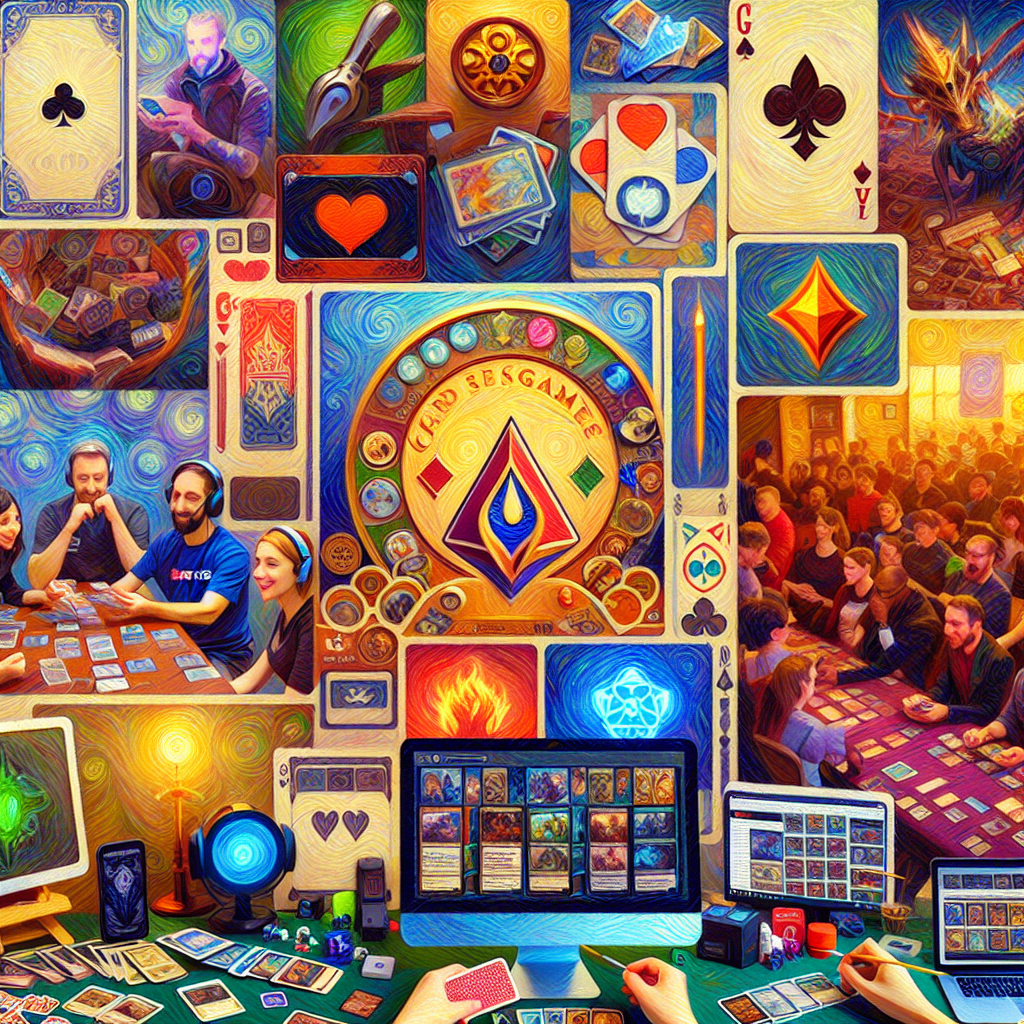
What Ethical Implications Arise From Ai In Competitive Gaming?
Conclusion
As we draw the curtain on this exploration of artificial intelligence and its influence on the cherished realm of card games, it’s essential to take a moment and reflect on what truly binds us to these pastimes. A card game isn’t merely a battle of strategy and wits; it’s an intricate tapestry of shared experiences, laughter, and heart. Each deal of the cards is a chapter in the saga of our friendships, where we navigate not just the odds but the emotional stakes that make every game pulse with life and connection.
Now, some might argue that the invasion of AI into our gaming world constitutes a cold disruption—a mechanical hijacking of something distinctly human. But let’s pause for a moment and challenge that thought. Could it be that AI might not just be a rival but a partner, an ally that steps in to create a landscape where fairness reigns supreme? After all, what is fair play if not a guarantee that every individual at the table, regardless of skills or experience, has a shot at victory?
Yes, AI excels at dissecting mountains of data, spotting patterns in ways that our human minds can overlook, arming us with fresh insights to elevate our gamesmanship. It could level the playing field, fostering a sense of trust and camaraderie among players by ensuring that deceit has no place at the table. Imagine a vibrant gaming community where your gut instincts and human emotions are enhanced rather than replaced by algorithms. This is not about stripping the thrill away from competition; it’s about amplifying it.
However, we must navigate carefully through this tech-laden landscape. The soul of a card game is rooted not just in skill but in the stories we’ll tell long after the last hand is played—those joyous moments of triumph mixed with the pangs of defeat that mold our humanity. As we welcome AI into our games, we must ensure that its presence enriches our experiences without eclipsing what makes them so precious.
Let’s not lose sight of what really matters: the shared chuckles, the cunning bluffs, the highs and lows that come with every hand dealt. Together, we can embrace a future where AI partners with us, maintaining fairness and allowing the artistry of human intuition to shine through. So here’s to the laughter around the table, the connections made, and the undying thrill of the game. Let’s shuffle the deck, deal the cards, and celebrate that which makes us truly human—together, hand in hand.

Conclusion
Conclusion:
- Card games represent not just strategy but a rich tapestry of shared experiences and emotional connections.
- Some argue that AI threatens the human element of gaming; however, it can also serve as a partner promoting fairness.
- AI’s ability to analyze data can elevate gameplay and level the playing field for all players.
- By fostering trust, AI can help eliminate deceit in games, enhancing the community experience.
- The essence of card games lies in storytelling and the emotional journey, which should not be overshadowed by technology.
- It’s important to ensure AI enriches the gaming experience while preserving the human elements we cherish.
- Embracing AI can help maintain fairness while celebrating the artistry of human intuition in games.

Conclusion
Other Resources

Other Resources
Here is a list of other resources you can review online to learn more:
- Splendor: Cities of Splendor Expansion
- Exploding Kittens
- Osprey Games
- Telegram
- Greater Than Games
- Keyflower: The Farmers Expansion
- Planly
- Quined Games
- Istanbul
- Roxley Games
- Power Grid
- Rising Sun
- Santorini
- Meeple Mountain
- Agricola (Revised Edition)
- The Gallerist
- The Dice Tower Podcast
- Jumbo
Use This Prompt To Get More Resources With Your Favorite Online AI Tool: Please provide me with a list of online articles with their URLs in a bulleted list that I can read regarding Could Artificial Intelligence Redefine The Concept Of Fair Play In Card Games?

Other Resources
Glossary Terms
Could Artificial Intelligence Redefine The Concept Of Fair Play In Card Games? – Glossary Of Terms
1. Artificial Intelligence (AI): Technology designed to simulate human intelligence, enabling machines to learn, reason, and make decisions.
2. Fair Play: The principle that participants in a game adhere to rules and ethics, promoting equality and integrity.
3. Card Games: Games that use playing cards as the primary device for gameplay, encompassing a wide variety of genres and rules.
4. Cheating: The act of breaking rules to gain an unfair advantage in a game, undermining the integrity of fair play.
5. Algorithm: A step-by-step procedure or formula for solving a problem or completing a task, often used in AI.
6. Game Theory: The study of strategic decision-making among competitors in situations of competition and cooperation.
7. Machine Learning: A subset of AI that enables systems to learn from data and improve their performance over time without explicit programming.
8. Ethics: The moral principles guiding behavior and decision-making in various contexts, including gaming and AI.
9. Human Factor: The influence of human behavior on systems and processes, crucial for understanding interactions in card games.
10. Randomization: A process by which outcomes are made unpredictable, often used in card games to ensure fairness and reduce bias.
11. Artificial Opponents: AI-based players designed to simulate human gameplay, providing challenges and competition.
12. Virtual Reality (VR): A simulated environment created using computer technology, enhancing interactive gaming experiences, including card games.
13. Multiplayer Dynamics: The interactions and relationships among multiple players in a shared gaming environment, affecting strategy and outcomes.
14. Transparency: Openness in gameplay and decision-making processes, which can enhance trust and fairness in gaming.
15. Player Profiling: Analyzing player behavior and strategies through data to improve AI responses and opponent simulation.
16. Risk Assessment: Evaluating the potential outcomes and uncertainties in decision-making during gameplay, often influenced by AI predictions.
17. Skill Gap: The difference between various players’ skills and abilities, potentially widened or narrowed by the introduction of AI.
18. Diminishing Returns: A situation where adding more of a resource (like AI assistance) yields progressively smaller benefits, relevant in card games.
19. Regulatory Framework: A set of rules and guidelines governing the use of technology and AI in gaming to promote fair play.
20. Cheating Detection: Techniques and technologies used to identify and prevent dishonest behavior in card games, potentially enhanced by AI.
21. Performance Metrics: Criteria used to evaluate player performance, potentially analyzed through AI for better understanding of fair play.
22. Player Autonomy: The degree of control and decision-making power a player has in a game, which can be influenced by AI involvement.
23. Adaptive Strategy: A gameplay approach that changes dynamically based on opponents and circumstances, potentially enhanced by AI.
24. Game Integrity: The quality of maintaining a fair, honest, and reliable gaming environment for all players.
25. Automated Decision-Making: AI’s ability to make real-time decisions in gameplay, posing questions about fairness and player agency.
26. Competitive Balance: The state in which players have equal chances of winning, which can be affected by AI and game design.
27. Fairness Algorithms: Specific algorithms designed to ensure equitable treatment of all players within an AI or gaming platform.
28. User Experience (UX): The overall experience of a player during gameplay, influenced by design, AI interaction, and the sense of fair play.
29. Cognitive Bias: Systematic patterns of deviation from norm or rationality in judgment, which can be studied to understand player behavior in card games.
30. Real-time Analysis: The capability of AI to evaluate and respond to gameplay as it happens, potentially affecting strategies and fairness.

Glossary Of Terms
Other Questions
Could Artificial Intelligence Redefine The Concept Of Fair Play In Card Games? – Other Questions
If you wish to explore and discover more, consider looking for answers to these questions:
- How will AI tools impact the traditional strategies used in card games?
- What specific features can AI bring to enhance fairness in card games?
- Can AI be programmed to recognize and adapt to human emotions during gameplay?
- How do players perceive the introduction of AI in competitive card games?
- Are there existing examples of AI being successfully integrated into card games?
- What safeguards can be implemented to ensure AI does not promote cheatings in card games?
- How can players retain the joy and spontaneity of card games in an AI-dominated environment?
- What is the potential for AI to create new card game formats or rules?
- How do different cultures perceive the role of AI in traditional games?
- What ethical frameworks should guide the development of AI within game contexts?
- How does reliance on AI in card games compare to its use in other competitive arenas, like sports?
- What role do social dynamics play in card games enhanced by AI?
- How might AI affect the economic landscape for card game developers and players?
- Can AI-driven insights lead to an enhanced understanding of competitive strategies?
- What are the long-term implications of AI in terms of skill development in card games?

Other Questions
Haiku
Could Artificial Intelligence Redefine The Concept Of Fair Play In Card Games? – A Haiku
Innovation meets heart,
In games where trust must prevail—
Humans, card and soul.

Haiku
Poem
Could Artificial Intelligence Redefine The Concept Of Fair Play In Card Games? – A Poem
In the Shuffle of Cards: A Poem on AI and Fair Play
Around the table, laughter rings,
As friends gather, each heart sings,
With cards in hand—this sacred space,
Where human jest and skills interlace.
Yet in the shadows, a whisper stirs,
Technology’s hand begins to purr,
Artificial minds, sharp and bold,
Can redefine the game we hold.
At first we fear this cold embrace,
Will heart and warmth lose their place?
But what if wisdom, AI’s true art,
Could guard the game, and mend the heart?
A partner, not a sovereign reign,
To help us learn, to ease our pain,
For every blunder, each bluff gone wrong,
AI could teach where we belong.
Yet oh! The thrill of human play,
The misreads, the luck, the chance to sway,
In gestures made and smiles exchanged,
Is the prize not richer when lives are changed?
To lose such essence, our gut does ache,
As we ponder what’s at stake,
A balance sought, a dance of grace,
Where algorithms aid our human race.
What of the players, strong and weak?
In this brave new world, it’s trust we seek,
Shall we let giants stack the deck,
And silence the calls of those who trek?
Ethics looms like a thick set veil,
As AI scripts each player’s tale,
Can warmth reside where codes reside?
Does fairness hide, or can it abide?
Let’s blend our tech with stories told,
Around the table, ourselves unfold,
For every flinch and every shove,
Lies the spirit of laughter, the essence of love.
So let’s not simply deal in fate,
But forge a future, celebrate,
Where every player—novice, pro—
Finds joy and fairness within the flow.
For it’s not just play; it’s life we weave,
In every hand, in what we believe,
So together let’s shuffle, let’s rise anew,
In the game of life, it’s me and you.

Poem
Checklist
Could Artificial Intelligence Redefine The Concept Of Fair Play In Card Games? – A Checklist
Checklist: Embracing AI in Card Games without Losing Humanity
Emotional Appeals
_____ Reconnect with the Heart: Recognize the emotional connections built through card games. How do your interactions today compare to those before AI?
_____ Prioritize Laughter and Camaraderie: Reflect on moments of joy in past games. What can you do to enhance this atmosphere as technology evolves?
Rational Appeals
_____ Understand AI’s Potential: Familiarize yourself with how AI can analyze game patterns and enhance strategic thinking. What insights can AI offer you in your next game?
_____ Balance Technology with Humanity: Ask yourself, how can AI be harnessed to ensure fairness without diminishing human intuition and creativity?
Ethical Appeals
_____ Evaluate Fair Play Concerns: Are the ethical implications of AI in card games understood? Consider the impact on trust and integrity within competitive environments.
_____ Champion Community Values: Advocate for frameworks that ensure equitable access to AI technologies for both small and large players.
Authority
_____ Seek Expertise: Look for insights from experts in ethics, sociology, and data science to guide your understanding of AI’s role in gaming.
_____ Engage in Community Dialogue: Participate in discussions about the balance of AI technology and human elements in gameplay. How can collective voices influence the future?
Narrative Appeals
_____ Share Your Stories: Document your experiences with AI in card games. How have they changed or enhanced your gameplay?
_____ Promote Inclusive Narratives: Ensure that the stories of small players are heard, reflecting the diverse experiences and challenges they face with AI strategies.
Social Appeals
_____ Create Community Spaces: Foster environments where players can share their thoughts on AI’s influence in games. How can this help maintain a sense of community?
_____ Support Local Players: Consider initiatives that uplift underrepresented players in the AI-driven landscape. What actions can you take to advocate for fairness?
Practical Steps
_____ Reflect on your recent gaming experiences and identify areas for improvement with AI’s integration.
_____ Discuss the integration of technology and human intuition with friends and fellow players.
_____ Explore ways to advocate for transparency and fairness in AI algorithms used in card games.
_____ Map out strategies for using AI as a tool rather than a replacement in your gameplay.
_____ Challenge preconceived notions about AI and engage in educational resources to better understand its impact on game dynamics.
This checklist serves as a guide to navigate the evolving landscape of card games in the face of AI, ensuring that the heart, head, and gut are aligned in maintaining the essence of fair play and human connection.

Checklist
At CardGameNews, we help people who love card games by collating information and news about card games.
Be sure to read our other related stories at CardGameNews to learn more about card games.


