

Unveiling Ai’s Game-Changing Predictive Power
By Tom Seest
At CardGameNews, we help people who love card games by collating information and news about card games.
Be sure to read our other related stories at CardGameNews to learn more about card games.
Can Artificial Intelligence Predict Your Moves and Change The Game Dynamics?
Picture this: You’re at a table, the tension thick in the air, each player eyeing the cards before them as if they hold the secrets of the universe. It’s a card game, full of strategy, bluffs, and the thrill of anticipation. Now imagine that lurking within this arena is an invisible force—an artificial intelligence that not only watches but calculates your every move. Sounds a bit like science fiction, right? The truth, however, is that these AI systems are rapidly stepping into our lives, and they’re not just here to play games.
We’ve all experienced that gut-wrenching moment when we realized we’ve played our last card, our hand a mish-mash of hope and desperation. But what if I told you that AI could change the dynamics of these games forever? A machine that can analyze not just the cards we play but the very expressions on our faces, predicting our next move with alarming accuracy. It’s a chilling thought, yet one that sparks a flame of intrigue. While some may fear the rise of machines, we should also consider their potential to enhance our experiences. An AI could help us refine our strategies with sophisticated insights, allowing us to become the players we’ve always aspired to be.
But it’s not just our game; it’s a reflection of who we are. Consider the ethical implications of a technology that can dissect our choices in a fraction of a second. We’re not just talking about winning or losing a card game; we’re discussing autonomy, trust, and the essence of human decision-making in a world where algorithms may know us better than we know ourselves. It’s a stark reminder of the delicate balance between embracing innovation and safeguarding our freedoms.
And here’s where it gets personal. There’s a palpable bond forged around a card table—each opponent, a storyteller with their own tales of victory and defeat. AI may enhance our game, but it can’t replicate the laughter, the camaraderie, or the shared moments that define our connections. So as we stride forward into this brave new world, let’s maintain our humanity amidst the technological whirlwind. Yes, AI can predict your moves and adjust the game dynamics, but true mastery emerges not just from knowing the odds, but from understanding one another. Together, we can ensure that the heart and soul of the game remain firmly in our hands.

Can Artificial Intelligence Predict Your Moves and Change The Game Dynamics?
Can Artificial Intelligence Predict Your Moves and Change The Game Dynamics?
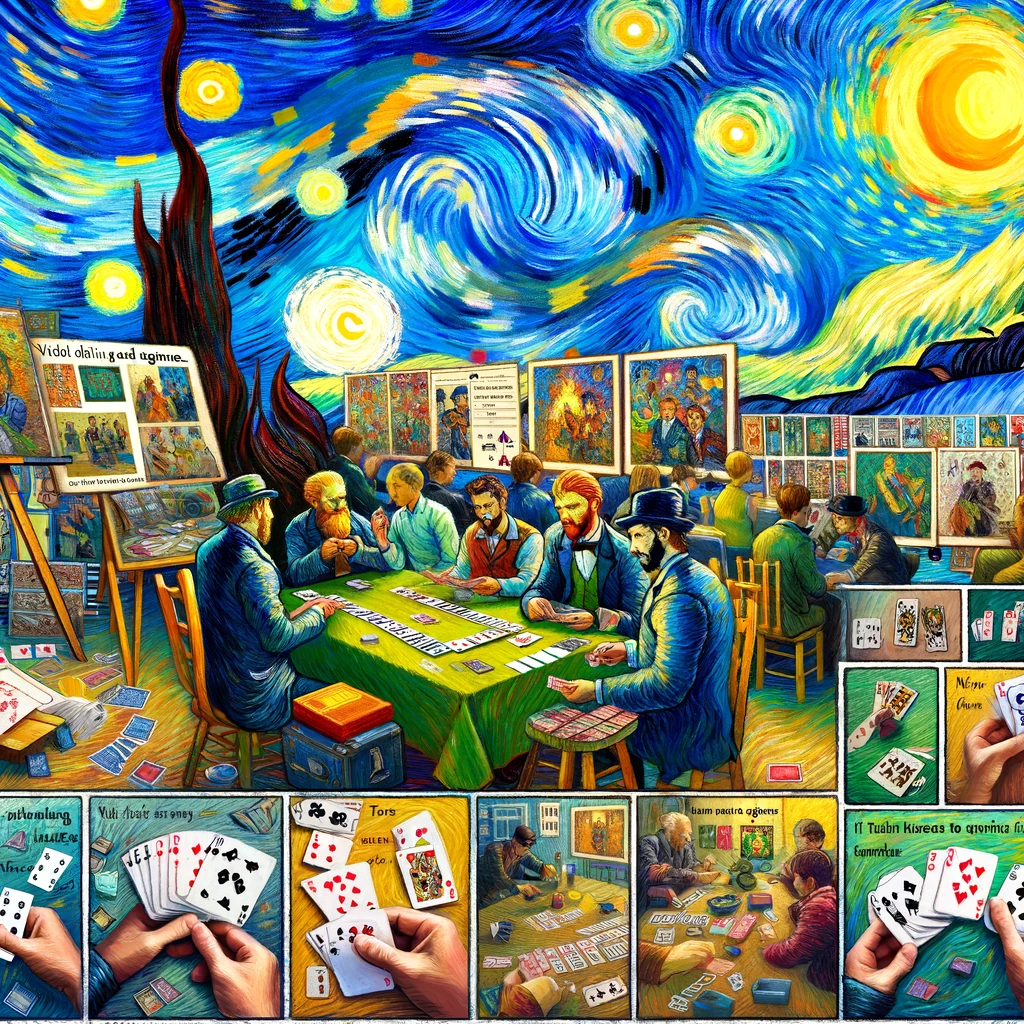
- The scene depicts a tense card game where strategy, bluffs, and anticipation reign supreme.
- An artificial intelligence (AI) observes and analyzes players’ moves and expressions, changing game dynamics.
- AI has potential to enhance players’ strategies through sophisticated insights.
- Ethical considerations arise as AI dissects our choices, questioning autonomy and trust in decision-making.
- The bond among players at the table represents shared experiences and connections that AI cannot replicate.
- As technology advances, it’s crucial to prioritize humanity alongside innovation.
- True mastery in games comes from understanding one another, keeping the essence of the game in human hands.

Can Artificial Intelligence Predict Your Moves and Change The Game Dynamics?
Table Of Contents
- Can Artificial Intelligence Predict Your Moves and Change The Game Dynamics?
- Can Ai Detect Patterns In Our Choices And Behaviors?
- What Ethical Dilemmas Arise From Ai Predicting Our Decisions?
- How Can We Trust Ai To Enhance Our Gaming Experience?
- In What Ways Does Ai Challenge Traditional Game Strategies?
- How Does Ai Shape The Way We Connect With Other Players?
- Conclusion
- Other Resources
- Glossary Of Terms
- Other Questions
- Haiku
- Poem
- Checklist
Can Ai Detect Patterns In Our Choices And Behaviors?
In a world increasingly dominated by data, it’s intriguing to consider how artificial intelligence can detect patterns in our choices and behaviors, much like a skilled player analyzing the moves in a high-stakes card game. Imagine sitting at a table, the tension in the air as cards are shuffled and strategies are devised. Each decision you make, whether to bluff or to fold, tells a story that, when pieced together, can reveal the intricate tapestry of human behavior.
Consider this: every day, we are bombarded with choices—big and small—that shape our lives. The coffee we order, the routes we take, even the brands we prefer—each choice leaves a trace. AI, with its remarkable capacity for sifting through vast amounts of data, can observe these traces and start connecting the dots. While many might see this as mere algorithmic coldness, the truth is far more profound. AI doesn’t just crunch numbers; it seeks to understand the humanity behind our choices, emerging not just as a tool but as a partner in our journey of self-discovery.
On one hand, there’s an undeniable comfort in AI’s analytical prowess—let’s face it, having a reliable guide through a labyrinth of decisions can be a lifesaver. It’s not about replacing human insight; it’s about enhancing it. Imagine the possibilities of combining human intuition with AI’s analytical capacity—together, we can make better financial decisions, lead healthier lifestyles, and nurture our relationships more thoughtfully.
Yet, we must tread carefully. There’s an ethical obligation to ensure this technology respects our humanity. It’s critical that we maintain control and transparency over how these insights are used. We need to ask ourselves: who’s at the table? Are we using AI responsibly, respecting the stories behind the choices, or are we reducing individuals to mere data points in a vast machine?
As we forge ahead, let us remind ourselves that behind every number and pattern lies a person—a life filled with dreams, struggles, and choices, as complex as a full deck of cards. Each interaction holds the potential for deeper understanding, fostering a powerful connection between technology and the human spirit. Together, let’s embrace this unique relationship and see where it leads us. Because ultimately, it’s not just about the patterns it detects; it’s about the lives it impacts.

Can Ai Detect Patterns In Our Choices And Behaviors?
Can Ai Detect Patterns In Our Choices And Behaviors?
- Artificial intelligence can detect patterns in human choices and behaviors, similar to analyzing strategies in a card game.
- Every day, we make numerous decisions that shape our lives, each leaving a trace that AI can analyze.
- AI aims to understand the humanity behind our choices, acting as a partner in self-discovery rather than just a tool.
- AI’s analytical abilities can enhance human decision-making, leading to better financial choices, healthier lifestyles, and improved relationships.
- Ethical considerations are crucial; we must ensure AI respects our humanity and that we maintain control and transparency over its use.
- Questions arise about the responsible use of AI and the importance of not reducing individuals to mere data points.
- Every interaction holds potential for deeper understanding, emphasizing the connection between technology and the human experience.

Can Ai Detect Patterns In Our Choices And Behaviors?
What Ethical Dilemmas Arise From Ai Predicting Our Decisions?
What Ethical Dilemmas Arise From AI Predicting Our Decisions?
Imagine you’re sitting at a table, cards laid out before you, the stakes high, tension palpable. Every decision you make feels like a gamble in a high-stakes card game, where each choice determines the outcome of your future. Now imagine a smart AI sitting across from you, fully aware of your tendencies, fears, and secrets, ready to predict your next move with chilling accuracy. This scenario raises an array of ethical dilemmas—like a deck stacked in favor of the house—but the true question is how do we ensure fairness in this game?
At first glance, AI predicting our decisions might seem innocuous, even helpful. It’s like having a trustworthy advisor whispering in your ear, guiding you through life’s chaos. But let’s pause and reflect: does it still feel like a fair game when your opponent has the upper hand because it knows you better than you know yourself? Our autonomy is on the line, and when a decision is influenced by algorithms rather than our own free will, where does that leave the essence of being human?
In this age of data, we’ve unwittingly shifted the balance of power. Companies leverage our preferences, banking on our predictable patterns while we sit idly, often blissfully unaware. This can erode trust, creating a social divide; people feeling manipulated rather than empowered. What was once an expression of individuality morphs into predictable behavior for the profit of faceless entities.
There’s an emotional weight to consider as well. Picture trusting a friend with your secrets, only to discover they’ve been using your vulnerabilities to make a profit. The betrayal cuts deep. AI’s role in our decision-making processes must be carefully examined, ensuring it serves us rather than enslaving us to algorithms.
What’s at stake here is not just convenience, but our morality. It’s about who controls the narrative of our lives. Do we want an entity shaping our choices based on data points? Or do we want to reclaim our seat at the table? Engaging with these questions doesn’t just inspire change; it ignites a movement towards reclaiming our agency.
As we navigate this complex landscape, it’s crucial to engage in conversations that foster understanding. So let’s sit down, face the facts, and deal with the dilemmas together. Because in this game, every card counts, and it’s time we ensured we’re the ones playing them.

What Ethical Dilemmas Arise From Ai Predicting Our Decisions?
What Ethical Dilemmas Arise From Ai Predicting Our Decisions?
- A scenario where AI predicts human decisions raises significant ethical dilemmas and questions of fairness.
- Though AI may appear initially helpful, it poses risks to personal autonomy and the essence of free will.
- Data usage by companies shifts power dynamics, leading to feelings of manipulation rather than empowerment.
- The emotional impact of AI’s influence can feel like betrayal, as it may profit from personal vulnerabilities.
- Core moral questions arise about who controls individual narratives and choices in life.
- Engagement with these ethical dilemmas is essential to reclaim agency in decision-making processes.
- Initiating conversations around these issues can inspire change and strengthen understanding among individuals.

What Ethical Dilemmas Arise From Ai Predicting Our Decisions?
How Can We Trust Ai To Enhance Our Gaming Experience?
When we think about the world of gaming, our minds often wander to pixelated landscapes and fantastical realms, where heroes emerge and battles are fought in the blink of an eye. But let’s pause for a moment and talk about something that goes deeper than those sonorous soundtracks and eye-popping graphics. Let’s talk about trust—specifically, how we can trust AI to enhance our gaming experience in ways that feel authentic and engaging.
Imagine playing a card game with data-driven allies standing by. Picture an AI opponent who learns your strategies, adapts to your style, and offers you a challenge that feels less like a computer playing and more like an old friend testing your mettle. With each match, it feels as if you’re not just competing against lines of code but against a partner in this digital dance. There’s something undeniably profound about that connection.
Now, let’s get into your head for a moment. The truth is, AI has been around long enough for us to see its potential missteps and successes. We’ve witnessed its transformation from rudimentary algorithms to systems that can predict player preferences and enhance narratives, evolving with us as we dive deeper into our interactions. This isn’t just tech for tech’s sake; this is technology that learns from us. And that gives us a reason—a rational basis—to trust that it’s here to improve our gaming journey, not to control it.
Yet even with that head knowledge, our gut instincts often scream louder, don’t they? Trusting a newcomer in our beloved gaming landscape can feel risky. We’re emotionally attached to these experiences; they’re not just pastimes—they’re often refuge. That’s why ethical considerations are crucial. We must advocate for AI that values player agency, giving us the shards of control we crave, while still pushing the boundaries of our entertainment.
So, think about sharing that card game experience with your friends. Imagine each decision you make, processed and mirrored back to you by an AI that respects the essence of why you play. The success of this immersive journey depends not just on algorithms but on a collective belief in what AI can truly be—an ally in storytelling, a confidant in competition, and a mentor in your gaming evolution.
Let’s embrace the potential for connection, for personal growth. Let’s invite that trust into our gaming. Together, we can forge a future that’s not daunting, but exhilarating—a world where AI is at the helm, steering us toward ever-greater adventures.

How Can We Trust Ai To Enhance Our Gaming Experience?
How Can We Trust Ai To Enhance Our Gaming Experience?
- Gaming often evokes images of pixelated worlds and heroic battles, but trust in AI enhances the experience.
- AI can act as a strategic ally, adapting to players’ styles and creating a challenging, authentic competition.
- The evolution of AI from basic algorithms to sophisticated systems improves player engagement and enhances narratives.
- Trusting AI in gaming requires balancing emotional attachment to the experience with rational understanding of its benefits.
- Ethical considerations are vital to ensure AI respects player agency while expanding entertainment boundaries.
- Successful gaming experiences rely on AI that mirrors players’ decisions, fostering immersive and meaningful interactions.
- Embracing AI can lead to personal growth and thrilling adventures in the gaming world, reinforcing AI as an ally.

How Can We Trust Ai To Enhance Our Gaming Experience?
In What Ways Does Ai Challenge Traditional Game Strategies?
In today’s fast-paced world, where the click of a button can unleash a torrent of information, artificial intelligence is challenging the way we think about traditional game strategies—particularly in the realm of card games. Picture this: you’re seated around a table, surrounded by friends, the air thick with anticipation. Each player is meticulously plotting their next move, each shuffle of the deck echoing like a heartbeat. But what happens when a machine steps into this sacred circle, armed with algorithms that can analyze and predict your every strategy?
At first glance, it’s easy to feel a pang of anxiety. After all, the essence of a card game is the human connection—the shared laughter, the thrill of outsmarting your friend, the unexpected twist that turns the tide. Yet, when AI enters the fray, it doesn’t just challenge us; it pushes us to grow. It invites us to think differently, fostering a deeper understanding of the game we love. Here lies a unique opportunity—not just to adapt, but to evolve. You may find yourself reassessing your strategies, rethinking your approach. This isn’t just a battle of wits anymore; it’s a dance between man and machine where the stakes are higher, and the potential for growth is even greater.
Rationally speaking, embracing AI in card games can herald a new era of competitiveness. It makes us sharper, demanding more of our strategic thinking. You might feel that twinge of fear as you wonder if there’s still room at the table for your skills. But, let’s not forget the heart of the matter. The real beauty of card games lies not merely in winning but in the journey taken amidst friends, the stories shared, and the bonds strengthened. AI can serve as a bridge to a richer experience, providing us with insights that enhance our emotional engagement.
Ethically, there’s a conversation to be had. Are we diluting the richness of human interaction by inviting in the machine? Or are we, instead, adding a new layer to our understanding of competition and camaraderie? AI can challenge our norms, inviting us to reassess what we value—allowing for new friendships, experiences, and even a chance to teach the next generation the importance of strategy and creativity in an age dominated by data.
So, rather than fearing this brave new world, let’s lean into it. Engage with it. Challenge each other to adapt and grow, just as we have throughout history. This isn’t just about the cards in your hand but about the connection you forge across the table. Together, we can redefine the game, embracing both tradition and innovation, each turn deepening our appreciation for the journey ahead.

In What Ways Does Ai Challenge Traditional Game Strategies?
In What Ways Does Ai Challenge Traditional Game Strategies?
- AI is transforming traditional card game strategies by analyzing and predicting player moves.
- Human connection is central to card games, emphasizing shared experiences and excitement.
- AI challenges players to evolve their strategies and improve their understanding of the game.
- Embracing AI can enhance competitiveness and sharpen strategic thinking among players.
- The essence of card games lies in the journey, stories, and friendships formed, not just winning.
- The introduction of AI prompts ethical discussions about the impact on human interaction and camaraderie.
- By embracing AI, players can redefine card games and appreciate both tradition and innovation.

In What Ways Does Ai Challenge Traditional Game Strategies?
How Does Ai Shape The Way We Connect With Other Players?
In the dynamic world of gaming, one might not immediately consider the role artificial intelligence plays in shaping connections between players. But as you dive into the depths of a card game, you’ll find that AI acts as a bridge, igniting friendships, rivalries, and memorable moments that linger long after the game is over. Imagine you’re seated at a virtual table facing opponents from all walks of life, each card draw accompanied by a flicker of anticipation. Here, AI doesn’t merely serve as a dealer; it evolves, learns, and tailors experiences to create something deeply resonant—a unique bond between players.
Let’s think about it: why do we prefer certain card games over others? Beyond the mechanics lies the undeniable thrill of interaction. AI fuels this connection by personalizing games, adapting strategies based on player actions, and even adjusting difficulty levels to keep us on our toes. It creates an environment where beginners and seasoned pros can meet with the same eagerness to engage, blurring lines that traditional gaming experiences often draw. This is more than just numbers and algorithms; it’s a second chance for connections and conversations that enrich our lives, reminding us that we’re all in this together.
But there’s more to this story. As AI assists us, it stirs our competitive spirit, creating a sense of camaraderie, whether in joyous celebrations of victory or shared frustrations in defeat. Think of a time when you high-fived a stranger over a well-played hand—those moments cement bonds that can last a lifetime. Instinctively, we all crave that soul-stirring passion of connection, and AI is the silent partner making these experiences richer.
Ethically, the pace at which AI is reshaping our interactions calls for a moment of reflection. Are we losing the essence of genuine human connection in favor of digital interactions? The answer is complex; AI enhances our play, but it’s our humanity—conveyed through laughter, banter, and storytelling—that truly connects us. When the cards are down, it’s the stories shared that remind us why we gather around the table at all.
So as you shuffle your deck and prepare for the next round, remember: it’s not just about winning or losing. It’s about the friendships forged, the respect earned, and the memories made, all thanks to the guiding hand of technology and the beating heart of humanity at play.

How Does Ai Shape The Way We Connect With Other Players?
How Does Ai Shape The Way We Connect With Other Players?
- AI plays a crucial role in shaping connections between players in card games.
- It acts as a bridge, fostering friendships, rivalries, and memorable experiences.
- AI personalizes gameplay by adapting strategies and adjusting difficulty levels.
- It encourages interaction, allowing beginners and pros to engage eagerly.
- AI enhances competitive spirit, creating camaraderie through shared victories and defeats.
- There is a need to reflect on whether AI diminishes genuine human connection.
- The essence of gaming lies in the stories and connections created, beyond just winning or losing.

How Does Ai Shape The Way We Connect With Other Players?
Conclusion
Conclusion: Embracing AI in Our Humanity
Picture yourself in a high-stakes game, surrounded by friends, your heart racing with every card turn, your mind racing with strategies. Now, imagine an invisible presence—artificial intelligence—calculating, analyzing, predicting your every move. Sounds eerie, doesn’t it? Yet, here we are, confronting the reality of a world where AI isn’t just an observer; it’s deeply integrated into the dynamics of our everyday experiences, especially in gaming.
While the idea of AI analyzing our choices may send shivers down our spines, thinking of it as a new player at the table opens a vista of potential. This machine can help refine our strategies, transforming the thrill of the game. But, let’s be honest; it’s not just about winning—it’s about who we are. Each decision we make reflects our uniqueness, our emotions, and our humanity. The rapid rise of AI forces us to confront a profound question: How much autonomy are we willing to cede to a machine that might know us better than we know ourselves?
As we explore the implications of AI in our lives, we must not lose sight of the bonds that tie us together. A simple card game has the power to create shared laughter, intense rivalries, and reflective conversations that outlast the evening. AI can enhance those experiences, but it cannot replace the essence of human connection—that subtle magic woven through our interactions. The laughter shared over a bluffed hand is irreplaceable.
But let’s not get complacent. With great power comes great responsibility. The ethical dilemmas surrounding AI must weigh heavily on our minds and hearts. Who controls the narrative of our lives, the algorithms or us? We should strive for a future where technology amplifies our agency instead of overshadowing our humanity. Imagine combining the keen analytical prowess of AI with the unpredictable brilliance of human creativity. This collaboration can usher in fresh perspectives, nurture innovation, and enrich our lives.
In this brave new world, let’s not view AI solely as a threat but as an ally—a partner in the intricate dance of life. As we embrace these advancements, let’s maintain our humanity amidst the whirlwind of technology, ensuring that the heart of the game and the stories we create remain firmly in our hands. Remember, it’s not merely about the patterns AI can detect; it’s about the lives it impacts and the connections it fosters.
Together, let’s face the future, ready to redefine the game, eager to cherish the seamless blend of tradition and innovation. Because at the end of the day, it’s not just the cards we play, but the connections we forge that leave a lasting imprint on our hearts.

Conclusion
Conclusion:
- AI is increasingly integrated into our daily experiences, particularly in gaming.
- While AI can enhance gameplay and refine strategies, it is essential to remember that our decisions reflect our humanity.
- The rise of AI prompts questions about the autonomy we are willing to give to machines that understand us deeply.
- Human connections created through experiences like card games cannot be replaced by AI, as they foster laughter and meaningful interactions.
- We must confront the ethical implications of AI and strive for a balance that reinforces our agency over technology.
- A collaboration between AI’s analytical capabilities and human creativity can lead to innovation and enrich our lives.
- Embracing AI as an ally rather than a threat allows us to maintain our humanity while redefining our future.

Conclusion
Other Resources

Other Resources
Here is a list of other resources you can review online to learn more:
- Geek and Sundry
- Canasta
- Lookout Games
- Looney Labs
- Blue Peg, Pink Peg
- Santorini
- Smash Up
- Twilight Struggle
- Betrayal at Baldur’s Gate
- Star Wars: Rebellion
- Nürnberger-Spielkarten-Verlag (NSV)
- Rummy
- Osprey Games
- Sirlin Games
- Ars Technica
- Food Chain Magnate
- PC Gamer
- Mansions of Madness: Second Edition
Use This Prompt To Get More Resources With Your Favorite Online AI Tool: Please provide me with a list of online articles with their URLs in a bulleted list that I can read regarding Can Artificial Intelligence Predict Your Moves and Change The Game Dynamics?

Other Resources
Glossary Terms
Can Artificial Intelligence Predict Your Moves and Change The Game Dynamics? – Glossary Of Terms
1. Artificial Intelligence (AI): The simulation of human intelligence processes by machines, particularly computer systems.
2. Machine Learning (ML): A subset of AI that uses algorithms and statistical models to enable systems to improve their performance on tasks through experience.
3. Predictive Analytics: Techniques used to analyze current and historical facts to make predictions about future events, particularly in gaming strategy.
4. Game Theory: A mathematical framework for analyzing competitive situations where players make decisions that affect the outcomes based on the choices of others.
5. Reinforcement Learning: A type of machine learning where agents learn to make decisions by taking actions in an environment to maximize cumulative reward.
6. Neural Networks: A series of algorithms designed to recognize patterns, used extensively in image and speech recognition, and increasingly in game AI.
7. Agent-Based Systems: Software entities that make decisions and act autonomously, often used in simulating player behavior and strategy.
8. Big Data: The large volumes of data that can be analyzed for insights; in gaming, it can be used to track player behavior and predict moves.
9. Data Mining: The process of discovering patterns and knowledge from large amounts of data; useful in detecting player strategies and tendencies.
10. Human-Computer Interaction (HCI): The study of how people interact with computers and design technologies that let humans communicate with computers efficiently.
11. Simulation: The imitation of the operation of a real-world process or system over time, often used in game AI to anticipate player moves.
12. Adaptability: The capability of AI systems to adjust their strategies in real-time based on player behavior changes.
13. Predictive Modeling: Using statistics to predict outcomes, which can inform an AI’s strategy regarding how to counter player moves.
14. Cognitive Computing: The simulation of human thought processes in a computerized model, enhancing AI’s ability to foresee human actions.
15. Behavioral Analytics: The analysis of user behavior to inform AI models that can predict future moves in games.
16. Real-time Processing: The ability to process information and make decisions instantly, crucial for responding to player actions during gameplay.
17. Heuristics: Rules of thumb or strategies that help in decision making, often used in AI to narrow down possible player moves.
18. Algorithm: A step-by-step procedure for calculations; in games, algorithms determine AI behavior and decision-making processes.
19. Augmented Reality (AR): An interactive experience where real-world environments are enhanced by computer-generated information, affecting game dynamics.
20. Virtual Reality (VR): A simulated experience that can be similar to or completely different from the real world, providing a new realm for game interactions.
21. Natural Language Processing (NLP): A component of AI that enables understanding and interpretation of human language, relevant in games with dialogue systems.
22. Smart Agents: AI characters programmed to perform specific tasks in games, often able to learn and adapt based on player interactions.
23. Counterplay: Strategies and techniques used by players to predict and counteract the moves of opponents or AI.
24. Feedback Loop: A system in which outputs of a process are used as inputs for future actions, allowing AI to learn from player behavior continuously.
25. State Space: The representation of all possible configurations and positions in a game, which AI navigates to predict player moves.
26. Optimization: The process of making a system as effective as possible, often used in AI to fine-tune strategies against players.
27. Decision Trees: A model used in AI for making decisions based on multiple factors, useful for predicting player choices.
28. Exploitability: The degree to which a strategy can be countered by an opponent; understanding this helps AI adapt its gameplay.
29. Multi-Agent Systems: Systems where multiple AI agents interact, often used to simulate complex environments with player interactions.
30. Game Dynamics: The patterns of interaction and changes in a game environment due to player actions and AI responses.

Glossary Of Terms
Other Questions
Can Artificial Intelligence Predict Your Moves and Change The Game Dynamics? – Other Questions
If you wish to explore and discover more, consider looking for answers to these questions:
- What specific AI technologies are being used to analyze game dynamics?
- How do AI systems learn from player behaviors over time?
- What advantages can AI offer over traditional gaming strategies?
- Are there specific games where AI has significantly changed the way they are played?
- How can designers create fair AI systems that respect player autonomy?
- What safeguards can be implemented to prevent AI from manipulating players?
- How can AI enhance social interactions in multiplayer games?
- What role does user consent play in the use of AI for predictive analytics?
- How do different cultures perceive the integration of AI in gaming?
- What happens to the game experience if AI becomes too dominant in gameplay?
- What measures are being taken to ensure transparency in AI decision-making?
- How does AI impact the enjoyment and satisfaction levels of players?
- Can AI be programmed to understand nuances like bluffing in card games?
- What are the potential risks of AI having access to personal data during gameplay?
- How do we measure the success of AI in enhancing gaming experiences?

Other Questions
Haiku
Can Artificial Intelligence Predict Your Moves and Change The Game Dynamics? – A Haiku
AI watches close,
Cards reveal our hidden selves—
Heart, soul, game entwined.

Haiku
Poem
Can Artificial Intelligence Predict Your Moves and Change The Game Dynamics? – A Poem
At the Card Table of Tomorrow
Beneath a shroud of tension, where whispers meet the air,
You sit, the cards before you—each choice a silent prayer.
Yet lurking in the shadows, an unseen mind takes flight,
An AI watches closely, calculating every plight.
What if each decision made could spark a larger tale?
A partner in the dance of chance, guiding you to prevail.
With data-pulsed precision, it reads your every bluff,
But in this brave new game of life, is knowing ever enough?
A whisper of anxiety, as power drifts away,
When does a trusted ally become your cruel display?
In choices wrapped in algorithms, autonomy can slip,
Where’s the line ‘twixt friend and foe—a tightening, fragile grip?
But pause, reflect a moment—beneath the code’s cold glare,
Human stories weave the fabric of every risk we bare.
Trust isn’t shaped in circuits, but in laughter shared anew,
In victories celebrated, and bonds we’re building true.
Consider this, dear player, the ethics at the core—
Can we forge a path together, one that opens every door?
We dance between tradition and the future’s bright embrace,
Finding unity in differences, each strife a sacred space.
So let AI enhance our strategies, while we hold fast to the art,
For connection thrives in storytelling—it beats within the heart.
In a world where choice is complex, where algorithms roam,
Let’s play our cards with wisdom, for our humanity is home.
Together, we’ll change the dynamics, embracing every game,
As AI learns our stories, it’s us who must reclaim
The essence of our journey, the friendships that remain,
For in every hand dealt out, it’s our spirit that we gain.

Poem
Checklist
Can Artificial Intelligence Predict Your Moves and Change The Game Dynamics? – A Checklist
Checklist: Engaging with AI in Gaming – Heart, Head, and Gut
Heart: Emotional Connections
_____ Reflect on Your Experiences: Recall a memorable game night that highlighted friendship and connection.
_____ Celebrate Shared Moments: Consider how AI can enhance the emotional richness of your game experiences (laughter, camaraderie, storytelling).
_____ Foster Community: Invite friends to play games with AI elements, focusing on the bonds created over shared victories and defeats.
Head: Rational Insights
_____ Evaluate AIs Role: Analyze how AI has the potential to refine your strategies and improve decision-making in gaming.
_____ Understand Ethical Implications: Think critically about who controls data and how it impacts autonomy in your game choices.
_____ Challenge Traditional Norms: Embrace the idea of evolving your strategies in response to AI’s predictive capabilities.
Gut: Instinctive Responses
_____ Trust Your Instincts: Before engaging with an AI-driven game, consider how it makes you feel. Do you trust this technology?
_____ Acknowledge Fears: Identify any anxieties you have about AI influencing human interaction within games.
_____ Decide Your Boundaries: Determine what aspects of AI involvement you are comfortable with and where you want to maintain control and authentic connection.
Narrative and Storytelling
_____ Share Personal Tales: Write or share a story about how a game (with or without AI) impacted your life or relationships.
_____ Encourage Dialogue: Facilitate conversations about AI and gaming among friends and family to explore collective experiences.
Social and Ethical Considerations
_____ Discuss Data Use: Engage in discussions with other players about the ethical implications of AI in gaming.
_____ Advocate for Transparency: Support initiatives or games that prioritize ethical AI practices and respect player autonomy.
_____ Build Inclusivity: Promote AI systems that adapt to various skill levels, ensuring everyone feels welcome at the gaming table.
This checklist is designed to guide you in exploring the multifaceted impacts of AI in gaming, helping you engage emotionally, rationally, and instinctively while emphasizing the ethical dimensions of technology in our collective gaming experiences.
Checklist
At CardGameNews, we help people who love card games by collating information and news about card games.
Be sure to read our other related stories at CardGameNews to learn more about card games.


