

Elevating Card Game Nights With Artificial Intelligence
By Tom Seest
At CardGameNews, we help people who love card games by collating information and news about card games.
Be sure to read our other related stories at CardGameNews to learn more about card games.
What New Experiences Can Artificial Intelligence Bring to Your Card Game Nights?
Imagine your living room, the familiar faces of friends gathered around the table, laughter spilling over as the deck of cards shuffles in the background. This cherished ritual, steeped in camaraderie and competition, is about to get a technological twist. Introducing artificial intelligence into your card game nights could be the spark that ignites not just a new way to play, but a whole new level of experience, connection, and even joy.
Consider how an AI could act as a knowledgeable referee, processing the rules at lightning speed while offering real-time updates and insights. There’s a special kind of relief that washes over players when they don’t have to bicker over the nuances of the game. It frees up energy to enjoy the banter and strategy instead. With the AI tracking scores and making strategic suggestions, it almost feels like having an experienced coach in your corner, guiding your every move while respecting the spirit of the game.
Think about the emotions tied to introducing new elements. The tension, the thrill, the unpredictable outcomes! Incorporating AI can cultivate an atmosphere where innovation meets nostalgia. It offers a bridge between the exciting present and the treasured past of your card-playing traditions. Each shuffled deck and drawn card becomes an opportunity for discovery, prompting players to crack jokes, share stories, and give a knowing nod as they reminisce about games gone by.
Rationally, this intelligence means we’ll never run into a rules loophole again. It’s about fostering fair play and equal opportunity for all players, driving home the ethical responsibility to ensure every game night is inclusive and enjoyable. Even the most casual player can enjoy the same strategic depth without fear of being outmatched.
As more friends join the fold, artificial intelligence could seamlessly adapt to ensure everyone is equally engaged. No one wants to feel like a spectator during a game night; it’s about connection, after all. By filling seats with potential allies and future friends, an AI can assist in bridging gaps and enhancing the entire experience.
So, why not take the leap? Elevate your game nights from typical gatherings into exhilarating adventures. Grab that deck of cards with confidence, knowing that a little technological help can turn the ordinary into the extraordinary. Let AI be the companion that brings your favorite game to life, creating memories and fostering connections that last well beyond the final hand.

What New Experiences Can Artificial Intelligence Bring to Your Card Game Nights?
What New Experiences Can Artificial Intelligence Bring to Your Card Game Nights?
- Imagine card game nights bringing friends together, enhanced by technology.
- AI can serve as a knowledgeable referee, processing rules and providing real-time updates.
- It alleviates disputes over rules, allowing players to focus on enjoyment and strategy.
- AI tracks scores and offers strategic suggestions, acting like a supportive coach.
- Combining AI with traditional gameplay creates a unique blend of innovation and nostalgia.
- AI ensures fair play and inclusivity, making the game enjoyable for all skill levels.
- Enhanced experiences allow for deeper connections and lasting memories during game nights.

What New Experiences Can Artificial Intelligence Bring to Your Card Game Nights?
Table Of Contents
- What New Experiences Can Artificial Intelligence Bring to Your Card Game Nights?
- How Can AI Enhance the Emotional Joy Of Card Game Nights?
- What Strategies Can AI Provide to Improve Our Game Skills?
- How Might AI Change the Dynamics Of Friendship During Game Night?
- Can AI-Driven Stories Add Depth to Our Card Game Experiences?
- How Does the Use Of AI Affect the Fairness In Card Games?
- Conclusion
- Other Resources
- Glossary Of Terms
- Other Questions
- Haiku
- Poem
- Checklist
How Can AI Enhance the Emotional Joy Of Card Game Nights?
When you gather around the table for a classic card game night, the air is thick with laughter, anticipation, and maybe a little bit of friendly rivalry. This isn’t just about cards; it’s about connection—an intangible thread that unwinds with each shuffle, each dealt hand. Now, imagine if artificial intelligence could amplify this experience—not replace the human touch, but enhance it in ways you never thought possible.
Picture a world where AI understands the dynamics of your group. Want to keep things light and breezy? It can suggest games that lean into humor, ensuring the night is filled with giggles rather than groans. Looking for a challenge? AI can identify your group’s skill levels and curate the perfect game that strikes that delicate balance between hard-fought victories and lighthearted fun. It’s not unlike having a wise old friend at the table, one who knows you inside and out, quietly making the evening flow smoother.
Consider the emotional appeal here. Card games are more than just a pastime; they evoke nostalgia, rekindle friendships, and even spark romance. By using AI to personalize these moments—like suggesting a beloved childhood game that stirs fond memories—you’re not just playing cards; you’re reigniting connections that mean the most to you. This kind of emotional resonance fosters a depth of experience that transcends mere entertainment.
Rationally, while the technology may seem complex, it operates behind the scenes, making effortless suggestions based on group preferences. The trust in AI lies in its ability to learn and adapt, evolving as your game nights do. It’s like having a co-pilot for your fun, prioritizing everyone’s enjoyment while letting your group’s quirks shine.
Ethically, consider this: the investment in AI doesn’t diminish that human element. Instead, it respects the traditions and values of gathering together. The authority here comes from countless studies highlighting how laughter and connection reduce stress and foster community—something we all crave, especially amidst life’s chaotic rush.
Finally, it’s not just an isolated experience. Engage your friends, family, and even new acquaintances in this shared journey. Invite them into the fold of smarter game nights—social bonds made stronger through laughter, strategic plays, and the occasional, well-placed bluff. By weaving AI into the fabric of your game nights, you’re not merely playing cards; you’re celebrating life’s rich tapestry of relationships. In a world that can easily feel fragmented, let’s enhance those joyful gatherings and make card game nights a cherished tradition built on connection, laughter, and perhaps even a dash of friendly rivalry.

How Can AI Enhance the Emotional Joy Of Card Game Nights?
How Can AI Enhance the Emotional Joy Of Card Game Nights?
- Card game nights create laughter, connection, and friendly rivalry among players.
- AI can enhance the game night experience by suggesting games based on group dynamics.
- It can curate challenges that match skill levels, balancing hard-fought victories with fun.
- AI personalizes experiences by evoking nostalgia and rekindling important connections.
- The technology operates seamlessly, learning and adapting to group preferences.
- Investing in AI respects human traditions, enhancing the social aspects of gaming.
- AI fosters stronger social bonds through shared experiences, laughter, and strategic play.

How Can AI Enhance the Emotional Joy Of Card Game Nights?
What Strategies Can AI Provide to Improve Our Game Skills?
When it comes to sharpening our skills in the beloved world of card games, artificial intelligence can feel like a knight in shining armor—or perhaps a wise old sage equipped with an arsenal of strategies that beckon to be explored. Imagine sitting at a table, cards in hand, the stakes high, and the thrill of the game surging through your veins. It’s in these moments that the ingenuity of AI can truly shine, reaching deep into our hearts and minds to elevate our gameplay.
First, consider the analytical prowess that AI brings to the table. By processing vast amounts of data from countless card games, AI can identify trends and strategies that even the most seasoned player might overlook. This is not just about numbers; it’s about instilling confidence in our decisions. Picture yourself confidently laying down a card, guided by insights that echo the experiences of thousands of players before you. Rational decision-making supported by AI means fewer missed opportunities, and a gut feeling that is reinforced by data—turning instinctive hunches into calculated moves.
Ethically speaking, the camaraderie built around card games can flourish as AI provides players with personalized coaching tools. These technologies can identify weaknesses in our gameplay without the harsh judgment of a fellow human partner. Instead of harsh critiques, imagine receiving constructive feedback that helps you grow, fostering a sense of community and shared improvement. This camaraderie becomes a bond, as players rally around the common goal of enhancement, cheering each other on while waving the banner of AI-supported success.
Now, let’s not forget the stories woven into every card game—the tales of losses and triumphs that shape our journeys. AI can tell a story too, one where every game serves as a data point in the grand narrative of improvement. It becomes a partner in our quest, guiding us through each hand dealt and every strategic choice made. We’re no longer just players in a game; we transform into explorers of uncharted territory, driven by a shared desire to level up.
Finally, let’s look around the table at our peers. As we apply AI-driven techniques, we not only uplift our game but inspire those around us to do the same. The ripple effect of improvement is contagious; others will see our growth and want to embark on their own journey. Together, we make the game richer and more dynamic. It’s not just about winning—it’s about connection, growth, and the stories we’ll share long after the cards are put away. So, why not let a little AI lend a hand? It might just lead you to your best game yet.
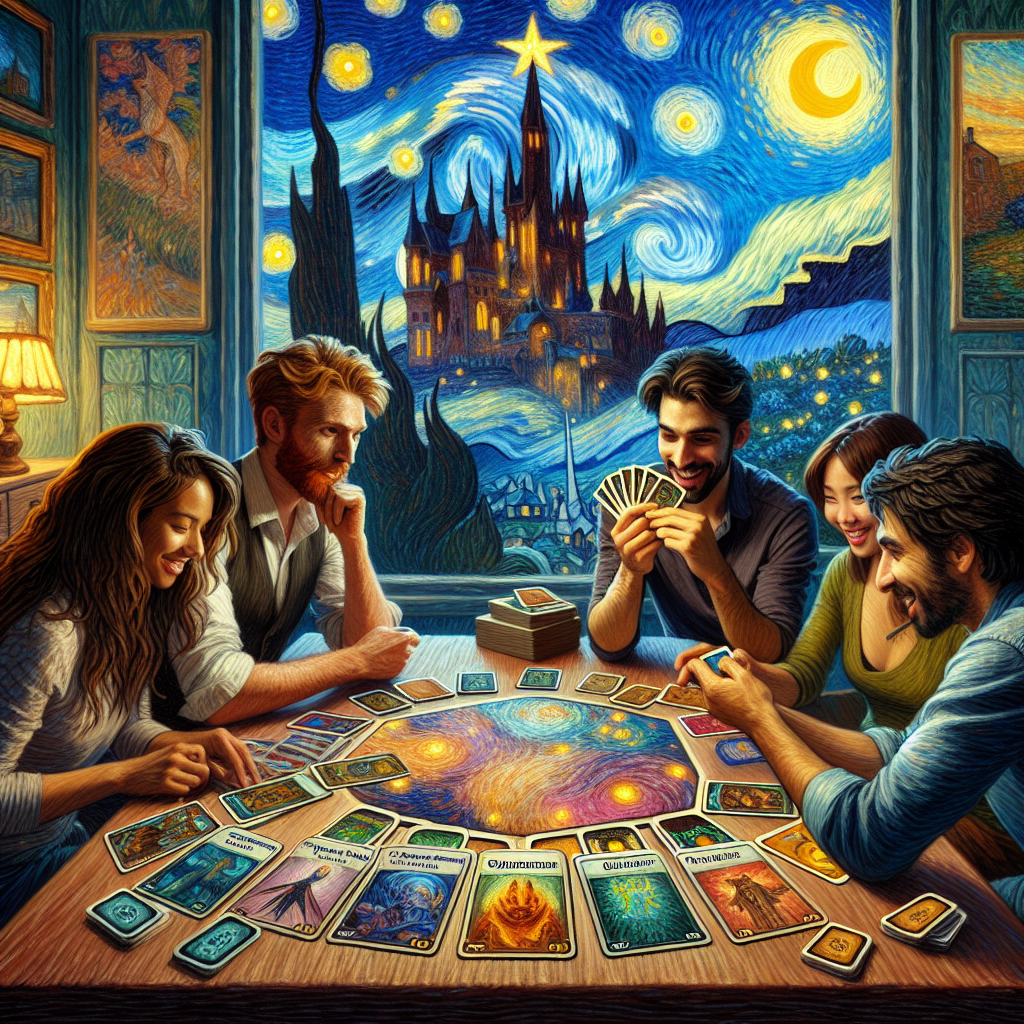
What Strategies Can AI Provide to Improve Our Game Skills?
What Strategies Can AI Provide to Improve Our Game Skills?
- AI enhances card game skills, acting as a strategic partner for players.
- It processes vast data to identify trends and strategies missed by seasoned players.
- AI supports rational decision-making, turning gut feelings into calculated moves.
- It offers personalized coaching tools, providing constructive feedback without harsh judgment.
- AI contributes to a sense of community among players by fostering shared improvement.
- Every game becomes a data point, transforming players into explorers of strategic gameplay.
- The impact of AI-driven techniques inspires peers, creating a ripple effect of growth in the gaming community.

What Strategies Can AI Provide to Improve Our Game Skills?
How Might AI Change the Dynamics Of Friendship During Game Night?
Imagine a living room filled with laughter, the aroma of popcorn wafting through the air, and a table strewn with a deck of cards waiting for the magic of camaraderie to unfold. Game nights have always been more than just competition; they’re rituals of connection, places where friends gather to share in the joy of victory and the agony of defeat. But what if artificial intelligence became the unexpected guest at your next card game?
At first glance, the prospect might seem as comforting as a knock-knock joke gone wrong. Can a sleek algorithm truly capture the nuance of human experience that makes us laugh, cry, and sometimes even argue? The answer lies in how we embrace this change rather than resist it. AI might not have feelings, but it can enhance our interaction in ways that deepen bonds. Picture an AI that suggests scenarios, integrates trivia related to past games, or even tailors challenges based on collective strengths and weaknesses—effectively turning an ordinary evening into an extraordinary experience.
We’ve all had that one friend who takes things a bit too seriously. What if AI could act as a neutral mediator? Imagine how the heated debates about game rules could dissolve into respectable discussions, all because a virtual assistant played the role of an impartial referee. How refreshing would it be to settle disputes not with raised voices, but with a few clicks on an app?
Yet, we must approach this with caution. The ethical implications of involving tech in our most treasured moments warrant reflection. Are we willing to sacrifice the raw, organic nature of friendship for the convenience of code? The heart of game night beats in the rhythm of our interactions—both laughter and heartfelt strategy. AI can serve as an amplifier of these dynamics but should never replace the beautiful messiness of human connection.
For all its potential, AI can’t replace the unique alchemy of shared stories, common vulnerabilities, and inside jokes that make friendships flourish. Instead, let’s harness its capabilities to create richer experiences, allow us to forge deeper connections, and draw us back to the heart of why we gather.
As the cards are shuffled, may we invite this new player into our circle—not as a substitute, but as a bridge leading us to a deeper understanding of connection that we all crave during those unforgettable game nights.

How Might AI Change the Dynamics Of Friendship During Game Night?
How Might AI Change the Dynamics Of Friendship During Game Night?
- Game nights are rituals of connection, filled with laughter and shared experiences.
- Artificial intelligence could enhance these gatherings by integrating trivia and tailoring challenges.
- AI could serve as a neutral mediator, helping to resolve disputes over game rules amicably.
- There are ethical considerations about using technology in personal interactions.
- The essence of friendships lies in shared stories, vulnerabilities, and laughter, which AI cannot replace.
- AI should be seen as an amplifier of relationships, not a substitute for genuine human connection.
- Inviting AI into game nights can create richer experiences and foster deeper connections among friends.

How Might AI Change the Dynamics Of Friendship During Game Night?
Can AI-Driven Stories Add Depth to Our Card Game Experiences?
Imagine gathering around a table with friends, laughter echoing as colorful cards are shuffled, and strategy takes center stage. Now, imagine that every character and twist of fate springs from an AI-driven narrative, not just a random draw from a deck. The experience isn’t merely about winning or losing; it’s deeper, richer, and more meaningful. Think about it: each card tells a story that resonates with our collective experiences, drawing on shared memories and emotions.
At first glance, the prospect of AI-driven narratives might seem like just another gimmick in the world of card games. But if you look closer, you’ll find that these stories have the potential to touch our hearts. They can echo our joys, our struggles, and even the simple moments of camaraderie that bind us together. How many times have you played a game, feeling the thrill of connection, only to find that it fades once the cards are put away? An AI that molds stories based on your interactions could breathe life into that moment, transforming it from a fleeting pastime into a cherished memory.
Rationally speaking, the use of AI in crafting narratives invites a level of variety and adaptability that traditional storytelling can rarely match. Every game could evolve, shaped by each player’s choices and strategies, offering endless possibilities. This isn’t just diversity; it’s a canvas for creativity, fostering engagement that keeps players coming back for more.
But let’s not forget the ethical dimension. When we introduce AI into our games, we have the chance to guide it with our values. Through collaborative storytelling, we can challenge stereotypes, highlight underrepresented voices, and create a tapestry of experiences that reflects a richer, more inclusive society.
Picture this: your friends around the table, engaged in discussions about the choices presented by the game. Conversations flow naturally; players express their thoughts and reactions. Suddenly, it’s no longer just a game; it’s a social experience that deepens bonds, promotes understanding, and inspires cooperation.
Card games have always had the power to elevate human connection. By integrating AI-driven storytelling, we can transform that spark into a lasting flame—one that fosters trust, encourages creativity, and inspires action. It’s not just about the cards; it’s about the stories we create together, and the connections we build, one game at a time. So, let’s take that leap and start a dialogue with the future of our gaming experiences. The journey promises to be as thrilling as the game itself.

Can AI-Driven Stories Add Depth to Our Card Game Experiences?
Can AI-Driven Stories Add Depth to Our Card Game Experiences?
- Gathering with friends around a table enhances the gaming experience, filled with laughter and strategy.
- AI-driven narratives provide depth to the game, creating meaningful stories that resonate with shared experiences.
- The transition to AI storytelling can transform fleeting moments into cherished memories, enhancing emotional connections.
- AI offers greater variety and adaptability in gameplay, allowing each session to evolve based on players’ choices.
- The ethical use of AI in storytelling can highlight underrepresented voices and promote inclusivity.
- Engaging discussions during gameplay enrich relationships, turning games into social experiences that deepen understanding.
- Integrating AI-driven storytelling in card games can foster trust, creativity, and lasting connections among players.

Can AI-Driven Stories Add Depth to Our Card Game Experiences?
How Does the Use Of AI Affect the Fairness In Card Games?
In the world of card games, there’s a dance that unfolds—each hand dealt a chance to outwit, outplay, and outlast the competition. Picture a smoky tavern where friends gather around a table, laughter mingling with the tension of a crucial play. These moments are woven with a sense of camaraderie, a trust built over time, forged through competition, and often, the unpredictability of chance. Now, imagine introducing artificial intelligence into this age-old ritual. The role of AI raises questions about fairness that hit us right in the gut.
The fairness aspect primarily hinges on how AI influences gameplay. On one side, we find its potential to level the playing field. For novices, AI can act as a patient teacher, offering insights gleaned from the vast sea of game theory. But therein lies the dilemma: if the machines become too adept at mastering strategies, does that not tilt the scales unfairly against those who rely solely on intuition and personal experience? The thrill of the game risks being overshadowed by an imbalance that places everyone at a disadvantage to an algorithm’s relentless efficiency.
Consider this: a player, heart racing, turns the last card—and in that moment, the outcome isn’t just a score; it’s a story. Yet, if an AI calculates those very possibilities in milliseconds, does it undermine the essence of the game itself? The bond formed over a shared struggle evaporates when victory feels like a preordained conclusion, dictated by cold logic rather than human experience.
Now, let’s engage the head. The use of AI in card games undeniably encourages strategic thinking. However, what about the ethics? A player should not only test their skills against an artificial opponent but also against the raw unpredictability that makes card games endearing. When AI enters the narrative, it risks morphing the game into a sterile simulation where the joy of human connection and community fades.
As we consider these implications, let’s foster a conversation. How do we embrace the innovations presented by AI without sacrificing the spirit of friendly competition? It’s essential to ensure we maintain fairness, trust, and purpose in our endeavors—whether playing at a kitchen table or engaging in supercharged online platforms. The integrity of our favorite card games must remain intact; after all, the laughter, the tension, and the unforgettable stories shared around that table are what truly matter.

How Does the Use Of AI Affect the Fairness In Card Games?
How Does the Use Of AI Affect the Fairness In Card Games?
- The introduction of AI into card games changes dynamics of competition and camaraderie.
- AI can serve as a valuable teacher for novices, leveraging game theory insights.
- There is a concern that AI’s strategic mastery may create an unfair advantage over intuitive players.
- The thrill of gameplay may diminish if outcomes feel predetermined by algorithms.
- AI encourages strategic thinking but raises ethical concerns about the essence of human connection.
- Maintaining fairness, trust, and purpose in gaming is crucial as AI becomes more prevalent.
- It’s vital to preserve the integrity and spirit of card games amidst technological innovations.

How Does the Use Of AI Affect the Fairness In Card Games?
Conclusion
Gathering around the table for a card game night is about more than just a few shuffled decks; it’s an exploration of camaraderie, competition, and connection. This age-old ritual—with its hearty laughter, friendly rivalries, and a sense of nostalgia—can be invigorated through the advent of artificial intelligence, transforming ordinary gatherings into extraordinary experiences. Imagine AI as your capable co-pilot, effortlessly ensuring that every rule is followed while tracking scores and suggesting strategies, freeing players to engage fully in the spirit of the game without the cloud of confusion hanging overhead.
This integration of technology brings not just efficiency but an emotional resonance that keeps the heart of game night alive. AI can personalize interactions, recommending games that fit the mood or adapting to the skill levels of players, creating an atmosphere where everyone feels included and challenged. It respects the traditions that bond us and encourages the creation of new memories, rekindling shared stories of past victories and humorous blunders. Ultimately, it’s not about outsmarting a machine but about enhancing the human experience that makes game nights so special.
Ethically, the inclusivity fostered by AI means that even beginners can enjoy the depth of card games without feeling outmatched. This change emphasizes the fairness that is foundational to friendly competition, ensuring that everyone feels engaged rather than sidelined. At the end of the day, the heart of any game night lies in the connections built—through laughter, mutual support, and the occasional good-natured dispute. AI not only enhances our skills but also brings us closer together, acting as a bridge between the past and the present, the traditional and the innovative.
Moreover, considering the impact AI could have on storytelling within these games elevates the entire experience. With narratives shaped by our choices and interactions, we create a richer tapestry of shared moments that strengthen our social bonds. The dynamic interplay between AI and players similarly encourages exploration and growth, both as individuals and as a collective community.
So why not embrace this technology? By inviting AI to join our cherished gatherings, we open the door to adventures that are not solely defined by competition but also by connection. Game nights can evolve into vibrant celebrations of friendship and creativity, ensuring these moments become timeless treasures in the story of our lives. It’s time to roll the dice with AI by our sides and let the cards play out in ways that deepen our laughter and redefine our bonds.

Conclusion
Conclusion:
- Card game nights foster camaraderie, competition, and connection among players.
- AI enhances the experience by tracking scores, ensuring rules are followed, and suggesting strategies.
- Technology adds emotional resonance, personalizing interactions and adapting to player skills.
- The use of AI respects gaming traditions while encouraging the creation of new memories.
- Inclusivity driven by AI allows beginners to participate without feeling overwhelmed.
- AI enhances storytelling within games, creating richer shared experiences and social bonds.
- Embracing AI transforms game nights into celebrations of friendship and creativity.

Conclusion
Other Resources

Other Resources
Here is a list of other resources you can review online to learn more:
- Dominion: Intrigue (Second Edition)
- Asmodee
- Rising Sun
- Tzolk'in: The Mayan Calendar
- Castles of Burgundy: The Dice Game
- Atlas Games
- Osprey Games
- Telegram
- The Voyages of Marco Polo
- Spirit Island: Branch & Claw Expansion
- Tom Vasel's The Dice Tower
- Forbidden Stars
- Eldritch Horror
- Eurogamer
- GMT Games
- Roxley Games
- Terra Mystica
- Mansions of Madness: Second Edition
Use This Prompt To Get More Resources With Your Favorite Online AI Tool: Please provide me with a list of online articles with their URLs in a bulleted list that I can read regarding What New Experiences Can Artificial Intelligence Bring to Your Card Game Nights?

Other Resources
Glossary Terms
What New Experiences Can Artificial Intelligence Bring to Your Card Game Nights? – Glossary Of Terms
1. Artificial Intelligence (AI): Simulation of human intelligence processes by machines, especially computer systems.
2. Game Mechanics: The rules and systems that govern gameplay, affecting player interactions and experiences.
3. Procedural Generation: A method of creating game content algorithmically, leading to unique game scenarios each time.
4. Adaptive Learning: AI’s ability to learn from player behavior and adjust settings or challenges accordingly.
5. Game Bots: AI-controlled opponents that can simulate human-like play, enhancing competition and engagement.
6. Card Drafting: A method where players select cards from a pool, influencing strategical depth and diversity.
7. Dynamic Difficulty Adjustment: AI’s ability to modify the game’s difficulty based on player performance.
8. User Interface (UI): The layout and design of the game that players interact with, crucial for ease of use.
9. Virtual Reality (VR): A simulated experience that can immerse players in a three-dimensional game environment.
10. Augmented Reality (AR): An enhancement of the real world with digital information, overlaying game elements onto physical surroundings.
11. Game Analytics: The collection and analysis of gameplay data to improve mechanics and player satisfaction.
12. Natural Language Processing (NLP): A branch of AI that enables machines to understand and respond to human language.
13. Player Engagement: The level of interest and involvement that players have while participating in a game.
14. Social Interaction: The exchange between players, facilitated by AI to enhance camaraderie and competition.
15. Custom Scenarios: AI-generated game situations tailored to player preferences and skill levels.
16. Replayability: The potential for a game to be played multiple times with varied experiences each time.
17. Facial Recognition: Technology used by AI to analyze players’ emotions and adapt gameplay accordingly.
18. In-Game Tutorials: AI-driven guides that help new players understand the rules and strategies.
19. Feedback Loop: A system where player actions influence AI responses, creating a more interactive experience.
20. Thematic Integration: The way AI can weave narrative elements into gameplay, enhancing the story aspect.
21. Real-time Strategy: A gameplay style where decisions are made quickly, often enhanced by AI strategies.
22. Game Balance: The fair distribution of power among players, which AI can help maintain.
23. Virtual Playtesting: Using AI to simulate gameplay scenarios for testing before official releases.
24. Player Profiles: Data-driven summaries of players’ styles and preferences, allowing for personalized experiences.
25. Matchmaking: AI systems that pair players based on skill levels or preferences to improve competitiveness.
26. Content Creation: AI’s ability to generate new cards, rules, or scenarios, adding freshness to card games.
27. Emergent Gameplay: Unpredictable game outcomes resulting from complex interactions between game mechanics and player strategies.
28. Multiplayer Dynamics: The interactions between multiple players facilitated by AI for enhanced competitiveness.
29. Game Optimization: The process of enhancing game performance and player experience using AI insights.
30. Feedback Mechanisms: Systems that allow players to communicate their preferences or experiences, which AI uses to improve future games.

Glossary Of Terms
Other Questions
What New Experiences Can Artificial Intelligence Bring to Your Card Game Nights? – Other Questions
If you wish to explore and discover more, consider looking for answers to these questions:
- What are some examples of AI tools currently available for card games?
- How can AI adapt to different types of card games?
- What is the cost of integrating AI technology into card games?
- How does AI handle different skill levels among players?
- Can AI personalize game suggestions based on past interactions?
- How does AI ensure ethical play during game nights?
- What precautions should be taken to maintain the human element in game nights?
- Are there any downsides to using AI in card games that players should be aware of?
- How can narratives created by AI enhance the storytelling aspect of card games?
- What feedback mechanisms are in place for players using AI during games?
- How do players typically respond to the presence of AI during game nights?
- What considerations should be made for inclusivity when using AI in games?

Other Questions
Haiku
What New Experiences Can Artificial Intelligence Bring to Your Card Game Nights? – A Haiku
Laughter fills the room,
AI guides hands, bonds deeper,
Games blend heart and minds.

Haiku
Poem
What New Experiences Can Artificial Intelligence Bring to Your Card Game Nights? – A Poem
In the warmth of friendship, laughter fills the air,
Card games are gatherings, a joy we all share.
Yet, a spark of innovation whispers to ignite,
With AI beside us, our nights can take flight.
Imagine a referee, impartial and wise,
Resolving disputes with no raised voices or sighs.
Scores tracked in an instant, strategy at play,
Transforming the game as we banter away.
Rational thoughts mingle with nostalgia’s sweet tune,
As new dynamics bloom under a digital moon.
AI enhances connections, unites hearts and minds,
Creating a tapestry where adventure unwinds.
Like a wise old friend, it learns our delight,
Suggesting just the right games to keep spirits light.
A balance of laughter, nostalgia, and thrill,
The magic of memories ignited at will.
Yet in this embrace, ethics must stand,
Preserving the essence of the warmth in our hands.
Friendships deepen as bonds gently grow,
With stories unfolding in the games that we know.
Together we conquer, not driven by fear,
Empowered by insights that teach us to cheer.
And in this synergy, watch as we thrive,
One card at a time, we truly come alive.
So let’s gather together, with AI as our guide,
In this rich world of gaming, where laughter won’t hide.
For cards are not just games, but tales we create,
Uniting us all in a dance to celebrate.

Poem
Checklist
What New Experiences Can Artificial Intelligence Bring to Your Card Game Nights? – A Checklist
Checklist for Enhancing Card Game Nights with AI
Emotional Appeals:
1. Nostalgia: Reflect on favorite childhood card games that evoke cherished memories.
2. Connection: Encourage sharing personal stories during gameplay to deepen friendships.
3. Laughter: Foster humor by selecting games that promote a lighthearted atmosphere.
Rational Appeals:
1. Rule Clarification: Utilize AI to clarify complex game rules in real-time.
2. Strategy Support: Rely on AI’s analytical capabilities to identify winning strategies.
3. Fair Play: Ensure AI promotes equitable gameplay for all skill levels, preventing experienced players from dominating.
Ethical Appeals:
1. Inclusivity: Ensure that AI adapts to accommodate both casual and serious players.
2. Non-Intrusive Guidance: Use AI for constructive feedback without diminishing the human element of gameplay.
3. Preserve Traditions: Balance AI integration while respecting traditional aspects of card games.
Authority Appeals:
1. Expert Insights: Leverage AI’s vast data analysis to enhance decision-making processes in your game.
2. Research Backing: Familiarize yourself with studies that support the benefits of laughter and connection in reducing stress.
Narrative Appeals:
1. Personal Stories: Encourage players to share how past games have impacted their lives.
2. Developing Themes: Invite AI to weave story elements into the gameplay to enhance engagement.
3. Shared Growth: Document and share individual growth stories from AI-coached gameplay experiences.
Social Appeals:
1. Inclusivity in Participation: Involve new players by allowing AI to suggest games that cater to varied skill levels.
2. Shared Success: Promote a culture of celebrating each other’s victories through collaborative AI coaching.
3. Community Building: Encourage formation of game night groups where AI enhances interaction, helping forge new friendships.
Practical Steps:
1. Set Up AI Tools: Ensure all participants understand how to use AI assistance during gameplay.
2. Invite Feedback: After each game night, solicit players’ thoughts on AI’s influence on their experience.
3. Balancing Tech and Tradition: Regularly reflect on how AI enhances versus detracts from the traditional gameplay experience.
This checklist aims to foster a well-rounded, enriching card game night experience that harmoniously integrates AI.

Checklist
At CardGameNews, we help people who love card games by collating information and news about card games.
Be sure to read our other related stories at CardGameNews to learn more about card games.


