

Maximizing Your Winning Odds With Ai Strategy Tips In Card Games
By Tom Seest
At CardGameNews, we help people who love card games by collating information and news about card games.
Be sure to read our other related stories at CardGameNews to learn more about card games.
What If Artificial Intelligence Could Offer Real-Time Strategy Tips During Card Games?
Imagine this: you’re locked in a fierce showdown at the card table, your heart racing as you weigh your next move. Around you, friends and family are fully engaged, their laughter and banter filling the air, but you can’t shake a nagging thought. What if there was a way to turn the tide? What if, in the heat of competitive play, an intelligent voice could offer real-time strategy tips to elevate your game?
AI in card games could become the trusted confidant you didn’t know you needed. Picture a scenario where an algorithm, honed by countless games and player strategies, analyzes your hand in a heartbeat. It could whisper suggestions – not telling you what to play, but offering insights based on probabilities and insights that, quite honestly, might escape even the most seasoned player. This isn’t about cheating; it’s about enhancing your understanding of the game. Suddenly, that gut feeling you relied on transforms into data-driven confidence, grounding your decisions in strategies that were once just out of reach.
But let’s not forget the emotional fabric that binds players together. Card games are more than rules and stakes; they’re about connections, laughter, and spirited rivalries. In allowing AI to enrich the experience, we risk turning a beloved pastime into a solitary endeavor. Will a friend’s challenge to bluff become less exciting if an app quietly endorses your next move? As we consider integrating AI, we must tread lightly, honoring the essence of camaraderie that has animated these gatherings for generations.
Ethically, we tread a fine line. Empowering players with AI assistance must be balanced with preserving the integrity of the game. Imagine an arena where everyone competes on a level playing field, where those choices made during the game reflect teamwork, strategy, and trust, rather than an easy pass to victory.
As we navigate this potential landscape, the promise of inspiration abounds. What if we elevate our game together, using technology to reinforce our understanding and decision-making? In fostering healthy competition, we not only enrich our own skills but also support those around us in their journeys to master the art of the card game. That’s the beauty of blending human intuition with intelligent insights—a shared experience that ultimately brings us closer, whether we win, lose, or draw.

What If Artificial Intelligence Could Offer Real-Time Strategy Tips During Card Games?
What If Artificial Intelligence Could Offer Real-Time Strategy Tips During Card Games?
- AI could revolutionize card games by providing real-time strategy tips, enhancing gameplay.
- An intelligent algorithm analyzes players’ hands and offers insights based on probabilities.
- The use of AI is intended to boost understanding of the game without encouraging cheating.
- Emotional connections between players are crucial in card games, adding to the social experience.
- Introducing AI assistance must be balanced with preserving the integrity of competitive gameplay.
- AI has the potential to foster healthy competition and collaboration among players.
- The blend of human intuition with AI insights can deepen the shared experience in card games.

What If Artificial Intelligence Could Offer Real-Time Strategy Tips During Card Games?
Table Of Contents
- What If Artificial Intelligence Could Offer Real-Time Strategy Tips During Card Games?
- What Emotions Do You Feel When You Lose a Card Game?
- How Would a Strategy Guide Change Your Game Outcomes?
- Could AI Enhance Your Confidence While Playing Cards?
- What Ethical Concerns Arise with AI Advising Players In Games?
- Are You Willing to Trust AI More Than Human Intuition In Strategy?
- Conclusion
- Other Resources
- Glossary Of Terms
- Other Questions
- Haiku
- Poem
- Checklist
What Emotions Do You Feel When You Lose a Card Game?
Losing a card game can ignite a rollercoaster of emotions, nothing short of an emotional tapestry woven from the threads of competition, camaraderie, and disappointment. Perhaps you’re gathered around a dimly lit table, laughter spilling over from every side, the card game unfolding like an intense drama, where every move can lead to euphoria or despair. You play your hand, you strategize, and then, just like that, the tides turn. The moment you realize you’re outmatched, that familiar knot forms in your stomach—a visceral jolt that reverberates through your gut.
Rationally speaking, it’s just a game, right? But isn’t that the beauty of it? The thrill of the game heightens our emotions, turning mere pieces of cardboard into conduits of joy, pain, and shared experiences. You start to weigh the possible outcomes. Did you make a miscalculation? Should you have played that one card differently? This inner dialogue—the tug-of-war between reasoning and feeling—often leads to a broader contemplation of failure and growth. It gets you thinking about life itself, about how we often lose more than we win, and how those losses can be just as instructive as victories.
On an ethical level, it reveals something real about human nature: our desire to compete, to connect, and sometimes to dominate. Here we are, grown adults engaging in a little card game, yet each round taps into the primal desire to succeed. You have to face it head-on—the sense of defeat can be tough to swallow, but in that vulnerability, there lies a beautiful opportunity for connection. When we lose, we often find ourselves drawn closer to those who share the table. The smiles exchanged, the playful jabs about luck, and the recognition of shared struggle bind us together like a secret pact.
And then there’s the aftermath—the social interactions that follow a game well played, even if the cards didn’t land in your favor. You share a laugh, you recount the highlights, the near wins, and the blunders. This communal experience fosters trust and understanding, transforming a single moment of defeat into a richer tapestry of friendship and resilience. So the next time you find yourself on the losing side of a card game, remember: it’s not just about the cards in your hand, but the connections forged in the moments that follow. Embrace it, learn from it, and cherish it—it’s all part of the game of life.

What Emotions Do You Feel When You Lose a Card Game?
What Emotions Do You Feel When You Lose a Card Game?
- Losing a card game evokes a wide range of emotions, blending competition, camaraderie, and disappointment.
- Each game can be intense, where strategic moves lead to feelings of both euphoria and despair.
- The experience of being outmatched creates a visceral reaction, despite the rational understanding that it’s “just a game.”.
- Games heighten emotions, transforming simple cards into vessels of joy, pain, and shared experiences.
- Losses in games prompt reflection on broader themes of failure, growth, and the nature of human competition.
- Defeat can foster deeper connections with fellow players, leading to shared laughs and mutual understanding.
- Post-game interactions enhance friendships and resilience, underscoring that the essence of the game lies in the connections formed.
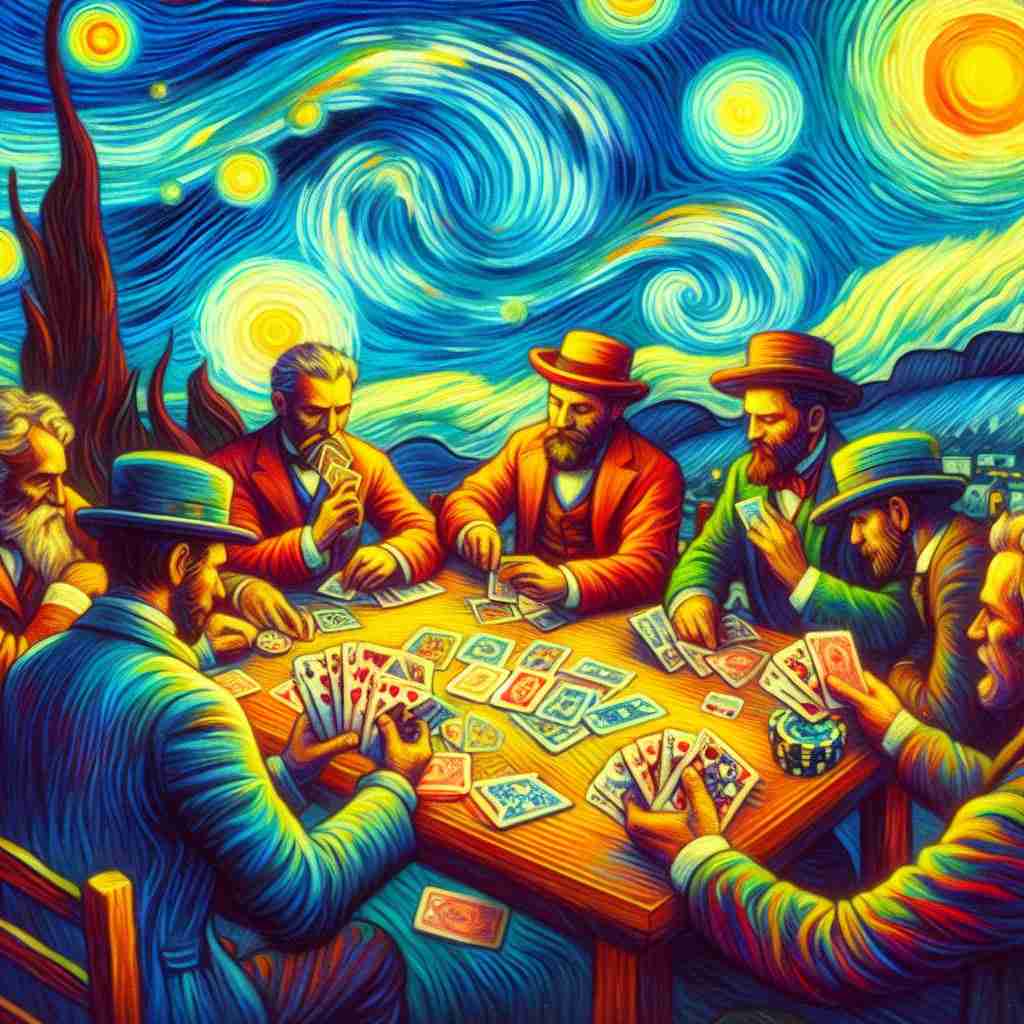
What Emotions Do You Feel When You Lose a Card Game?
How Would a Strategy Guide Change Your Game Outcomes?
Imagine you’re seated at a table surrounded by friends, laughter filling the air, the stakes raised with each turn of the card. You’re playing a card game, a thrilling mix of strategy, intuition, and social interaction. Now, think about what it would mean to pull out a strategy guide before diving into the fray. It’s not just a pile of tips and tricks; it’s a comprehensive roadmap that could shift the odds in your favor.
At first glance, it might seem like a crutch, a way to cheat or take an easy route. But let’s pause. What if this guide was more about honing your skills than relying on shortcuts? The heart of the matter is that every player at that table wants to be better, to feel the pulse of the game quicken with each decision they make. A strategy guide isn’t about winning; it’s about enhancing the experience. It’s about understanding the nuances that separate a novice from a seasoned player—a way to engage both head and gut.
When you dive into a guide, you learn not just the mechanics of the game but the ethics of competition. It teaches you to appreciate the skill involved, to respect your opponent, and to savor the thrill of a well-timed bluff or a surprising comeback. No one likes to lose, but when the outcomes are rooted in learned knowledge rather than blind luck, every game becomes a story in itself; a narrative woven with lessons and camaraderie.
Think of the authority and confidence you could bring to the table. You’ll enter not just as another face in the crowd, but as a strategic thinker, armed with insights that allow you to analyze, adapt, and anticipate your opponents’ moves. The table transforms from a battlefield to a vibrant space of connection and skillful play where you both challenge and uplift one another.
So, in this age of information, where the barriers to mastery seem to crumble with a few clicks, why not embrace the advantage? A strategy guide fosters growth—not just as a player but as a part of a community that values progress, respect, and the shared joy of the game. Use it not as a way to diminish the experience, but to elevate it. Because every card dealt is a new chapter, and with a guide in hand, you might just pen a winning story.

How Would a Strategy Guide Change Your Game Outcomes?
How Would a Strategy Guide Change Your Game Outcomes?
- Playing a card game involves strategy, intuition, and social interaction.
- A strategy guide serves as a helpful resource to improve skills rather than a crutch for cheating.
- Enhancing the gaming experience is about understanding nuances that distinguish experienced players from novices.
- An effective guide teaches not only the game’s mechanics but also the ethics of competition and respect for opponents.
- Knowledge-based outcomes lead to more meaningful games, filled with lessons and camaraderie.
- Equipped with insights from a guide, players gain confidence and the ability to analyze and adapt to opponents’ tactics.
- Embracing a strategy guide promotes growth within the gaming community, valuing progress and shared enjoyment.

How Would a Strategy Guide Change Your Game Outcomes?
Could AI Enhance Your Confidence While Playing Cards?
Imagine sitting at a table, surrounded by friends, the air thick with laughter, camaraderie, and the subtle tension of a Card Game. The stakes can sway your heartbeat, but what if you had a secret ace up your sleeve? Artificial Intelligence, designed to assist, analyze, and empower, might just be that edge you never knew you needed.
Picture this: the thrill of playing a card game with friends, the strategic maneuvers, and the friendly banter, all underpinned by a foundation of trust. Trust in your skills only grows when backed by data-driven insights. AI can analyze patterns and strategies from countless games, offering real-time advice that feels as intuitive as your gut instincts. By leveraging technology, you’re not stepping away from the thrill; you’re deepening it, gaining the confidence to make bold moves that could change the game.
But let’s talk ethics—about fairness. With AI providing insights, is it a crutch or a boon for your gameplay? It’s crucial to understand that this tech fosters not just personal skill, but collective growth. Your friends may learn alongside you, sharing insights and strategies, which turns the competition into collaboration. The result? A more engaging experience that builds bonds, rather than just beating opponents.
Consider the narrative: think of famous card players who honed their skills over decades. What if they had access to AI’s analytical prowess? They’d likely have mastered their craft sooner, fine-tuning their techniques to the point of artistry. AI serves as a mentor, rooting for your success while giving you the tools to trust your instincts. It enriches the journey, turning each card flip into a lesson learned, each hand into a story to be shared.
In a world where technology often isolates us, this approach—using AI to enhance connection, not detract from it—offers a powerful antidote. Emotionally, rationally, and ethically, the benefits of integrating AI in your card game strategy are profound. You don’t just evolve into a better player; you forge deeper connections, develop a keen sense of strategy, and cultivate an informed confidence that reflects in every game. AI in gaming isn’t just about winning; it’s about growing, connecting, and embracing the excitement of the game to its fullest. So, are you ready to redefine your game face?

Could AI Enhance Your Confidence While Playing Cards?
Could AI Enhance Your Confidence While Playing Cards?
- Playing card games with friends fosters laughter and camaraderie amidst strategic competition.
- Artificial Intelligence can provide data-driven insights, enhancing trust and confidence in gameplay.
- AI analyzes patterns and strategies, offering real-time advice that complements gut instincts.
- The use of AI promotes collective growth, allowing friends to learn and share insights together.
- Historical card players would have benefitted from AI’s analytical capabilities, mastering techniques more efficiently.
- Integrating AI into gaming enhances connection, enriching the overall experience beyond just winning.
- Embracing AI in card games leads to personal growth, deeper connections, and a more informed strategy.

Could AI Enhance Your Confidence While Playing Cards?
What Ethical Concerns Arise with AI Advising Players In Games?
As we dive deeper into the realm of artificial intelligence guiding players in games, we’re beckoned to pause and ponder the ethical quagmire that could ensue. Picture a seasoned player, adrenaline coursing through their veins, engaged in a high-stakes Card Game. They lean on AI for strategy, with the unshakable trust that the technology will pave the way to victory. But at what cost?
This scenario isn’t just a backdrop for excitement; it’s a glimpse into a broader narrative about dependency. While we appreciate the assistance AI can provide to elevate our gameplay, it raises fundamental questions about autonomy and skill. Is every strategic move influenced by an AI truly our own, or do we risk losing a piece of ourselves in the process? The gut reaction can be one of unease. Relying on algorithms could jeopardize the very essence of the game, potentially stripping away the raw thrill of discovery and personal growth that comes from learning through mistakes.
From a rational perspective, the role of AI expands beyond enhancing performance; it has the potential to reshape competition itself. Imagine a future where players equipped with sophisticated AI systems dominate the landscape, while those who prefer a more traditional approach are left scrambling in shadows of their own making. It’s a mountain of ethical consideration stacked against the flatlands of fairness. In a world increasingly driven by technology, grappling with how we define skill, strategy, and competition is crucial.
And let’s not forget the social implications. Gaming is often centered around community, camaraderie, and rivalry. The introduction of AI advisors has the potential to alter the dynamics of human interaction, potentially sidelining the very social bonds that make gaming rich and engaging. Are we creating spaces where genuine connection is overshadowed by engineered solutions? The heart yearns for collaboration and fun, while the mind wrestles with these emerging realities.
As we journey forward, it’s vital to foster trust—not just in the technology but in ourselves. Let’s embrace the challenge of balancing innovation with ethics, urging developers to consider the implications of AI in gaming. Let’s lead discussions about responsible use, reminding ourselves that at the end of the day, it’s our stories, our efforts, and our intimate moments in the game that matter most. Together, we can shape a gaming landscape that respects both the capabilities of AI and the indomitable spirit of the human player.

What Ethical Concerns Arise with AI Advising Players In Games?
What Ethical Concerns Arise with AI Advising Players In Games?
- The integration of AI in gaming raises significant ethical concerns regarding player dependency.
- Relying on AI for strategy may undermine personal autonomy and diminish individual skills.
- There is a risk of losing the essence of gaming—thrill of discovery and personal growth through mistakes.
- AI has the potential to reshape competition, favoring players with advanced AI over traditional strategies.
- Social dynamics in gaming communities could be altered, affecting camaraderie and genuine interaction.
- It is crucial to balance innovation with ethical considerations regarding AI’s role in gaming.
- Trust in both technology and ourselves is essential to foster responsible AI use in gaming.

What Ethical Concerns Arise with AI Advising Players In Games?
Are You Willing to Trust AI More Than Human Intuition In Strategy?
In the grand game of strategy, be it in corporate boardrooms or the battlefield of life, there’s an age-old debate: trust your gut or trust the gut of a machine? Imagine sitting at a table playing a high-stakes card game. You’re eyeing your opponents, trying to read their faces, feeling the tension in the air. Your instinct tells you to bluff or fold. It’s visceral, it’s raw—it’s human. But then there’s the AI, with its algorithms crunching numbers, analyzing patterns, and predicting outcomes with a precision that can be unnerving.
Let’s dig deeper into this dichotomy. First, the human intuition—your gut. It’s built from years of experience, successes, and failures. Each decision is layered with emotion, memory, and sometimes even a dash of instinctual brilliance. Yet, amid the warmth of human experience lies unpredictability. Can you really trust intuition when stakes are high?
Now, enter AI, the cold, calculating counterpart. Imagine a machine devoid of emotional bias, envision numbers dancing around complex calculations that reveal insights we, as humans, might overlook. Here’s the head appeal: these systems can process volumes of data in seconds—data that tell a story we can’t always see. Faced with overwhelming information, aren’t you curious to see what the algorithms have to say?
But here’s where it gets tricky. Do we hand over our agency, our very power, to machines that, despite their prowess, lack the human touch? Ethically, this is an important consideration. Who holds responsibility when decisions go awry—us or the AI? There’s a narrative at play that begs the question: would you really let a program decide the fate of your important moments, or even your company’s future?
On the social front, consider this—collaboration between humans and AI can lead to extraordinary outcomes. Two heads, or in this case, a head and a machine, can create a synergy that neither could achieve alone. It’s like reaching for a card while holding the deck; one influences the other, leading to choice enriched by knowledge and understanding.
So, as you step up to the table, ask yourself: will you bet on your instincts, or will you give AI a seat beside you? The answer may shape not just your strategy, but the very way you approach the future.

Are You Willing to Trust AI More Than Human Intuition In Strategy?
Are You Willing to Trust AI More Than Human Intuition In Strategy?
- The debate between trusting human intuition and AI’s analytical capabilities is prevalent in strategic situations, such as corporate decisions and competitive settings.
- Human intuition is rooted in personal experience and can blend emotion with instinct, but it carries an element of unpredictability.
- AI excels at processing vast amounts of data quickly, uncovering insights that may elude human perception.
- There are ethical concerns regarding the delegation of decision-making to machines, especially in high-stakes situations.
- The question of responsibility arises when AI-mitigated decisions result in negative outcomes.
- Collaboration between humans and AI can lead to superior results, combining emotional intelligence with analytical precision.
- Your choice between relying on instincts or incorporating AI could significantly influence your strategic approach and future decisions.

Are You Willing to Trust AI More Than Human Intuition In Strategy?
Conclusion
Imagine stepping into the world of card games, where the thrill of competition and the warmth of camaraderie intersect. The excitement builds around the table as laughter fills the air, and your heart races with each hand dealt. Now, envision a scenario where artificial intelligence enters this realm, offering real-time strategy tips designed to enhance your game. This isn’t just about winning; it’s about transforming every card flip into a data-driven opportunity for personal growth and connection.
There’s an undeniable rush in playing strategically, but what if AI could help you see angles you’ve never considered? This technology acts not as a cheat, but as an ally, enhancing your intuition with insights drawn from countless games and strategies. The underlying beauty lies in the potential to deepen your understanding of the game while bolstering your confidence. Imagine how this newfound knowledge allows you to make bold choices while fostering healthy competition that encourages everyone around the table to improve together.
However, the emotional and ethical implications of AI in card games are multifaceted. While it can unify and inspire, there’s a fine line between collaboration and dependency. As we introduce this technology, we must ask ourselves: will it erode the genuine interactions we cherish in gaming? The moments that bring us together—the bluffs, the shared laughter, the subtle acknowledgments of defeat—could they be diminished by the cold efficiency of an algorithm?
As we contemplate these questions, consider how our losses and victories reflect not just our skills, but our relationships with each other. Each game becomes a living narrative, one where we forge bonds of trust and resilience. In this landscape, the role of AI can be transformative, providing insights that enhance not just our performance, but our social fabric.
In the end, the essence of the card game remains tied to human experience. Embracing AI shouldn’t mean relinquishing our instincts; instead, it should complement them, merging the best of both worlds. By strengthening our skills and reinforcing connections, we can move beyond the fear of technology overshadowing our humanity. It’s about striking that delicate balance—where AI amplifies our game while preserving the spirit of competition, camaraderie, and genuine joy that truly defines these moments. So when you next sit down at the card table, ask yourself: how can we harness this innovation to elevate our game, ensuring that each hand played becomes a celebrated chapter in the ongoing story of friendship and fun?

Conclusion
Conclusion:
- Card games combine competition and camaraderie, creating a lively and engaging atmosphere.
- AI offers real-time strategy tips to enhance game performance and personal growth.
- The technology serves as an ally, enhancing intuition with insights from numerous strategies.
- AI can deepen understanding of the game while building player confidence and encouraging bold choices.
- There are emotional and ethical considerations regarding AI’s impact on genuine interactions in gaming.
- The role of AI is to transform the game experience without overshadowing human connections and instincts.
- The focus should be on leveraging AI to elevate the game while preserving friendship and enjoyment.

Conclusion
Other Resources

Other Resources
Here is a list of other resources you can review online to learn more:
- Gaming Rules!
- GeekDad
- Paizo Publishing
- Flickr
- Blue Peg, Pink Peg
- Small World
- Eagle-Gryphon Games
- Splendor: Cities of Splendor Expansion
- DriveThruRPG
- Gaia Project
- Level 99 Games
- GMT Games
- Gloom
- Memoir '44: Pacific Theater
- Ravensburger
- Terraforming Mars
- Tabletop Gaming News
Use This Prompt To Get More Resources With Your Favorite Online AI Tool: Please provide me with a list of online articles with their URLs in a bulleted list that I can read regarding What If Artificial Intelligence Could Offer Real-Time Strategy Tips During Card Games?

Other Resources
Glossary Terms
What If Artificial Intelligence Could Offer Real-Time Strategy Tips During Card Games? – Glossary Of Terms
1. Artificial Intelligence (AI): The simulation of human intelligence in machines that are programmed to think and learn.
2. Real-time: The immediate processing or feedback that occurs concurrently with an event or action.
3. Strategy: A plan or method for achieving a specific goal, particularly in competitive settings like card games.
4. Card Game: A game played with a deck of cards, which may involve skill, strategy, and chance.
5. Tips: Suggestions or pieces of advice aimed at improving performance or decision-making.
6. Decision-making: The cognitive process of selecting a course of action among several alternatives.
7. Machine Learning: A subset of AI that focuses on the development of algorithms that allow machines to learn from and make predictions based on data.
8. Game Theory: The study of mathematical models of strategic interaction among rational decision-makers.
9. Player Profiling: Analyzing a player’s behavior and strategies to anticipate their future moves and decisions.
10. Feedback Loop: A system in which outputs of a process are used as inputs, enhancing learning and strategy refinement.
11. Simulation: The imitation of a real-world process or system over time, often used for strategy testing.
12. Algorithm: A step-by-step procedure for calculations or problem-solving, which can be executed by a computer.
13. Neural Networks: A series of algorithms designed to recognize patterns, often used in AI for processing complex data inputs.
14. Data Mining: The process of discovering patterns and knowledge from large amounts of data.
15. User Interface: The means by which a player interacts with the game, influencing how tips and strategies are presented.
16. Adaptive Learning: A method where an AI system adjusts its strategies based on the evolving gameplay and player actions.
17. Probabilistic Modeling: Techniques that incorporate probability to predict outcomes based on diverse factors in card games.
18. Game Dynamics: The patterns of play that emerge from the interactions between players and the rules of the game.
19. Gamification: The application of game-design elements in non-game contexts to enhance engagement and learning.
20. Predictive Analytics: Using historical data and statistical algorithms to forecast future outcomes in card games.
21. User Experience (UX): The overall experience a player has while interacting with the AI assistant during gameplay.
22. Turn-based Strategy: A type of gameplay where players take turns making decisions, often analyzed for optimal moves.
23. Hand Evaluation: The process of assessing the strength of a player’s current cards to inform strategy.
24. Opponent Modeling: The method of creating a representation of an opponent’s potential moves and strategies.
25. Strategic Depth: The complexity and range of viable strategies available in a game.
26. Cognitive Load: The total amount of mental effort being used in the working memory while playing and strategizing.
27. Behavioral Analysis: The examination of player actions and tendencies to refine predictive models.
28. Interactivity: The capability of the AI to adapt and respond to player decisions in real-time.
29. Win Probability: A metric assessing the likelihood of a player winning a game at a given time based on current conditions.
30. Contextual Awareness: An AI’s ability to understand and consider the specific circumstances and state of the game when offering tips.

Glossary Of Terms
Other Questions
What If Artificial Intelligence Could Offer Real-Time Strategy Tips During Card Games? – Other Questions
If you wish to explore and discover more, consider looking for answers to these questions:
- How does AI analyze card hands to provide strategy tips?
- What types of card games can benefit from AI strategy tips?
- Are there existing AI tools available for card players?
- How do players feel about using AI in competitive environments?
- Can AI help in bluffing strategies in card games?
- What are the potential drawbacks of relying on AI for card game strategies?
- How can players maintain their competitive edge while using AI?
- What ethical guidelines should be established for AI use in games?
- How does AI engagement change the social dynamics of card games?
- What lessons can we learn from losses in card games when using AI assistance?
- How might AI change the future of professional card playing?
- What safeguards can prevent AI from being perceived as cheating?
- How do different cultures view the integration of AI in traditional games?
- What role does emotional intelligence play in card games that AI cannot replicate?
- How can AI enhance collaborative learning among card players?

Other Questions
Haiku
What If Artificial Intelligence Could Offer Real-Time Strategy Tips During Card Games? – A Haiku
AI at the card table,
Guides hearts with data’s wisdom,
Bonded in each play.

Haiku
Poem
What If Artificial Intelligence Could Offer Real-Time Strategy Tips During Card Games? – A Poem
In the heat of the game, where laughter swells,
A dance of hearts and minds, where every story dwells.
Cards in hand, the pressure mounts, a silent plea,
What if a wise guide could help us see?
Imagine an ally, not cloaked in deceit,
But a spark of insight, making strategy sweet.
AI whispers softly, a trusted confidant,
Transforming our instincts, giving courage to daunt.
Yet the table’s bond—the warmth of shared play,
Could it fade into shadows, as tech paves the way?
A careful balance, we must engage,
Preserving our laughter while invoking the sage.
For in each loss, a lesson entwined,
A tapestry woven from emotions combined.
In defeat, we find strength, a deeper embrace,
Connections like glue, through triumph and grace.
With guides and algorithms—as we learn and explore—
Do we risk losing essence, the thrill we adore?
To share in the struggle, to rise and to fall,
Is human connection what matters most of all.
So as the cards shuffle, trust your gut as you play,
But let knowledge enhance, not lead you astray.
In this vibrant game, where hearts intertwine,
Let AI bolster growth, yet never define.
Together we navigate this new frontier,
With courage and confidence, let’s venture without fear.
For at the end of each hand, regardless of fate,
It’s the bonds that we cherish—a legacy great.

Poem
Checklist
What If Artificial Intelligence Could Offer Real-Time Strategy Tips During Card Games? – A Checklist
Checklist: Enhancing Your Card Game Experience with AI and Strategy
Emotional Connections
_____ Reflect on the emotions you experience during card games—what do wins and losses teach you about yourself and your relationships?
_____ Consider the role of camaraderie in your gameplay. How can AI enhance, rather than detract from, your shared experiences with friends and family?
_____ Embrace vulnerability during games. How can learning from losses foster deeper connections with fellow players?
Rational Insights
_____ Evaluate how AI-powered strategies can sharpen your decision-making. What specific data points or analyses can boost your confidence?
_____ Analyze the potential impact of using strategy guides. Are they tools for skill enhancement or crutches that might undermine the game’s authenticity?
_____ Assess how AI can level the playing field in competitions. How do you feel about a fairer game based on informed strategies?
Ethical Considerations
_____ Consider the ethical implications of relying on AI. Does it enhance or diminish personal skill and agency in gameplay?
_____ Assess the importance of maintaining the essence of competition. How can you ensure AI aids rather than takes away from your and others’ experiences?
_____ Engage in discussions about responsible AI use in gaming. How can you advocate for a balance between innovation and traditional gameplay values?
Authority and Learning
_____ Identify reputable sources for strategy guides or AI tools. What credentials should they have to ensure their reliability?
_____ Explore narratives of successful players who have used technology to improve their skills. What lessons can you draw from their journeys?
_____ Commit to continuous learning. How often do you seek out new strategies or insights to enhance your gameplay?
Social Dynamics
_____ Reflect on the role of social interaction in card games. How can AI support, rather than isolate, your group dynamics?
_____ Engage with friends in shared learning experiences. How can you each benefit from discussing strategies influenced by AI?
_____ Foster a community of growth. How can you contribute to a supportive environment where players encourage one another’s development?
Gut Feelings
_____ Trust your instincts while recognizing AI as an aid. How can you balance intuition with data-driven insights?
_____ Reflect on the thrill of unpredictability in games. What feelings arise when relying solely on AI versus trusting your gut?
_____ Evaluate how your gameplay changes when using AI support. Are you more daring or cautious in your decision-making?
Use this checklist as a guide to deepen your understanding, improve your strategies, and enhance connections while enjoying the competition of card games.

Checklist
At CardGameNews, we help people who love card games by collating information and news about card games.
Be sure to read our other related stories at CardGameNews to learn more about card games.


