

Unleashing The Ai-Powered Card Game Revolution
By Tom Seest
At CardGameNews, we help people who love card games by collating information and news about card games.
Be sure to read our other related stories at CardGameNews to learn more about card games.
What If Artificial Intelligence Could Create Your Perfect Card Game Challenge?
Have you ever sat at a table, cards in hand, the excitement buzzing in the air, while pondering just how to elevate that experience? Imagine a card game challenge crafted perfectly for you, one that reflects your quirks, interests, and competitive spirit. What if, instead of shuffling through the same tired deck and familiar rules, you could engage an artificial intelligence that understands you deeply—your preferences, your past victories, your soft spots?
Picture this: a card game designed not just for competition, but for connection. You and your friends gather around, laughter spilling over as the AI injects elements that resonate with your shared memories. Maybe it brings up inside jokes or past challenges that had everyone in stitches. This isn’t merely a game; it’s a storyline evolving in real-time, a shared experience that stitches bonds tighter.
As you delve deeper, this AI respects your emotional landscape, ensuring that the challenge never veers into frustration but rather keeps you on the edge of your seat, engaged and ready for the next play. It knows when to crank the tension and when to ease up, creating a rhythm akin to that of a well-rehearsed symphony. It’s in the moments of suspense that you feel truly alive, and as your heart races, you can feel the weight of camaraderie as everyone at the table leans in, eyes sparkling with possibility.
With such a personalized encounter, the ethical implications are worth pondering. Would it replace the human touch? Or instead, amplify our ability to connect? It seems that the heart of any card game remains its players—and this AI acts as a facilitator, amplifying our human connections rather than diminishing them. Experts in psychology and game design agree that strong social interactions heighten our enjoyment and fulfillment.
So, why not embrace such a challenge? Let you and your friends be the architects of an unforgettable experience. If artificial intelligence can craft the perfect card game for us, it can not only entertain but inspire camaraderie, foster connections, and cultivate lifelong memories. Dive into this opportunity; shuffle the deck, trust the process, and get ready for a revitalized way to engage with the people who matter most in your life. Your perfect card game adventure awaits—are you ready to play?

What If Artificial Intelligence Could Create Your Perfect Card Game Challenge?
What If Artificial Intelligence Could Create Your Perfect Card Game Challenge?
- Imagine elevating your card game experience with a personalized challenge reflecting your interests.
- An AI designs a game that fosters connection and resonates with shared memories among friends.
- It creates an evolving storyline, promoting laughter and camaraderie during gameplay.
- The AI ensures engagement by managing emotional intensity, balancing tension and ease.
- This approach amplifies human connections, preserving the essential role of players in the game.
- Experts agree that personalized gaming enhances social interactions for greater enjoyment.
- Embrace the challenge of an AI-crafted card game for unforgettable moments with friends.

What If Artificial Intelligence Could Create Your Perfect Card Game Challenge?
Table Of Contents
- What If Artificial Intelligence Could Create Your Perfect Card Game Challenge?
- What Emotional Experiences Do You Seek In a Card Game Challenge?
- How Can AI Help You Make More Strategic Decisions While Playing?
- What Ethical Considerations Arise When AI Designs Games for Players?
- What Narratives Can AI Incorporate to Enhance Immersive Gameplay?
- How Does Playing Card Games with Friends Strengthen Your Social Bonds?
- Conclusion
- Other Resources
- Glossary Of Terms
- Other Questions
- Haiku
- Poem
- Checklist
What Emotional Experiences Do You Seek In a Card Game Challenge?
When you sit down for a game, you might think it’s just a deck of cards, but in reality, it’s a gateway to a universe rich in emotional experiences. Card games are more than just a pastime; they serve as a canvas upon which we paint our shared humanity. It’s in the laughter over a well-timed play or the tension that crackles in the air during a high-stakes moment where connections are forged.
Consider the thrill that runs through you, the rush of adrenaline as you strategize your next move. That feeling isn’t just about winning or losing; it’s about embracing risk. Every card you play is a brushstroke in a larger masterpiece—a narrative about courage, vulnerability, and the unpredictable nature of life itself. Each game becomes a chapter filled with characters, emotions, and lessons learned. In the hands of a skilled player, a simple card game transforms into a symphony of decision-making and instinct.
This is more than just entertainment; it’s a social ritual. Gathering around a table, eyes glinting with competitive spirit, we exchange stories and laughter. We share tales of past victories and defeats, providing a strange kind of comfort—reminding us that we’re not alone in our struggles. The bonds we form in these moments are often stronger than the cards we hold. They are a testament to shared experiences, mutual respect, and the thrill of human connection.
As you contemplate the emotional experiences you seek, reflect on the greater tapestry of values that underpins every challenge. The games we play teach us about integrity, ethics, and respect for our opponents. Winning is sweet, but showing grace in defeat? That’s the hallmark of character. You want to walk away with lessons etched into your memory, knowing that every game is a chance to learn something new about yourself and others.
Ultimately, the emotional experiences you seek in a card game challenge touch the core of what it means to be human. They invite you to dive deep into the ocean of emotion, to challenge your intellect, and to revel in the connections that bind us all. So, gather your friends, shuffle those cards, and prepare for an exciting journey filled with laughter, tension, and unforgettable moments. Embrace what the game offers, and you may just find more than you expected waiting on the other side of that shuffle.

What Emotional Experiences Do You Seek In a Card Game Challenge?
What Emotional Experiences Do You Seek In a Card Game Challenge?
- Card games act as a gateway to rich emotional experiences and shared humanity.
- They create connections through laughter and tension during gameplay.
- The thrill of strategizing involves embracing risk, making each game a narrative about life.
- Games transform into chapters filled with emotions, lessons, and character development.
- They serve as a social ritual that strengthens bonds through shared stories and experiences.
- Games teach valuable lessons about integrity, ethics, and respect for opponents.
- Ultimately, card games invite deep emotional exploration and foster meaningful connections.
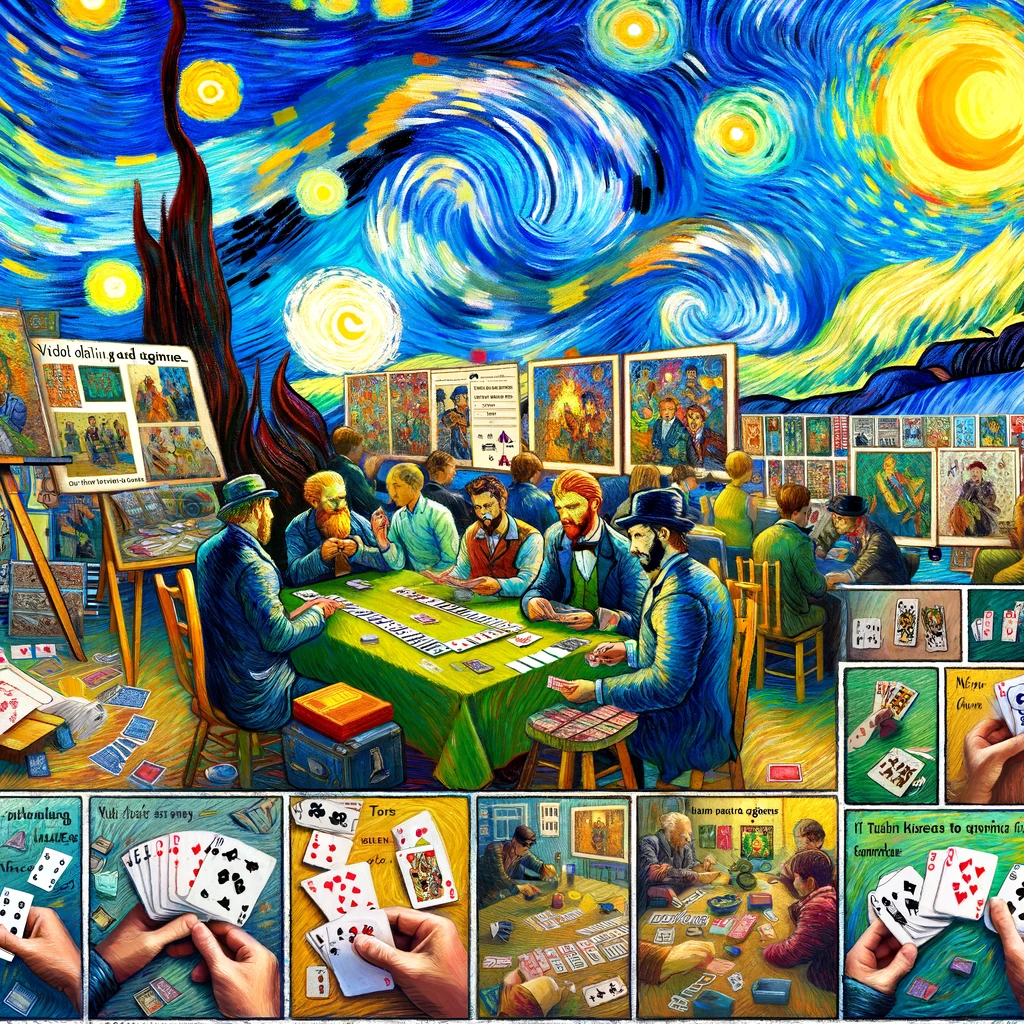
What Emotional Experiences Do You Seek In a Card Game Challenge?
How Can AI Help You Make More Strategic Decisions While Playing?
When it comes to navigating the thick jungle of a card game, strategy is your trusty compass. Picture this: You’re sitting at the table, the air thick with anticipation and the sound of cards being shuffled. Around you are the faces of your friends, each one wielding their own blend of skill, luck, and heart. It’s not just about winning a game; it’s about the camaraderie and the stories you create together. Here’s where AI steps in—not as a crutch, but as a powerful ally.
Imagine having an intelligent assistant sitting beside you, analyzing every move and forecasting outcomes with the precision of a master strategist. This isn’t about replacing your intuition; it’s about enhancing it, giving your gut the edge it needs to make those split-second decisions. When the stakes are high, being able to tap into AI’s data-driven insights can turn the tide in your favor. You’ll find yourself weighing your choices with a clarity that feels almost otherworldly.
But we all know that strategy shouldn’t only be about cold calculations. It should resonate with the heart. Think about the narratives that unfold at the table—the tension, the triumphs, the lessons learned. AI can help honor those moments by providing context and highlighting underlying patterns in the game. It allows you to appreciate not just your own trajectory but those of your rivals as well. Each card played is a chapter in a collaborative epic, and understanding it deeply enriches your experience.
Here’s an ethical angle to consider: using AI promotes fair play and inclusivity. It levels the playing field, allowing newcomers to learn alongside veterans without feeling overshadowed. Each player, regardless of experience or background, has the opportunity to tap into resources that can enhance their play, fostering an environment where growth is celebrated.
Moreover, embracing AI in your game isn’t just about the here and now. It’s about building a community, sharing strategies, and collectively improving your craft. By learning from one another and from AI’s insights, you cultivate trust among your peers. You’re not just a player; you’re part of a movement aiming for growth and deeper connections.
As you shuffle through cards, remember: AI can transform your game from a solitary endeavor into a shared journey of discovery. With the right blend of technology and human spirit, every hand dealt becomes a stepping stone toward more strategic, fulfilling play.

How Can AI Help You Make More Strategic Decisions While Playing?
How Can AI Help You Make More Strategic Decisions While Playing?
- Strategy serves as a compass in the intricate landscape of card games.
- AI acts as an intelligent ally, enhancing intuition and providing data-driven insights.
- Using AI helps turn the tide in high-stakes situations, offering clarity for decision-making.
- The narratives created during gameplay are enriched by understanding patterns through AI.
- AI promotes fair play and inclusivity, allowing players of all experience levels to learn and grow.
- Embracing AI fosters a community of shared strategies and collective improvement.
- AI transforms gameplay from an individual pursuit into a collaborative journey of discovery.

How Can AI Help You Make More Strategic Decisions While Playing?
What Ethical Considerations Arise When AI Designs Games for Players?
When it comes to AI designing games, particularly something as deceptively simple as a card game, we need to grapple with a host of ethical considerations that stretch far beyond the realm of algorithms and code. Picture a game night, laughter echoing in living rooms as players strategize their moves around a table. Now imagine if the very essence of that game was crafted by an intelligence that lacks understanding of human emotion or moral consequence.
At the heart of it all, we must ask: Who is driving the narrative? When a card game is conceived by AI, it can inadvertently perpetuate stereotypes or biases if it’s trained on flawed data. The stakes are high. Every card dealt and every mechanic crafted carries weight, impacting players from different backgrounds and experiences. Here lies the challenge: How do we ensure that our digital companions in gaming don’t just entertain but also uplift, fostering a sense of belonging rather than division?
Rational considerations come into play. Developers wield tremendous power—they’re the artists, sculptors, and architects of this digital playground. Yet, with great power comes great responsibility. Ethical AI should be transparent, leaving no stone unturned in its decision-making process. Players deserve insight into how their gaming experiences are shaped and who or what influenced the final product, creating a trust bond that can be as strong as the friendships forged over that very card game.
Narratively speaking, let’s not forget the social dynamic within gaming. Games are a reflection of humanity, a mirror that showcases our flaws and triumphs. When AI takes the helm, there’s a risk that these reflections could become distorted. The sense of camaraderie or competition can easily tilt, affecting how players interact with one another. Are we shaping a community, or are we fostering isolation?
Whether it’s a simple card game or a sprawling digital world, the ethical responsibilities that come with AI aren’t just abstract concepts—they’re deeply personal. They touch every player, every family, and every community. As we move forward into this brave new world of gaming, we must embrace the collective responsibility. We have the opportunity not just to create games, but to craft experiences that resonate with the heart, challenge the mind, and honor the human spirit. After all, gaming should leave you not just entertained but enriched.

What Ethical Considerations Arise When AI Designs Games for Players?
What Ethical Considerations Arise When AI Designs Games for Players?
- AI designing games, especially card games, raises significant ethical considerations beyond algorithms and code.
- AI lacks understanding of human emotions and moral consequences, impacting the essence of games..
- There is a risk of perpetuating stereotypes or biases if AI is trained on flawed data.
- Developers must create ethical AI that is transparent in decision-making processes.
- Games reflect humanity, and AI’s involvement risks distorting social dynamics among players.
- The ethical responsibilities of AI in gaming are deeply personal and affect every player and community.
- We should aim to create games that enrich experiences and resonate with human values.

What Ethical Considerations Arise When AI Designs Games for Players?
What Narratives Can AI Incorporate to Enhance Immersive Gameplay?
In the world of gaming, narratives have the power to transform a simple card game into a profound journey that stirs the very core of our being. Think about it: when we sit down to play, we aren’t just playing our cards; we’re weaving stories, creating characters, and immersing ourselves in worlds that challenge us emotionally, intellectually, and morally. What if AI could take that experience up a notch? Imagine for a moment a card game where every shuffled deck holds not just numbers or suits, but questions that provoke thought and spark empathy.
Picture a scenario where each card you play has a backstory, a mission, or a struggle. AI-powered narratives can analyze your decisions and the emotional reactions of players around the table, crafting a storyline that adapts in real time. This isn’t just a game; it’s a reflection of ourselves and the choices we make, echoing the complexities of the human experience. The head is engaged by the strategic challenges ahead, while the heart resonates with stories of triumph and despair, drawing players into deeper connections with both their characters and fellow gamers.
But let’s not forget the ethical components. An AI that understands the intricacies of its players can also ensure that narratives promote social responsibility — perhaps crafting scenarios that touch on issues of justice, ethics, or even environmental stewardship. These are not merely abstract concepts; it’s about providing a platform where players can explore their values and beliefs through engaging gameplay. This, in turn, fosters trust and confidence in the narrative itself; players are willing to invest their time and emotions in a game that resonates with their own ideals.
Consider also the narrative threads that bind us together. While we’re playing our card game, friendships form in the heat of decision-making, alliances are tested, and rivalries deepen. An advanced AI can tap into the social dynamics at play, subtly enhancing the drama and delivering points of tension that demand our gut reactions. We laugh, we argue, we cheer each other on. That shared experience, infused with narrative richness, builds bonds that endure long after the game concludes.
Ultimately, by embracing the full capacity of AI in storytelling, we can create immersive gameplay that doesn’t just entertain but also connects us on levels we never thought possible. As we draw our cards, let’s remember: each one is a piece of a larger human story waiting to be told.

What Narratives Can AI Incorporate to Enhance Immersive Gameplay?
What Narratives Can AI Incorporate to Enhance Immersive Gameplay?
- Narratives in gaming transform simple card games into profound journeys that evoke deep emotional connections.
- Players create stories and characters, navigating worlds that challenge them intellectually and morally.
- AI can enhance the gaming experience by integrating adaptive narratives that respond to players’ decisions and emotions.
- AI-powered games can explore ethical themes, promoting social responsibility and allowing players to engage with their values.
- The shared experiences during gameplay, including forming friendships and testing alliances, strengthen social bonds.
- Advanced AI can enhance drama and tension in gameplay, heightening emotional responses among players.
- Utilizing AI in storytelling can lead to immersive gameplay that fosters deeper connections among players.

What Narratives Can AI Incorporate to Enhance Immersive Gameplay?
How Does Playing Card Games with Friends Strengthen Your Social Bonds?
Gathering around a table for a card game isn’t just about the strategies, the wins, or the losses; it’s about the connection that develops among friends. When the shuffle of the deck echoes in the air and laughter mingles with friendly banter, something profound takes place. It’s a symphony of personalities—each card played is a note that adds to the harmony of friendship.
At first glance, it may seem frivolous. After all, it’s just a card game, right? But consider, for a moment, the intricate social fabric woven through shared experiences. Each hand dealt can reveal a little more about who we are. Some of us play cautiously, calculating every risk, while others throw caution to the wind, relishing adventure. These choices reflect our values, our comfort zones, and in the midst of a game, they morph into lessons about trust and vulnerability.
Playing card games can evoke a sense of nostalgia, reminiscent of childhood evenings spent with family, where the stakes were low, but the joy was high. Those memories bring warmth to the heart, reinforcing the ethical fabric of connection that we often underestimate. It’s an invitation to engage, to share stories of triumphs and defeats that extend beyond mere gameplay into life itself.
When we gather to play, we create a safe haven—an oasis from the stresses of the outside world. In these moments, we give ourselves permission to laugh and groan, to celebrate and commiserate. The shared experience fosters communication and strengthens trust, reminding us that no matter how competitive the game may be, the real goal is the ties that bind us together. This isn’t just a competition; it’s a reaffirmation of community.
In an age dominated by screens and virtual interactions, playing a good old-fashioned card game harks back to the essence of humanity. It teaches us patience and resilience, but more importantly, it reminds us of our shared humanity. We can find ourselves leaning in closer, sharing inside jokes and memories, and feeling, quite viscerally, the warmth of companionship.
So next time you gather with friends for a card game, remember: it’s not just about the cards you hold; it’s about the strength of the bonds you are forging with every dealt hand. Embrace the laughter, the stories, and the connection, and let it inspire you to cultivate those ties, both at the table and beyond.

How Does Playing Card Games with Friends Strengthen Your Social Bonds?
How Does Playing Card Games with Friends Strengthen Your Social Bonds?
- Card games foster connection and friendship among players.
- Each card played reflects personalities, decisions, and values.
- Playing evokes nostalgia and warmth from childhood experiences.
- Games create a safe haven from external stresses and foster communication.
- Engagement in card games strengthens trust and community bonds.
- In a digital age, card games remind us of our shared humanity.
- The experience goes beyond competition, emphasizing the ties that unite us.

How Does Playing Card Games with Friends Strengthen Your Social Bonds?
Conclusion
Picture this: You’re gathered with friends around a card table, cards in hand and laughter in the air. Sounds familiar, right? But what if I told you that the stakes could get even higher? Imagine that feeling of anticipation not just fueling the game, but crafting an experience uniquely tailored to you and your crew thanks to artificial intelligence. This isn’t merely about playing cards; it’s about diving into a realm where every game draws from your shared history—inside jokes, rivalries, heartfelt moments—and turns them into a vibrant narrative that unfolds right before your eyes.
Let’s be clear: this isn’t about AI taking over. This is about elevating human connection. AI can adapt, providing you with challenges that spark joy rather than frustration, navigating through emotional landscapes with finesse. It’s not just a game—it becomes a collaborative story, with each card played contributing to an evolving saga of strategy, wit, and camaraderie. In the heat of competition, the tension thickens, and suddenly, you’re not just playing; you’re forging memories and deepening bonds that will last long after the last card has been dealt.
Now, let’s not skirt around the ethical issues at play. Who’s steering this ship? As AI takes on a bigger role in crafting our gaming experiences, it’s crucial we remain mindful. It has the power to reinforce social connections or, conversely, to challenge us in ways that expose our biases and frailties. Developers wield incredible power—it’s their duty to create an ethical gaming landscape that reflects the very best of our shared humanity, fostering inclusivity and fairness.
As you ponder the narrative potential of AI-enhanced card games, consider how these stories of triumphs and failures resonate deeply with us all. Each game session is an odyssey filled with laughter, lessons, and moments that build trust. It’s a connection that speaks to our hearts, engages our heads, and compels us to lean in and truly participate in both the game and each other’s lives.
So next time you shuffle those cards with your friends, remember: you aren’t just playing a game. You’re creating a tapestry of experiences that enriches not only your evening but also the relationships that matter most. Embrace this AI-powered revolution. Trust the process, and let those cards lead you into a revitalized, unforgettable adventure. Your perfect game of connection awaits—are you ready to play?

Conclusion
Conclusion:
- Gathering with friends around a card table creates a familiar and joyful atmosphere.
- AI enhances the gaming experience by drawing from shared histories and personal narratives.
- The focus is on elevating human connection rather than AI takeover.
- AI adapts to players’ emotions, providing joyful challenges that foster collaboration.
- Each game session transforms into a shared story, deepening bonds and forging memories.
- Ethical considerations are crucial as developers shape inclusive and fair gaming experiences.
- AI-powered card games enrich relationships and create unforgettable adventures together.

Conclusion
Other Resources

Other Resources
Here is a list of other resources you can review online to learn more:
- Robinson Crusoe: Mystery Tales Expansion
- Jumbo
- Lucky Duck Games
- Memoir '44: Pacific Theater
- Spirit Island
- Dominion (Second Edition)
- Cephalofair Games
- Hive
- Mechs vs. Minions
- Goliath Games
- Mayfair Games
- Arcane Wonders
- Gaia Project
- Puerto Rico (with two expansions)
- Gaming Rules!
- Blue Orange Games
- Dominion: Intrigue (Second Edition)
- Dead of Winter: The Long Night
Use This Prompt To Get More Resources With Your Favorite Online AI Tool: Please provide me with a list of online articles with their URLs in a bulleted list that I can read regarding What If Artificial Intelligence Could Create Your Perfect Card Game Challenge?

Other Resources
Glossary Terms
What If Artificial Intelligence Could Create Your Perfect Card Game Challenge? – Glossary Of Terms
1. Artificial Intelligence (AI): Computer systems designed to perform tasks that typically require human intelligence, such as decision making and problem solving.
2. Algorithm: A set of rules or calculations to solve problems or perform specific tasks, crucial in AI development for game design.
3. Card Game: A game involving cards as the primary components, where players compete based on strategies involving those cards.
4. Challenge: A test of skill or ability that players face in a game, often designed to increase engagement and excitement.
5. Dynamic Gameplay: A game feature that allows rules, scenarios, or difficulty to change based on player actions or AI input.
6. Customization: The ability to modify game elements, such as cards or rules, to create a personalized gaming experience.
7. User Interface (UI): The means by which players interact with the game, including visual elements and controls.
8. Game Mechanics: The rules and systems that dictate player interactions and the flow of the game.
9. Player Experience (PX): The overall experience a player has while engaging with the game, encompassing enjoyment, challenge, and interaction.
10. Artificial Creativity: The ability of AI to generate new ideas, content, or strategies, enhancing the uniqueness of the card game.
11. Playtesting: The process of testing the game with real players to identify issues, improve mechanics, and enhance the overall experience.
12. Balancing: Adjusting the strength and weaknesses of game components to ensure fairness and competitiveness.
13. Simulation: An imitation of real-world processes and conditions within the game, allowing players to strategize based on predicted outcomes.
14. Multiplayer Mode: A game mode where multiple players can compete or cooperate, increasing the game’s social aspect.
15. Single Player Mode: A game mode focused on an individual player, often featuring AI opponents or challenges.
16. Artificial Opponent: A computer-controlled player designed to simulate human behavior and provide a challenge in the game.
17. Data Analysis: The examination of data collected from gameplay to inform design decisions and enhance player engagement.
18. Artificial Neural Networks: Computing systems inspired by the human brain’s network of neurons, used in AI to analyze and learn from data.
19. Iterative Development: A process of continuously improving and refining a game based on feedback and testing.
20. Thematic Elements: The storyline, art style, and overall atmosphere of the game that contribute to its appeal and context.
21. Victory Conditions: The requirements a player must meet to win the game, defining the objectives and strategies.
22. Strategy: A plan of action or approach to achieve success in the game, often dependent on the game’s mechanics and player choices.
23. Randomization: The use of chance elements to introduce unpredictability and variation in gameplay, enhancing replayability.
24. Turn-Based Play: A style of gameplay where players take turns performing actions, allowing for strategic depth and contemplation.
25. Real-time Play: A fast-paced style of gameplay where all players act simultaneously, requiring quick decision-making.
26. Feedback Loop: A system where the output of a process influences the input, in gaming, often relating to how player actions affect game progression.
27. Adaptive AI: AI that learns and adjusts its strategies based on player behavior, providing a tailored challenge to users.
28. Scalability: The capability of the game to expand in terms of additional content, player numbers, or complexity without losing performance.
29. Replayability: The quality of a game that encourages players to play again, often due to different strategies, outcomes, or experiences.
30. Community Engagement: The interaction and collaboration among players and game developers, fostering a vibrant ecosystem around the game.

Glossary Of Terms
Other Questions
What If Artificial Intelligence Could Create Your Perfect Card Game Challenge? – Other Questions
If you wish to explore and discover more, consider looking for answers to these questions:
- How does AI personalize the card game experience for individual players?
- What specific features would an AI-powered card game include?
- How can I ensure fair play when using AI in card games?
- Are there any popular examples of AI-driven card games currently available?
- How does AI analyze player emotions and adjust gameplay accordingly?
- What are the potential drawbacks of using AI in game design?
- How can AI enhance the storytelling aspect of card games?
- What kinds of data does AI use to understand player preferences?
- How does the integration of AI influence player strategy development?
- Are there ethical guidelines for developers creating AI-driven games?
- How can players provide feedback to improve AI algorithms in games?
- What role does nostalgia play in the enjoyment of card games?
- How can card games bridge generational gaps among players?
- What are some strategies for creating lasting memories during game nights?
- How does the use of AI in games impact social interaction among friends?

Other Questions
Haiku
What If Artificial Intelligence Could Create Your Perfect Card Game Challenge? – A Haiku
Cards shuffled, hearts race,
AI crafts tales of our fears,
Friendship’s bonds grow strong.

Haiku
Poem
What If Artificial Intelligence Could Create Your Perfect Card Game Challenge? – A Poem
At a table set with laughter bright,
Where cards mix with memories in gentle flight,
A challenge awaits, both fresh and bold,
Crafted by AI, new stories unfold.
Imagine the thrill as the deck comes alive,
Each play a connection, where friendships thrive,
Not just competition but a tapestry spun,
With jokes and past glories, every player as one.
The heart races faster with each strategic play,
Moments of tension keep frustration at bay,
Deep insights emerge, as gut instincts align,
AI as a partner, our fates intertwine.
In the dance of the game, ethics hold sway,
Fostering fairness in a colorful way,
With every card dealt, humanity glows,
Acknowledging biases, the wisdom grows.
As we gather our friends through joy and through strife,
The lessons we learn teach us about life,
For card games create not just wins or defeats,
But bonds that grow stronger with each heartbeat.
In playful narratives, our choices unveil,
Resilience and courage woven through tales,
As laughter resounds, and alliances take flight,
We remember that together, we shine the brightest light.
So shuffle the deck, embrace what’s in sight,
With AI as the guide, the future feels right,
For every encounter is a chance to explore,
The heart, head, and gut drive us to seek even more.

Poem
Checklist
What If Artificial Intelligence Could Create Your Perfect Card Game Challenge? – A Checklist
Checklist for Creating Your Perfect AI-Powered Card Game Experience
Emotional Appeals
_____ Reflect on the emotional experiences you want from your game (laughter, tension, connection).
_____ Consider incorporating personal anecdotes or inside jokes that resonate with your group.
_____ Aim to create an atmosphere of camaraderie and shared joy throughout the game.
Rational Appeals
_____ Assess how AI can enhance strategic decision-making by analyzing potential outcomes.
_____ Evaluate the level of complexity suitable for your audience to ensure engagement without frustration.
_____ Investigate various AI tools that can assist in crafting gameplay for optimal experience.
Ethical Considerations
_____ Discuss the potential biases or stereotypes that might arise from AI-generated games.
_____ Ensure transparency in how AI influences gameplay and narratives.
_____ Promote inclusivity by considering ways AI can level the playing field for all players, regardless of experience.
Authority Insights
_____ Research expert opinions on integrating AI into gaming for deeper engagement.
_____ Gather information on psychological effects of social gaming from professionals.
_____ Seek insights from game designers on the ethical implications of AI in game creation.
Narrative Elements
_____ Think about possible narratives that can be woven into the gameplay to enhance immersion.
_____ Create characters or scenarios with backstories that players can relate to or learn from.
_____ Consider how AI can adapt the game’s narrative based on player choices and emotional dynamics.
Social Connections
_____ Plan for moments of teamwork and competition that foster deeper relationships among players.
_____ Include opportunities for players to share personal stories connected to the game.
_____ Encourage reflection on what players can learn about themselves and each other through gameplay.
Final Steps
_____ Gather friends and present your AI-powered card game concept.
_____ Encourage open feedback during and after gameplay to refine the experience in future sessions.
_____ Celebrate the shared stories and bonds created, reinforcing the value of the experience beyond just winning or losing.

Checklist
At CardGameNews, we help people who love card games by collating information and news about card games.
Be sure to read our other related stories at CardGameNews to learn more about card games.


