

Harnessing Ai For Unforgettable Card Game Stories
By Tom Seest
At CardGameNews, we help people who love card games by collating information and news about card games.
Be sure to read our other related stories at CardGameNews to learn more about card games.
Is Artificial Intelligence Poised to Create Unforgettable Card Game Narratives?
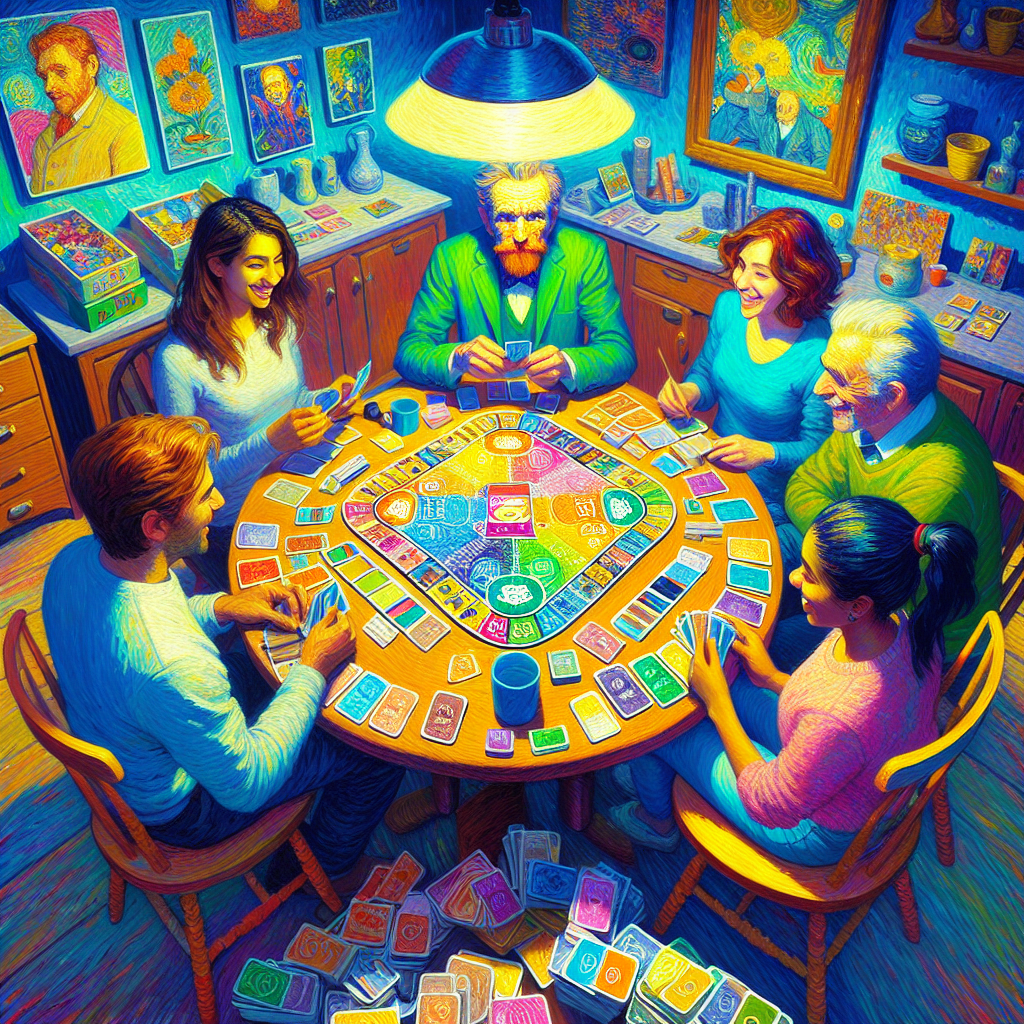
Imagine a world where the simple act of gathering around a table, shuffling a deck of cards, and sharing a few laughs transforms into an experience that transcends mere entertainment. Card Game narratives woven by Artificial Intelligence could redefine how we connect emotionally with the stories that unfold, creating unforgettable moments around the table. This isn’t just about winning or losing; it’s about crafting a shared journey with your friends and family.
The emotional appeal of a great story resonates deeply within us. Picture this: each card you play reveals a new twist in the tale. The unassuming Ace of Hearts suddenly morphs into a catalyst for adventure, igniting friendships, loyalty, and perhaps betrayal. This storytelling potential goes beyond simple gameplay mechanics; it touches on our longing for connection, reminding us that life itself is a series of unpredictable narratives, much like the twists and turns in a captivating game.
On a rational level, AI’s capacity to analyze patterns and player choices means that no two games would ever be the same. It can adapt to your style and preferences, generating plots that resonate on a personal level. This tailored approach not only enhances the gameplay experience; it elevates it, making each round feel fresh, exciting, and uniquely yours. We’re no longer just players; we become co-authors of our own epic tales.
Ethically, the integration of AI into card games sparks important conversations about creativity and originality. Who holds the rights to the stories that emerge? Does the spark of creative genius belong to the programmer, the player, or the AI itself? These are questions that can foster a healthy dialogue within our communities, ensuring we approach this technological leap with integrity and inclusivity.
As we navigate this brave new world, it’s essential to acknowledge the authority of storytellers—game designers, writers, and players alike—who breathe life into these narratives. Their insights can guide the evolution of AI in card games, ensuring we enrich rather than undermine the art of storytelling, maintaining our human touch amid the rise of technology.
In this evolving landscape, we have the chance to embrace both tradition and innovation, allowing AI to be a tool that amplifies our shared experiences. Let’s take the leap together, exploring how the next chapter in gaming might just be the most unforgettable one yet—one that brings us closer, ignites our imaginations, and creates stories that will resonate long after the final card is played.

Is Artificial Intelligence Poised to Create Unforgettable Card Game Narratives?
Is Artificial Intelligence Poised to Create Unforgettable Card Game Narratives?
- AI revolutionizes card games by creating immersive storytelling experiences that go beyond mere entertainment.
- Each card played can introduce new plot twists, enhancing emotional connections and creating memorable shared journeys.
- AI adapts to player styles and preferences, ensuring that no two games are alike and making each session uniquely personal.
- This evolution positions players as co-authors of their own stories, enriching the gameplay experience.
- Ethical discussions arise regarding creativity and ownership of the narratives generated by AI in card games.
- Importance of storytellers—designers, writers, and players—remains crucial to maintaining the integrity of storytelling.
- Embracing AI in gaming allows for a blend of tradition and innovation, fostering deeper connections and imaginative storytelling.

Is Artificial Intelligence Poised to Create Unforgettable Card Game Narratives?
Table Of Contents
- Is Artificial Intelligence Poised to Create Unforgettable Card Game Narratives?
- How Can AI Transform Storytelling In Card Games?
- What Ethical Concerns Arise with AI-Generated Narratives?
- Can AI Enhance Emotional Connections In Card Games?
- How Does AI Influence Player Decisions and Strategies In Card Games?
- Are AI-Generated Narratives More Immersive Than Traditional Ones?
- Conclusion
- Other Resources
- Glossary Of Terms
- Other Questions
- Haiku
- Poem
- Checklist
How Can AI Transform Storytelling In Card Games?
When you think of a card game, what often comes to mind is a simple deck and a gathering of friends around a table, sharing laughter, strategy, and maybe a little friendly rivalry. But what if I told you that artificial intelligence could morph those games into something far more profound? Imagine a card game that doesn’t just involve shuffling cards but also taps into the deepest human experiences—creating stories that resonate with each player’s emotions and choices.
Picture this: each hand dealt brings with it a narrative twist, one that evolves based on the players’ decisions. As you pick up a card, it’s not just a number or an image; it represents a moment, a risk, a chance to alter the storyline unfolding before you. That’s where AI steps in—not just as a tool, but as a co-creator, evolving the gameplay to reflect not just strategy, but the very essence of your humanity. It learns from your reactions, adapting to your style, emotions, and preferences to craft a unique gaming experience each time.
Now consider the ethical side of this innovation. By utilizing AI’s ability to analyze human behavior, card games can forge deeper connections amongst players. Stories can become more inclusive, representing diverse perspectives that mirror the rich tapestry of our society. This isn’t just entertainment; it’s about forging bonds and empathy in a world often divided by screens and distance. This shared experience brings us closer as we laugh, strategize, and even confront our vulnerabilities together.
And let’s not forget the power of authority in storytelling. When game developers collaborate with writers, psychologists, and social scientists, the richness of narrative deepens. This team can ensure that every card played communicates not just a tactical advantage but also a heartfelt message or a moral lesson, guiding players to think critically about their choices and their impacts on others.
So, as we embrace AI in card games, we open the door to extraordinary narratives that invite us into a richer world—a world where every flip of the card is a chance to connect, to grow, and to resonate on levels we’ve yet to explore. Together, let’s step into this new era of storytelling, capturing the heart, nurturing the mind, and igniting our guts. Game on!

How Can AI Transform Storytelling In Card Games?
How Can AI Transform Storytelling In Card Games?
- Card games traditionally involve simple decks and social interaction among friends.
- Artificial intelligence can transform these games into profound experiences by creating emotionally resonant narratives.
- Each hand dealt introduces narrative twists based on player decisions, making cards more than just numbers or images.
- AI acts as a co-creator, adapting the gameplay to reflect players’ emotions, styles, and preferences for unique experiences.
- AI can foster deeper connections among players, producing inclusive stories that reflect diverse perspectives.
- Collaboration among developers, writers, psychologists, and social scientists enriches storytelling by conveying moral lessons and encouraging critical thinking.
- The integration of AI in card games invites extraordinary narratives, promoting connection, growth, and exploration of our humanity.

How Can AI Transform Storytelling In Card Games?
What Ethical Concerns Arise with AI-Generated Narratives?
In this brave new world where AI wields a pen, we find ourselves amidst a complex card game—one where the stakes are higher than what’s printed on the surface. The narratives spun by algorithms can enthrall us, triggering laughter and tears, but a shadow looms when we consider the ethical underpinnings of this innovation.
Picture this: a world where the stories we hold dear could be generated without the heartbeats we came to trust. There lies an unsettling notion that these narratives, crafted in sterile code, may lack the empathy and nuance humans naturally infuse into storytelling. When we lean on AI for our tales, we risk losing the unique, lived experiences that breathe life into our narratives. Each story is a tapestry woven from human emotion and perspective; machine-generated content often lacks that soul.
Now, think with your head for a moment. The potential for misinformation grows exponentially. AI is capable of producing compelling narratives at lightning speed, but clarity of truth must be its foundation. When truths blur in this digital haze, who becomes accountable? Are we prepared to acknowledge the consequences? Each tale an AI conjures carries the risk of misinformation, manipulation, and a potential erosion of trust within our communities. We’re navigating a world where discerning fact from fabrication becomes a mental chess match, and that can lead down a treacherous path.
And let’s not ignore your gut instinct. There’s an undeniable feeling of unease that accompanies the rise of AI-generated narratives. Our social fabric can only withstand so much dissonance before it starts to fray. When we rely on algorithms to tell our stories, we create a society that underestimates the power of authenticity. We must ask ourselves—how do we ensure that our cultural narratives remain vibrant and rooted in reality?
The call to action is clear. Engage with the content that resonates with your heart and challenges your intellect. Support creators who invite vulnerability into their storytelling. Advocating for transparency about AI’s role in narrative creation paves the way for ethical standards we can adhere to. Take part in conversations about these emerging tools, ensuring that they complement rather than replace the authentic human experience. Together, we can preserve stories that enrich our shared humanity rather than dilute it.

What Ethical Concerns Arise with AI-Generated Narratives?
What Ethical Concerns Arise with AI-Generated Narratives?
- The rise of AI in storytelling presents both opportunities and ethical challenges.
- AI-generated narratives may lack the empathy and nuance inherent to human storytelling.
- Over-reliance on AI risks losing the unique, lived experiences that inform genuine narratives.
- There is a growing potential for misinformation as AI can create compelling but potentially misleading content.
- A blurred line between fact and fiction necessitates accountability in narrative creation.
- Relying on algorithms may undermine the authenticity of cultural narratives and social cohesion.
- The importance of supporting creators and advocating for transparency in AI’s role in storytelling is crucial.

What Ethical Concerns Arise with AI-Generated Narratives?
Can AI Enhance Emotional Connections In Card Games?
Sitting around a table, cards in hand, laughter and tension mingling in the air, there’s something almost sacred about the rituals we share during card games. It’s a tapestry woven with stories, memories, and moments of heart-stopping excitement. But as technology leaps ahead at breakneck speed, a question looms large: can artificial intelligence foster even deeper emotional bonds within these simple yet profound interactions?
Consider the transformative power of AI. Beyond the math and algorithms lies an untapped potential to enhance our connections. Imagine a card game where an AI doesn’t just calculate odds but recognizes emotional cues—facial expressions, tone of voice, or even the subtle shifts in one’s seat. It could suggest strategies not just based on the cards dealt but tailored to your friends’ personalities, fostering a deeper connection as you navigate the highs and lows of the game together. Picture an AI that learns your group dynamics, nudging you to share that inside joke, or reminding you when it’s time to play hardball or let up. This isn’t just gadgetry; it’s insights straight from the heart.
The rational side of this equation is equally compelling. As we embrace AI, we might glean insights that enhance our strategic gameplay. This could lead to better experiences for newcomers, leveling the playing field. No one wants to feel like an outsider at the table. With AI guiding them along, everyone can step into the game with confidence, knowing they belong.
Ethically speaking, the integration of AI into our favorite pastimes prompts a dialogue about companionship and authenticity. This tool should never replace human bonds but instead enrich them; it should remind us of the value of connection amid technological advances. True emotional engagement—whether through a card game or any other social interaction—comes down to trust. When AI respects those bonds, it nurtures an environment where laughter and camaraderie thrive.
As we gather around the table for another round of our beloved card game, let’s embrace the possibilities provided by AI. By harnessing this technology to enhance our emotional connections, we can deepen friendships, create unforgettable memories, and ensure that every shuffle of the deck is infused with meaning. So, the next time you deal a hand, consider the ways in which this powerful ally might amplify the joys of shared experiences, making us feel more connected than ever before.

Can AI Enhance Emotional Connections In Card Games?
Can AI Enhance Emotional Connections In Card Games?
- Card games create a sacred space of shared rituals, stories, and excitement.
- AI has the potential to enhance emotional connections during these games by recognizing emotional cues.
- An AI could suggest personalized strategies based on players’ personalities, fostering deeper bonds.
- AI can help newcomers feel more confident and included by providing strategic guidance.
- The integration of AI into games raises ethical considerations about companionship and authenticity.
- AI should enrich human connections rather than replace them, emphasizing trust and emotional engagement.
- Embracing AI can deepen friendships and create meaningful experiences during card games.

Can AI Enhance Emotional Connections In Card Games?
How Does AI Influence Player Decisions and Strategies In Card Games?
In the world of card games, where every shuffle and deal holds the promise of victory or defeat, players are often guided by intuition, experience, and a bit of luck. But now, artificial intelligence has stepped into this arena, influencing decisions in ways that challenge not just the integrity of the game, but its very essence. Picture the scene: a player sits across from an opponent, each glance at the cards eliciting a mix of hope and anxiety. AI has made its presence felt here—not just as a tool for analysis, but as a partner that learns, adapts, and grows with each play.
At first glance, the idea of AI in a card game may seem like a non-starter—a soulless algorithm tampering with the organic thrill of strategy and chance. However, let’s look closer. AI systems can analyze countless possible responses to a player’s moves, providing insights that sharpen one’s strategic edge. This isn’t just about winning; it’s about cultivating a deeper understanding of the game. When players tap into AI’s vast reservoirs of knowledge, they’re not only enhanced but also uplifted. They become part of a larger community of thinkers striving for excellence.
Yet, it’s crucial to navigate this integration with care. Relying too heavily on an algorithm can erode the very instincts that make card games rich with human connection and spirited competition. Ethical considerations linger in the air: does employing AI to gain an edge diminish the player’s journey? The conversation we need to have begins with trust. Players must embrace AI’s support while ensuring it serves as an aide, not a crutch. The importance of emotional intelligence in gauging opponents’ reactions and managing one’s own responses remains crucial, bringing humanity back into the fray.
The narrative here isn’t just about technology; it’s about evolution in gameplay. Whether you’re a seasoned pro or a weekend warrior, there’s value in melding human spirit with cutting-edge tools. It opens doors to innovation while honoring the traditions that brought us to this point. Players are encouraged to engage with this newfound ally thoughtfully, forging a path that respects the game’s history while embracing the future.
As we stand at this intersection of tradition and technology, let’s take action. Equip ourselves with knowledge, lean on AI as a trusted companion, and let’s play our best hands, together. After all, in the game of life—and in every card game—we’re in it for the connection, the strategy, and the stories we weave along the way.

How Does AI Influence Player Decisions and Strategies In Card Games?
How Does AI Influence Player Decisions and Strategies In Card Games?
- Card games rely on intuition, experience, and luck, but now AI influences players’ decisions.
- AI acts as a learning partner that adapts with each play, enhancing strategic understanding.
- Integration of AI provides insights through analysis of possible responses to moves.
- Heavy reliance on algorithms risks eroding human instincts and emotional connections in games.
- Ethical considerations arise: does using AI diminish the player’s journey and experience?
- Players are encouraged to use AI as a supportive tool, while maintaining their human intuition.
- The evolution of gameplay combines human spirit with technology, respecting tradition while embracing innovation.

How Does AI Influence Player Decisions and Strategies In Card Games?
Are AI-Generated Narratives More Immersive Than Traditional Ones?
When you sit down at a table for a card game, there’s a unique thrill that takes over. You shuffle the deck, lay out the cards, and with each turn, you’re not just playing a game; you’re engaging in a narrative that unfolds with every bluff, every risk, and every triumph. This pressed-together reality comes from human experiences, emotions, and connections, a tapestry woven with threads of vulnerability and strength. But when we step back and consider AI-generated narratives, the question arises: do they capture that same magic?
At their best, AI narratives can whisk us away on journeys that are intricately plotted and endlessly creative. They draw from immense databases of knowledge, conjuring up worlds that feel fresh and expansive. However, it’s essential to recognize what might be lost in translation. There’s a difference, an intangible essence, that emerges only when a human hand, a human heart, crafts a story. This essence lies in the soul of the storyteller—the echoes of laughter, the weight of sorrow, the shared glances that breathe life into every word.
Imagine the emotional resonance of a tale passed down through generations, woven into the fabric of family reunions and fireside chats. These narratives not only inform us; they nurture the connections that bind us together. In contrast, AI has a vast intellect but lacks the compassion and intuitive understanding that only comes from lived experience. It can paint a stunning picture but may miss the brushstrokes that capture the nuances of human emotion.
From an ethical standpoint, the authenticity in storytelling can raise questions about ownership and representation. A computer processor, no matter how advanced, lacks the authentic voice that carries the weight of personal truth. Humans crave stories that resonate with shared struggles, hopes, and dreams—stories that reflect our reality, not just an optimized algorithm.
So as we find ourselves drawn into the allure of AI-generated narratives, let’s not forget the emotive power of a story born from the human experience. Let’s cherish the foundation of connection that they offer, recognizing that, much like a card game, the best stories often come from the lively interaction between players, each playing their part in a shared experience. Embrace both worlds, but never overlook the heart that makes the tale truly memorable.

Are AI-Generated Narratives More Immersive Than Traditional Ones?
Are AI-Generated Narratives More Immersive Than Traditional Ones?
- Playing cards evokes a unique thrill, transforming each game into a narrative of bluffs, risks, and triumphs.
- AI narratives can generate intricate and creative stories, drawing from vast databases of knowledge.
- However, AI lacks the intangible essence that comes from human storytelling—a blend of emotions and experiences.
- Human narratives are enriched by shared experiences, laughter, and sorrow, creating deeper emotional resonance.
- Ethically, the authenticity of storytelling raises questions about ownership and representation.
- Humans desire stories that reflect shared struggles, hopes, and dreams, not just those generated by algorithms.
- While AI narratives are alluring, they cannot replace the heart and connection found in human-created stories.

Are AI-Generated Narratives More Immersive Than Traditional Ones?
Conclusion
Gathering around a table for a card game offers more than just competition; it’s an opportunity to create and share stories that connect us. As we find ourselves at the fascinating intersection of traditional gameplay and cutting-edge technology, the role of Artificial Intelligence emerges as a potential game changer—one that could not only enhance our experiences but infuse them with unforgettable narratives.
Imagine a game where each card played isn’t just an action but a pivot in a story woven through real-time decisions and emotional interactions. AI stands ready to respond to the players’ choices, knitting together a unique tapestry that reflects not just strategy but the nuances of human emotion. As players, we become co-authors of this evolving adventure, shaping the outcomes based on our collective whims and choices. It’s about lending our voices to the narratives, making each game a new chapter of connection and laughter.
But alongside these thrilling possibilities lurks a cautionary tale about the ethical implications of letting technology steer our stories. We must ponder who truly owns the narratives crafted by AI—programmers, players, or the AI itself? By engaging in this discourse, we can cultivate a landscape where creativity thrives without sacrificing originality. This is not merely about algorithms plotting twists; it challenges us to preserve the heart and soul of storytelling amid technological advancements.
Through AI, card games can become more than just casual entertainment; they can create spaces for empathy and reflection, drawing in diverse perspectives and allowing players to experience a wider range of emotions. The teamwork behind game development—collaborating across disciplines like psychology and creative writing—ensures that while AI works its magic, the essence of human connection remains paramount.
As we step into this new frontier, let’s embrace technology as a means to amplify our shared experiences. We have the chance to deepen our relationships around the table, fostering bonds that transcend simple gameplay. With every shuffle of the deck, we tap into something profoundly human—a collective journey enriched by laughter, strategy, and the unforgettable tales we construct together. So, let’s not shy away from this innovation; instead, let’s channel it to create narratives that live on in our hearts, long after the cards have been put away. Game on!

Conclusion
Conclusion:
- Gathering for card games fosters storytelling and connection beyond competition.
- AI has the potential to enhance gameplay with unique narratives based on real-time choices.
- Players participate as co-authors of evolving stories through their decisions and interactions.
- Ethical concerns arise regarding ownership of narratives created by AI.
- AI can transform card games into spaces for empathy, reflection, and diverse emotional experiences.
- Collaboration in game development is essential to maintain human connection amidst technological advances.
- Embracing technology in gaming can deepen relationships and create lasting memories through shared experiences.

Conclusion
Other Resources

Other Resources
Here is a list of other resources you can review online to learn more:
- Santorini
- Spirit Island
- Food Chain Magnate
- Puerto Rico (with two expansions)
- The Dice Tower Podcast
- Scythe
- Tigris & Euphrates
- Carcassonne
- Champions of Midgard
- IELLO
- Instapaper
- Cosmic Encounter
- Asmodee
- Rising Sun
- Cardboard Republic
- Munchkin
- 999 Games
- Star Wars: Rebellion
Use This Prompt To Get More Resources With Your Favorite Online AI Tool: Please provide me with a list of online articles with their URLs in a bulleted list that I can read regarding Is Artificial Intelligence Poised to Create Unforgettable Card Game Narratives?

Other Resources
Glossary Terms
Is Artificial Intelligence Poised to Create Unforgettable Card Game Narratives? – Glossary Of Terms
1. Artificial Intelligence (AI): Technology that simulates human intelligence processes, including learning, reasoning, and problem-solving.
2. Card Game: A game using a deck of cards as the primary medium, often involving strategy, chance, and player decision-making.
3. Narrative: A structured story or account of events, often used to engage players emotionally and enhance gameplay.
4. Procedural Generation: Algorithm-driven creation of content, allowing for randomization and infinite variations in game environments and narratives.
5. Game Mechanics: The rules and systems that govern gameplay, such as turn-taking, scoring, and player actions.
6. Player Agency: The degree of control and influence players have over the game’s narrative and outcome.
7. Immersion: The extent to which players feel absorbed and engaged in the game world and its story.
8. Character Development: The process of creating complex and relatable characters that evolve throughout the game narrative.
9. World-Building: The development of a fictional universe, including its rules, geography, history, and culture.
10. Dynamic Storytelling: A narrative approach that adapts based on player choices and actions, creating unique experiences for each playthrough.
11. Branching Paths: Narrative options that diverge based on player decisions, leading to multiple possible outcomes.
12. Foreshadowing: A storytelling technique that hints at future events in the narrative, enhancing suspense and engagement.
13. Conflict: The central struggle or challenge faced by characters, driving the narrative forward.
14. Theme: The underlying message or central idea explored in a game’s narrative, such as friendship, betrayal, or adventure.
15. Dialogue: The conversation between characters that helps to reveal character personalities and advance the plot.
16. NPC (Non-Player Character): Characters in the game controlled by the AI rather than a human player, which can enrich the narrative.
17. Replayability: The potential for a game to be played multiple times with varying experiences, often due to different story outcomes.
18. Emotion Recognition: AI’s ability to analyze player emotions through inputs, potentially influencing narrative direction.
19. Adaptive Learning: AI techniques that allow the system to learn from player behavior to improve narrative quality over time.
20. Game Lore: The backstory and history of the game world, enriching player understanding of the narrative context.
21. Artifical Creativity: The use of AI to generate original content, including narratives and character arcs, mimicking human creativity.
22. User Interface (UI): The means by which players interact with the game, which includes menus, cards, and visual elements that convey the narrative.
23. Feedback Loop: A system where the player’s actions influence the game’s narrative, and the game’s responses impact future player decisions.
24. Narrative Arc: The structured progression of a story, including exposition, rising action, climax, and resolution.
25. Immersive Experience: A highly engaging environment that facilitates deep emotional or cognitive investment in the game’s narrative.
26. Simulation: The use of computer-based models to mimic real-world processes, potentially affecting narrative outcomes in the game.
27. Choice Architecture: The design of how choices are presented to players, affecting their decision-making processes and narrative experience.
28. Artificial Companions: AI-controlled characters that assist or challenge players, enriching the narrative through interaction.
29. Ethos: The characteristic spirit, values, or beliefs conveyed through a game’s narrative and character interactions.
30. Collaborative Storytelling: A narrative style that encourages input and contributions from multiple players, shaped by their interactions and choices.

Glossary Of Terms
Other Questions
Is Artificial Intelligence Poised to Create Unforgettable Card Game Narratives? – Other Questions
If you wish to explore and discover more, consider looking for answers to these questions:
- How exactly does AI analyze player choices in card games?
- What are some examples of AI-driven card games currently available?
- How will AI-generated narratives change the role of game designers and writers?
- What specific ethical guidelines should govern the use of AI in storytelling?
- Can AI-generated narratives include moral lessons and critical thinking prompts?
- How do players perceive AI’s influence on their game experience?
- What technical challenges exist in developing AI for card games?
- How can the gaming industry balance AI tools with traditional storytelling methods?
- Will AI-generated narratives be able to replicate the depth of human emotion in stories?
- What impact might AI storytelling have on social interactions during gameplay?
- How can AI enhance accessibility for players with different skill levels?
- What mechanisms can ensure transparency about AI’s role in narrative creation?
- How might AI influence the evolution of player strategies in competitive card games?
- What demographic factors might affect acceptance of AI in card games?
- How can we measure the success of AI-generated narratives in card games?

Other Questions
Haiku
Is Artificial Intelligence Poised to Create Unforgettable Card Game Narratives? – A Haiku
Cards shuffle, tales swell,
AI spins our shared stories—
Hearts weave through the game.

Haiku
Poem
Is Artificial Intelligence Poised to Create Unforgettable Card Game Narratives? – A Poem
Around the table, laughter blooms,
A deck of cards, where friendship looms.
Beneath the shuffle and playful strife,
We weave our tales, the heart of life.
Picture an Ace, a catalyst bright,
Igniting bonds in the soft twilight.
Each play—a choice, a narrative spun,
Echoes of kinship, a race won or undone.
AI joins hands, not to replace our soul,
But to shape each story, to help us grow whole.
With whispers of wisdom, it learns our ways,
Crafting fresh journeys with every phase.
Yet questions arise, ethical threads,
Who owns the stories where imagination treads?
Are they coded whispers or human dreams?
In the quest for integrity, we must hear the screams.
We cherish the bonds that empathy brings,
As each card transforms, the heartstrings sing.
AI’s role—an ally, not a thief in the night,
To amplify narratives, guiding our flight.
But as we embrace this brave new arc,
Let’s not forget the pulse in the dark.
For it’s through shared laughter and moments of grace,
That we stitch together our place in this space.
So gather your friends, let the stories flow,
With AI beside us, let our connections grow.
In every flip, let’s discover anew,
The magic of tales that bind me and you.

Poem
Checklist
Is Artificial Intelligence Poised to Create Unforgettable Card Game Narratives? – A Checklist
AI and Card Game Narratives Checklist
Emotional Connection
_____ Reflect on a memorable card game experience with friends or family. What made it special?
_____ Consider how storytelling through AI could evoke similar emotions.
_____ Identify elements that enhance emotional engagement in your gameplay.
Rational Engagement
_____ Research how AI analyzes player patterns and decisions.
_____ List potential benefits of AI-generated narratives on gameplay variety.
_____ Evaluate the effectiveness of AI in personalizing game experiences according to player preferences.
Ethical Considerations
_____ Discuss the implications of AI on creative ownership of stories.
_____ Debate the ethical questions surrounding the authenticity of AI-generated narratives.
_____ Promote conversations about maintaining human influence in storytelling amid AI advancements.
Authority in Storytelling
_____ Acknowledge the roles of game designers, writers, and psychologists in shaping AI narratives.
_____ Source insights from experts on responsible implementation of AI in gameplay.
_____ Stay informed about ongoing developments in AI technology relevant to storytelling.
Narrative Appeal
_____ Share stories that highlight the evolution of card games influenced by technology.
_____ Explore the narrative depth and character development created through AI in card games.
_____ Collect personal anecdotes from players about their experiences with AI-enhanced games.
Social Interaction
_____ Assess how AI could facilitate deeper connections during gameplay.
_____ Encourage inclusive storytelling that reflects diverse perspectives through AI.
_____ Create a community platform for discussions on AI’s role in enhancing social bonds in card gaming.
Gut Instincts
_____ Identify feelings of comfort or discomfort regarding AI involvement in games.
_____ Trust your instincts on maintaining authenticity in gameplay experiences.
_____ Engage in conversations about the balance between AI assistance and human intuition in card games.
Use this checklist to deepen your understanding and engagement with the integration of AI in card games, highlighting the balance between innovation and the emotional, ethical, and social dimensions of storytelling.
Checklist
At CardGameNews, we help people who love card games by collating information and news about card games.
Be sure to read our other related stories at CardGameNews to learn more about card games.


